

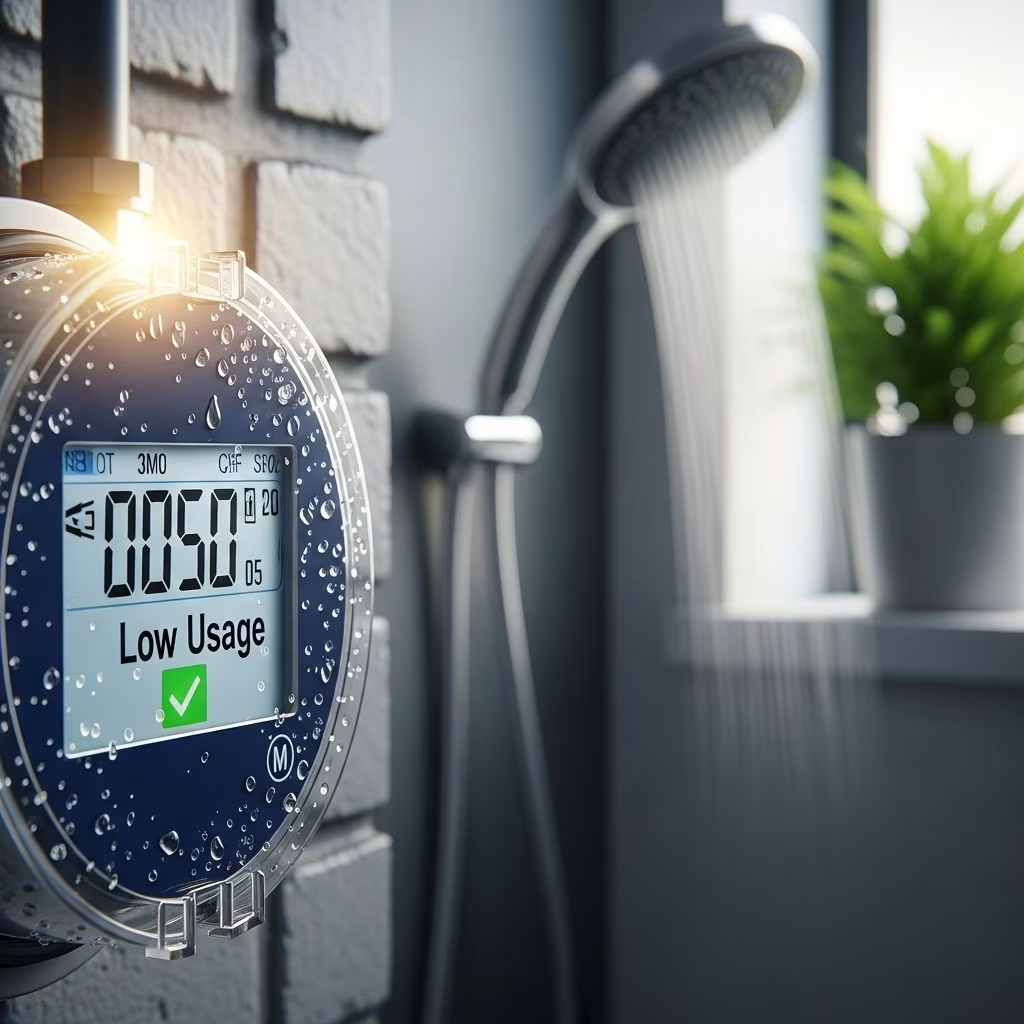
High water bills can strain household budgets, but targeted changes in daily routines and home infrastructure can lead to substantial reductions in usage and costs. By addressing common sources of waste like leaks, inefficient appliances, and poor watering practices, families can save hundreds of dollars yearly while promoting sustainability.
Understanding Your Water Consumption Patterns
Before implementing changes, assess your current usage. Review past bills to identify seasonal spikes, often linked to outdoor watering or undetected leaks. Install a water meter if possible, or conduct a simple audit by shutting off all fixtures and observing if the meter continues to run, signaling hidden leaks. This baseline knowledge directs efforts to high-impact areas.
Indoor activities account for about 70% of residential water use, with bathrooms leading at roughly 50%, followed by laundry and kitchen tasks. Outdoor use surges in warmer months, potentially doubling bills. Tracking via apps or manual logs reveals habits like prolonged showers or unnecessary rinsing.
Eliminate Waste from Leaks and Drips
Leaks are silent bill increasers; a single dripping faucet can waste over 3,000 gallons annually. Inspect all faucets, toilets, and pipes regularly. For toilets, add food coloring to the tank—if it seeps into the bowl within 10 minutes, replace the flapper. Outdoor hoses and irrigation lines often hide issues; check connections and spigots monthly.
- Repair faucet drips immediately to prevent 330 gallons lost monthly from 100 drops per minute.
- Examine hoses for wear; a small crack can squander 6,000 gallons yearly.
- Schedule professional inspections for underground lines if bills jump inexplicably.
Upgrade to High-Efficiency Fixtures
Switching to water-saving devices yields quick returns. EPA’s WaterSense-labeled products meet strict efficiency standards without compromising performance. Low-flow showerheads limit output to 2 gallons per minute versus 5 for older models, saving 7,000 gallons per person annually with five-minute showers.
| Fixture Type | Standard Flow | WaterSense Flow | Annual Savings (Family of 4) |
|---|---|---|---|
| Showerhead | 2.5+ gpm | ≤2.0 gpm | ~12,000 gallons |
| Faucet Aerator | 2.2 gpm | ≤1.5 gpm | ~500 gallons |
| Toilet | 1.6+ gpf | 1.28 gpf | ~13,000 gallons |
Aerators on kitchen and bathroom faucets cost pennies yet cut flow dramatically. Dual-flush toilets offer choices for liquid (0.8 gallons) or solid waste (1.6 gallons), ideal for varied needs.
Adopt Bathroom Habits That Conserve
The bathroom dominates usage; optimize it first. Limit showers to five minutes—use a timer or playlist to enforce. Turn off water while soaping or shampooing, saving 10-20 gallons per session. Skip baths unless essential; they use 70 gallons versus 25 for a short shower.
- Brush teeth with faucet off: saves 8 gallons daily.
- Shave over a basin: avoids 10 gallons per use.
- Install timed or motion-sensor faucets for hands-free operation.
For shaving or washing faces, fill a cup or sink basin instead of running taps continuously.
Optimize Kitchen and Laundry Efficiency
Kitchen habits like constant rinsing inflate bills. Scrape dishes directly into full-load dishwashers; Energy Star models use 30% less water. Hand-wash in a filled sink, not under streams. Thaw foods in refrigerators overnight to bypass running water defrosts.
Laundry follows suit: wait for full loads in front-loaders, which extract water efficiently, reducing dry times. Cold washes preserve fabrics and cut heating-related waste indirectly. Aerators here prevent overfilling during prep tasks.
Insulate and Streamline Hot Water Delivery
Wasted water waiting for hot flow from pipes adds up. Insulate lines with foam sleeves, available cheaply, to retain heat and speed delivery—saving gallons per use. Set water heaters to 120°F, balancing safety and efficiency; every 10°F drop conserves 3-5% energy.
Point-of-use heaters near distant fixtures minimize pipe runs. Low-flow fixtures pair well, as aerated streams feel robust despite lower volume.
Master Outdoor Water Management
Landscapes guzzle up to 30% of total use in summer. Water lawns deeply but infrequently—early morning or evening curbs evaporation by 25%. Use soaker hoses or drip systems delivering water to roots, not air; they cut waste by 50% versus sprinklers.
- Group plants by thirst levels for tailored irrigation.
- Set schedules with rain gauges; skip after 0.5 inches precipitation.
- Harvest rainwater via barrels under downspouts for non-potable garden needs.
Smart controllers adjust via weather apps, preventing overwatering during rain forecasts. Mulch beds retain soil moisture, reducing needs by 20-30%.
Leverage Technology and Appliances
Modern tools automate savings. Smart leak detectors alert via apps to anomalies. Irrigation timers integrate soil moisture sensors for precise dosing. High-efficiency washers and dryers minimize cycles.
Pool owners: cover surfaces to slash evaporation losses, refilling less often. Compost scraps to avoid garbage disposals’ rinse requirements.
Engage Your Household and Track Progress
Conservation succeeds collectively. Educate all members on impacts—post reminders or gamify challenges with rewards for lowest monthly use. Baseline your bill, set 10-20% reduction goals, and monitor quarterly.
Apps log usage, graph trends, and suggest tweaks. Utility rebates for WaterSense upgrades amplify motivation; check local programs.
Long-Term Investments for Maximum Impact
Replace grass with xeriscaping—drought-tolerant plants, rocks, and natives slash watering 50-75%. Greywater systems repurpose laundry or shower water for landscapes legally in many areas. Rain gardens capture runoff, replenishing groundwater.
Professional audits pinpoint issues pros miss. Over time, these yield compounding savings, often paying off in 1-3 years.
Frequently Asked Questions
How much can I save by fixing leaks?
A typical home leak wastes 10,000 gallons yearly; repairs can cut bills by $50-100 annually depending on rates.
Are low-flow showerheads noticeable?
WaterSense models maintain pressure via aeration; most users report no difference after adjustment.
What’s the best time to water outdoors?
Dawn or dusk minimizes evaporation; avoid midday heat.
Do rainwater barrels require permits?
Check local codes; many areas encourage with incentives.
How do I read my water meter for leaks?
Turn off all water; if dial moves, a leak exists.
Potential Savings Overview
| Action | Est. Gallons Saved/Year (Family of 4) | Cost Savings (at $0.01/gallon) |
|---|---|---|
| Low-flow showerheads | 12,000 | $120 |
| Leak repairs | 10,000 | $100 |
| Full-load appliances | 5,000 | $50 |
| Short showers | 8,000 | $80 |
| Drip irrigation | 15,000 | $150 |
Combining strategies can halve usage, yielding $500+ savings yearly.
References
- Start Saving — US EPA. 2023-10-01. https://www.epa.gov/watersense/start-saving
- How to Cut Your Water Use in Half — Consumer Reports. 2023-05-15. https://www.consumerreports.org/water-conservation/how-to-cut-your-water-use-in-half-a1121517078/
- Tips to Reduce Water Usage & Lower Your Bill — Mayes & Sons Plumbing. 2025-01-10. https://www.mayesandsonsplumbing.com/blog/2025/january/tips-to-reduce-water-usage-lower-your-bill/
- 17 Tips to Lower Your Water Bills — Fayette Heating & Air Conditioning. 2024-06-20. https://fayetteheating.com/blog/homeowner-tips-lower-water-bill/
- 54 Ways To Save On Your Water Bill — CSWDHR. 2023-08-05. https://www.cswdhr.com/ways-to-save-on-your-water-bill/
This article is general information, not personal financial advice. Consider your own situation, or speak with a licensed adviser, before acting on it.


