

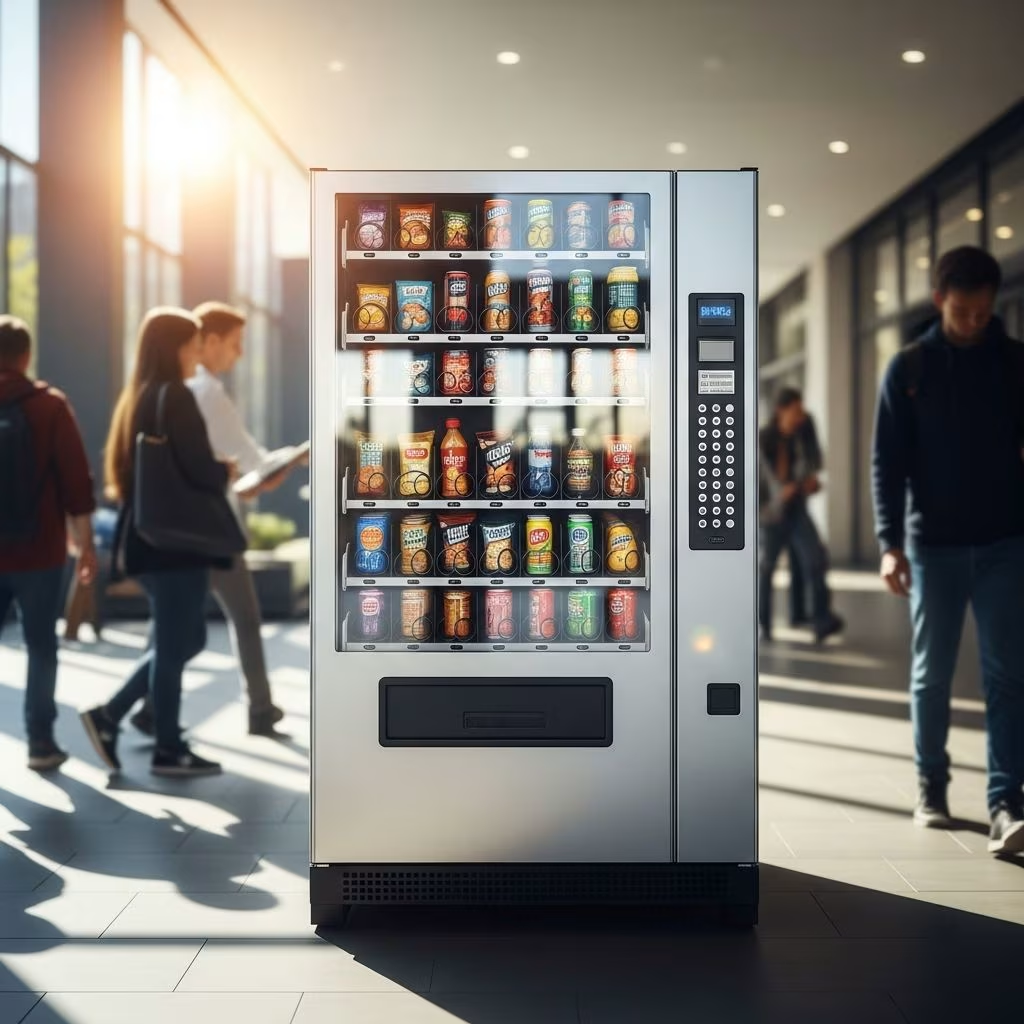
How to Start a Vending Machine Business
The vending machine industry represents a significant opportunity for entrepreneurs seeking to build a scalable business with relatively low barriers to entry. With approximately 5 million vending machines operating across the United States and generating $7.4 billion in annual revenue, the market continues to expand for operators willing to approach it strategically. Unlike many business ventures that require substantial upfront capital or specialized expertise, vending offers a path to income generation that can start modestly and grow into a full-time operation. However, success requires careful planning, realistic expectations, and a commitment to understanding the operational realities of the business.
Understanding the Vending Machine Market
Before launching your vending machine business, it’s essential to understand the market landscape and what drives profitability. The unattended retail industry encompasses diverse revenue opportunities beyond traditional snack and beverage machines. According to industry research, the average vending machine generates approximately $309 per machine per month, though this figure ranges significantly from as low as $75 to as high as $650 depending on location quality and product selection. Individual machines typically earn between $5 and $100 per week, translating to roughly $20 to $400 monthly per unit depending on placement.
The fragmented nature of the vending industry means that while large corporations like Coca-Cola operate their own equipment, the majority of machines are managed by independent owner-operators. This fragmentation creates opportunities for entrepreneurs to carve out profitable niches by focusing on specific locations or customer demographics.
Startup Costs and Initial Investment
One of the primary advantages of entering the vending business is its relatively modest startup requirements. An operator can acquire a decent used machine and purchase initial inventory for less than $2,000, making it accessible to entrepreneurs with limited capital. New machines typically cost between $3,000 and $5,000, while quality used equipment can be sourced for significantly less. The key is researching reliable suppliers and understanding the total cost of ownership, including installation, permits, and initial product inventory.
Beyond the machine itself, factor in location placement fees, which vary considerably depending on the venue. Premium locations like hotels or office buildings may charge percentage-based commissions or flat monthly fees, while smaller businesses might welcome machines without charging placement costs. Strategic location selection early in your business can minimize these expenses while you build capital and experience.
Selecting the Right Location
Location selection represents one of the most critical factors determining vending machine profitability. Successful placement requires analyzing foot traffic patterns, identifying your target customer base, understanding local competition, and determining which products will perform well in specific environments. Research potential locations thoroughly before committing to placement agreements.
Consider starting with lower-barrier venues such as small offices, local businesses, or service establishments that may not charge placement fees or require minimal upfront costs. This approach allows you to establish your business, generate revenue, and build experience while maintaining healthier margins. As your operation scales and you accumulate capital, you can expand into premium, high-traffic locations that offer greater revenue potential despite higher placement costs.
Develop win-win agreements with location owners by demonstrating the mutual benefits of your partnership. Quality machines with reliable service and regular maintenance become assets to their businesses rather than liabilities.
Financial Planning and Profitability
Creating a comprehensive financial plan is essential before purchasing your first machine. Your plan should account for all startup costs, including the machine purchase, initial inventory, installation, permits, and signage. Additionally, project ongoing expenses such as location fees, inventory replenishment, maintenance, fuel for servicing routes, business insurance, and property taxes.
Revenue projections should be conservative and based on realistic assumptions about foot traffic and sales velocity for your target locations. Remember that approximately 50% of gross revenue typically goes toward the cost of products sold within machines, significantly impacting net profitability. An operator generating $5,000 in monthly revenue might reasonably expect roughly $2,000 in profit after accounting for product costs and operational expenses.
To make vending viable as a full-time business, most operators need to achieve economies of scale by building operations consisting of dozens of machines that collectively generate sufficient income. A single machine rarely provides livable income, but multiple machines working together create a sustainable business model.
Choosing Products and Managing Inventory
Product selection directly impacts your machine’s performance and profitability. Rather than stocking generic assortments, research what specific customer demographics and location types prefer. Office buildings might perform better with healthier snack options and beverages, while entertainment venues might favor candy and premium sodas.
Effective inventory management prevents costly mistakes like overstocking perishable items, running empty machines that miss sales, or stocking products that don’t sell. Poor inventory decisions based on guesswork rather than data analysis consistently undermine profitability. Track sales data meticulously to understand which products perform best in each location, allowing you to make informed restocking decisions.
Regular machine servicing prevents customer frustration from broken equipment or product jams. A customer’s negative experience with an inoperative machine can result in lost sales and, in extreme cases, loss of the location altogether. Prioritizing customer satisfaction through reliable equipment and responsive service creates competitive advantages.
Understanding Operational Demands
While vending machines are often marketed as passive income opportunities, the reality involves significant hands-on management. Despite being self-service, vending businesses require regular restocking, thorough cleaning, equipment repairs, and responsive customer service. Many new operators underestimate this workload, discovering too late that answering late-night service calls and managing weekend inventory emergencies conflicts with expectations of truly passive income.
Your operational schedule depends on machine volume and location types. A small operation with a few machines might require servicing once or twice monthly, while larger operations demand more frequent attention. Plan your time realistically and consider whether you’ll personally handle servicing or hire employees to manage routes.
Leveraging Technology for Growth
Modern successful vending operations integrate technology at every operational level. Contemporary machines feature card payment systems, touchscreens, and remote monitoring capabilities that increase sales, improve efficiency, and enhance customer satisfaction. These technological investments directly contribute to profitability through increased transaction value and reduced cash-handling losses.
Vending Management Software (VMS) platforms like Cantaloupe’s Seed, Nayax’s VendSys, and Gimme VMS provide data-driven insights into inventory, sales patterns, and service requirements. These tools transform guesswork into actionable intelligence, enabling operators to make informed decisions about restocking, product selection, and location performance. While complex management software makes sense as your operation scales, certain technologies like cashless payment systems offer immediate value even for small operations by increasing transaction frequency and average transaction value.
Customer Service as a Competitive Advantage
In the vending business, exceptional customer service creates a significant competitive advantage despite lacking physical staff presence. Solutions that allow customers to receive immediate assistance when problems occur—such as reporting malfunctioning machines, requesting refunds, or providing feedback—directly impact retention and growth.
Operators who prioritize customer experience report substantial benefits including longer location retention, improved success when negotiating new placements, increased purchase frequency from satisfied customers, and better understanding of recurring issues with specific machines or products. Solving problems quickly and efficiently positions your business favorably compared to larger operators who often lack responsive service capabilities.
Building Systems for Scalability
Successful vending businesses establish standard procedures covering inventory management, equipment maintenance, route planning, cash handling, and customer support. These systems become increasingly valuable as your operation grows, enabling consistent quality across multiple machines and locations.
Systematic approaches prevent costly errors, reduce operational friction, and create frameworks for training employees as you expand. What works manually with five machines requires proceduralization before scaling to fifty machines. Build these systems early, even if they seem excessive for your current size, to facilitate smooth growth.
Exploring Business Diversification
As your vending operation matures, the unattended retail industry offers numerous expansion opportunities beyond traditional snack and beverage machines. Consider diversifying into micro-markets (self-checkout food and beverage areas), office coffee services, pantry services, and specialized vending for arcades, laundromats, retail stores, hotels, and other venues. These adjacent businesses leverage your existing operational expertise and customer relationships while opening new revenue streams.
Common Pitfalls to Avoid
Understanding common failure points helps new operators navigate challenges successfully. Inadequate startup capital remains a primary reason businesses fail—operators who don’t account for ongoing costs, maintenance expenses, and cash reserves for handling problems quickly run into financial difficulty. Starting under-capitalized leaves no buffer for unexpected expenses or slow periods.
Insufficient research before selecting locations leads to poor placements with low sales volumes. Selecting locations based on lowest fees rather than foot traffic and customer demographics results in underperforming machines that consume time without generating adequate returns. Taking time to research locations thoroughly pays substantial dividends.
Poor inventory management creates multiple problems: empty machines miss sales, overstocked perishables spoil or go unsold, and guesswork-based decisions cost money. Using data to inform stocking decisions prevents these costly mistakes.
Financing Options and Growth Capital
Several financing options support vending machine entrepreneurs. Equipment suppliers often provide financing programs that spread machine costs across time. Dedicated vending finance companies like Cantaloupe Capital, vending.com, and eVending.com (part of the Wittern Group) offer specialized funding for small vending businesses seeking to expand beyond initial modest operations. Exploring these options can help you scale faster than reinvesting profits alone allows.
Frequently Asked Questions
Q: How much can I expect to earn from a single vending machine?
A: Revenue varies significantly based on location quality and product selection, ranging from $75 to $650 monthly per machine. After accounting for product costs (approximately 50% of revenue) and operational expenses, net profit typically ranges from $50 to $300 monthly per machine. Most operators need multiple machines to generate livable income.
Q: What’s the minimum startup capital required?
A: You can start with less than $2,000 by purchasing a used machine and initial inventory. However, planning for $3,000 to $5,000 provides better quality equipment and inventory selection. Many successful operators recommend starting under-capitalized as a primary failure risk.
Q: How much time does a vending machine business require?
A: Despite passive income marketing claims, expect to spend several hours weekly on restocking, maintenance, and customer service. The exact time depends on your machine volume and whether you personally service locations or hire employees.
Q: How do I find good vending machine locations?
A: Research foot traffic patterns, target demographics, local competition, and product demand before approaching location owners. Start with smaller venues offering lower placement costs to minimize initial risk while you build experience and capital for premium locations.
Q: Is technology investment necessary for small vending operations?
A: While complex management software becomes valuable as you scale, certain technologies like cashless payment systems offer immediate benefits even for small operations by increasing transaction frequency and average transaction value.
Q: Can I make vending machines a full-time business?
A: Yes, but most operators need to build operations consisting of multiple dozens of machines to generate livable full-time income. Early success comes from reinvesting profits into additional machines to achieve economies of scale.
References
- Starting a Vending Business: Real Challenges & Proven Success Strategies — Zippy Assist. 2025-11-29. https://zippyassist.com/articles/realities-of-starting-vending-business
- The Economics of Vending Machines — The Hustle. https://thehustle.co/the-economics-of-vending-machines
- Start a Vending Machine Business in 2025 — Nav. https://www.nav.com/blog/vending-machine-business-1864566/
- Why I Walked Away from Buying a 7-Figure Vending Machine Business — SBO Financial. https://sbo.financial/blog/wealth-creation/blog-wealth-creation-7-figure-vending-business/
- Business Taxes: Property, State, Federal, and Sales Tax Considerations — U.S. Small Business Administration. https://www.sba.gov/business-guide/manage-your-business/manage-taxes
This article is general information, not personal financial advice. Consider your own situation, or speak with a licensed adviser, before acting on it.


