

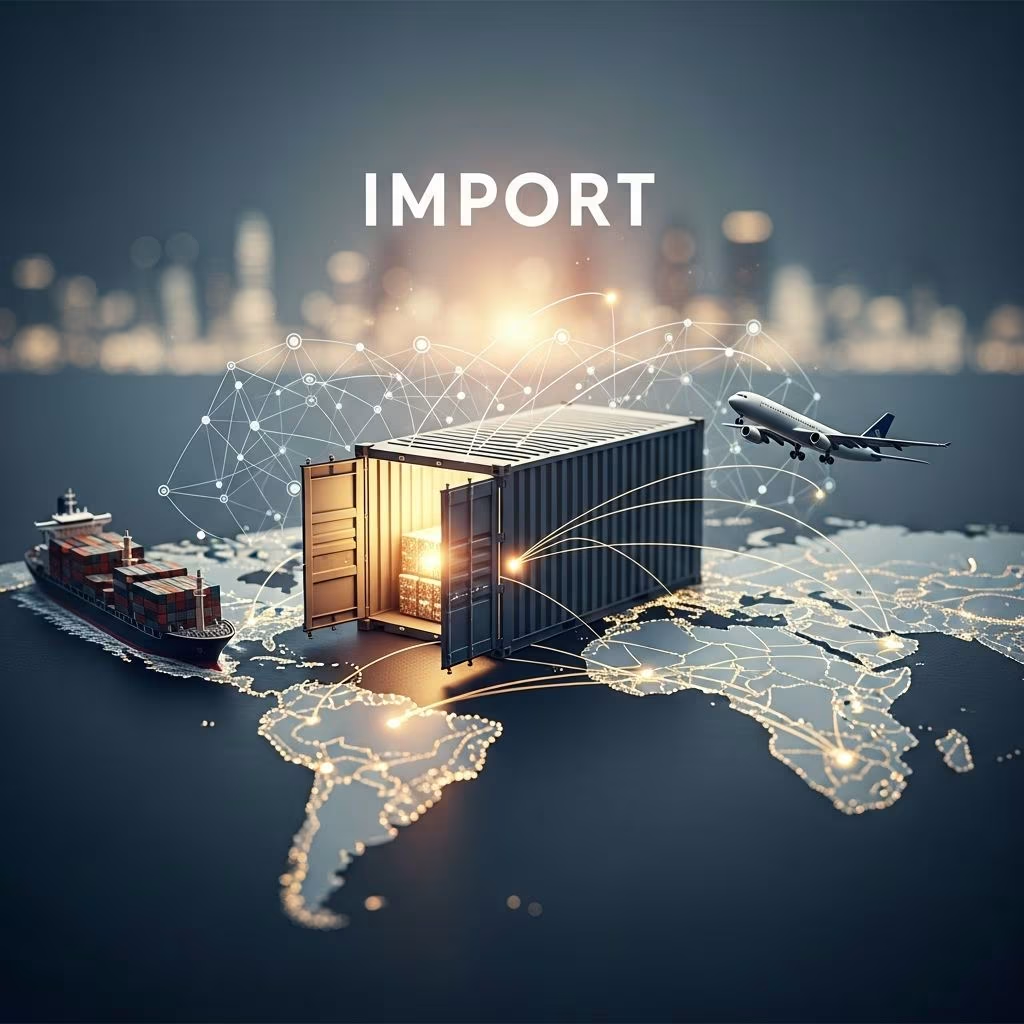
What Is an Import?
An import is a good or service that is produced in one country and purchased by residents of another country. It represents the physical or intangible transfer of products across international borders, forming a critical component of global trade and economic interdependence. Imports allow consumers and businesses to access products that may not be available domestically, are produced more efficiently abroad, or are offered at more competitive prices in foreign markets.
The concept of importing is fundamental to modern economies, enabling countries to leverage comparative advantages and specialize in production areas where they are most efficient. When a business or consumer in the United States purchases manufactured goods from China, agricultural products from Brazil, or services from India, those transactions are classified as imports for the importing country.
Understanding Imports in International Trade
Imports form one half of international trade, with exports representing the other side. While exports are goods and services produced domestically and sold abroad, imports are the inverse—goods and services purchased from foreign producers. Together, these two components create the balance of trade, a key economic indicator that measures the difference between a nation’s exports and imports.
The relationship between imports and exports is complex and interconnected. A country might simultaneously export automobiles while importing petroleum, or export services while importing manufactured consumer goods. This two-way flow of commerce reflects the reality that no single nation possesses all resources or can efficiently produce every good and service its population demands.
Key Characteristics of Imports
- Foreign Origin: Imports originate from producers outside the importing country’s borders.
- Cross-Border Transaction: They involve the movement of goods or services across international boundaries, requiring customs documentation and compliance with trade regulations.
- Consumer and Business Access: Imports provide businesses with raw materials, intermediate goods, and finished products, while offering consumers expanded product choices.
- Price Competitiveness: Imported goods often compete with domestic products, potentially offering lower prices or superior quality.
- Economic Impact: Imports affect domestic employment, prices, trade balances, and overall economic growth.
How Imports Work
The import process involves multiple steps and participants, from the initial purchase decision through final delivery to consumers or businesses. Understanding this process provides insight into how global supply chains function and how international commerce facilitates economic activity.
The Import Process
The typical import process begins when a domestic importer identifies products available from foreign suppliers that meet their needs or offer competitive advantages. The importer may be a retailer seeking inventory, a manufacturer requiring components, or a distributor serving local markets. Once a supplier is identified and terms are negotiated, a purchase order is placed, and goods are manufactured or prepared for shipment.
After production, goods must navigate customs clearance procedures. This involves preparing extensive documentation, including commercial invoices, bills of lading, certificates of origin, and licenses if required. These documents must accurately describe the products, their value, country of origin, and intended use. Customs authorities in the importing country examine these documents to verify compliance with trade regulations, assess applicable tariffs and duties, and ensure no prohibited items are being imported.
Once cleared by customs, goods are transported to their final destination through ports of entry, which may be airports, seaports, or border crossings. Transportation typically involves multiple intermediaries, including freight forwarders, shipping companies, and customs brokers, each playing specialized roles in moving products efficiently across borders.
Documentation and Compliance
Importers must navigate complex regulatory requirements that vary by country and product type. Key documentation includes:
- Commercial Invoice: Details price, terms of sale, and product descriptions.
- Bill of Lading: Serves as proof of shipment and receipt.
- Certificate of Origin: Certifies where products were manufactured, important for tariff classification.
- Import License: Required for certain restricted or regulated products.
- Health and Safety Certificates: Mandatory for food, pharmaceuticals, and other regulated items.
Tariffs and Duties on Imports
Tariffs are taxes imposed by governments on imported goods. They serve multiple purposes: generating government revenue, protecting domestic industries from foreign competition, and achieving policy objectives related to trade and national interests. Understanding how tariffs work is essential for importers, businesses, and consumers, as tariff costs are often passed along in product prices.
Types of Tariffs
Ad Valorem Tariffs: These are calculated as a percentage of the product’s value. For example, a 20% ad valorem tariff on shoes valued at $100 would result in a $20 tax. This type is common because it adjusts automatically to price changes.
Specific Tariffs: These charge a fixed amount per unit of imported goods, regardless of value. For instance, a tariff might impose a $5 fee per pair of imported shoes. Specific tariffs can disadvantage lower-priced imports relative to higher-priced ones.
Compound Tariffs: Combining both ad valorem and specific components, compound tariffs might charge 10% of value plus $2 per unit. These complex structures are less common but provide governments flexibility in tariff design.
Effects of Tariffs on Importers and Consumers
Tariffs increase the cost of imported goods, making them more expensive for domestic consumers and businesses. Higher import costs can benefit domestic producers by reducing competition, but they simultaneously reduce consumer choice, increase prices, and may lower overall economic efficiency. The impact depends on how tariffs are structured, what products they affect, and how trading partners respond through retaliatory measures.
Types of Imported Products
Imports encompass virtually every category of goods and services in modern economies. Common imported products vary by country but generally include:
- Raw Materials: Oil, minerals, metals, agricultural commodities used in domestic production.
- Manufacturing Components: Semiconductors, automotive parts, textiles, and intermediate goods.
- Finished Consumer Goods: Electronics, clothing, furniture, appliances, and other retail products.
- Food and Agricultural Products: Fresh fruits, coffee, spices, seafood, and specialty foods.
- Services: Increasingly, imports include services like software development, customer support, financial services, and consulting.
The Balance of Trade and Trade Deficits
The balance of trade is the difference between a country’s exports and imports. When imports exceed exports, a country runs a trade deficit; when exports exceed imports, it runs a trade surplus. Trade deficits are often viewed with concern by policymakers, though economists debate their significance and implications.
A trade deficit indicates that a country is purchasing more goods and services from abroad than it is selling internationally. This isn’t necessarily negative—it may reflect strong domestic demand, attractive investment opportunities, or advantageous trade relationships. However, persistent trade deficits can raise concerns about job losses in import-competing industries and the sustainability of trade relationships.
Economic Impact of Imports
Imports have multifaceted effects on economies, creating both benefits and challenges that policymakers must carefully balance.
Benefits of Imports
- Consumer Choice and Lower Prices: Imports expand product availability and competitive pressure often reduces prices, benefiting consumers through increased purchasing power.
- Access to Resources: Countries can import resources unavailable domestically or obtain them more cost-effectively than domestic production would allow.
- Business Efficiency: Companies benefit from cheaper components and raw materials, improving competitiveness and profitability.
- Economic Growth: Trade stimulates overall economic activity, creates supply chain employment, and drives innovation through competitive pressure.
- Specialization: Imports enable countries to focus on industries where they have comparative advantages, improving overall productivity.
Challenges Associated with Imports
- Domestic Job Displacement: Import competition can reduce employment in domestic industries unable to compete on price or quality.
- Trade Deficits: High import levels may contribute to trade imbalances and currency pressures.
- Industrial Adjustment: Rapid import growth requires domestic industries to adapt, which can be costly and disruptive.
- Dependency Issues: Over-reliance on imports in critical sectors may create vulnerabilities in supply chains.
- Regulatory Concerns: Imports may not meet domestic safety or environmental standards without proper enforcement.
Import Quotas and Trade Restrictions
Beyond tariffs, governments may limit imports through quotas, which set maximum quantities of specific products that can be imported. Quotas directly restrict supply, which typically raises prices more dramatically than tariffs. Other trade restrictions include:
- Embargoes: Complete bans on trade with specific countries or for certain products.
- Licensing Requirements: Mandatory permits for importing particular goods.
- Standards and Regulations: Requirements for safety, environmental compliance, or labeling that effectively restrict imports.
- Domestic Content Requirements: Rules mandating minimum percentages of domestically produced components.
Global Supply Chains and Modern Import Patterns
Modern global supply chains have transformed import patterns, with many products now involving imports of components that are assembled domestically. A smartphone might contain semiconductors from South Korea, aluminum from Australia, rare earth minerals from China, and assembly in multiple countries before reaching consumers. These complex supply chains make simple categorization of products as “imports” or “domestic” increasingly difficult.
Just-in-time manufacturing has created deep interdependencies between countries, where production in one nation relies on timely imports from others. This efficiency improves productivity but creates vulnerabilities to supply disruptions, as demonstrated during recent global crises.
Frequently Asked Questions
Q: What is the difference between imports and exports?
A: Imports are goods or services purchased from foreign countries, while exports are goods or services produced domestically and sold abroad. Together, they comprise international trade and determine a nation’s trade balance.
Q: How do tariffs affect imported product prices?
A: Tariffs add to the cost of imported goods. These taxes are typically passed on to consumers through higher prices, potentially making imported products less competitive than domestic alternatives, depending on tariff rates and product categories.
Q: Why do countries restrict imports?
A: Countries restrict imports to protect domestic industries from foreign competition, generate government revenue through tariffs, address trade imbalances, ensure national security in critical sectors, and protect consumers from unsafe or substandard products.
Q: Can imports harm the domestic economy?
A: While imports create overall economic benefits through lower prices and expanded choice, they can negatively impact specific industries and workers in import-competing sectors, requiring adjustment and retraining in affected communities.
Q: What role do imports play in global supply chains?
A: Imports are fundamental to modern supply chains, with most manufactured goods involving components imported from multiple countries. This global integration improves efficiency but creates interdependencies and vulnerabilities to supply disruptions.
Q: How are imported products cleared through customs?
A: Imports undergo customs clearance involving documentation verification, tariff assessment, and compliance checks. Customs authorities examine commercial invoices, certificates of origin, and other documentation to ensure legal and safe entry into the country.
References
- U.S. International Trade Commission – Import Statistics and Data — U.S. International Trade Commission. 2025. https://www.usitc.gov/
- World Trade Organization – Understanding the WTO: Imports and Tariffs — World Trade Organization. 2024. https://www.wto.org/
- International Monetary Fund – Balance of Payments and Trade Statistics — International Monetary Fund. 2024. https://www.imf.org/
- U.S. Census Bureau – International Trade Data — U.S. Census Bureau. 2025. https://www.census.gov/foreign-trade/
- World Bank – Trade Statistics and Analysis — The World Bank. 2024. https://www.worldbank.org/
This article is general information, not personal financial advice. Consider your own situation, or speak with a licensed adviser, before acting on it.


