

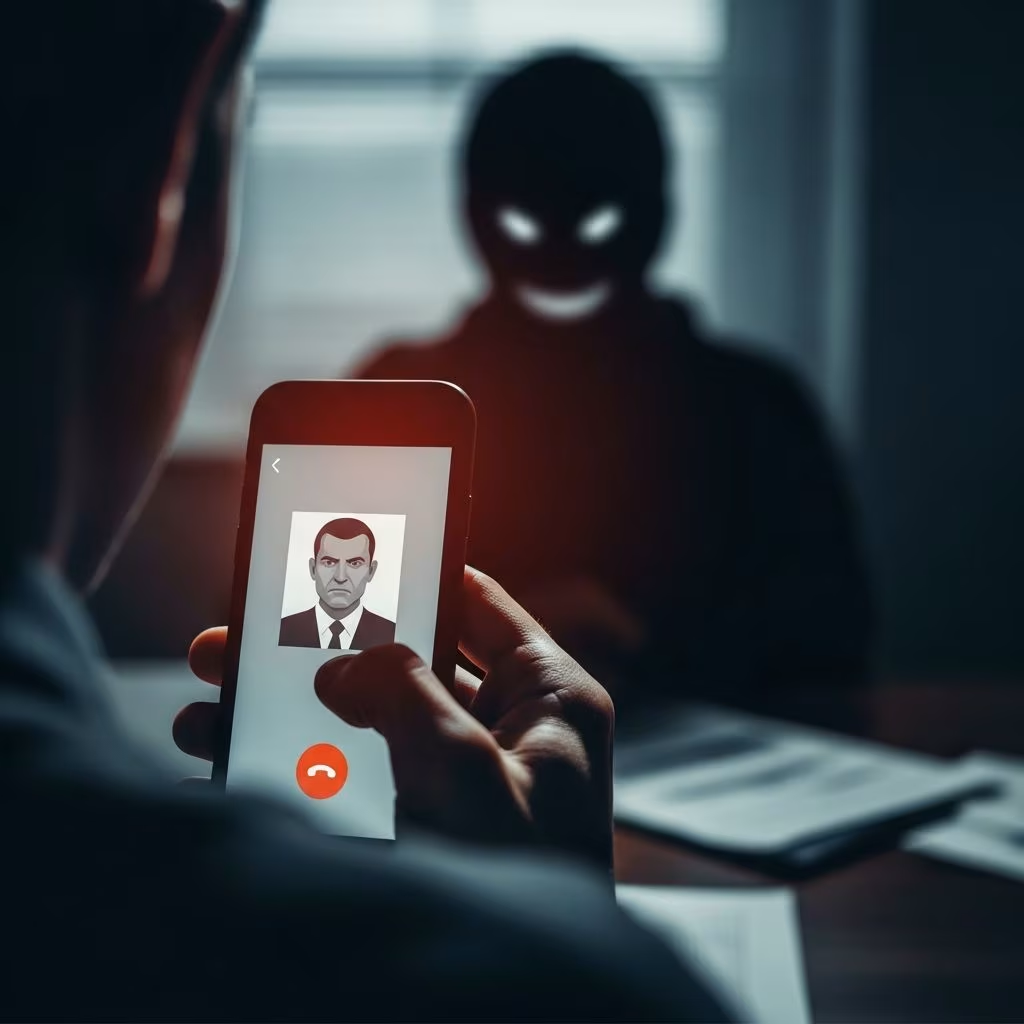
I Got a Call Saying I Was Under Investigation. It Was a Scam.
Phone scams targeting consumers have reached alarming levels, with scammers increasingly impersonating government officials and law enforcement to pressure victims into sending money. One of the most prevalent and convincing scams involves callers claiming you are under investigation for crimes you didn’t commit. These sophisticated schemes exploit fear and urgency to manipulate victims into making hasty financial decisions. Understanding how these scams work is crucial for protecting yourself and your family.
Understanding the Investigation Scam
The investigation scam represents one of the most convincing fraud schemes circulating today. Scammers place calls to unsuspecting individuals, claiming they are law enforcement officers or federal agents conducting an investigation into the victim’s identity, financial accounts, or alleged criminal activity. The caller may reference real-sounding case numbers, warrant information, and personal details to establish credibility.
The FBI explicitly warns consumers that “The FBI does not call private citizens threatening arrest or requesting money.” This simple statement is one of the most important defense mechanisms against these scams, yet many victims fail to recognize this red flag during the stressful moments of receiving such a call.
How the Scam Unfolds
These scams typically follow a structured pattern designed to manipulate victims through fear and perceived authority. Understanding each stage helps you identify the scam before you become a victim.
The Initial Contact
The scammer initiates contact via phone call, often using caller ID spoofing technology to display an official government phone number. They may claim to represent the U.S. Marshals Service, FBI, IRS, or Customs and Border Protection. The caller ID might show what appears to be an official government office number, lending false legitimacy to the call.
Establishing Credibility
To convince you they are legitimate, scammers provide personal information they’ve obtained through data breaches, social media, or public records. They may reference your old addresses, phone numbers, Social Security number, or other identifying details. They often provide official-sounding case numbers, warrant numbers, and badge numbers to further authenticate their false claims.
Creating Urgency and Fear
The scammer then alleges that you are involved in criminal activity such as identity theft, failing to appear for jury duty, suspicious banking transactions, or possession of illegal substances. They warn that if you don’t act immediately, you will be arrested. This creates intense psychological pressure that clouds judgment and encourages rushed decision-making.
Demanding Payment
Once fear is established, the scammer demands payment to resolve the investigation. They may claim you need to pay a fine, processing fee, or verification amount. The payment methods demanded by scammers are deliberately chosen to be difficult to reverse. Common payment methods include:
- Bitcoin and other cryptocurrency deposits
- Prepaid gift cards or debit cards
- Wire transfers through services like Western Union
- Direct bank transfers
- Target, iTunes, or Google Play cards
Red Flags and Warning Signs
Legitimate law enforcement agencies have established protocols that differ significantly from scammer tactics. Learning these distinctions is essential for protecting yourself.
Government Agencies Will Never:
- Call threatening arrest or demanding immediate payment
- Ask for credit card, debit card, or gift card numbers
- Request wire transfers or bitcoin deposits
- Demand payment via untraceable methods
- Tell you to keep the call secret
- Request photos of your driver’s license or personal documents
- Ask you to verify personal information through email or text
Common Scammer Tactics to Recognize:
- Caller ID spoofing that displays official government numbers
- Creating time pressure by threatening immediate arrest
- Using real government terminology and case numbers
- Requesting you stay on the phone while transferring money
- Instructing you to keep the conversation confidential
- Offering “settlements” or “alternate dispute resolution” options
- Claiming you need to act before speaking to a lawyer
Recent Variations of Investigation Scams
Scammers continuously evolve their tactics to remain effective. Several variations have emerged recently, each targeting different fears and vulnerabilities.
The Social Security Number Scam
Scammers claim your Social Security number has been compromised and linked to criminal activity. They demand immediate payment to “verify” your identity or prevent further damage. They may reference stolen personal information to convince you of the threat’s legitimacy.
The Customs and Border Protection Scam
In this variation, scammers impersonate CBP officers and claim packages containing illegal substances addressed to you have been intercepted at the border. They allege suspicious banking transactions and threaten prosecution unless you pay immediately. They provide fake case numbers and warrant information to establish false credibility.
The Sheriff’s Office Scam
Scammers impersonate local sheriff’s office personnel, claiming you have unpaid parking tickets, court fines, or other local violations. They threaten immediate arrest if payment isn’t made within the hour.
The Impact on Victims
Investigation scams result in substantial financial losses. Victims have reported losses in the tens of thousands of dollars, and many lose their life savings in these schemes. Beyond financial damage, victims experience severe emotional trauma, embarrassment, and anxiety.
The Federal Trade Commission reports that Americans lost over $10 billion to scams in 2024, with phone scams representing a significant portion of this total. Robocalls and phone scams have surged 13% over two years, with 69% of people reporting they’ve received at least one scam call in the last six months.
Steps to Protect Yourself
During a Suspicious Call:
- Hang up immediately if the caller threatens arrest or demands payment
- Do not provide personal information to unknown callers
- Never confirm your Social Security number, banking details, or other sensitive information
- Don’t stay on the phone to “verify” information
- Ignore caller ID information as it can be spoofed
Verification Steps:
- Independently call the agency the person claims to represent using a number you find yourself
- Ask the caller for specific details and verify them through official channels
- Consult with a trusted person before taking any action
- Visit official government websites to check if there is any legitimate investigation
- Contact your local police department to report the call
Ongoing Protection:
- Register your number on the National Do Not Call Registry
- Use caller ID apps that identify known scam numbers
- Enable call filtering features on your phone
- Keep personal information private on social media
- Monitor your credit reports regularly for identity theft
- Freeze your credit with the three major credit bureaus
- Use strong, unique passwords for financial accounts
If You’ve Been Targeted
If You Received the Call But Didn’t Send Money:
Report the incident to the Federal Trade Commission at ReportFraud.ftc.gov and to your local FBI office. Provide details about the caller, phone number, case numbers mentioned, and any other identifying information. This helps law enforcement track patterns and identify scam networks.
If You Sent Money to a Scammer:
Act quickly, as the sooner you report the fraud, the better your chances of recovery. Take these immediate steps:
- Contact your bank or payment service immediately
- If you used a wire transfer service, contact them to attempt to recall the funds
- For cryptocurrency, contact the exchange and file a report
- For gift cards, contact the retailer’s fraud department
- File a report with the Federal Trade Commission
- File a report with your local police department
- Contact the FBI’s Internet Crime Complaint Center (IC3)
- Place a fraud alert on your credit file
- Monitor your accounts for unauthorized activity
Frequently Asked Questions
Q: Can the FBI or IRS call me about an investigation?
A: While these agencies may contact you by mail or through official court processes, they typically do not initiate contact via unsolicited phone calls threatening arrest or demanding immediate payment. If you receive such a call, it is almost certainly a scam.
Q: How do scammers get my personal information?
A: Scammers obtain personal information through data breaches, public records, social media oversharing, hacking, or simply making educated guesses. They may reference this information to convince you of their legitimacy.
Q: What should I do if I’m unsure whether a call is legitimate?
A: Always hang up and independently call the agency at a number you find yourself. Never use numbers provided by the caller, as they may connect you to the scammer’s associates.
Q: Can I recover money I sent to a scammer?
A: Recovery depends on the payment method used. Wire transfers and cryptocurrency are nearly impossible to recover, while some credit card or bank transfers may be reversible if you act quickly. Contact your financial institution immediately.
Q: What is caller ID spoofing?
A: Caller ID spoofing is a technology that allows scammers to display a fake phone number on your caller ID, making it appear as though the call is coming from a legitimate government office. This is illegal but commonly used by scammers.
Q: Are there any phone carriers with better scam call protection?
A: T-Mobile has demonstrated superior spam and scam call blocking capabilities compared to other major carriers, identifying over 90% of calls and blocking six times as many scam calls as its nearest competitor. However, no carrier has achieved perfect accuracy yet.
Q: How can I protect my credit from identity theft?
A: Freeze your credit with the three major credit bureaus (Equifax, Experian, TransUnion), monitor your credit reports regularly, use strong passwords, and be cautious about sharing personal information online.
References
- U.S. Marshals, FBI Urge Public: Report Phone Scams — U.S. Marshals Service. 2019. https://www.usmarshals.gov/news/press-release/us-marshals-fbi-urge-public-report-phone-scams
- Scammers Use Fake Emergencies To Steal Your Money — Federal Trade Commission. 2024. https://consumer.ftc.gov/articles/scammers-use-fake-emergencies-steal-your-money
- FBI Internet Crime Complaint Center (IC3) — Federal Bureau of Investigation. 2024. https://www.ic3.gov
- Robocalls and Phone Scams Up 13% in Two Years — Money Magazine. 2024. https://money.com/more-scam-robocalls-cell-phones/
- This Cell Phone Carrier Is Best at Protecting You From Spam Calls — Money Magazine. 2024. https://money.com/cell-phone-carrier-spam-calls-t-mobile/
This article is general information, not personal financial advice. Consider your own situation, or speak with a licensed adviser, before acting on it.


