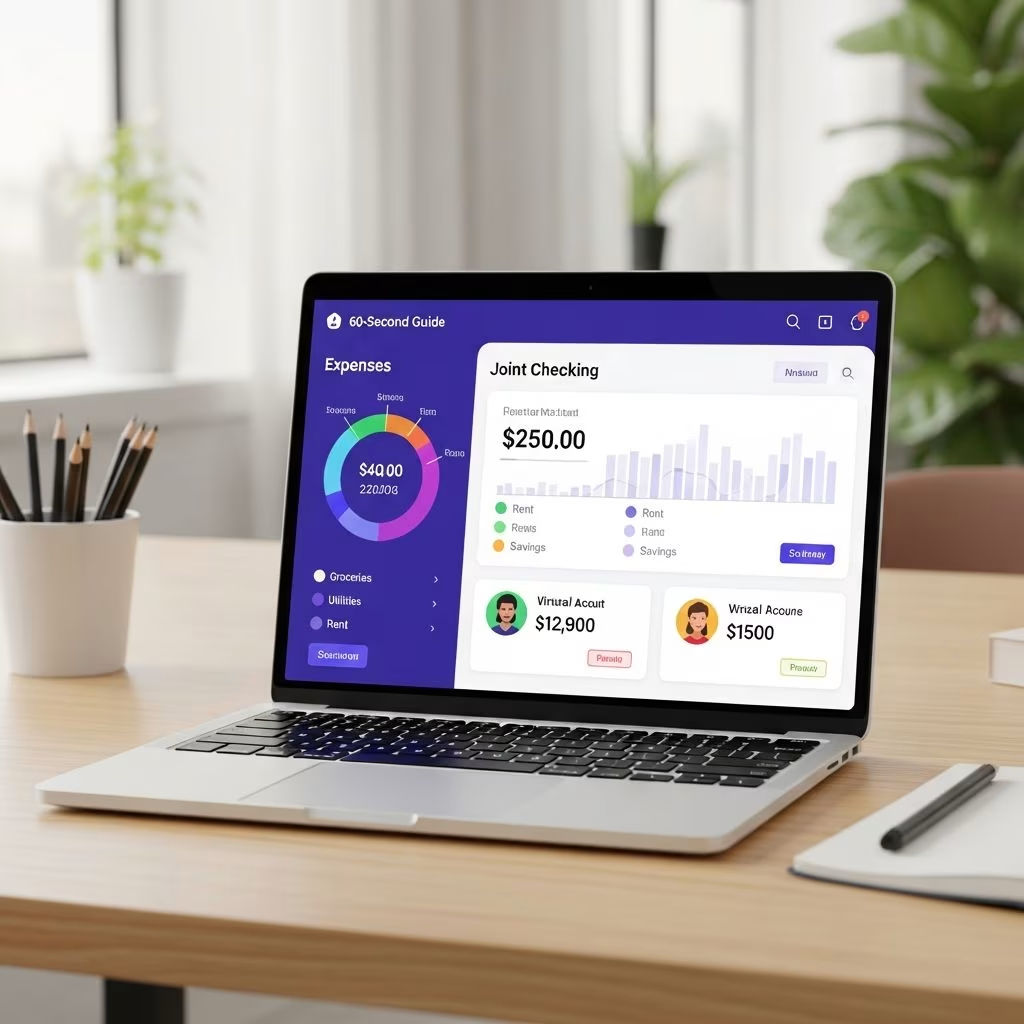
Joint checking accounts simplify shared expenses for couples, roommates, or families but require clear rules and communication to avoid conflicts. This guide distills key management strategies into actionable steps, drawing from best practices at major banks like TD Bank and Citi.
What is a Joint Checking Account?
A **joint checking account** is a bank account owned by two or more people, where each owner can deposit, withdraw, write checks, or use a debit card without the other’s permission. All parties share equal access and responsibility for the balance, including overdrafts.
Common for couples handling household bills or parents managing family expenses, these accounts promote transparency but demand trust. Unlike individual accounts, any owner can close it or spend freely, making upfront agreements essential.
Benefits and Risks of Joint Checking Accounts
Joint accounts streamline bill payments and build financial teamwork. Key benefits include:
- Simplified shared expenses: Pay rent, utilities, and groceries from one pot.
- Equal access: Both parties deposit salaries or transfer funds easily.
- Transparency: Real-time visibility into spending habits fosters accountability.
Risks involve potential overspending by one party, overdraft fees, or disputes during breakups. Each owner is liable for all debts, even if uninvolved.
| Pros | Cons |
|---|---|
| Easy bill splitting | Risk of unauthorized withdrawals |
| Promotes communication | Joint liability for overdrafts |
| Cost savings on fees | Complicated to close |
How to Set Up a Joint Checking Account
Opening one mirrors individual accounts but requires info from all owners. Steps include:
- Choose a bank: Compare fees, apps, and online tools. TD Bank offers robust monitoring via app.
- Gather documents: IDs, SSNs, addresses, proof of residence.
- Apply jointly: Online (15-20 mins) or in-branch. Select ‘joint’ option.
- Fund it: Make initial deposit; set up direct deposits.
- Customize: Order debit cards, enable alerts, link to savings.
Hybrid approach: Keep personal accounts for fun money alongside joint for bills.
Communicate and Establish Clear Guidelines
Success starts with honest talks on finances. Discuss spending habits, goals, and access rules before opening.
- Define access: Who checks balance? Who pays bills?
- Set review cadence: Weekly or monthly logins together.
- Agree on contributions: 50/50 or income-based via auto-transfers.
Regular money dates prevent surprises. Establish spending thresholds, e.g., consult over $100 purchases.
Agree on Expenses to Use the Account For
Limit to shared costs to avoid resentment. Common categories:
- Housing: Rent/mortgage, HOA fees.
- Utilities: Electric, water, internet, phone.
- Groceries: Household food and supplies.
- Transportation: Gas, car insurance, maintenance.
- Other: Vacations, kids’ school fees.
Exclude personal items like gifts or hobbies. Document in a shared note or app for reference.
Set a Budget Together
Joint budgeting aligns priorities. Process:
- Calculate income: Sum salaries, gigs.
- List expenses: Fixed (rent) vs. variable (dining out).
- Allocate savings: 20% to emergency fund.
- Track discretionary: Set fun money limits.
Tools like bank apps categorize spends automatically. Review monthly, adjust for life changes.
Monitor the Account Regularly
Check weekly via app or online banking. Focus on:
- Transactions: Spot fraud or anomalies.
- Patterns: Address impulse buys.
- Fees: Avoid ATM/maintenance charges.
TD Bank’s app enables 24/7 transfers, bill pay, and statements.
Watch for Overdraft Transactions
Overdrafts cost $30+, hitting both owners. Prevent with:
- Alerts: Low-balance notifications.
- Buffer: Keep $200-500 cushion.
- Opt-out: Disable overdraft coverage if offered.
Monitor diligently; one slip affects credit.
Decide What to Do with Extra Money
Surpluses build wealth. Options:
- Save: Transfer to high-yield savings or IRA.
- Debt paydown: Target high-interest loans.
- Fun fund: Short trips or date nights.
Prioritize security first, enjoyment second.
Closing a Joint Checking Account
If relationships end or needs change, close carefully:
- Open individuals: Redirect deposits/payments.
- Divide funds: Per contributions or agreement.
- Cancel autos: Bills, checks.
- Joint visit: Or online process; get confirmation.
Banks may charge early closure fees. Plan 1-2 weeks.
Frequently Asked Questions (FAQs)
What documents are needed to open a joint account?
Photo IDs, SSNs, addresses, sometimes proof of residence for all owners.
Can one person empty a joint account?
Yes, any owner can withdraw all funds legally.
Are joint accounts FDIC insured?
Yes, up to $250,000 per depositor, per bank.
How to handle unequal incomes?
Proportional contributions via auto-transfers maintain fairness.
What if we fight over transactions?
Banks may freeze or require joint sign-off; communication prevents this.
References
- How to Manage a Joint Checking Account — TD Bank. 2025. https://www.td.com/us/en/personal-banking/learning/how-to-manage-a-joint-account
- Joint Checking Accounts: What to Know in 2026 — Sunward. 2026-01-01. https://gosunward.org/articles/joint-checking-accounts-what-to-know-in-2026/
- Joint Bank Accounts: How They Work — Citi. 2024-06-15. https://www.citi.com/banking/personal-banking-guide/basic-finance/joint-bank-account
- How To Open a Joint Bank Account — PNC Insights. 2025. https://www.pnc.com/insights/personal-finance/spend/how-to-open-joint-bank-account.html
- What Is A Joint Bank Account? — Bankrate. 2025-03-10. https://www.bankrate.com/banking/what-is-a-joint-bank-account/
This article is general information, not personal financial advice. Consider your own situation, or speak with a licensed adviser, before acting on it.