

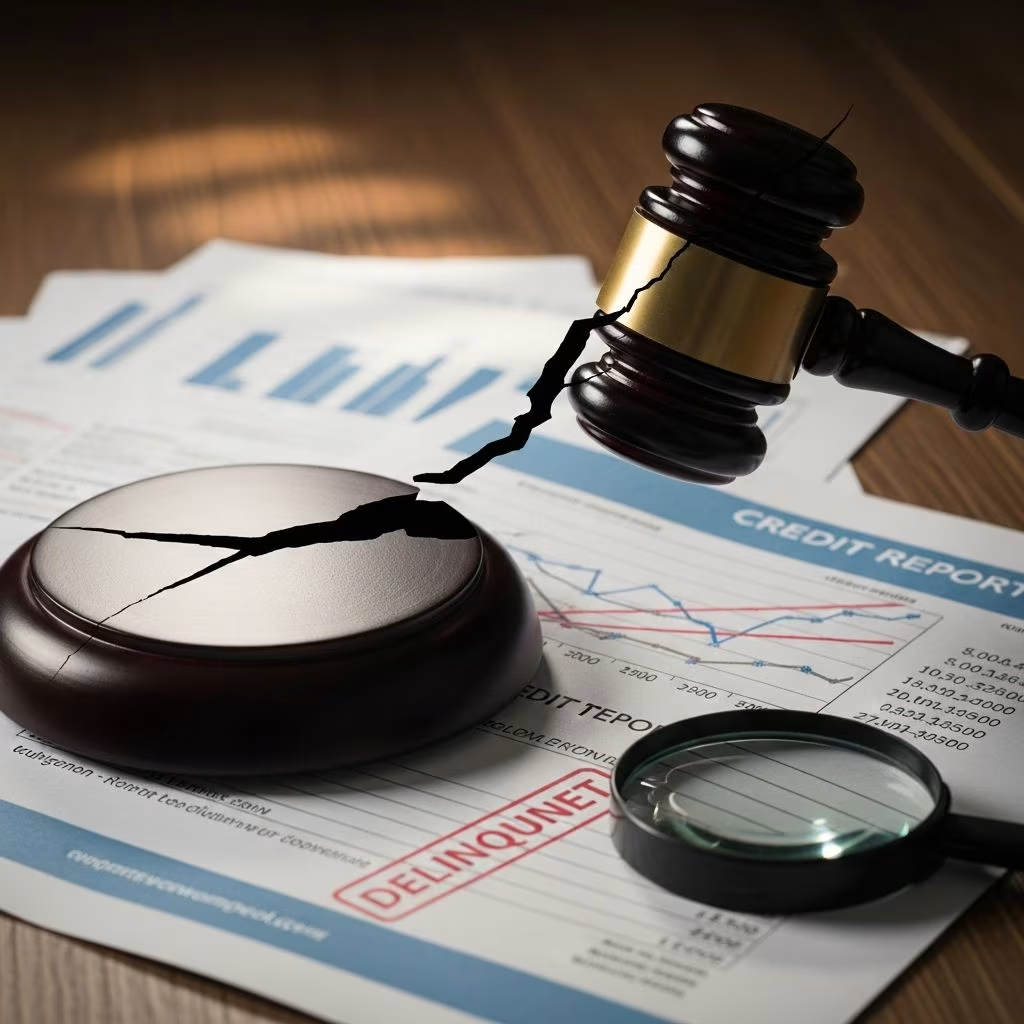
Court judgments represent formal decisions ordering debt repayment, stemming from unresolved creditor lawsuits. While once a staple of consumer credit reports, major changes have altered their visibility and direct influence on personal credit scores. This shift, effective from 2018, means judgments no longer factor into standard FICO or VantageScore calculations for individuals, yet indirect consequences persist through public records and lender scrutiny.
What Constitutes a Judgment?
A judgment arises when a creditor sues over unpaid debt and wins in court. The ruling mandates payment, often with added interest or fees. Types include civil judgments for consumer debts like medical bills or credit cards, distinct from criminal cases. Once entered, it becomes public, accessible via court databases.
- Civil judgments: Debt-related court orders.
- Tax liens: Government claims, similarly excluded from consumer reports.
- UCC liens: Business asset claims, appearing on commercial profiles.
These entries signal financial distress, prompting lenders to reassess risk even outside automated scoring.
Evolution of Judgment Reporting on Consumer Credit
Prior to April 2018, Equifax, Experian, and TransUnion included judgments on consumer credit reports for seven years from filing. This direct presence slashed scores dramatically—up to 200 points in severe cases—due to their status as top-tier negatives.
The Consumer Credit Reporting Changes Act prompted removal of civil judgments and tax liens from consumer files. Credit scoring models now ignore them entirely, as they are absent from bureau data used for FICO and VantageScore computations.
| Pre-2018 | Post-2018 |
|---|---|
| Judgments on consumer reports for 7 years | Excluded from consumer credit reports |
| Direct score drop (100-200+ points) | No direct impact on FICO/VantageScore |
| Visible to all lenders via bureaus | Public records searchable separately |
This table highlights the pivotal shift, benefiting consumers by preventing automatic penalties but not erasing real-world hurdles.
Indirect Ways Judgments Still Harm Your Finances
Absence from credit reports does not equate to invisibility. Judgments endure in public court records indefinitely in most jurisdictions, discoverable during manual underwriting. Mortgage providers, for instance, routinely scour these databases, often demanding satisfaction before approving loans.
Consequences extend beyond lending:
- Wage garnishment: Creditors can seize up to 25% of disposable income in many states.
- Bank levies: Funds frozen or withdrawn without notice.
- Rental denials: Landlords check public records, viewing judgments as red flags.
- Employment barriers: Some roles scrutinize financial history.
Indirect score damage occurs if enforcement disrupts payments elsewhere, spawning delinquencies that do tank scores.
Business Credit: Where Judgments Retain Power
Unlike consumer reports, business credit files from Dun & Bradstreet, Experian Business, and Equifax Business still list judgments. A single entry can plummet scores by 50+ points, signaling severe risk and blocking financing, supplier terms, or leases.
- Dun & Bradstreet: 10 years inactivity.
- Equifax Business: 7 years from filing.
- Experian Business: ~7 years.
Suppliers may demand cash payments; insurers hike premiums. Even alternative lenders balk at recent judgments.
Settling Judgments: Does Payment Erase the Damage?
Paying a judgment updates its status to “satisfied” in records, a milder mark than unpaid. However, for consumers, it remains off credit reports anyway. On business files, the paid notation lingers but appears less damning over time.
No immediate score boost follows payment on consumer profiles, as judgments aren’t scored. Yet, resolution halts collection actions, stabilizing finances and preventing secondary delinquencies. Lenders may view satisfied judgments more leniently during reviews.
Post-payment steps:
- Obtain court satisfaction document.
- Submit to bureaus if erroneously listed (pre-2018 remnants).
- Monitor public records for updates.
Strategies to Mitigate Judgment Effects
Proactive measures rebuild standing despite judgments:
- Negotiate settlements: Offer lump sums for reduced amounts or payment plans before court.
- Dispute inaccuracies: Vacate judgments via improper service proofs—consult attorneys.
- Build positive history: Timely payments, low utilization (under 30%) drive score gains.
- Secure secured cards: Prove reliability for gradual approvals.
- Monitor reports: AnnualCreditReport.com for free checks; dispute errors promptly.
Over time, fresh positive data overshadows past issues, especially as judgments age.
State Variations and Legal Nuances
Judgment durations and enforcement differ by state. New York retains them for seven years on reports (if applicable), with abstracts amplifying drops. Texas landlords often reject applicants due to abstracts. Illinois sees judgments as irresponsibility signals, complicating loans.
Federal rules standardize consumer exclusions, but state courts dictate public record retention—often permanent.
Frequently Asked Questions
Do judgments lower my credit score directly?
No, since 2018, consumer credit reports exclude them, so FICO/VantageScore algorithms disregard judgments.
Can I remove a judgment from public records?
Removal requires legal vacating for errors like improper notice; satisfaction doesn’t erase it.
How long do judgments stay on business credit?
Varies: up to 10 years on D&B, 7 on others, from filing or satisfaction.
Will a paid judgment help my loan application?
Yes, as a satisfied status shows resolution, improving lender perceptions over unpaid ones.
Should I ignore old judgments?
No—pay to stop garnishment and enhance applications, even if scores are unaffected.
Long-Term Financial Recovery Roadmap
Recovering post-judgment demands discipline:
| Timeline | Actions | Expected Outcomes |
|---|---|---|
| 0-6 Months | Settle judgment; dispute errors; budget strictly | Halt collections; stabilize cash flow |
| 6-12 Months | Consistent on-time payments; reduce debt | Score rise 50-100 points |
| 1-2 Years | Apply secured credit; diversify accounts | Access better rates; prime approvals |
| 2+ Years | Maintain low utilization; save emergency fund | Full recovery; judgment minimal factor |
This roadmap leverages time and habits for resilience.
Judgments test financial fortitude but don’t define futures. With strategic responses, individuals and businesses reclaim stability, underscoring prevention via timely debt management.
References
- How Judgments Affect Your Credit Score in NY — Graham & Borgese. 2025-07-01. https://www.grahamborgese.com/blog/2025/july/how-judgments-affect-your-credit-score-in-ny2/
- What Is a Judgment & Does It Affect Your Credit Score? — Nav. 2023-10-01. https://www.nav.com/blog/do-judgments-impact-my-business-credit-score-33104/
- How a Judgment Affects a Debtor’s Credit Score — Texas Collections. 2024-01-15. https://texascollections.com/affecting-debtors-credit-score/
- The Influence of a Civil Judgment on Your Credit Score — NN Legal. 2024-05-20. https://www.nnlegal.com/dupage-county-attorney/the-influence-of-a-civil-judgment-on-your-credit-score
- Judgments No Longer Appear on a Credit Report — Experian. 2023-11-10. https://www.experian.com/blogs/ask-experian/judgments-no-longer-included-on-credit-report/
This article is general information, not personal financial advice. Consider your own situation, or speak with a licensed adviser, before acting on it.


