

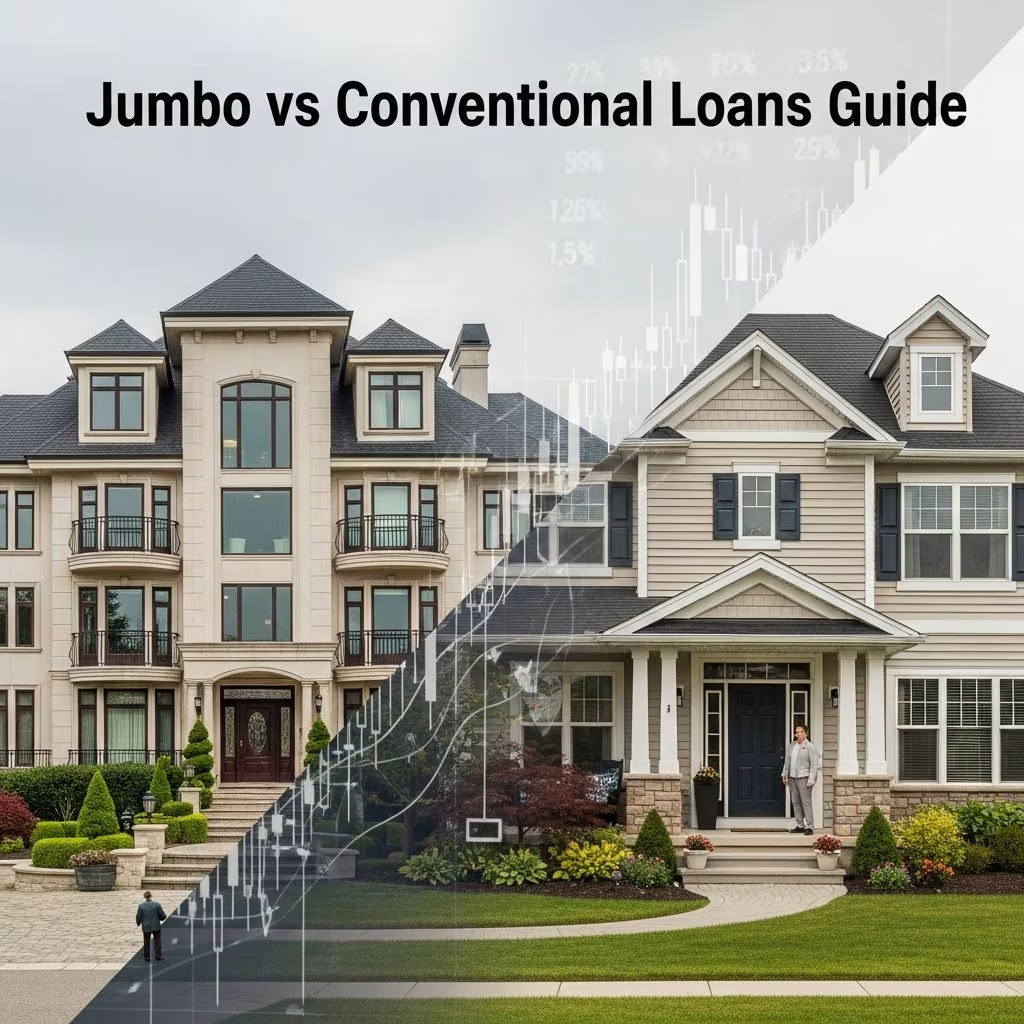
Navigating mortgage options requires understanding the core distinctions between **jumbo loans** and **conventional loans**. Jumbo loans finance properties exceeding federal limits set by the Federal Housing Finance Agency (FHFA), while conventional loans stay within those boundaries, offering broader accessibility. This guide breaks down definitions, qualifications, costs, and strategies to help you select the best path for your home purchase.
Defining Mortgage Loan Categories
Every year, the FHFA establishes **conforming loan limits** that dictate what qualifies as a standard mortgage. For 2025, the baseline stands at **$806,500** for most U.S. areas, rising to **$1,209,750** in high-cost regions. Loans at or below these thresholds are conforming conventional mortgages, purchasable by Fannie Mae and Freddie Mac, which provides lenders security and keeps terms favorable.
In contrast, **jumbo loans** surpass these caps, funding luxury estates or homes in pricey markets without government-sponsored enterprise backing. This classification as non-conforming elevates lender risk, influencing everything from approval criteria to interest pricing. Both types fall under conventional loans broadly, but jumbo status triggers unique underwriting standards.
Qualification Standards Compared
Securing approval hinges on financial strength, with jumbo options demanding more rigorous proof of stability.
Credit Profile Expectations
Conventional loans accommodate credit scores starting around **620**, enabling more borrowers entry, especially first-timers via specialized programs. Jumbo lenders, however, typically insist on **700+** to offset exposure on multimillion-dollar amounts. Stronger scores unlock better terms across both.
Debt-to-Income Thresholds
Your **DTI ratio**—monthly debts divided by income—faces leniency in conventional products, often up to **50%** via automated systems. Jumbo approvals cap at **43-45%**, occasionally stretching to 50% for elite profiles with ample reserves.
Down Payment Demands
- Conventional: As low as **3%**, ideal for entry-level buyers, though under 20% triggers private mortgage insurance (PMI).
- Jumbo: Minimums hover at **10-20%**, with 25%+ preferred for optimal rates and PMI avoidance.
Documentation and Reserves
Expect standard paperwork for conventional: recent tax returns, pay stubs. Jumbo scrutiny intensifies—two years’ taxes, profit/loss for self-employed, plus **6-24 months’ reserves** covering payments. Conventional may require minimal liquidity, up to six months if risks appear.
Interest Rate Dynamics
Historically, jumbo rates exceed conventional due to absent backing, but market shifts and premium borrower pools have narrowed gaps. Qualified jumbo applicants with robust profiles sometimes secure equal or lower rates, driven by private investor competition. Differences range from negligible to **0.25-0.50%**, compounding significantly over 30 years.
Rate determinants include credit, down payment size, DTI, loan scale, and economic conditions. Jumbo pricing remains bespoke, urging rate shopping across lenders.
Comprehensive Feature Comparison
| Feature | Conventional Loan | Jumbo Loan |
|---|---|---|
| Loan Limit (2025 baseline) | Up to $806,500 ($1,209,750 high-cost) | Exceeds limits, often millions |
| Min Credit Score | 620+ | 700+ |
| Down Payment | 3-20% | 10-25%+ |
| Max DTI | Up to 50% | 43-45% (up to 50% exceptional) |
| Cash Reserves | 0-6 months | 6-24 months |
| PMI Requirement | <20% down | Avoided at 20%+ |
| Government Backing | Yes (Fannie/Freddie) | No |
| Typical Rates | Competitive baseline | Similar or slightly higher |
This table synthesizes data from leading sources, highlighting jumbo’s elevated barriers.
Expense Breakdown: Beyond the Principal
Jumbo pursuits incur steeper ancillary costs: elevated closing fees from larger scales, potential dual appraisals (though innovations like certain smart loans waive seconds), and PMI risks if down payments falter. Conventional paths minimize these, with accessible 3% programs offsetting insurance via equity buildup.
Ideal Scenarios for Each Loan Type
| Buyer Profile | Recommended Loan | Rationale |
|---|---|---|
| Property under limits, limited savings | Conventional | Low down payment entry, flexible quals |
| Luxury home over limits | Jumbo | Sole financing avenue |
| High-income, strong credit, big equity | Jumbo | Potentially superior rates |
| First-time or moderate finances | Conventional | Lower hurdles, govt support |
| VA-eligible high-value buy | VA Jumbo | 0% down possible with entitlement |
Strategic Steps for Application Success
- Pre-qualify early: Gauge eligibility via soft pulls without credit hits.
- Boost credentials: Elevate score, reduce debts, amass reserves.
- Compare providers: Rates vary; pit multiple quotes.
- Explore hybrids: High-balance loans bridge near-limit gaps.
- Lock rates wisely: Time amid volatility.
Navigating High-Cost Area Nuances
In pricey locales like coastal metros, elevated FHFA caps expand conventional viability, but true luxury still demands jumbo. Local market dynamics—inventory, appreciation—affect choices, with jumbos suiting investors eyeing premium assets.
Frequently Asked Questions
What sets the 2025 conforming limit?
FHFA annually adjusts based on housing trends; 2025 baseline is $806,500, higher in select areas.
Can jumbo rates undercut conventional?
Yes, for top-tier borrowers, due to investor demand and risk mitigation.
Is PMI unavoidable on jumbos?
No, 20%+ down eliminates it; otherwise, lender-placed options apply.
How much reserves for jumbo approval?
Typically 6-12+ months, scaling with loan size and profile.
Self-employed jumbo challenges?
Intense: CPA statements, extended tax history required.
Market Trends and Future Outlook
Post-pandemic, jumbo volumes surged with luxury demand, narrowing rate spreads. Persistent inflation or policy shifts could recalibrate FHFA limits, impacting boundaries. Borrowers benefit from monitoring FHFA announcements and lender innovations reducing jumbo frictions.
For personalized advice, consult certified mortgage professionals. This analysis equips you to weigh options confidently amid evolving financing landscapes.
References
- Jumbo vs. conventional loan: Key differences — Better Mortgage. 2025. https://better.com/content/jumbo-vs-conventional-loan
- Jumbo vs. Conventional Loans — Arkansas Federal Credit Union. 2025. https://www.afcu.org/learn/home-mortgage/jumbo-vs-conventional-loan/
- Jumbo Vs. Conventional Loans: What’s The Difference? — Bankrate. 2025. https://www.bankrate.com/mortgages/jumbo-vs-conventional-loans/
- Jumbo loan vs. conventional loan: What’s the difference? — Rocket Mortgage. 2025. https://www.rocketmortgage.com/learn/jumbo-vs-conventional-loan
- Jumbo vs. Conventional Loans — LendingTree. 2025. https://www.lendingtree.com/home/mortgage/high-balance-loan-vs-jumbo-loan/
- Jumbo vs Conventional Loan: How They Compare — Zillow. 2025. https://www.zillow.com/learn/jumbo-vs-conventional-loan/
This article is general information, not personal financial advice. Consider your own situation, or speak with a licensed adviser, before acting on it.


