

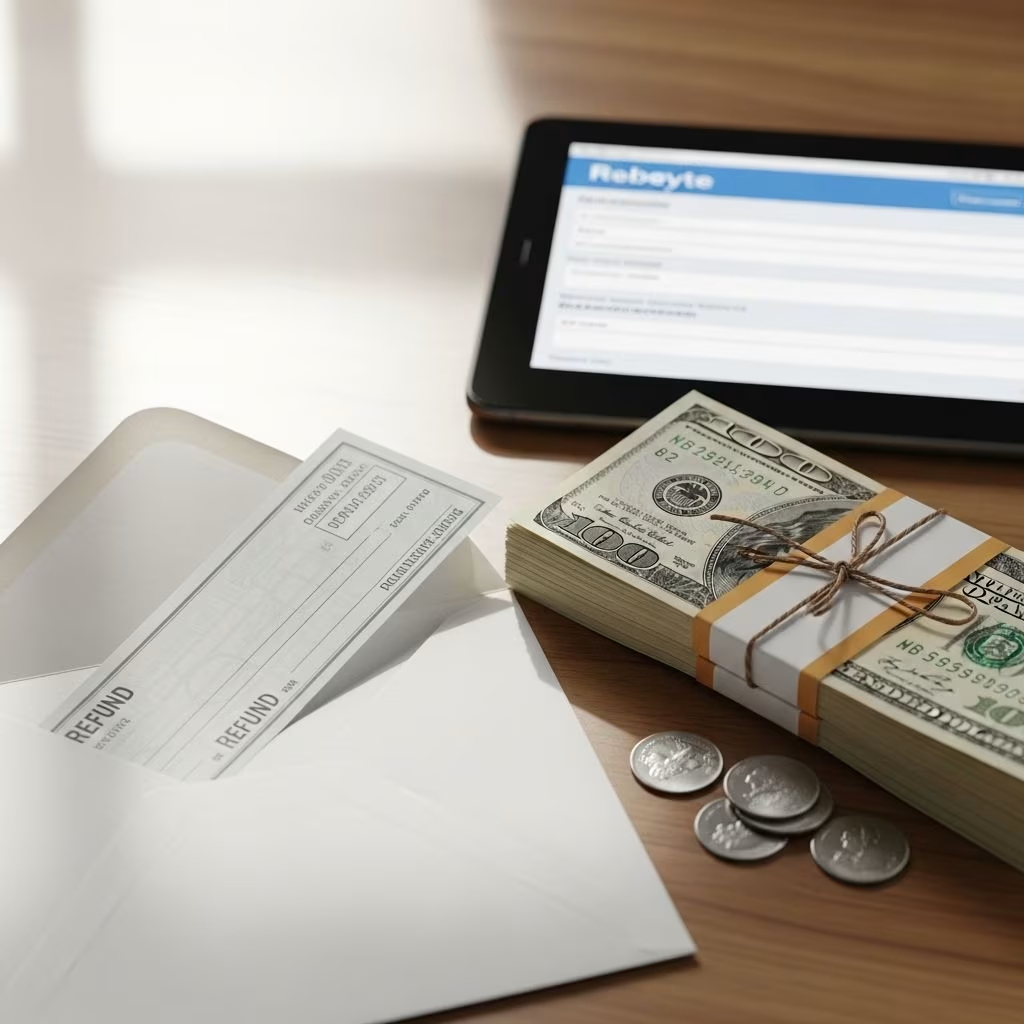
Mail-in rebates offer a smart way to save money on everyday purchases, from groceries to electronics. By mailing in proof of purchase, you can receive cash back or discounts weeks or months later. However, success requires attention to detail—many forfeit rebates by overlooking fine print. This guide covers everything from finding rebates to cashing in, helping you maximize returns.
What Is a Mail-In Rebate?
A **mail-in rebate** is a promotional offer where consumers buy a qualifying product, then submit paperwork by mail to receive a refund, often $5 to $50 per item. Manufacturers use them to boost sales and clear inventory. Unlike instant discounts, rebates come later, but they can stack with coupons for deeper savings.
Common in categories like health products, tools, and appliances, rebates appeal to budget-conscious shoppers. For example, buying a participating shampoo might yield $3 back. High-value rebates on big-ticket items, such as appliances, can save hundreds. According to the Council of Better Business Bureaus, billions in rebates go unclaimed annually due to improper submissions.
How Mail-In Rebates Work
The process is straightforward but time-sensitive:
- Purchase a qualifying product: Check packaging or ads for rebate offers. UPC codes must match exactly.
- Fill out the rebate form: Download or cut from box; include name, address, email, and purchase details.
- Include proof: Original receipt (not photocopy), UPC barcode from package.
- Mail everything: Use provided envelope or address; postmark by deadline.
- Wait for payment: Checks arrive in 8-12 weeks via mail or digital transfer.
Rebates often limit one per household or product. Track submissions with a spreadsheet noting product, date bought, mailed, and expected payout.
Where to Find the Best Mail-In Rebates
Spot rebates on product packaging, store displays, Sunday newspaper inserts, or online. Key sources include:
- Manufacturer websites: Brands like Schick or Air Wick list active promotions.
- Retailer portals: Home Depot’s Rebate Center offers deals on appliances and tools.
- Coupon sites: Passionate Penny Pincher tracks rebates with tips.
- Store flyers: Grocery chains like Kroger highlight weekly offers.
Focus on high-value items. For instance, Home Depot provides 11% rebates on select in-store purchases. Stack with sales for optimal savings.
Step-by-Step Guide to Submitting a Mail-In Rebate
Follow these proven steps to ensure approval:
- Print or cut the form immediately: Rebate offers expire quickly—print upon spotting one.
- Read all instructions: Note eligibility, deadlines (often 30-60 days post-purchase), and required items.
- Gather documents: Keep original receipt safe; trim UPC carefully without tearing.
- Complete accurately: Use black ink, legible handwriting. Include phone/email for questions.
- Mail correctly: Affix proper postage; use certified mail for high-value rebates ($20+).
- Track progress: Note postmark date; follow up if no response after 12 weeks.
A table of common submission requirements:
| Item | Required? | Tips |
|---|---|---|
| Rebate Form | Always | Fill completely; no erasures. |
| Original Receipt | Usually | Highlight purchase; keep copy. |
| UPC Code | Often | Cut cleanly from box. |
| Product Package | Sometimes | Seal in envelope if specified. |
| Postage | Always | First-class; self-addressed stamped envelope common. |
Common Mistakes That Cost You Rebate Money
Avoid these pitfalls—responsible for 40% of denials per consumer reports:
- Missing deadlines: Postmark must precede expiration; buy early.
- Incomplete forms: Forgetting address or ZIP code voids claims.
- Photocopied receipts: Originals required; scan for records only.
- Wrong UPC: Mismatch disqualifies; double-check.
- Insufficient postage: Causes return; calculate weight.
- No proof of purchase date: Receipt must show qualifying date.
Pro tip: Submit multiple rebates together to save on envelopes/postage, but verify separate deadlines.
Real-Life Examples of Successful Mail-In Rebates
Shoppers report big wins:
- Health & Beauty: $10 back on two Schick razors after buying during sale.
- Tools: Home Depot’s 11% on a $500 HVAC unit netted $55.
- Groceries: $5 per Air Wick refill, stacking to $25/year.
- Electronics: Printer ink rebates yielding 20% cash back.
One user shared: “Submitted 12 rebates from grocery hauls—got $78 back over three months without hassle.” Track to turn small savings into substantial totals.
Tips to Maximize Your Rebate Savings
Elevate your strategy:
- Stack deals: Use coupons + sale price + rebate. Example: $9.99 item – $2 coupon – $5 rebate = $2.99 net.
- Buy in bulk: Eligible for multiple rebates if per-item limits allow.
- Join loyalty programs: Some retailers like Home Depot auto-apply rewards.
- Digital alternatives: Apps like Ibotta offer similar instant rebates.
- Share with friends: Split household limits by submitting separately.
Annual savers report $200+ from consistent rebate hunting.
Mail-In Rebates vs. Other Savings Methods
| Method | Pros | Cons | Best For |
|---|---|---|---|
| Mail-In Rebates | High value, post-purchase | Wait time, effort | Planned buys |
| Coupons | Instant, easy clip | Lower value | Groceries |
| Cashback Cards | Automatic rewards | Requires spending | Everyday |
| Sales | Large discounts | Unpredictable | Big items |
Rebates shine for targeted savings on promoted products.
Frequently Asked Questions (FAQs)
What if my rebate check doesn’t arrive?
Wait 12-14 weeks, then contact the listed address/phone with proof of submission. Certified mail helps prove mailing.
Can I submit rebates online?
Some brands offer digital uploads; check form. Traditional mail-ins remain common for verification.
Are rebates taxable?
No, as purchase refunds. Large amounts (>$600) may trigger 1099 forms from issuers.
How long do I keep receipts?
Until rebate arrives + 30 days for disputes. Shred securely after.
Do rebates expire if unclaimed?
Yes, follow up promptly. Some states regulate processing times.
Start Rebating Today
Mail-in rebates put real money back in your pocket with minimal effort. Scan shelves next shop, print forms, and submit meticulously. Over time, these savings add up—empowering smarter spending in 2026 and beyond.
References
- Complaint Trends: Rebate Processing Delays — Council of Better Business Bureaus. 2024-06-15. https://www.bbb.org/article/news-releases/18911-bbb-tip-mail-in-rebates
- Consumer Guide to Rebates — Federal Trade Commission (FTC). 2023-11-01. https://consumer.ftc.gov/articles/mail-mail-fraud
- Rebate Center — The Home Depot. 2025-12-01. https://www.homedepot.com/c/rebate_center
- Mail-in Rebates: Tips and Current Offers — Passionate Penny Pincher. 2025-10-20. https://passionatepennypincher.com/mail-in-rebates-6-tips-to-help-you-get-started/
- Rebates and Refunds: What Consumers Need to Know — Consumer Reports. 2024-03-12. https://www.consumerreports.org/money/savings/rebates/
This article is general information, not personal financial advice. Consider your own situation, or speak with a licensed adviser, before acting on it.


