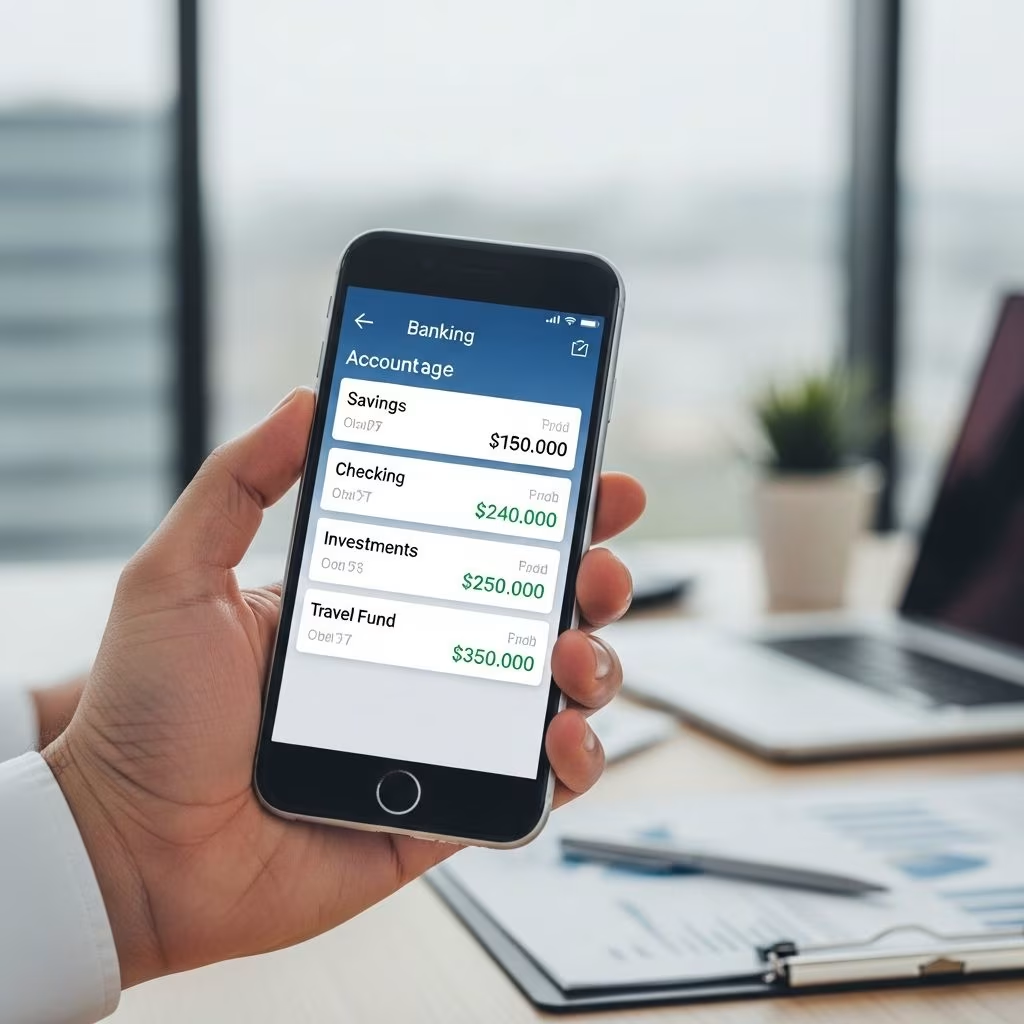
Handling finances across several bank accounts can enhance organization and goal achievement, but it demands a structured approach to prevent confusion and fees. This guide explores practical methods to streamline oversight, leverage technology, and maintain financial health.
Why Consider Multiple Bank Accounts?
Maintaining more than one bank account offers distinct advantages for personal finance management. It enables clear separation of funds for various purposes, such as daily spending, emergencies, and specific savings goals, reducing the risk of overspending from a single pool. Financial experts note that this setup promotes disciplined budgeting by mimicking physical cash envelopes digitally.
Additionally, different accounts can capitalize on varying interest rates or promotional offers from banks. For instance, parking emergency funds in a high-yield savings account maximizes returns while keeping transactional funds in a no-fee checking account. This diversification also provides a safety net; if one account faces issues like fraud, others remain unaffected.
Defining Clear Purposes for Each Account
Assigning dedicated roles to accounts is foundational. Start with an **income account** for incoming paychecks, acting as the central hub before funds are distributed. Next, designate a **spending account** for routine bills and groceries to monitor daily outflows easily.
Further, create purpose-specific savings accounts: one for **emergencies** (aim for 3-6 months of expenses), another for **short-term goals** like vacations, and a third for **long-term objectives** such as home down payments. Businesses or freelancers benefit from a separate **business account** to delineate personal and professional transactions, simplifying tax preparation.
- Income Account: Receives direct deposits; minimal activity beyond transfers.
- Spending Account: Covers essentials like utilities and dining.
- Emergency Fund: Untouched except in crises; high-yield preferred.
- Goal Accounts: Labeled by target (e.g., ‘Car Fund’).
- Business Account: For self-employed income and expenses.
This categorization, inspired by methods like the ‘Hi-5’ system, ensures intentional money use and curbs impulse spending.
Leveraging Technology for Unified Oversight
Technology bridges the gap when accounts span institutions. **Consolidated dashboards** aggregate balances, transactions, and net worth from banks, investments, and even crypto holdings in one view, eliminating manual logins. Tools like these update in real-time, offering asset allocation insights and beneficiary designations for estate planning.
Bank-specific apps excel for single-institution accounts, providing overviews and alerts for low balances or unusual activity. For multi-bank setups, budgeting apps link externally, enabling holistic tracking. Prioritize apps with strong security, regular updates, and positive reviews.
| Tool Type | Best For | Key Features |
|---|---|---|
| Bank App | Single Bank | Account overview, bill pay, alerts |
| Budgeting App | Multiple Banks | Linking, categorization, reports |
| Dashboard Tool | Comprehensive View | Net worth, crypto tracking, inheritance tools |
Color-code or label accounts in apps for quick identification, and set custom notifications to stay proactive.
Implementing Automation for Effortless Management
Automation minimizes manual effort. Configure **direct deposit splits** if your employer supports it, routing percentages of paychecks to designated accounts automatically (e.g., 50% to spending, 20% to savings). For non-splittable deposits, schedule recurring transfers on payday from the income account.
Enroll in **automatic bill pay** from the appropriate spending account to ensure timely payments without overdraft risks. Reconcile accounts monthly using ERP-like modules or apps that match statements against transactions for accuracy. Limit inter-account transfers to reduce complexity and fees.
Monitoring Balances and Avoiding Common Pitfalls
Regular balance checks prevent fees and surprises. Schedule weekly ‘money dates’ to review statements, adjust allocations, and verify automations. Track via dashboards to spot trends like declining emergency funds early.
Avoid **excess cash holdings**, as inflation erodes value. Aim to invest surplus beyond immediate needs in higher-return options. Watch for dormant accounts incurring fees; consolidate or close them after updating linked payments and checking penalties.
Rebalance periodically: Assess goals, income changes, and account performance, then transfer funds accordingly. Update dashboards post-adjustments.
Enhancing Security Across Accounts
Multiple accounts amplify fraud risks, so enable two-factor authentication, unique passwords, and transaction alerts everywhere. Use distinct debit card designs or stickers for visual separation at point-of-sale.
Review terms regularly for policy changes via bank news sections, adjusting strategies as needed (e.g., shifting from fee-hiking accounts). Designate trusted contacts in dashboard tools for legacy protection.
Ideal Number of Accounts and Simplification
Five accounts often suffice for most: income, spending, emergency, short-term, long-term. More can overwhelm; periodically audit for redundancy. Online platforms aid oversight but don’t justify excess accounts.
Stick to budgets, plan for large expenses via dedicated pots, and separate shared finances for clarity.
Frequently Asked Questions
Is it wise to have multiple checking accounts?
Yes, for categorizing expenses and curbing overspending, provided you use tools for tracking.
How often should I review my accounts?
Weekly for balances, monthly for reconciliations.
Can multiple accounts hurt my credit?
No direct impact, but inactivity might signal issues to lenders indirectly.
What if accounts are at different banks?
Use aggregating apps for unified views.
Should I close unused accounts?
Yes, after transferring funds and updating links to avoid fees.
References
- The Ultimate Guide to Managing Multiple Bank Accounts Like a Pro — Kubera. 2023. https://www.kubera.com/blog/manage-multiple-bank-accounts
- Does It Make Sense To Have Multiple Checking Accounts? — Sunward. 2024. https://gosunward.org/articles/multiple-checking-accounts/
- 5 Practical Tips for Managing Multiple Banking Tools and Accounts — Artsyltech. 2023. https://www.artsyltech.com/blog/5-practical-tips-for-managing-multiple-banking-tools-and-accounts
- 3 Tips To Help You Manage Multiple Bank Accounts — First Alliance Credit Union. 2024. https://www.firstalliancecu.com/blog/3-tips-to-help-you-manage-multiple-bank-accounts
- Easily Handle Multiple Bank Accounts and Reconciliation — GoVirtualOffice. 2023. https://govirtualoffice.com/easily-handle-multiple-bank-accounts-and-reconciliation/
- How to manage your finances with multiple accounts — Fulton Bank. 2024. https://www.fultonbank.com/Education-Center/Saving-and-Budgeting/How-to-manage-your-finances-with-multiple-accounts
This article is general information, not personal financial advice. Consider your own situation, or speak with a licensed adviser, before acting on it.