

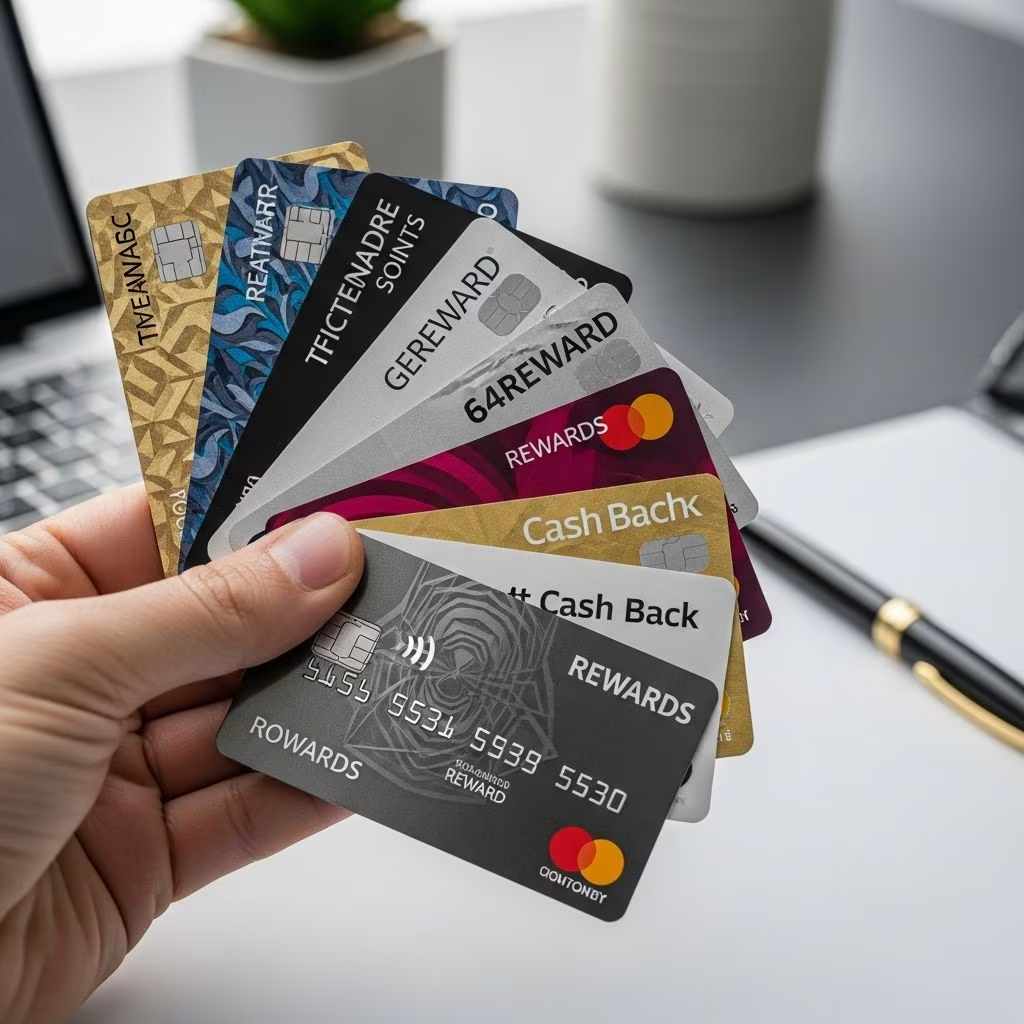
Handling several rewards credit cards can supercharge your earnings on everyday spending, but it requires discipline to avoid chaos. With the right approach, you can earn more points, miles, or cash back while safeguarding your financial health and credit score.
Why Pursue Multiple Rewards Cards?
Rewards cards offer accelerated benefits in specific categories like travel, dining, or groceries. By holding several, you align purchases with optimal earning rates, potentially boosting returns significantly. For instance, one card might provide 5% back on flights, while another delivers 4% on gas. This diversification amplifies value without increasing overall spending.
Additionally, maintaining multiple accounts can enhance your credit profile if managed well. Diverse accounts contribute to a richer credit mix, a factor in scoring models, and spread utilization across limits for lower ratios.
Assess Your Capacity Before Adding Cards
Not everyone thrives with a wallet full of cards. Start by evaluating your organizational skills and financial habits. Signs you’re ready include consistent on-time payments, a solid budget, and comfort tracking expenses digitally.
Limit yourself to 3-5 active cards initially. More can lead to oversight, especially if due dates vary. Use this table to gauge readiness:
| Factor | Green Light | Caution |
|---|---|---|
| Payment History | 100% on-time last 12 months | Any lates in past year |
| Budget Awareness | Track spending monthly | Spend exceeds income often |
| Tech Comfort | Use apps for finance | Prefer paper statements |
| Credit Utilization | Under 10% average | Over 30% regularly |
Build a Tracking System from Day One
Centralize information on all cards using a spreadsheet, app, or notebook. Log details like annual fees, bonus categories, due dates, and welcome offers. Apps like Mint or YNAB aggregate accounts for real-time views of balances and rewards.
- Essential Columns: Card name, issuer, limit, APR, rewards rate per category, fee due date, statement close date.
- Weekly Review: Check balances and pending transactions to catch issues early.
- Color-Code: Highlight high-fee cards or those nearing utilization thresholds.
Personal finance tools often send alerts for due dates or large charges, reducing manual effort.
Assign Strategic Roles to Each Card
Treat cards like tools in a toolbox—each for a job. Match spending to highest rewards:
- Groceries and gas: Everyday bonus cards (3-6% back).
- Travel bookings: Airline or hotel co-branded (3-5x points).
- Dining and entertainment: Restaurant specialists (4%+ cash back).
- Everything else: Flat-rate 1.5-2% cards.
Before purchases, pause: “Which card maximizes this?” This habit alone can double rewards yield. Track purposes in your system to reinforce usage.
Streamline Payments for Effortless Compliance
Automation is your ally. Set autopay for full balances where possible to dodge interest entirely. For minimums only, pair with manual full payments.
Align due dates to one “payday” monthly by contacting issuers—most allow changes online or via phone. This consolidates effort.
- Multiple Payments: Pay weekly/bi-weekly to monitor spending and keep utilization low.
- Alerts: Enable texts/emails for due dates, 80% utilization, or suspicious activity.
Low utilization (under 30%, ideally 1-10%) bolsters scores, as it signals control.
Protect Physical Cards and Prevent Fraud
Don’t carry all cards daily—risk of loss or theft rises. Stash infrequently used ones securely at home. Use digital wallets for frequent access.
Review statements bi-weekly for anomalies. Enable lock/unlock features in apps for instant control. Fraud alerts from issuers add layers.
Monitor Credit Health Holistically
Multiple inquiries from new cards can dip scores temporarily, but on-time payments rebound stronger. Free weekly reports from AnnualCreditReport.com track progress.
Keep old cards open for history length (15% of FICO score). Use them occasionally to prevent dormancy closures.
Harvest Rewards Without Waste
Log earnings regularly. Redeem optimally: travel portals for high value, statement credits for simplicity. Watch expiration policies.
Chase welcome bonuses often require $4,000 spend in 3 months—shift planned expenses strategically without overspending.
Spot and Fix Overload Signals
Warning signs: Missed payments, constant stress, balances creeping up, or rewards tracking overwhelming you. Pare down to top 3-4 cards matching your life.
- Cancel low-value ones after fees waive.
- Product change instead of closing to preserve history.
Advanced Tactics for Power Users
Manufactured spending (e.g., gift card flips) tempts but risks shutdowns—stick to organic. Space applications 3-6 months to minimize inquiries.
Combine with checking accounts for issuer perks. Review annually: Downgrade underperformers.
Frequently Asked Questions
How many rewards cards is too many?
Depends on you—3-5 for most. If tracking feels burdensome, scale back.
Does autopay hurt if I set minimum only?
No, but pay full manually to avoid interest. Autopay prevents lates.
Can multiple cards improve my score?
Yes, via lower utilization and credit mix, if payments are perfect.
What if I lose a card?
Report immediately; monitor statements. Carry fewer to minimize risk.
Should I close unused cards?
Rarely—hurts history and utilization. Use minimally or downgrade.
Final Thoughts on Sustainable Management
Success lies in systems over willpower. Start small, automate ruthlessly, review often. Rewards follow discipline, turning cards into wealth builders.
References
- 5 Tips to Help You Manage Multiple Credit Cards and Protect Your FICO® Scores — myFICO. 2023-2024. https://www.myfico.com/credit-education/blog/multiple-credit-cards
- 4 Ways to Manage Your Spending on Multiple Credit Card Accounts — The Points Guy. 2023. https://thepointsguy.com/credit-cards/manage-spending-on-multiple-credit-card-accounts/
- Managing Credit: How Many Credit Cards Should You Have? — CCU. 2024. https://www.ccu.com/learn/credit-basics/how-many-credit-cards-should-i-have/
- 4 Ways To Stay Organized When You Have Multiple Cards — Bankrate. 2024-02-06. https://www.bankrate.com/credit-cards/advice/stay-organized-multiple-credit-cards/
- How to Manage Multiple Credit Cards — SoFi. 2024. https://www.sofi.com/learn/content/how-to-manage-multiple-credit-cards/
This article is general information, not personal financial advice. Consider your own situation, or speak with a licensed adviser, before acting on it.


