

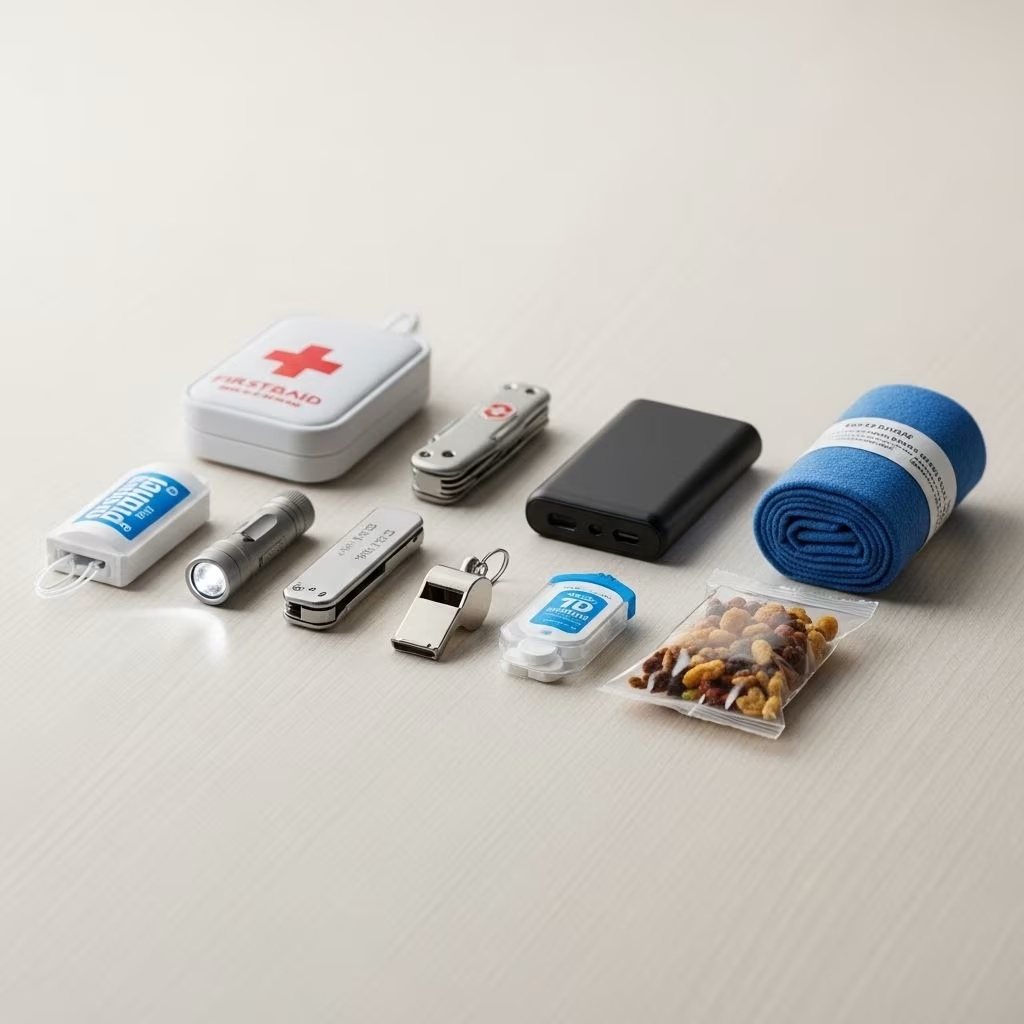
Micro-prepping focuses on small, actionable steps to safeguard your household against everyday disruptions like power outages, minor injuries, or short-term supply issues, emphasizing efficiency and multi-purpose items over massive stockpiles.
In an era of economic pressures and unpredictable events, this minimalist approach to preparedness ensures resilience without financial strain, blending self-reliance with practicality for families and individuals alike.
What Is Micro-Prepping?
**Micro-prepping** is making incremental, low-cost preparations for minor disruptions that could otherwise derail your day or week, such as a flat tire, sudden illness, or brief utility failure. Unlike full-scale survivalism, it prioritizes essentials you already use, like extra batteries or basic medications, rotated into daily life to avoid waste.
This strategy promotes a minimalist mentality, focusing on needs over wants—multi-purpose tools that serve now and in crises. For instance, a sturdy multi-tool handles everyday fixes and emergencies, saving space and money.
- Targets small disasters: 72-hour inconveniences, not apocalypses.
- Builds habits: Integrate preps into routines, like weekly pantry checks.
- Affordable: Start under $50 with household items.
By decluttering and prioritizing, micro-preppers free up time and reduce stress, turning potential chaos into manageable moments.
Why Micro-Prepping Matters Now
Modern life amplifies small disasters’ impact: supply chain glitches, inflation-driven shortages, or urban vulnerabilities like traffic jams stranding commuters. Government data from FEMA highlights that 40% of disasters are ‘small’ events causing outsized disruption without warning.
Micro-prepping fosters self-reliance, reducing reliance on delayed aid. Studies show prepared households recover 2-3x faster from minor events, minimizing financial loss—e.g., avoiding $200+ spoilage from a blackout.
| Disaster Type | Impact Without Prep | Micro-Prep Solution |
|---|---|---|
| Power Outage (4-24 hrs) | Food spoilage, no lights/charge | Cooler, LED lanterns, power bank |
| Minor Injury | Infection, ER visit ($500+) | Stocked first aid kit |
| Car Breakdown | Stranded, towing fees | Emergency roadside kit |
| Water Outage | Hygiene issues | Stored gallons, purification tabs |
Build a Robust First Aid Kit
A well-stocked **first aid kit** is micro-prepping’s cornerstone, treating cuts, burns, or sprains to avert doctor visits. Customize for your family: add kid meds, allergy treatments, or pet supplies.
- Essentials: Bandages (assorted), gauze, tape, antiseptic wipes, tweezers, scissors, thermometer, gloves.
- Medications: Pain relievers (ibuprofen/acetaminophen), antihistamines, hydrocortisone cream, antibiotic ointment.
- Advanced: EpiPen (if needed), burn gel, tourniquet for severe bleeding.
- Store in waterproof container; check expiry monthly.
Quick action reduces injury severity—e.g., cleaning a wound prevents 80% of infections per CDC guidelines. Cost: $20-40 at pharmacies.
Stock Non-Perishable Foods Wisely
Maintain a **3-day food supply** of no-cook, nutrient-dense items rotated via normal shopping to ensure freshness. Focus on calorie-dense, familiar foods for morale.
- Canned goods: Tuna, beans, veggies (pop-top lids).
- Grains: Peanut butter, nuts, energy bars, instant oats.
- Hydration: Bottled water (1 gal/person/day), electrolyte packets.
Meal prepping enhances this: Batch-cook staples weekly, saving time and ensuring healthy options during outages. Benefits include stress reduction and portion control, as pre-portioned meals curb overeating.
Pro Tip: Use a pantry inventory sheet; aim for 2,000 calories/person/day.
Prepare for Power Outages
Outages from storms or grid strain hit 70 million U.S. homes yearly. Micro-prep with battery-powered essentials.
- Light/Charge: LED headlamps, lanterns, solar charger, power bank (10,000mAh+).
- Preserve Food: Cooler with ice packs; eat perishables first.
- Comfort: Battery fan, blankets, battery radio for updates.
Test gear bi-annually; multi-use items like solar lanterns double as campsite lights.
Water Storage and Purification
Secure **1 gallon/person/day** for 3 days, stored in cleaned jugs. For outages, add purification: bleach (8 drops/gal) or tablets.
- Methods: Boiling (1 min), filters (e.g., LifeStraw), UV purifiers.
- Urban hack: Fill bathtubs pre-storm.
Microgreens offer sustainable backup: Grow nutrient-rich greens in 7-10 days indoors, ideal for small spaces.
Vehicle Emergency Kit
Don’t get stranded: Assemble a **roadside kit** in your trunk.
| Item | Purpose |
|---|---|
| Jumper cables | Dead battery |
| Tire inflator/sealant | Flats |
| Blanket, water, snacks | Wait time |
| Flares/reflectors, flashlight | Visibility |
| Multi-tool, duct tape | Repairs |
Apps like Waze complement; keep kit light under 20 lbs.
Cash and Documents Ready
ATMs fail in outages; stash **$200-500** in small bills, hidden safely.
- Documents: Waterproof pouch with IDs, insurance, passports, medical records.
- Digital: Encrypted cloud backups.
- Family plan: Printed evacuation routes, emergency contacts.
Financial Buffers and Skills
Build a **$1,000 emergency fund**; micro-prep by automating $20/paycheck. Learn skills: Basic plumbing, tire changes—YouTube suffices.
Declutter to fund preps: Sell extras, freeing space/time.
Family Communication Plan
Designate out-of-area contact; practice drills quarterly.
- Text trees beat calls in congestion.
- Meetup spots: 2 local, 1 out-of-town.
Frequently Asked Questions (FAQs)
Q: How much does micro-prepping cost to start?
A: Under $100 for basics like a first aid kit, water, and batteries, using household items.
Q: Is micro-prepping the same as full prepping?
A: No—micro focuses on small-scale, minimalist resilience for 72-hour events, not long-term bunkers.
Q: Can apartment dwellers micro-prep?
A: Yes, with compact items like power banks and microgreens for food security in tiny spaces.
Q: How often should I check supplies?
A: Monthly for expiry; rotate food with grocery cycles.
Q: What if I have kids or pets?
A: Customize kits—child meds, pet food, comfort toys—to maintain calm.
Getting Started Checklist
- Assemble first aid kit.
- Stock 3-day food/water.
- Build vehicle kit.
- Stash cash/documents.
- Plan family comms.
- Learn 3 skills.
Start small: One category/week builds momentum without overwhelm.
References
- 10 Real Benefits of Meal Prepping — Fresh Meal Plan. 2023-05-15. https://freshmealplan.com/blogs/news/benefits-of-meal-prepping
- Micro-Prepping Meets Minimalism: Affordable Resilience — The Survival Mom. 2024-02-20. https://thesurvivalmom.com/prepping-minimalism/
- Preparedness: What It Means and Why It Matters — The Mighty Microgreen. 2024-08-10. https://themightymicrogreen.com/preparedness-what-it-means-and-why-it-matters/
- Micro-Prepping Meets Minimalism — Women’s Outdoor News. 2025-07-15. https://www.womensoutdoornews.com/2025/07/micro-prepping-meets-minimalism/
- Micro-Prepping: How to Prepare for Small Disasters — Wise Bread. 2019-03-12. https://www.wisebread.com/micro-prepping-how-to-prepare-for-small-disasters
This article is general information, not personal financial advice. Consider your own situation, or speak with a licensed adviser, before acting on it.


