

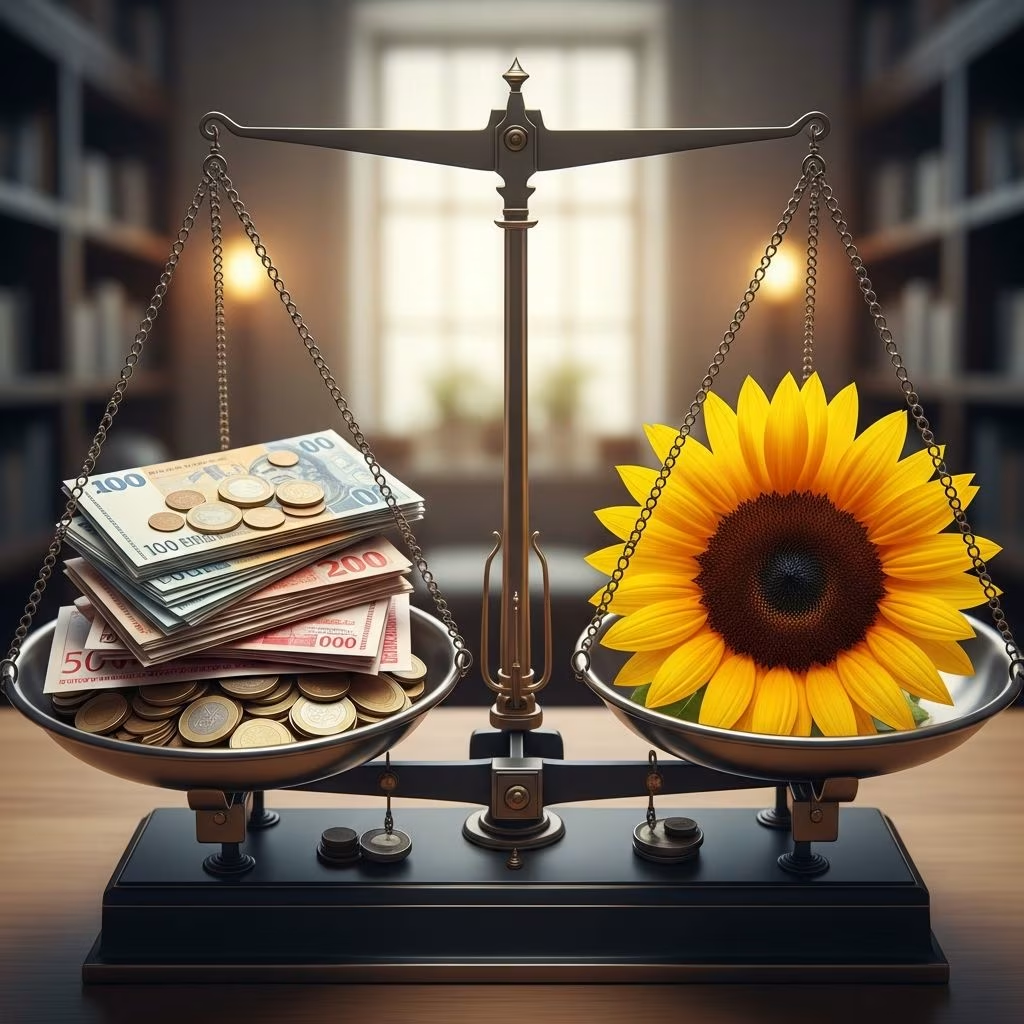
You have probably heard the phrase “money can’t buy happiness” more times than you can count. Yet money clearly affects how safe we feel, the options we have, and the stress we experience. The truth is more nuanced: money is a tool that can support happiness, but it cannot create it on its own.
This article explores what the research really says about money and happiness, the ways in which money falls short, and the powerful ways it can help when used wisely.
Is It True That Money Can’t Buy Happiness?
Researchers have spent years trying to understand the relationship between income and emotional wellbeing. Their findings show that money does matter—especially when you do not have enough to cover basic needs—but it has limits.
- Money reduces stress when it covers essentials like housing, food, healthcare, and transportation.
- Beyond a certain level, more income adds far less to daily happiness than people often expect.
- How you think, the quality of your relationships, and how you spend your time have a stronger and more lasting impact on happiness.
A widely cited analysis from Princeton University found that happiness rises with income up to around a certain comfort level, after which the gains level off for many people. More recent work shows that in some cases happiness can still rise with higher income but not as dramatically as it does at lower income levels. In other words, money helps most when you don’t have enough, and after your basic needs and some comforts are met, other factors dominate.
Ways in Which Money Can’t Buy Happiness
The saying that money can’t buy happiness exists for a reason. There are important areas of life where additional income or spending simply cannot solve the problem.
Money Can’t Change Your Mindset
Your mindset—how you think, interpret events, and talk to yourself—plays a major role in your overall happiness. If you are constantly comparing yourself to others, focusing on what you lack, or expecting the worst, more money will not automatically fix that pattern.
- Negative thinking can persist regardless of your bank balance.
- Perfectionism and regret can make you feel dissatisfied even when you achieve financial goals.
- Chronic stress and worry may follow you into every income bracket if you never address the underlying beliefs.
Research in psychology shows that people often adapt quickly to improved circumstances—a process called the hedonic treadmill—and then return to their usual level of happiness. Without working on your mindset, you can raise your income and still feel stuck emotionally.
Money Can’t Buy Relationships
One of the strongest predictors of long-term happiness is the quality of your relationships—not your income or status. A decades-long study by Harvard researchers found that good relationships are closely linked with better wellbeing and even longer life.
- Genuine friendships and close family bonds cannot be bought.
- Money may attract people to your lifestyle, but it cannot create trust or emotional intimacy.
- Costly gifts can’t fix chronic conflict, disrespect, or lack of communication.
You can spend money on dinners, trips, or outings with loved ones, but the connection itself comes from being present, listening, and caring—not from your wallet.
Material Things Don’t Make Us Happy for Long
When people earn more or receive an unexpected windfall, many quickly think of things to buy: clothes, gadgets, home décor, or a nicer car. These purchases can provide a short-term boost in mood, but research shows it is usually brief.
- We adapt quickly to new possessions, and they become our new normal.
- Comparisons with others often resume, leading to another cycle of wanting more.
- Accumulating items can even create clutter and financial pressure, which undermine wellbeing.
Studies in behavioral science find that people often get more lasting satisfaction from experiences, such as travel or shared activities, than from material goods, even when both cost the same.
Ways in Which Money Can Support Happiness
Although money cannot directly create happiness, it can be used strategically to support the factors that do matter most. Used this way, money becomes a tool for freedom and options, not just consumption.
Money Buys Time
One of the most valuable things money can buy is time. Time for rest, relationships, and meaningful activities has a powerful impact on happiness.
- If your income is low, you may need multiple jobs or excessive overtime, leaving little time for loved ones.
- With more financial breathing room, you may be able to reduce hours, switch to a less stressful job, or outsource some tasks.
- Paying for services like childcare, house cleaning, or prepared meals can free up time for what matters most to you.
Researchers have found that people who use money to buy time—such as paying someone to handle tasks they dislike—report higher life satisfaction than those who spend on material goods instead.
Money Buys Experiences
Another key way money can support happiness is by funding experiences. Experiences often create memories, personal growth, and connection with others.
- Vacations and weekend trips, even modest ones, can strengthen relationships and relieve stress.
- Concerts, classes, or community events can deepen your interests and build a sense of belonging.
- Small, regular experiences—like coffee with a friend or a monthly museum visit—can add up over time.
Experiences are less likely to be compared directly to what others have, and they tend to become part of your identity and life story, which makes them more impactful than most purchases.
Money Can Help Others
Generosity is another area where money can meaningfully contribute to happiness. Research in psychology and economics has repeatedly shown that spending on others can increase wellbeing.
- Donating to causes you care about can strengthen your sense of purpose.
- Supporting friends or family in practical ways can deepen relationships.
- Even small acts of giving—covering a meal, contributing to a fundraiser—can boost your mood.
In one study, people who spent money on others reported greater happiness than those who spent the same amount on themselves, even across different income levels. Used this way, money becomes a tool for connection and impact, not just consumption.
How Much Money Do You Need to Be Happy?
There is no single number that works for everyone, but research does provide useful guidelines about the relationship between income and life satisfaction.
A well-known study from Princeton University examined more than 450,000 survey responses to see how income related to everyday emotional wellbeing. The researchers found:
- As income rises from very low levels, emotional wellbeing increases substantially.
- Lower incomes are strongly associated with more stress and negative emotions.
- Beyond a comfortable income range, additional income has a smaller effect on daily happiness.
Later research expanded on this, suggesting that for some people, happiness continues to rise with higher income, but the rate of improvement slows and depends on factors like personality and how the money is used.
Rather than chasing an exact number, it can be more useful to focus on questions like:
- Can I cover my essentials (housing, food, utilities, healthcare) without constant fear?
- Do I have some buffer savings for emergencies?
- Can I afford a few experiences or comforts that matter most to me?
- Does my work schedule leave me time and energy for relationships and health?
When these conditions are met, other aspects of life—mindset, purpose, relationships—often matter more than squeezing out a little more income.
| Income Situation | Common Challenges | Potential Impact on Happiness |
|---|---|---|
| Not enough to cover basics | Housing insecurity, food stress, unpaid bills, no savings | High stress, anxiety, limited ability to plan or enjoy life |
| Enough for basics but little margin | Some bills paid, little to no buffer, few extras | Improved wellbeing but still vulnerable to shocks |
| Comfortable with savings | Essentials covered, some experiences, growing safety net | Stress greatly reduced; other factors matter more |
| High income, high lifestyle costs | Long hours, status pressure, expensive habits | Happiness depends heavily on time, health, and relationships |
Money Can’t Buy Happiness, But It Can Lead You to It
Taken together, research and experience point to a balanced view: money itself does not create happiness, but it can create the conditions that make happiness easier to reach.
- What money can’t do: heal your mindset, guarantee love, or make you fulfilled on its own.
- What money can do: reduce financial stress, buy time, fund experiences, and enable generosity.
When you treat money as a tool rather than a measure of your worth, it becomes easier to align your financial decisions with what genuinely matters to you. For some, that may mean more time with family; for others, it might be the peace of having a solid emergency fund or the satisfaction of supporting a cause they care about.
The key is to use money in ways that support your values, health, and relationships. It is not the size of your bank account that determines your happiness; it is how you use what you have.
Practical Ways to Use Money to Support Happiness
If you want to use your finances more intentionally to support your wellbeing, consider these practical strategies.
- Build a basic safety net. Aim for a small emergency fund so unexpected expenses cause less crisis.
- Spend according to your values. Identify 2–3 things that matter most (family time, learning, health) and direct extra funds there.
- Limit lifestyle creep. When your income rises, avoid automatically raising every expense; keep some of the increase for savings and experiences.
- Use money to free time. When possible, reduce obligations or outsource tasks that drain your energy.
- Give strategically. Choose causes you care about and build giving into your budget, even in small amounts.
Frequently Asked Questions (FAQs)
Q: Does earning more always make you happier?
A: No. Research shows that while higher income can reduce stress and improve wellbeing when money is tight, the happiness boost becomes smaller once your basic needs and some comforts are covered.
Q: If money can’t buy happiness, why do I feel better when I have more of it?
A: Feeling better when you have more money is often about reduced stress and increased security. When you are not worried about paying bills or handling emergencies, it is easier to relax and enjoy life.
Q: Are experiences really better than things?
A: Many studies find that spending on experiences—like travel, classes, or time with loved ones—tends to create more lasting satisfaction than spending on material goods, partly because experiences create memories and social connections.
Q: How can I be happier if my income is limited?
A: Focus on what you can influence: building a small emergency fund, reducing high-interest debt, and investing in relationships, health, and skills. Align spending with your top priorities, even in small ways, and look for low-cost experiences that add joy.
Q: Is it wrong to want to earn more money?
A: No. Wanting to earn more is reasonable, especially if your current income does not cover your needs. The key is to stay clear about why you want more and to ensure that pursuing higher income does not cause you to sacrifice your health or most important relationships.
References
- Kahneman D, Deaton A. High income improves evaluation of life but not emotional well-being. — Proceedings of the National Academy of Sciences. 2010-09-21. https://www.pnas.org/doi/10.1073/pnas.1011492107
- Killingsworth MA. Experienced well-being rises with income, even above $75,000 per year. — Proceedings of the National Academy of Sciences. 2021-03-02. https://www.pnas.org/doi/10.1073/pnas.2016976118
- Brickman P, Coates D, Janoff-Bulman R. Lottery winners and accident victims: Is happiness relative? — Journal of Personality and Social Psychology. 1978-08-01. https://doi.org/10.1037/0022-3514.36.8.917
- Harvard Study of Adult Development. — Harvard Medical School. 2023-01-10. https://www.health.harvard.edu/mental-health/the-harvard-study-of-adult-development
- Dunn EW, Gilbert DT, Wilson TD. If money doesn’t make you happy, then you probably aren’t spending it right. — Journal of Consumer Psychology. 2011-07-01. https://doi.org/10.1016/j.jcps.2011.02.003
This article is general information, not personal financial advice. Consider your own situation, or speak with a licensed adviser, before acting on it.


