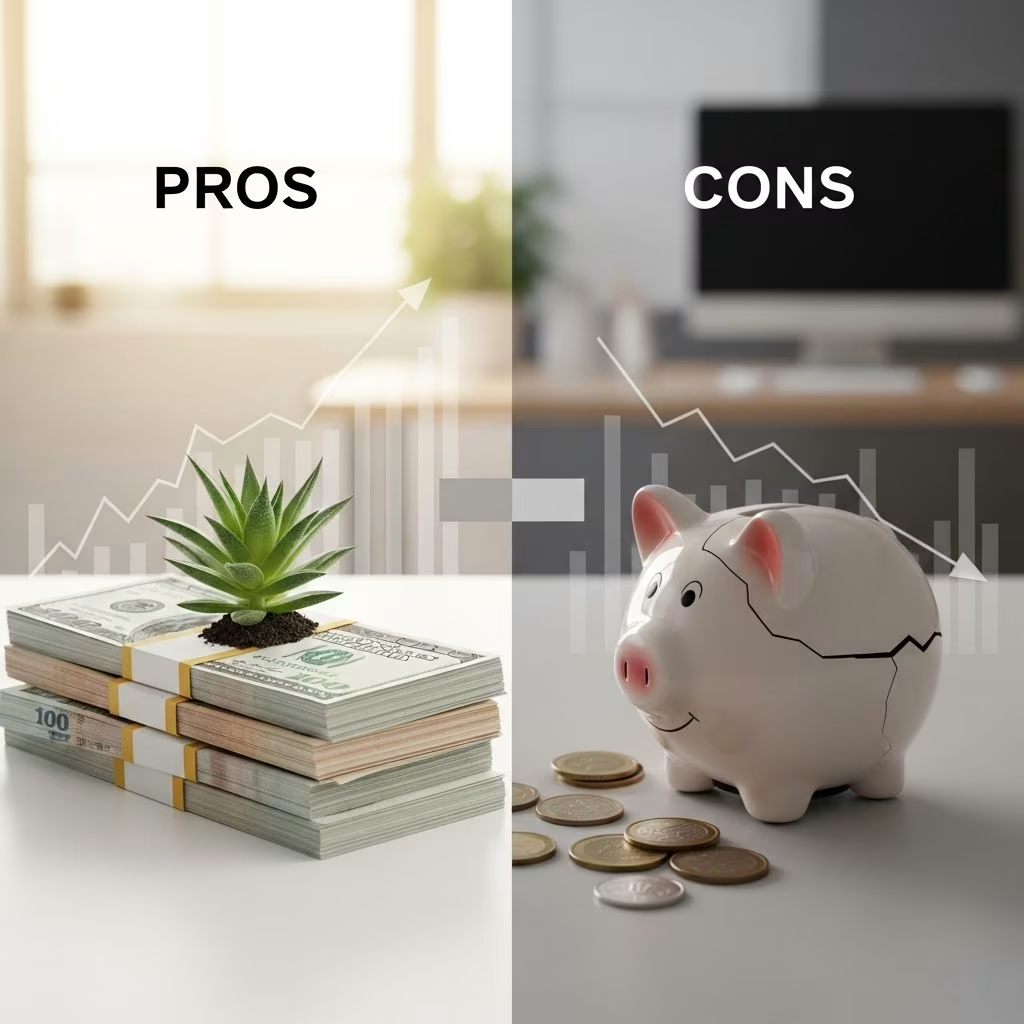
Money market accounts (MMAs) serve as hybrid deposit options from banks and credit unions, blending savings growth with checking-like access. They typically deliver superior interest compared to basic savings while offering tools like debit cards or checks, all backed by federal insurance.
Understanding the Fundamentals of Money Market Accounts
A money market account functions as an interest-bearing deposit vehicle that financial institutions provide to encourage saving with added convenience. Unlike rigid certificates of deposit, MMAs permit flexible deposits and withdrawals within set boundaries. Banks leverage these funds for short-term lending or safe investments, sharing generated yields with account holders through variable rates that adjust periodically.
Interest accrual happens daily or monthly, with credits appearing quarterly or monthly, often scaling by balance tiers to reward larger deposits. This setup appeals to those building emergency reserves or pursuing near-term objectives without sacrificing accessibility. Federal regulations cap certain transactions at six per month to preserve their savings classification, though ATM or in-person withdrawals face no such restrictions.
Key Advantages That Make MMAs Attractive
MMAs stand out for several compelling reasons, particularly for savers valuing both return and readiness.
- Superior Interest Earnings: These accounts frequently outpace traditional savings rates, with tiered structures boosting yields on higher balances. This compounding effect accelerates growth for substantial sums.
- Federal Deposit Protection: Insured up to $250,000 by the FDIC for banks or NCUA for credit unions, ensuring principal safety against institutional failure.
- Enhanced Liquidity Options: Access funds via debit cards, limited checks, ATMs, or transfers, bridging savings security with everyday utility.
- No Maturity Lock-In: Withdraw anytime without penalties, unlike CDs, suiting unpredictable needs.
- Short-Term Investment Alignment: Banks invest in low-risk assets like treasuries, yielding stable returns passed to depositors.
These features position MMAs as reliable for parking cash intended for imminent use while earning more than idle checking balances.
Potential Drawbacks and Limitations to Consider
Despite strengths, MMAs include hurdles that may deter certain users.
- Minimum Balance Demands: Many require $2,500 to $10,000+ to avoid fees or earn top rates, challenging for modest savers.
- Transaction Caps: Limited to six transfers or checks monthly; excess incurs fees or closure risks.
- Variable Rate Volatility: Yields fluctuate with market conditions, potentially dropping during low-rate periods.
- Opportunity Cost: Rates may trail CDs or high-yield online savings in some scenarios.
- Fee Structures: Maintenance charges apply if balances dip, eroding gains.
Shop diligently, as online institutions often waive such fees while matching competitive rates.
How MMAs Compare to Other Savings Vehicles
MMAs occupy a middle ground among deposit types. The table below outlines distinctions:
| Feature | Money Market Account | Traditional Savings | Checking | Certificate of Deposit |
|---|---|---|---|---|
| Interest Rate | Moderate-High (Variable) | Low (Variable) | None/Low | High (Fixed) |
| Access | Limited Checks/Debit/ATM | Transfers/ATM | Unlimited | Locked |
| Insurance | FDIC/NCUA up to $250k | FDIC/NCUA up to $250k | FDIC/NCUA up to $250k | FDIC/NCUA up to $250k |
| Best Use | Emergency/Short-term | Basic Saving | Spending | Long-term Locked |
| Min Balance | Often High | Low/None | Low/None | Fixed Deposit |
Distinguish MMAs from money market funds: the former are insured deposits, while funds are uninsured investments with slight principal risk.
Ideal Scenarios for Opening an MMA
Opt for an MMA when liquidity and modest growth align with goals like:
- Maintaining 3-6 months’ expenses in an emergency fund.
- Saving for vacations, down payments, or vehicle purchases within 1-3 years.
- Transitioning funds between long-term investments.
- Maximizing yields on excess cash beyond checking needs.
Avoid if you anticipate frequent transactions or hold under minimum thresholds; standard savings or high-yield alternatives may suit better.
Steps to Select and Launch Your MMA
- Research Rates: Compare APYs across banks, favoring online options for top tiers.
- Review Fees: Confirm waiver conditions for maintenance or excess withdrawals.
- Verify Access: Ensure debit/check features match usage.
- Check Limits: Understand transaction rules to avoid penalties.
- Open Online: Link to existing accounts for seamless transfers.
Current high-rate environments (as of 2026) amplify MMA appeal amid Fed adjustments.
Frequently Asked Questions
Are money market accounts safe?
Yes, FDIC/NCUA insures up to $250,000, safeguarding deposits.
Do MMAs have check-writing?
Many permit limited checks monthly, varying by institution.
Can rates change on MMAs?
Rates are variable, tied to market conditions.
What’s the typical minimum balance?
Often $1,000-$10,000 to dodge fees.
Are MMAs better than savings accounts?
Usually for higher yields with access, but check specifics.
Strategic Tips for MMA Success
To optimize:
- Automate transfers to hit tiers swiftly.
- Monitor rates quarterly; switch if lagging.
- Pair with budgeting for disciplined use.
- Ladder with CDs for varied maturities.
MMAs excel in balanced portfolios, offering insured growth without full illiquidity.
References
- What Is a Money Market Account & How Does It Work? — PNC Insights. 2024. https://www.pnc.com/insights/personal-finance/save/what-is-a-money-market-account.html
- What Is a Money Market Account and Its Benefits? — Mountain America Credit Union. 2024. https://www.macu.com/accounts/savings/money-market
- The Ultimate Guide to Money Market Accounts — Bank Five Nine. 2024. https://www.bankfivenine.com/everyday-money/money-market-accounts-guide/
- What is a Money Market Account and How Does it Work? — Ally Bank. 2024. https://www.ally.com/stories/save/what-is-a-money-market-account/
- What Is a Money Market Account? — City National Bank. 2024. https://www.cnb.com/personal-banking/insights/what-is-money-market.html
- Money Market Accounts: Definition, Benefits, and Features — Business Insider. 2024. https://www.businessinsider.com/personal-finance/banking/what-is-a-money-market-account
- What is a money market account? — Consumer Financial Protection Bureau. 2023-10-01. https://www.consumerfinance.gov/ask-cfpb/what-is-a-money-market-account-en-1007/
This article is general information, not personal financial advice. Consider your own situation, or speak with a licensed adviser, before acting on it.