

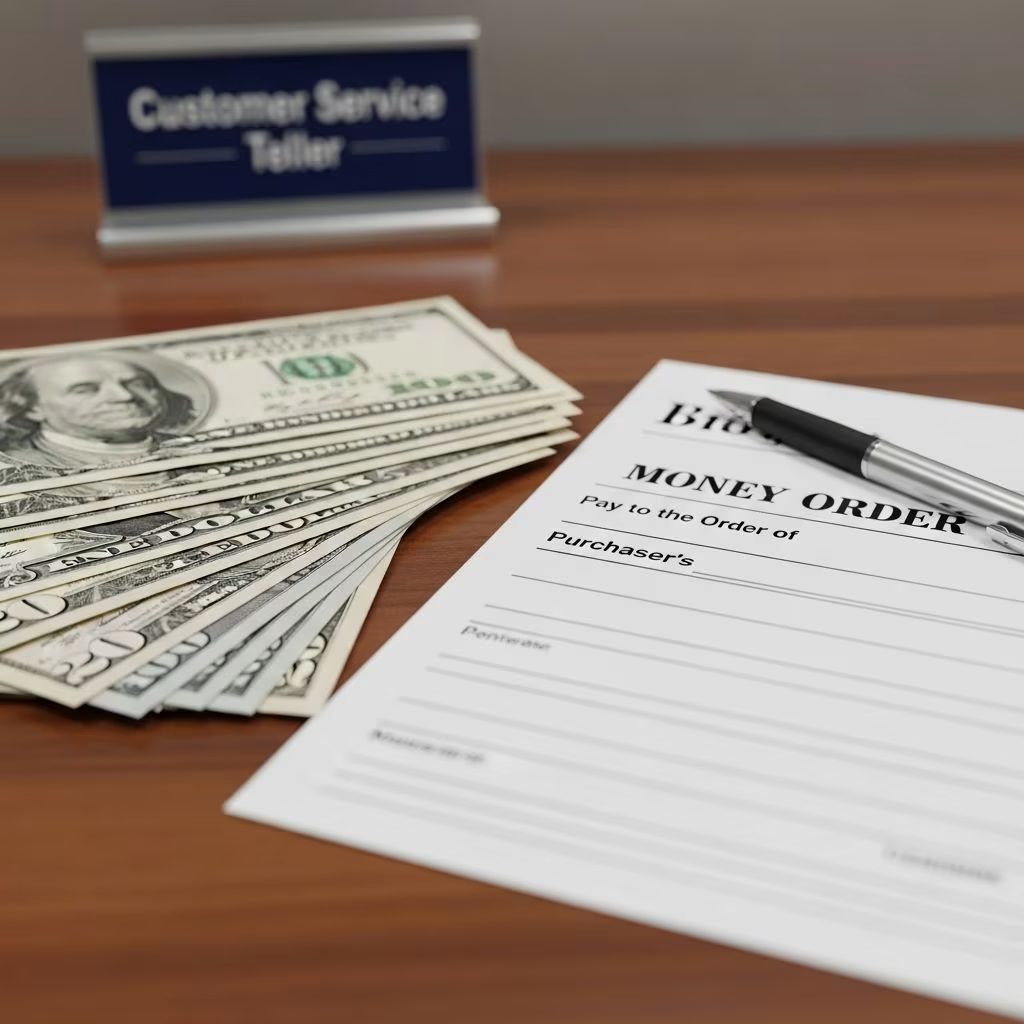
A money order is a secure, prepaid payment method guaranteed by the issuer, ideal for those without bank accounts or needing to send funds safely without cash or personal checks. Unlike personal checks, funds are prepaid, reducing bounce risks, and it’s more secure than cash as it requires recipient ID to cash. Typical fees range from $1 to $5, with limits around $1,000 domestically.
In 2026, money orders remain popular for rent, bills, or small transfers, especially amid rising digital scams. This guide covers top places to buy them, fees, pros/cons, and alternatives like wire transfers, which are faster but costlier (up to $50) with higher limits.
What Is a Money Order?
A money order functions like a guaranteed check: you prepay the amount plus a small fee using cash, debit, or sometimes credit (treated as cash advance). The recipient endorses it and cashes at banks, post offices, or retailers, showing ID matching the order.
Key benefits include privacy (no bank details needed), replaceability if lost (with fees), and backing by issuers like USPS or banks. However, mailing delays access, and limits cap utility for large sums. Security is high but vulnerable to theft if not tracked.
- Prepaid security: Funds guaranteed upon purchase.
- No bank account required: Accessible to unbanked.
- Low cost: Under $5 typically.
- Drawbacks: Physical delivery risks, $1,000 limit.
Where Can You Get a Money Order?
Money orders are available at banks, post offices, retailers, and grocery stores. Availability varies by location; check ahead in 2026 as some fees rose post-inflation. Here’s a breakdown:
USPS (United States Postal Service)
The post office is a top choice for reliability. Buy at any branch during hours; no ID needed to purchase, but recipient needs one to cash.
- Fee: $2.10 for amounts up to $500; $2.85 for $501-$1,000 (domestic).
- Limit: $1,000 per order; no daily max with multiple purchases.
- Payment: Cash, debit, traveler’s checks; no credit cards.
- Pros: Nationwide access, tracking via mail.
- Cons: Branch hours only; international limits $700.
USPS issues over 100 million annually, per federal data, making it a trusted option.
Banks and Credit Unions
Most major banks like Bank of America, Wells Fargo, Chase offer them to account holders, sometimes non-customers with fees.
| Bank | Fee | Limit | Notes |
|---|---|---|---|
| Bank of America | $5 | $1,000 | Account holders only; cash/debit. |
| Wells Fargo | $5 | $1,000 | Unlimited daily for customers. |
| Chase | Free-$5 | $1,000 | Free for some checking accounts. |
| Credit Unions (e.g., Navy Federal) | $1-$3 | $5,000 | Often lower fees for members. |
Banks guarantee via their funds, but non-customers pay more. Call ahead; digital banking apps don’t issue them.
Retail Stores (Walmart, 7-Eleven, etc.)
Convenient 24/7 options at big-box stores. Walmart leads with low fees.
- Walmart: $1.00 (up to $1,000); cash/debit only; ID may be required for large amounts.
- 7-Eleven: $0.99-$1.49; limit $500-$1,000.
- Kroger/Ralphs: $0.69-$1.00 + possible surcharge.
- Pros: Extended hours, low cost.
- Cons: Not all locations; cash-only often.
Retailers partner with issuers like Western Union for quick issuance.
Grocery Stores and Check-Cashing Stores
Places like Safeway, Rite Aid, or standalone check-cashers (ACE Cash Express) offer them.
- Fees: $0.50-$3.00.
- Limits: $500-$2,000.
- Tip: Shopper loyalty cards may waive surcharges.
Ideal for quick buys during errands.
Money Order Fees and Limits Comparison
| Location | Typical Fee | Max Amount | Payment Methods |
|---|---|---|---|
| USPS | $2.10-$2.85 | $1,000 | Cash, debit |
| Banks | $0-$5 | $1,000-$5,000 | Cash, debit |
| Walmart | $1.00 | $1,000 | Cash, debit |
| 7-Eleven | $0.99-$1.49 | $1,000 | Cash |
Data aggregated from issuer guidelines; fees stable into 2026 but verify locally. International orders cap at $700 with higher fees.
How to Buy and Cash a Money Order
Buying steps:
- Visit location with cash/debit equal to amount + fee.
- Fill recipient name/address (non-erasable ink).
- Keep receipt for refunds if lost.
- Sign if required; track via certified mail.
Cashing: Recipient shows ID at banks/post offices/retailers. Deposits clear next day. Refunds cost $15-$18 if stolen/lost, taking 30-60 days.
Money Order vs. Wire Transfer
Wire transfers suit large/fast needs; money orders for cheap/small. Key differences:
| Feature | Money Order | Wire Transfer |
|---|---|---|
| Type | Paper | Electronic |
| Fee | $1-$5 | $0-$50 |
| Limit | $1,000 | $100,000+ |
| Speed | Days (mail + cash) | Same-day/immediate |
| Security | Good, replaceable | High, hard to reverse |
| Bank needed? | No | Yes |
Wires are irreversible, pricier, but unlimited—best for real estate. Use money orders for under $1,000 without banks.
Pros and Cons of Money Orders
Pros
- Low fees for small amounts.
- Unbanked-friendly.
- Guaranteed funds.
- Privacy, no account link.
Cons
- Physical risks (loss/theft).
- Low limits.
- Mailing delays.
- No easy reversals post-mail.
When to Use Alternatives
- Digital apps (Zelle/Venmo): Free for small P2P, instant.
- Bank drafts: Higher limits, $7-$10 fee, bank-guaranteed.
- Cashier’s checks: Similar to drafts, for larger sums.
For international, money transfers beat orders in speed (1 day vs. weeks).
Frequently Asked Questions (FAQs)
Can I buy a money order with a credit card?
Usually no; treated as cash advance with fees/interest. Use cash/debit.
How long does it take to cash a money order?
Immediate at retailers/banks if ID matches; deposits next business day.
What if my money order is lost or stolen?
Report with receipt; refund in 30-60 days for $15-$18 fee.
Are money orders safe for mailing?
Yes with tracking; use certified mail to minimize risks.
What’s the cheapest place for a money order?
Walmart or grocery stores at $0.69-$1.00; check surcharges.
Final Tips for 2026
Verify fees/limits locally via apps/websites. Rise in scams favors tracked delivery. For frequent use, consider banking for free/low-fee options. Money orders bridge cash/digital gaps securely.
References
- Difference between money order and money transfer — Unimoni. 2023-05-15. https://www.unimoni.in/blog/difference-between-money-order-and-money-transfer/
- Wire Transfer vs. Money Order: What Is the Difference? — PayMints. 2021-10-01. https://www.paymints.io/2021/10/wire-transfer-vs-money-order/
- Bank Draft Vs Money Order — Western Union. 2024-02-20. https://www.westernunion.com/blog/en/ca/money-order-vs-bank-draft-whats-right-for-you/
- Money Order vs. Wire Transfer: What’s the Difference? — SoFi. 2024-08-10. https://www.sofi.com/learn/content/wire-transfer-vs-money-order/
- Money Order vs. Wire Transfer: What’s the Difference? — Experian. 2023-11-05. https://www.experian.com/blogs/ask-experian/money-order-vs-wire-transfer-whats-the-difference/
- Money Order vs Wire Transfer: What Is the Difference? — Ace Money Transfer. 2024-03-12. https://acemoneytransfer.com/blog/money-order-vs-wire-transfer-what-is-the-difference
This article is general information, not personal financial advice. Consider your own situation, or speak with a licensed adviser, before acting on it.


