

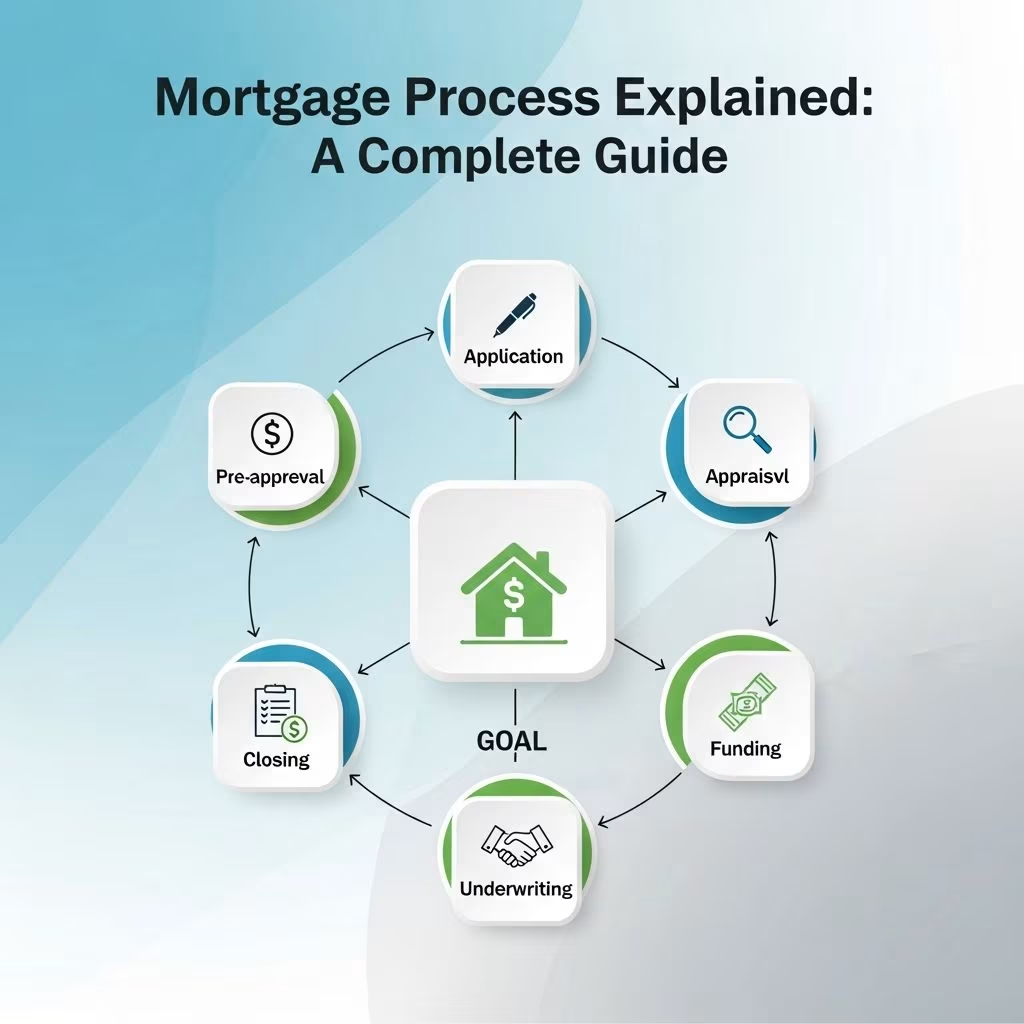
Purchasing a home is one of the most significant financial decisions most people will make in their lifetime. The mortgage process can seem complex and overwhelming, involving numerous steps, documents, and financial considerations. However, understanding each phase of the mortgage journey can help you navigate it more confidently and make informed decisions. This comprehensive guide breaks down the entire mortgage process into manageable stages, from initial preparation through final closing.
What Is a Mortgage?
A mortgage is a loan secured by real estate property, typically a residential home. When you obtain a mortgage, the lender provides funds to purchase the property, and you agree to repay the borrowed amount plus interest over a specified period, usually 15 to 30 years. The property itself serves as collateral for the loan, meaning if you fail to make payments, the lender can foreclose on the property to recover their investment.
Understanding the fundamental components of a mortgage is essential before beginning the application process:
- Principal: The original amount borrowed to purchase the home
- Interest: The cost of borrowing money, expressed as an annual percentage rate (APR)
- Terms: The length of time you have to repay the loan, typically 15, 20, or 30 years
- Collateral: The property that secures the loan
Step 1: Pre-Approval and Pre-Qualification
Before you start shopping for homes, it’s wise to understand how much you can borrow. Pre-qualification and pre-approval are two distinct but related processes that help establish your borrowing capacity.
Pre-Qualification
Pre-qualification is an informal assessment where you provide basic financial information to a lender who estimates how much you might be able to borrow. This process typically involves:
- Reviewing your income and employment status
- Assessing your existing debts and monthly obligations
- Discussing your savings and down payment amount
- Considering your credit history in general terms
Pre-qualification does not involve a credit pull and is not a binding commitment from the lender. It provides a preliminary estimate to help you understand your potential buying power.
Pre-Approval
Pre-approval is a more formal process that carries more weight in the homebuying journey. During pre-approval, you must provide extensive documentation, and the lender will:
- Pull your credit report to review your credit score and history
- Verify your income through tax returns, W-2s, and recent pay stubs
- Confirm employment status with your employer
- Review bank statements to verify savings and down payment funds
- Analyze your debt-to-income ratio
- Issue a pre-approval letter stating the maximum loan amount you can borrow
A pre-approval letter demonstrates to sellers that you are a serious buyer with financing secured, making your offer more competitive.
Step 2: Finding a Property and Making an Offer
Once you’re pre-approved, you can begin shopping for homes within your budget. Working with a real estate agent can help you identify properties that meet your needs and financial criteria. When you find a home you want to purchase, you’ll make an offer that typically includes:
- The proposed purchase price
- The proposed down payment amount
- Contingencies (such as inspection, appraisal, or financing contingencies)
- Proposed closing timeline
- Earnest money deposit amount
Once your offer is accepted, you officially enter into a purchase contract, and the formal mortgage application process begins.
Step 3: Formal Mortgage Application
After your offer is accepted, you’ll complete a formal mortgage application with your lender. This application requires comprehensive financial documentation and personal information, including:
Required Documentation
- Completed mortgage application form (typically the Uniform Residential Loan Application)
- Recent pay stubs (typically last two months)
- Recent tax returns (typically last two years)
- Bank statements and investment account statements
- List of debts and monthly obligations
- Explanation of any derogatory credit marks or gaps in employment
- Identification and proof of citizenship or legal residency
- Information about the property being purchased
During this stage, your lender will also explain different loan options available to you, such as fixed-rate versus adjustable-rate mortgages, and help you select the option that best fits your financial situation.
Step 4: Processing and Initial Review
Once your application is submitted, the lender’s processing team reviews your documentation to ensure completeness and accuracy. The processor may request additional documents or clarifications. This stage typically involves:
- Verifying all submitted documentation is complete
- Ordering the home appraisal
- Ordering a title search to ensure the property has a clear title
- Requesting any additional documentation needed
- Scheduling a property inspection (if not already completed)
The processing stage usually takes 3-5 business days, depending on document completeness and lender workload.
Step 5: Home Appraisal
The lender orders a professional appraisal to determine the property’s fair market value. An independent appraiser will:
- Conduct a thorough inspection of the interior and exterior
- Compare the property to similar homes recently sold in the area
- Consider the property’s condition, age, and amenities
- Provide a detailed written appraisal report
The appraisal is critical because the lender will not finance more than the appraised value. If the appraisal comes in lower than your purchase price, you’ll need to either renegotiate with the seller, increase your down payment, or walk away from the deal (depending on your purchase contract terms).
Step 6: Title Search and Insurance
The lender orders a title search to ensure the seller has the legal right to sell the property and that there are no outstanding liens or claims against it. Title insurance protects both you and the lender from any future claims related to the property’s ownership. Types of title insurance include:
- Lender’s Title Insurance: Protects the lender’s investment in the property
- Owner’s Title Insurance: Protects your ownership interest in the property
Step 7: Underwriting
Underwriting is one of the most critical steps in the mortgage process. During underwriting, a specialist reviews your entire application, documentation, and property information to determine your creditworthiness and the lender’s risk. The underwriter will:
- Verify your income and employment stability
- Analyze your credit report for any red flags
- Review your debt-to-income ratio
- Assess your savings and financial reserves
- Evaluate the appraisal and property condition
- Ensure all documentation complies with lending guidelines
The underwriter can issue one of three decisions:
- Approved: Your loan is approved without conditions
- Approved with Conditions: Your loan is approved pending fulfillment of specific requirements (most common outcome)
- Suspended or Denied: The underwriter has identified issues that prevent loan approval
Underwriting typically takes 3-5 business days but can take longer if additional documentation is needed. Common conditions might include updated pay stubs, written explanation of credit issues, or additional financial documentation.
Step 8: Final Walkthrough and Inspection
Before closing, you’ll have the opportunity to conduct a final walkthrough of the property to ensure:
- All agreed-upon repairs have been completed
- The property remains in the expected condition
- Included items (appliances, fixtures) are still present
- No new damage has occurred since your initial inspection
This final walkthrough protects your interests and ensures the seller has fulfilled all contractual obligations.
Step 9: Clear to Close
Once the underwriter is satisfied that all conditions have been met and all documentation is verified, you’ll receive a “clear to close” status. This indicates that:
- Your loan is approved and ready to fund
- All underwriting conditions have been satisfied
- All necessary documentation is complete and accurate
- You can proceed to the closing stage
The clear to close typically occurs 2-3 days before your scheduled closing date, allowing time for final preparations.
Step 10: Closing Disclosure and Review
At least three business days before closing, you’ll receive a Closing Disclosure document. This standardized form outlines all the terms and costs associated with your mortgage, including:
- Loan amount and terms
- Interest rate and APR
- Monthly payment amount
- All closing costs and fees
- Property details and insurance information
You should carefully review this document and compare it to your loan estimate. If you notice discrepancies or have questions, contact your lender immediately.
Step 11: Final Closing Meeting
On closing day, you’ll meet with the title company or attorney to sign all final mortgage documents and transfer funds. Key documents you’ll sign include:
- Promissory Note: Your promise to repay the loan
- Mortgage or Deed of Trust: Document placing a lien on the property
- Closing Disclosure: Final confirmation of all loan terms and costs
- Deed: Document transferring property ownership to you
- Title Insurance Policy: Protection against title defects
- Other Documents: May include homeowner insurance documentation, HOA documents, and various disclosures
You’ll also wire your down payment and closing costs to the title company, and the lender will fund the loan. Once all documents are signed and funds are transferred, the deed is recorded with the local government, and you officially own the property.
Typical Mortgage Timeline
While timelines can vary, a typical mortgage process takes 30-45 days from application to closing:
| Stage | Timeline | Key Activities |
|---|---|---|
| Pre-Approval | 1-2 days | Document submission and credit review |
| Application & Processing | 3-5 days | Document verification and appraisal order |
| Appraisal & Inspections | 5-10 days | Property evaluation and title search |
| Underwriting | 3-7 days | Comprehensive application review |
| Clear to Close | 2-3 days | Final preparations and document review |
| Closing | 1 day | Final signing and fund transfer |
Costs Associated with the Mortgage Process
Understanding mortgage costs helps you budget appropriately for homeownership. Common costs include:
- Origination Fees: Charges for processing your loan application
- Appraisal Fee: Cost of the professional property appraisal
- Title Search and Insurance: Protecting your ownership rights
- Home Inspection: Professional evaluation of property condition
- Credit Report Fee: Cost of pulling your credit report
- Underwriting Fee: Cost of loan review and approval
- Attorney Fees: Legal representation during closing
- Property Taxes and Insurance: Prorated amounts for the closing period
Frequently Asked Questions
Q: How long does the mortgage process typically take?
A: The mortgage process usually takes 30-45 days from application to closing. However, this can vary depending on document completeness, lender workload, and any issues that arise during underwriting.
Q: What credit score do I need to qualify for a mortgage?
A: Most conventional loans require a minimum credit score of 620, though scores of 740 or higher typically receive better interest rates. Different loan types (FHA, VA, USDA) have different requirements.
Q: What is the difference between pre-qualification and pre-approval?
A: Pre-qualification is informal and provides an estimate of borrowing capacity. Pre-approval requires documentation verification and results in a commitment letter, making it more valuable when making offers.
Q: What happens if the appraisal comes in lower than the purchase price?
A: You’ll need to renegotiate with the seller, increase your down payment, or walk away from the purchase. The lender will not finance more than the appraised value.
Q: What is “clear to close” status?
A: Clear to close means your loan is fully approved, all conditions have been satisfied, and you’re ready to move forward with closing. It typically occurs 2-3 days before your scheduled closing date.
Q: What documents do I need to bring to closing?
A: Bring a valid government-issued ID, proof of homeowner’s insurance, and any other documents requested by your title company. Ask your lender for a complete list beforehand.
Q: Can I lock in my interest rate?
A: Yes, most lenders offer rate locks that protect your interest rate for a specified period (typically 30-60 days). This protects you if rates increase before closing.
References
- Consumer Financial Protection Bureau (CFPB) – Mortgages — U.S. Consumer Financial Protection Bureau. 2024. https://www.consumerfinance.gov/mortgages/
- Federal Reserve – Consumer Handbook on Adjustable Rate Mortgages — Board of Governors of the Federal Reserve System. 2024. https://www.federalreserve.gov/pubs/ARM/
- HUD – Home Buying Process — U.S. Department of Housing and Urban Development. 2024. https://www.hud.gov/program_offices/public_indian_housing/programs/ph/phr/about/key_documents/faq
- National Association of Realtors – Home Buying Process — NAR Research. 2024. https://www.nar.realtor/
- Freddie Mac – Mortgage Process Guide — Freddie Mac Corporation. 2024. https://sf.freddiemac.com/
This article is general information, not personal financial advice. Consider your own situation, or speak with a licensed adviser, before acting on it.


