

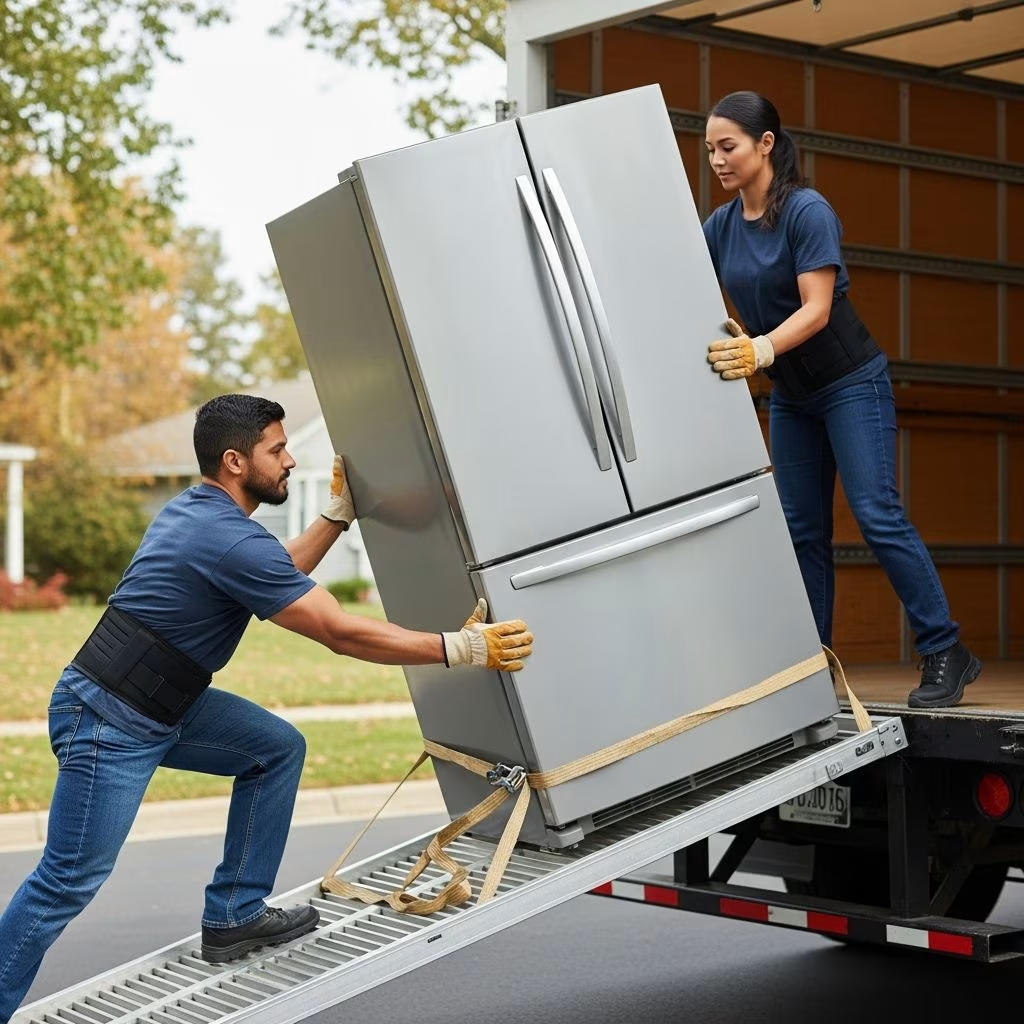
Moving a refrigerator, especially a heavy Kenmore model, demands careful planning and the right techniques to prevent damage to the appliance, your home, or yourself. Unlike smaller items, fridges are bulky, with compressors containing oil that requires upright transport to avoid leaks or failures. This guide draws from professional mover insights and manufacturer guidelines to walk you through every step, ensuring a smooth process whether you’re shifting it across the kitchen or to a new home.
Why Moving a Fridge Requires Special Care
Refrigerators are among the most challenging household appliances to relocate due to their size, weight (often 200-400 pounds), and delicate components like coils, compressors, and doors. Improper handling can lead to dents, scratches on stainless steel surfaces, oil displacement in the compressor, or even personal injury from falls on stairs. Experts emphasize using specialized tools and working in teams to maintain control at all times.
Common pitfalls include skipping padding, which causes visible scratches, or tilting the fridge on its side, risking compressor damage. Always keep the fridge upright during transport, as lying it on its back or side can cause oil to flow into lines, leading to malfunctions upon restart. GE Appliances explicitly advises upright positioning in vehicles under all circumstances.
Gather the Right Tools and Supplies
Before starting, assemble these essentials for a safe move:
- Appliance dolly: Unlike standard dollies, these feature straps and wide bases for securing heavy loads and navigating stairs. Rent from truck rental spots for $20-50/day.
- Moving blankets or pads: Protect exterior surfaces from straps and impacts. Old blankets or shrink wrap work well.
- Ratchet straps or bungee cords: Secure the fridge to the dolly without overtightening.
- Floor protection: Red rosin paper, cardboard, or inverted scrap carpeting to prevent scratches on hardwood or tile.
- Cleaning supplies: For emptying and defrosting.
- Helper: At least one other person for leverage and safety.
- Tools: Screwdriver for shelves, pliers for leveling legs, adjustable wrench for water lines.
Investing in these prevents costly repairs; for instance, a scratched stainless steel door can cost hundreds to fix.
Step 1: Prepare the Refrigerator
Preparation takes time but saves headaches. Start 24-48 hours ahead if possible.
- Empty everything: Remove all food, shelves, bins, and drawers. For Kenmore models, adjustable shelves tilt up at the front and lift out of rear tracks; bins lift straight up to disengage hooks.
- Defrost if needed: Unplug and leave doors open for 24 hours to melt ice. Place towels to absorb water.
- Clean thoroughly: Wipe interiors with baking soda solution for move-in readiness. Tape doors with painter’s tape (not duct tape, which damages finishes).
- Disconnect utilities: Unplug power cord carefully without rolling over it. Shut off and disconnect water line if applicable, using pliers. Tape coils to the back.
- Adjust for mobility: Raise leveling legs or rollers by turning screws clockwise with a wrench so the fridge rests higher for dolly access.
This step ensures nothing shifts during transit and reduces weight.
Step 2: Protect Your Floors and the Fridge
Floors suffer most from hasty moves. Slide red rosin paper or thick cardboard under the fridge before pulling it out. For short shifts, invert clean scrap carpeting underneath—the rough backing grips without slipping, gliding smoothly without gouges.
Pad the fridge exterior with blankets, securing with shrink wrap. Focus on corners, doors, and handles. Stainless steel shows every mark, so double-layer here.
Step 3: Load Onto the Appliance Dolly
With a helper, tilt the fridge gently backward (never forward, to protect coils) and slide the dolly underneath. Strap securely: position upper strap over the top third, lower over the bottom third. Ratchet tight but with finger-width give to avoid crushing panels.
For Kenmore fridges with rollers, roll it onto the dolly base if flat ground allows, but straps are non-negotiable.
| Feature | Appliance Dolly | Standard Dolly |
|---|---|---|
| Straps | Built-in ratchet straps for security | Bungee cords only, unstable |
| Stairs Capability | Yes, with leverage bars | No, tips easily |
| Weight Capacity | 800+ lbs | 400-600 lbs |
| Best For | Fridges, washers | Boxes, light furniture |
Step 4: Navigate the Move Safely
Clear pathways of obstacles. For flat moves, two people push-pull in sync. On stairs, one guides from top, one supports base—never go solo. Control is key: if it slips, it accelerates dangerously.
Avoid pushing on built-in wheels; they dent floors and lack control. Lift with legs, keep back straight, and communicate constantly.
In vehicles, secure upright with straps to walls. Drive smoothly to prevent shifting.
Step 5: Reinstall and Restart
At destination, reverse steps: dolly into place, remove straps/pads, level with rollers (15/8″ at fridge side, higher at freezer for auto-close). Wait 4-24 hours before plugging in—allows oil to settle. Reconnect water, replace shelves/bins, and test.
For Kenmore: Engage shelf lugs in rear tracks, lower front; bins hook into door slots.
Common Mistakes to Avoid
- No padding: Leads to scratches.
- Tilting sideways: Compressor oil issues.
- Solo stair moves: High injury risk.
- Pushing on wheels: Floor damage.
- Immediate restart: Potential compressor failure.
Frequently Asked Questions (FAQs)
Q: Can I lay a fridge on its side to move it?
A: No, always transport upright to prevent oil from entering compressor lines. If unavoidable, only on its back and wait 24 hours before use.
Q: How long to wait before plugging in after moving?
A: 4-24 hours, depending on tilt duration, for oil to resettle.
Q: What’s the best way to protect floors?
A: Use inverted carpeting, cardboard, or rosin paper under the fridge.
Q: Do I need an appliance dolly?
A: Yes, for safety and stairs; standard dollies lack straps.
Q: How do I move a Kenmore fridge short distances?
A: Adjust rollers up, slide on protected flooring, never push directly.
Pro Tips from Movers
Mike, a seasoned mover, stresses tandem work and control: “Don’t take anything on stairs you can’t control.” For stainless models, pad meticulously. Home Depot guides echo measuring first and team lifts.
Word count: 1678 (excluding metadata/HTML tags).
References
- Kenmore Refrigerator Owner Manual — Sears Parts Direct. 2023. https://c.searspartsdirect.com/doc/L0801057
- Carrying the Kenmore: How to Move a Fridge — Wise Bread. 2010-01-12. https://www.wisebread.com/carrying-the-kenmore-how-to-move-a-fridge
- How to Move a Refrigerator | Kitchen Appliances — The Home Depot (YouTube Transcript). 2023. https://www.youtube.com/watch?v=vPDhptWlvv0
- How to Move a Refrigerator — The Home Depot. 2024-06-01. https://www.homedepot.com/c/ah/how-to-move-a-refrigerator/9ba683603be9fa5395fab90a3daa166
- Tips for Moving Refrigerators — ExpertVillage Leaf Group (YouTube). 2020-12-13. https://www.youtube.com/watch?v=OE_vFLmGWwA
- How to Move Appliances — Kenmore Livemore. 2023. https://inspiration.kenmore.com/how-to-move-appliances/
This article is general information, not personal financial advice. Consider your own situation, or speak with a licensed adviser, before acting on it.


