

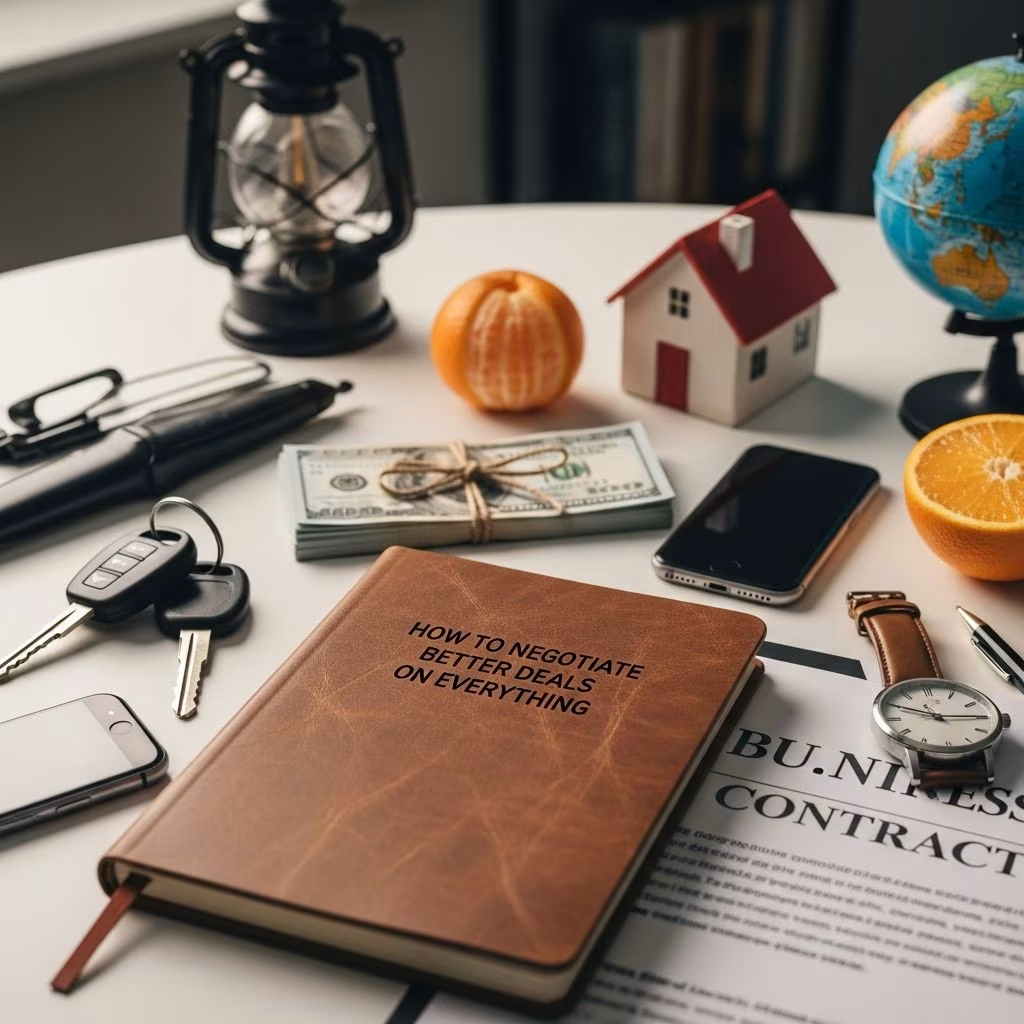
Everything is Negotiable: 4 Simple Strategies for Getting Awesome Deals
Most people assume that prices are fixed and non-negotiable, especially in retail environments where price tags seem set in stone. However, the reality is far different. Nearly everything can be negotiated if you approach it strategically and respectfully. Whether you’re shopping at a bookstore, buying furniture, or making any significant purchase, understanding how to negotiate effectively can save you substantial money. This article explores four proven strategies that can help you secure better deals on items you thought had fixed prices.
Can You Really Negotiate in a Bookstore? A Real-World Example
To demonstrate that negotiation works even in traditionally non-negotiable retail environments, consider this real-world case study. While browsing a local bookstore, an opportunity arose to test negotiation principles in practice. The desired item carried a cover price of $9.95, a price that seemed firmly established. Rather than accepting this price, negotiation techniques were employed, resulting in securing the same book for $6.00—a remarkable 40% discount.
This success wasn’t achieved through aggression or manipulation. Instead, it relied on understanding the dynamics of the transaction, researching the business model, identifying the decision-maker, and presenting a respectful proposal. The bookstore owner agreed to the lower price, even requesting discretion about the arrangement. This example proves that negotiation opportunities exist in places where most people would never think to ask.
Strategy 1: Determine the Seller’s Cost
One of the most effective negotiation strategies involves understanding the economics of the transaction from the seller’s perspective. Before entering any negotiation, invest time in researching what the seller likely paid for the item. This information becomes your foundation for proposing a price that benefits both parties.
In the bookstore example, understanding that retailers typically purchase books at approximately 50% of the cover price was crucial. If a book carries a $9.95 cover price, the bookstore owner likely paid around $4.97 or $5.00 for it. Proposing $6.00 as the sale price meant the owner would still earn a profit, making the negotiation attractive rather than threatening.
The underlying principle is important to understand: the goal of negotiation isn’t to cheat the seller or eliminate their profit. Rather, it’s to find a price point that works for both you and the seller. When both parties feel they’ve benefited, the negotiation succeeds. This approach differs dramatically from Hollywood portrayals of negotiations as battles to be won by humiliating the other person.
Here are ways to research seller costs:
- Investigate industry margins and markup percentages
- Research wholesale costs online through business databases
- Look for manufacturing or import costs relevant to the product
- Consider seasonal variations that might affect seller costs
- Ask clarifying questions that reveal cost structures
Strategy 2: Make the Other Person Feel Good
Psychology plays an enormous role in successful negotiations. When people feel respected and appreciated, they’re more willing to help you achieve your goals. This strategy emphasizes treating the negotiation as a human conversation rather than a confrontation.
Consider the difference between two approaches to negotiating a gym membership rate:
- Aggressive approach: “That’s all I’m going to pay. Take it or leave it!” This approach creates defensiveness and resentment.
- Respectful approach: “If there’s any way you can do this for me, I would really appreciate it.” This approach invites cooperation.
Most people inherently want to help others, especially when asked politely. When you frame your negotiation request as an appeal for help rather than a demand, you tap into this natural inclination. The person you’re negotiating with will feel better about themselves for helping you, and they’ll be more motivated to find creative solutions.
This strategy involves several key elements:
- Use respectful language and tone throughout the conversation
- Acknowledge the other person’s position and constraints
- Frame your request as something they can help you with
- Express genuine gratitude for their consideration
- Avoid ultimatums or aggressive language
- Show appreciation for their business and relationship
When you make the other person feel good about the negotiation, they’re more likely to agree to your terms and may even offer better terms than you requested. Positive feelings create positive outcomes.
Strategy 3: Negotiate With the Right Person
Not everyone has the authority to negotiate prices. One of the most critical aspects of successful negotiation involves identifying who holds decision-making power. Approaching the wrong person wastes time and often results in automatic refusals.
In the bookstore case study, the owner was the ideal negotiating partner because she held complete authority to make pricing decisions. She could assess the situation, understand her profit margins, and make an immediate decision. An employee working at the register would likely have had no authority to discount prices and would have been unable to help.
Finding the right person also means finding the right kind of business. In family-owned or independent businesses, owners or senior managers typically have negotiating authority. In large chain stores, this authority is often centralized, and individual employees cannot make pricing decisions.
When attempting to negotiate, consider these approaches:
- Ask to speak with the manager or owner directly
- If the owner isn’t present, ask when they’re typically available
- Inquire about which employees have authority to adjust prices
- Look for floor managers or department heads in larger establishments
- Ask about slightly damaged items that managers might discount
- Never assume someone lacks authority without asking
The best negotiation partners are those with genuine decision-making power. They can assess your proposal on its merits and make immediate decisions without needing approval from above. When you identify and approach these individuals, your success rate increases dramatically.
Strategy 4: Research and Preparation
Successful negotiation doesn’t happen spontaneously. It requires thorough research and careful preparation beforehand. The more information you gather before entering the negotiation, the more confident and effective you’ll be during the conversation.
Preparation involves several key components:
- Market research: Understand what similar items cost at different retailers
- Industry knowledge: Learn about typical markups and profit margins in the relevant industry
- Timing: Consider seasonal factors, inventory levels, and business cycles that might affect willingness to negotiate
- Competitive analysis: Research alternative options available to you, which strengthens your negotiating position
- Seller information: Understand the business type and decision-making structure
- Your own limits: Know your maximum price and minimum acceptable terms before negotiating
When you enter a negotiation well-prepared, you project confidence. You can speak intelligently about the value proposition, reference market comparisons, and present your case logically rather than emotionally. Sellers recognize and respect preparation, and it significantly increases the likelihood they’ll take your proposal seriously.
Key Principles for Negotiation Success
Beyond the four main strategies, several underlying principles apply to all negotiations:
- Frame it as collaboration: Position the negotiation as finding a solution that works for both parties, not as a competition where one person wins and another loses.
- Listen actively: Pay attention to the seller’s concerns and constraints. Understanding their position helps you craft proposals they’ll accept.
- Be willing to walk away: Your willingness to abandon the negotiation if terms aren’t acceptable gives you real leverage. Conversely, appearing desperate weakens your position.
- Start strategically: Make your initial offer thoughtfully. Too aggressive an opening creates offense; too timid an opening anchors the negotiation at an unfavorable level.
- Be flexible: Successful negotiations often involve creative compromises that address both parties’ core needs.
Situations Where Negotiation Works Best
| Business Type | Likelihood of Success | Best Approach |
|---|---|---|
| Family-owned businesses | Very High | Ask for owner; show respect for their business |
| Independent retailers | High | Identify decision-maker; research their margins |
| Large chain stores | Low | Ask about damaged merchandise or manager authority |
| Antique or specialty shops | Very High | Research comparable items; suggest fair value |
| Service businesses | High | Inquire about package deals or long-term discounts |
Common Mistakes to Avoid
While negotiation can be highly effective, certain mistakes undermine success. Awareness of these pitfalls helps you avoid them:
- Being disrespectful: Rudeness or aggression immediately shuts down negotiations and damages relationships.
- Approaching the wrong person: Wasting time with employees who lack authority frustrates everyone involved.
- Making unrealistic proposals: Suggesting prices so low they eliminate all profit creates offense rather than interest.
- Failing to prepare: Entering negotiations without research leaves you vulnerable to skilled negotiators.
- Getting emotional: Allowing frustration or disappointment to drive your words damages your credibility.
- Negotiating everywhere: Some situations genuinely don’t allow negotiation. Knowing when to negotiate and when to accept prices demonstrates good judgment.
Frequently Asked Questions About Negotiation
Q: Is it appropriate to negotiate in all retail environments?
A: No. While many situations allow negotiation, some don’t. Big-box retailers with fixed pricing policies typically won’t negotiate. However, independent businesses, service providers, and specialty retailers often will. Always ask respectfully if negotiation is possible.
Q: What’s the best opening offer to make?
A: Your opening offer should be reasonably lower than your target price but not so extreme that it offends. Research suggests opening at 20-30% below your target creates room for negotiation while remaining realistic enough to be taken seriously.
Q: How do I know the seller’s cost?
A: Research industry markup percentages, wholesale pricing databases, and comparable sales. You won’t always know exact costs, but educated estimates based on industry standards work well.
Q: What should I do if the seller says no immediately?
A: Don’t give up immediately. Express that you understood their position and ask if there’s any flexibility. Sometimes “no” is an opening position rather than a final answer.
Q: Can I negotiate online?
A: Yes, though it’s more challenging than in-person negotiation. Email or chat negotiations require clear writing and patience. Direct phone calls work better than written communication for online negotiations.
Q: Should I negotiate if I’m not comfortable doing so?
A: Building negotiation skills takes practice. Start with lower-stakes situations like asking for discounts on smaller items. As you gain confidence and experience, you can tackle more significant negotiations.
References
- Getting to Yes: Negotiating Agreement Without Giving In — Roger Fisher, William L. Ury, and Bruce Patton. Houghton Mifflin Harcourt. 1981. https://www.pon.harvard.edu/books/getting-to-yes/
- The Penny Hoarder: How to Negotiate the Best Deal on Everything — The Penny Hoarder Staff. 2024. https://www.thepennyhoarder.com/save-money/negotiation-strategies/
- Negotiation Skills: Definition, Types, and How to Improve Them — Harvard Program on Negotiation. Harvard Law School. 2023. https://www.pon.harvard.edu/
- The Psychology of Negotiation: Understanding Human Behavior in Deals — American Psychological Association. 2023. https://www.apa.org/
- Retail Profit Margins and Industry Standards — U.S. Bureau of Labor Statistics. U.S. Department of Labor. 2024. https://www.bls.gov/
This article is general information, not personal financial advice. Consider your own situation, or speak with a licensed adviser, before acting on it.


