

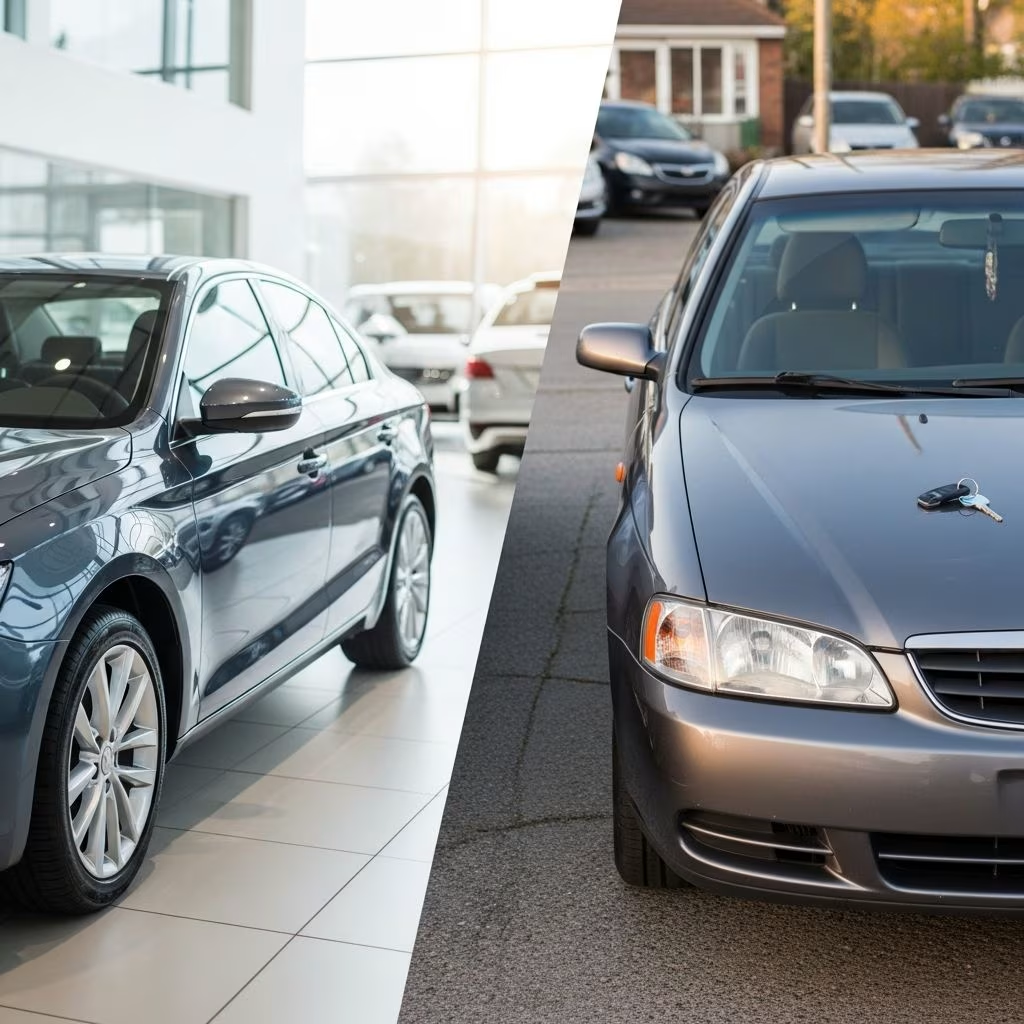
Choosing between a new car and a used car is one of the biggest money decisions many people make. A car affects your monthly budget, your savings goals, and how quickly you can build long-term wealth. This guide walks you through the main differences, pros and cons, and the questions to ask so you can choose the option that fits your finances and your life.
Understanding the true cost of buying a car
When you ask yourself, “Should I buy a new or used car?”, the sticker price is only the beginning. A smart decision comes from looking at the total cost of ownership, not just the purchase price.
Key costs to consider over the years you own the car include:
- Purchase price and fees
- Loan interest and financing terms
- Insurance premiums
- Fuel and routine maintenance
- Repairs and unexpected issues
- Registration, taxes, and inspections
- Depreciation (how quickly the car loses value)
New cars typically cost more upfront but often have lower repair costs and better interest rates, while used cars usually have a smaller purchase price but may cost more in financing and maintenance.
The pros and cons of buying a new car
Buying a brand new car can feel exciting and simple: you get the exact color, features, and technology you want. But there are trade-offs that matter for your finances.
Benefits of buying a new car
- Full warranty coverage: Most new cars come with manufacturer warranties, commonly around 3 years or 36,000 miles for basic coverage, and sometimes longer for powertrain components. This can significantly reduce out-of-pocket repair costs during the first few years.
- Lower repair and maintenance issues early on: New cars are less likely to have mechanical problems, which can mean fewer unexpected repair bills in the short term.
- Latest safety and tech features: Newer models often include improved crash protection, driver-assistance systems, and better fuel efficiency, which can improve safety and lower operating costs.
- More favorable financing rates: Lenders often offer lower interest rates on new car loans compared to used, which can reduce total interest costs over the life of the loan.
- Customizable options: You can usually choose the trim, options, and packages you want rather than compromising on what is available on the used market.
Drawbacks of buying a new car
- Higher purchase price: New vehicles are significantly more expensive. Recent data show the average new vehicle price was above $47,000, compared to around $27,000 for used.
- Rapid depreciation: New cars typically lose about 20% or more of their value in the first year and around 10% per year in the next few years. This means your car can be worth much less than you paid relatively quickly.
- Larger down payment recommended: To avoid owing more than the car is worth (being “upside down” on your loan), a down payment of at least 20% on a new car is often advised.
- Higher taxes and fees: Because sales tax and registration fees are tied to the car’s value, you will pay more of both on a new vehicle than on an older, cheaper one.
- More expensive insurance: Insurance premiums are usually higher for new cars because they cost more to repair or replace in the event of a claim.
The pros and cons of buying a used car
A used car is often considered the frugal choice, especially if you prioritize a lower monthly payment or want to avoid tying up too much of your income in transportation.
Benefits of buying a used car
- Lower purchase price: Used cars cost substantially less than new ones, often by tens of thousands of dollars. A lower price can mean a smaller loan, lower monthly payment, or the ability to pay cash.
- Reduced depreciation hit: A car that is a few years old has usually already gone through the steepest part of its depreciation curve. After about 5 years, a car may be worth roughly half of its original price, and depreciation tends to slow after that.
- Smaller down payment: A common guideline is at least 10% down on a used car, which is generally much more affordable than 20% down on a new vehicle given the lower price.
- Potential warranty coverage through certified pre-owned: Dealer-certified pre-owned (CPO) cars are typically inspected and may include extended warranties, which can reduce risk and repair costs.
- Lower taxes, fees, and often insurance: Because used cars are cheaper, you usually pay less in sales tax, registration fees, and insurance premiums.
Drawbacks of buying a used car
- Higher interest rates on loans: Lenders commonly charge higher interest rates on used car loans, sometimes up to nearly double the rate for new car financing. This can increase the total cost of borrowing even if the loan amount is smaller.
- Greater risk of repairs: Older vehicles are more likely to need major repairs and more frequent maintenance, which can add unpredictability to your budget.
- Limited choice of features: You may need to compromise on color, trim, or specific features when buying used, especially if you are working within a strict price range.
- Potential unknown history: Unless you have detailed maintenance records and a vehicle history report, there may be hidden issues such as previous accidents, flood damage, or poor maintenance.
New vs used car: key financial differences
To see how new and used cars differ financially, it helps to compare several core factors side by side.
| Factor | New Car | Used Car |
|---|---|---|
| Average price | Higher (around mid-$40,000s to $50,000s on average) | Lower (around upper $20,000s on average) |
| Monthly payment | Higher average payment (e.g., around $730+) | Lower average payment (e.g., around $520+) |
| Interest rate | Generally lower APR | Typically higher APR |
| Down payment guideline | Often 20% recommended | Often 10% recommended |
| Depreciation speed | Fastest in first years | Slower once several years old |
| Repairs and maintenance | Lower initially; often covered by warranty | Higher risk of repairs; warranty depends on age and program |
| Insurance | Generally more expensive | Generally less expensive |
Questions to ask before you decide
Beyond the numbers, the right decision depends on your personal finances and priorities. Before choosing new or used, work through these questions honestly.
1. What is my total car budget?
Decide on a maximum all-in budget, not just a target monthly payment. Consider:
- How much cash you can put down without touching your emergency fund
- How big a monthly payment you can afford while still saving for other goals
- How long you are comfortable making payments (shorter terms usually cost less in interest overall)
Financial educators often suggest that all car expenses (payment, insurance, fuel, and maintenance) stay within a manageable portion of your take-home pay to avoid crowding out savings and debt payoff.
2. How stable is my income?
If your income is variable, irregular, or less predictable, the lower payment and reduced risk of owing a large balance on a depreciating asset may make a simpler, less expensive used car more prudent. If you have a very stable income, strong savings, and low debt, you may be able to comfortably handle a new car without jeopardizing your financial goals.
3. How long do I plan to keep the car?
- If you plan to keep the car for many years, a new car might make sense because you can enjoy many years of use from it, and the cost per year may balance out over time.
- If you expect to change cars frequently, buying used can help you avoid the steepest depreciation and may be more cost-effective.
In both cases, driving a car for as long as it is reliable and economical to maintain is usually the most budget-friendly strategy.
4. How important are reliability and warranty coverage?
If you rely heavily on your car for work, childcare, or long commutes, reducing the risk of breakdowns may be a high priority. A new car (or a newer certified pre-owned car) with warranty coverage can offer more peace of mind.
If you have flexibility, access to public transportation, or a second vehicle, you may be more comfortable accepting the higher repair risk that can come with an older used car.
5. How does this purchase affect my bigger money goals?
A car is a depreciating asset. Every dollar you spend on a vehicle is a dollar you cannot invest, use to pay off debt, or save for a home or retirement. Before choosing a more expensive car (new or used), ask:
- Will this car payment delay paying off high-interest debt?
- Will it reduce how much I can invest for retirement or other long-term goals?
- Could a less expensive car allow me to reach financial independence sooner?
Balancing comfort and convenience now with financial freedom later is at the heart of the new vs used car decision.
How to make a smart car purchase decision
Once you know your budget and priorities, you can use a simple process to decide whether a new or used car is best for you.
Step 1: Define your needs vs. wants
- List your must-have features (such as number of seats, safety ratings, fuel type, transmission, cargo space).
- List your nice-to-have features (like premium audio, sunroof, leather seats, or advanced tech).
- Commit to not going over budget just to add extra “wants”.
Step 2: Set a realistic price range
Using your budget, determine:
- The maximum out-the-door price (including taxes and fees) you can afford.
- Your target monthly payment, based on a loan term that is as short as you can reasonably manage.
Compare what kinds of new cars and what kinds of used cars fall into that range. A modest new car and a higher-trim used car may both be options; you can then weigh features against long-term costs.
Step 3: Estimate total cost of ownership
For each car you are seriously considering (new or used), estimate:
- Loan payment and total interest over the life of the loan
- Insurance quotes
- Expected fuel costs based on mileage and your driving habits
- Estimated maintenance and repair costs (using reports, reviews, and reliability ratings)
- How much the car is likely to be worth in several years (its resale value)
Consumer and finance organizations provide useful data on typical financing rates, average payments, and ownership costs that you can use as a benchmark when comparing options.
Step 4: Consider financing carefully
- Shop around with banks, credit unions, and reputable lenders before going to the dealership.
- Aim for the shortest loan term you can afford to limit interest costs and avoid paying on a very old car.
- Avoid focusing only on the monthly payment; look at the total amount you will repay.
- For used cars, be aware that financing rates may be significantly higher, which can narrow the savings compared to a new car.
Step 5: Protect yourself with research
- For used cars, always get a vehicle history report and consider an independent mechanical inspection before buying.
- Check safety ratings and recall information for both new and used options.
- Understand the warranty terms and what is (and is not) covered.
When a new car might make sense
A new car could be a good fit if:
- You have stable income, a solid emergency fund, and low debt.
- You can make a strong down payment and still afford your other financial goals.
- You plan to keep the car long enough to spread out the higher upfront cost.
- You value having the latest safety features and strong warranty coverage.
- You can secure a low interest rate and avoid expensive dealer add-ons.
When a used car might be the better choice
A used car may be wiser if:
- You want to limit how much of your budget goes to transportation.
- You are focusing on paying off debt or building savings quickly.
- You are comfortable with some repair risk in exchange for a lower purchase price.
- You can pay cash or minimize how much you borrow.
- You are willing to shop around, check history reports, and be patient to find a good vehicle.
Frequently Asked Questions (FAQs)
Q: Is it always better financially to buy a used car?
A: Not always. Used cars usually have lower purchase prices, but they can come with higher interest rates, more maintenance, and fewer years of warranty coverage. New cars often cost more upfront but may offer lower financing rates and lower repair costs in the early years. The better choice depends on your budget, how long you will keep the car, and your tolerance for repair risk.
Q: How much should I spend on a car?
A: A common guideline is to choose a car that allows you to comfortably cover the payment, insurance, fuel, and maintenance while still saving for emergencies, retirement, and other goals. Many financial educators suggest keeping transportation costs to a limited share of your take-home pay so your car does not prevent you from building wealth.
Q: What loan term is best when buying a car?
A: Shorter loan terms usually cost less in total interest, even though the monthly payments are higher. Very long loans can keep you paying for a car long after it has lost much of its value and can increase the risk that you will owe more than the car is worth if you need to sell or if it is totaled.
Q: Are certified pre-owned (CPO) cars a good compromise?
A: Certified pre-owned vehicles can offer a middle ground. They are used, often only a few years old, but are typically inspected by the manufacturer or dealer and may include extended warranty coverage. This can provide some of the peace of mind of a new car with a lower price than buying brand new.
Q: Should I ever buy a car with little or no money down?
A: Low or zero down payment loans can lead to owing more on your loan than the car is worth, especially with a new vehicle that depreciates quickly. Putting money down reduces this risk and lowers both your monthly payment and total interest cost. If you do choose a low down payment, it is especially important to keep the overall price reasonable and the loan term as short as possible.
References
- New Versus Used: Budgeting Tips on Buying a Car — Quicken. 2023-08-15. https://www.quicken.com/blog/new-versus-used-budgeting-tips-buying-car/
- Used Car vs. New Car: Which Should You Buy? — Experian. 2024-10-21. https://www.experian.com/blogs/ask-experian/used-vs-new-car/
- How to Finance a Used Car — Consumer Reports. 2023-05-05. https://www.consumerreports.org/money/car-financing/how-to-finance-a-used-car-a7337825677/
This article is general information, not personal financial advice. Consider your own situation, or speak with a licensed adviser, before acting on it.


