

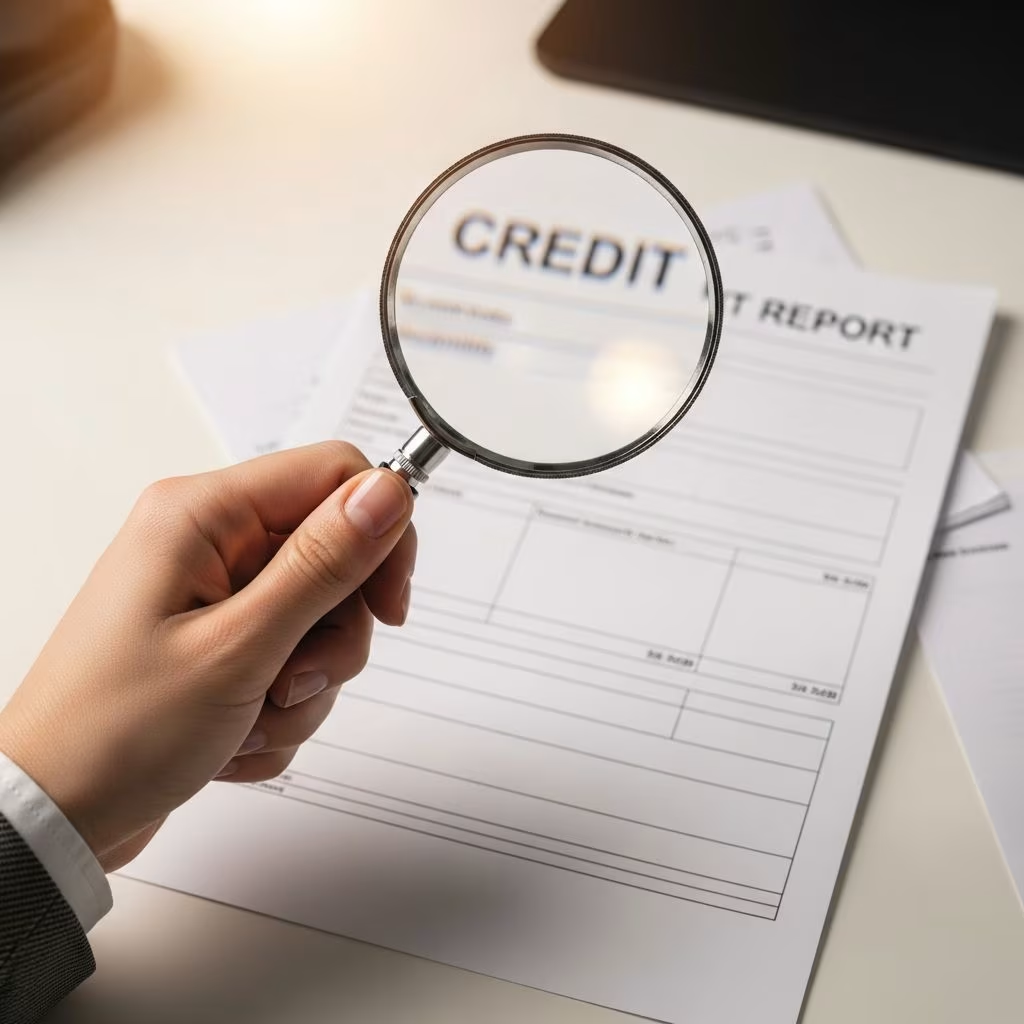
Many people assume everyone has a credit report, but that’s not always true. A credit report compiles your financial history from credit bureaus, yet some individuals have none due to limited activity. This guide explains why this happens, verification methods, implications, and steps to build credit.
Understanding Credit Reports and Bureaus
Credit reports are records maintained by agencies like Equifax, Experian, and TransUnion, detailing payment history, debts, and public records. These reports influence loan approvals, interest rates, rentals, and jobs. The Fair Credit Reporting Act (FCRA) governs their accuracy and use, ensuring fair practices.
Each bureau collects data independently from lenders, utilities, and public sources. Not all creditors report to every bureau, leading to variations. A report includes personal info, tradelines (accounts), inquiries, and public records like bankruptcies.
| Bureau | Key Data Sources | Common Uses |
|---|---|---|
| Equifax | Lenders, banks, public records | Mortgages, auto loans |
| Experian | Credit cards, retail accounts | Personal loans, credit cards |
| TransUnion | Utilities, collections | Rentals, employment checks |
Reasons You Might Lack a Credit Report
No credit report means no file exists at one or more bureaus. Common causes include:
- New to credit: Young adults or recent immigrants with no accounts.
- Financial minimalism: Paying everything in cash or debit, avoiding loans/credit cards[10].
- Thin file: Insufficient reportable activity; minor accounts may not trigger a file.
- Errors or freezes: Identity issues or security freezes blocking data.
- Non-reporting creditors: Some utilities or rent don’t report unless delinquent.
Under FCRA, bureaus must create files when creditors submit data, but without activity, none forms.
How to Confirm If You Have No Credit Report
Verify status via AnnualCreditReport.com, authorized by FCRA for free weekly reports from all three bureaus. Steps:
- Visit AnnualCreditReport.com.
- Provide ID details (SSN, address).
- Request reports; if none, bureaus notify “no file found”.
Direct bureau sites offer free reports periodically. Expect notices like “insufficient data” if no report exists.
Consequences of Having No Credit History
Absence of a report often equals “no credit score,” treated like poor credit by lenders. Impacts:
- Higher interest rates or denials on loans/mortgages.
- Challenges securing apartments or jobs requiring checks.
- Limited insurance options or higher premiums.
Fannie Mae requires tri-merge reports for loans; no file may block underwriting. FCRA mandates disclosures for denials.
Strategies to Establish Your First Credit Report
Building starts with reportable activity. Proven methods:
- Secured credit card: Deposit-backed card reports payments to bureaus[10].
- Credit-builder loan: Pays itself; reports positive history.
- Become authorized user on trusted person’s card with good history.
- Retail cards or small loans: Start small, pay on time[10].
Aim for activity across bureaus. On-time payments build positive data within months.
Legal Rights Under FCRA for No-File Situations
FCRA protects even those without reports:
- Free annual access to check status.
- Dispute inaccuracies once file starts.
- Fraud alerts if identity concerns.
- No adverse action without notice.
Amendments like FACTA ensure score disclosures. CFPB oversees compliance.
Advanced Tips for Rapid Credit Building
For faster results:
| Method | Time to Impact | Pros | Cons |
|---|---|---|---|
| Secured Card | 1-3 months | Low risk, builds score | Requires deposit |
| Credit Builder Loan | 3-6 months | Forced savings | Fees possible |
| Authorized User | Immediate | No responsibility | Relies on primary user |
| Utility Reporting Services | 6+ months | No new debt | Limited bureaus |
Monitor via free tools; diversity accounts (installment + revolving) optimizes scores[10]. Avoid hard inquiries early.
Common Myths About Creditless Status
- Myth: No report means bad credit. Fact: It’s neutral; build positively.
- Myth: Can’t rent without credit. Fact: Use alternatives like higher deposits.
- Myth: Immigrants auto-get reports. Fact: Need U.S. activity.
FAQs
Can I get a loan with no credit report?
Possible via no-credit-check options or co-signers, but expect higher costs. Build first for better terms.
How long to build a credit report from nothing?
3-6 months with consistent activity[10].
Do all debts appear on reports?
Only those reported by creditors; medical/payday often don’t unless collections.
What’s a thin credit file vs. no file?
Thin has minimal data; no file has zero.
Can I freeze a non-existent report?
Yes, for prevention; contact bureaus.
Long-Term Financial Health Beyond Reports
Once established, maintain via low utilization (<30%), timely payments. Diversify sources; review quarterly. FCRA empowers corrections. For mortgages, ensure 7-year history per guidelines.
Non-traditional data like rent reporting emerges, expanding access. Stay informed via official sites.
References
- Requirements for Credit Reports — Fannie Mae. 2023. https://selling-guide.fanniemae.com/sel/b3-5.2-01/requirements-credit-reports
- The Fair Credit Reporting Act (FCRA) — Electronic Privacy Information Center. 2023-10-01. https://epic.org/fcra/
- Credit Reporting — Office of the Comptroller of the Currency (OCC). 2024. https://www.occ.treas.gov/topics/consumers-and-communities/consumer-protection/credit-reporting/index-credit-reporting.html
- Fair Credit Reporting Act (Regulation V) — National Credit Union Administration (NCUA). 2023. https://ncua.gov/regulation-supervision/manuals-guides/federal-consumer-financial-protection-guide/compliance-management/lending-regulations/fair-credit-reporting-act-regulation-v
- Fair Credit Reporting Act — Bureau of Justice Assistance (BJA). 2023. https://bja.ojp.gov/program/it/privacy-civil-liberties/authorities/statutes/2349
- Fair Credit Reporting Act — Federal Trade Commission (FTC). 2024-01-01. https://www.ftc.gov/legal-library/browse/statutes/fair-credit-reporting-act
This article is general information, not personal financial advice. Consider your own situation, or speak with a licensed adviser, before acting on it.


