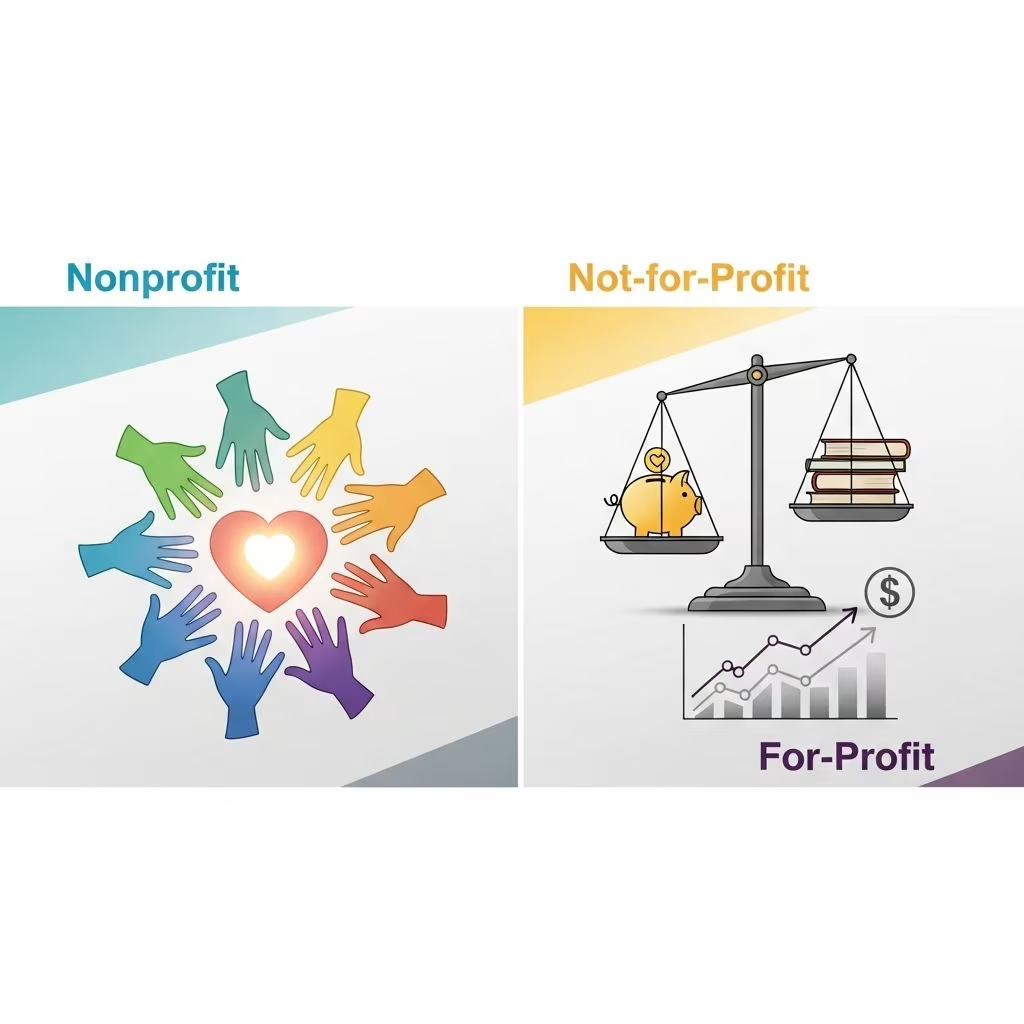
Understanding the landscape of organizations dedicated to social good requires distinguishing between **nonprofit**, **not-for-profit**, and **for-profit** entities. While all may contribute to community welfare, their legal frameworks, funding mechanisms, and operational priorities differ significantly. This article delves into these distinctions, offering clarity for donors, volunteers, business leaders, and aspiring organizers.
Defining the Core Organizational Types
Each type serves unique purposes within the charitable and business ecosystems. Nonprofits prioritize broad societal benefits, not-for-profits focus on specific groups, and for-profits blend profit motives with optional social initiatives.
Nonprofit Organizations: Champions of Public Benefit
Nonprofits are structured to advance charitable, educational, scientific, or religious causes that benefit the wider public. Governed by strict IRS regulations, particularly under 501(c)(3) status, they reinvest all surpluses into mission-driven activities rather than distributing profits to individuals. Examples include disaster relief agencies like the American Red Cross or hunger alleviation groups such as Feeding America.
These entities thrive on public support, ensuring resources address pressing needs like healthcare access or environmental conservation. Their tax-exempt status incentivizes donations, as contributors can claim deductions, fostering a cycle of philanthropy.
Not-for-Profit Entities: Member-Centric Operations
Not-for-profits, often called mutual benefit organizations, cater to designated communities such as hobbyists, residents, or professionals. They generate revenue through dues, fees, and events, reinvesting funds to enhance member services rather than pursuing private gain. Common instances encompass homeowners associations, parent-teacher groups, and amateur sports leagues.
Unlike nonprofits, donations to these groups are seldom tax-deductible unless they qualify under specific IRS codes like 501(c)(7) for social clubs. Their scope remains narrow, prioritizing internal improvements like facility upgrades or exclusive programs.
For-Profit Organizations: Profit with Purpose
For-profits operate within commercial frameworks, deriving income from sales, services, or investments. While their primary aim is shareholder value, many integrate corporate social responsibility (CSR) to support causes, blending revenue generation with societal impact.
These businesses face full taxation and enjoy flexibility in fund allocation, enabling rapid scaling or innovation. Examples include companies funding community projects alongside core operations.
Comparative Analysis: Key Distinctions at a Glance
To highlight variances, consider this overview table:
| Aspect | Nonprofit | Not-for-Profit | For-Profit |
|---|---|---|---|
| Purpose | Public good (e.g., education, health) | Member benefits (e.g., clubs, associations) | Profit generation with optional CSR |
| Funding Sources | Donations, grants (tax-deductible) | Membership dues, fees | Sales, investments |
| Tax Status | Typically 501(c)(3) exempt | May be exempt (e.g., 501(c)(6/7)) | Taxable |
| Profit Use | Reinvest in mission | Reinvest for members | Distribute to owners/shareholders |
| Governance | Board of directors, strict reporting | Member-elected leaders | Executives, shareholders |
This table underscores how nonprofits emphasize altruism, not-for-profits focus inwardly, and for-profits prioritize financial returns.
Funding and Revenue Strategies
Financial models shape sustainability and growth for each type.
- Nonprofits: Depend on diversified streams including individual gifts, corporate sponsorships, and government grants. Success hinges on impact storytelling to attract recurring donors.
- Not-for-Profits: Rely predominantly on steady member contributions, supplemented by event revenues. Limited donor appeal stems from non-deductible status.
- For-Profits: Leverage market-driven sales, allowing predictable scaling. CSR budgets often mirror profits, enabling targeted philanthropy.
Nonprofits face revenue volatility from donor fluctuations, while for-profits benefit from commercial stability.
Tax Implications and Legal Frameworks
Tax treatment profoundly influences operations. The IRS delineates nonprofits as 501(c)(3) public charities, exempting them from federal income tax and rendering donations deductible. Not-for-profits may access exemptions under other subsections but rarely offer donor benefits. For-profits remit corporate taxes, though deductions for charitable contributions apply.
Compliance demands rigorous reporting for tax-exempt groups, including Form 990 filings to maintain transparency. Violations risk status revocation, emphasizing accountability.
Governance and Management Challenges
Leadership structures vary, impacting efficiency.
- Nonprofits feature volunteer-heavy boards guiding missions without ownership stakes, fostering community alignment but complicating decisions.
- Not-for-profits empower members via elections, promoting tailored services yet risking internal conflicts.
- For-profits employ professional executives focused on KPIs, streamlining operations but potentially sidelining social goals.
Managing nonprofits proves arduous due to regulatory hurdles and unstable funds, contrasting for-profits’ autonomy.
Real-World Examples and Case Studies
Habitat for Humanity exemplifies nonprofits, channeling donations into housing for the needy. A local PTA represents not-for-profits, using dues for school enhancements. Meanwhile, a corporation like Patagonia integrates for-profit sales with environmental grants.
These cases illustrate adaptive strategies: nonprofits scale via partnerships, not-for-profits via engagement, and for-profits via innovation.
Choosing the Right Structure for Your Goals
Entrepreneurs weighing options should align structure with objectives. Public impact favors nonprofits; group benefits suit not-for-profits; revenue potential points to for-profits. Conversion between types demands legal navigation, often involving asset reallocation.
Frequently Asked Questions (FAQs)
What defines a nonprofit organization?
A nonprofit advances public welfare through mission-aligned activities, reinvesting surpluses without private inurement.
Are not-for-profits identical to nonprofits?
No; not-for-profits serve limited memberships, lacking broad charitable tax perks.
How do nonprofits handle surpluses?
Surpluses fund program expansion, staff, or infrastructure to amplify impact.
Can nonprofits transition to for-profit status?
Yes, via complex restructuring, though rare due to mission shifts.
Do for-profits qualify as charities?
Not inherently; they pursue profits, with CSR as supplementary.
Navigating these structures empowers strategic philanthropy and business planning.
References
- Nonprofit, Not-for Profit & For-Profits: Key Differences — U.S. Chamber of Commerce. 2023-10-12. https://www.uschamber.com/co/start/strategy/nonprofit-vs-not-for-profit-vs-for-profit
- Nonprofit vs. not-for-profit: Definitions + differences — Bonterra Tech. 2024-05-15. https://www.bonterratech.com/blog/nonprofit-vs-not-for-profit
- 7 Key Differences Between Nonprofit and For-profit Organizations — Norwich University Online. 2023-08-20. https://online.norwich.edu/online/about/resource-library/7-key-differences-between-nonprofit-and-profit-organizations
- What’s the Difference Between a Nonprofit and Not-For-Profit? — My LifeSite. 2023-11-05. https://mylifesite.net/blog/post/whats-the-difference-between-a-nonprofit-and-not-for-profit
- EO operational requirements: Private foundations and public charities — Internal Revenue Service (IRS.gov). 2025-01-10. https://www.irs.gov/charities-non-profits/eo-operational-requirements-private-foundations-and-public-charities
This article is general information, not personal financial advice. Consider your own situation, or speak with a licensed adviser, before acting on it.