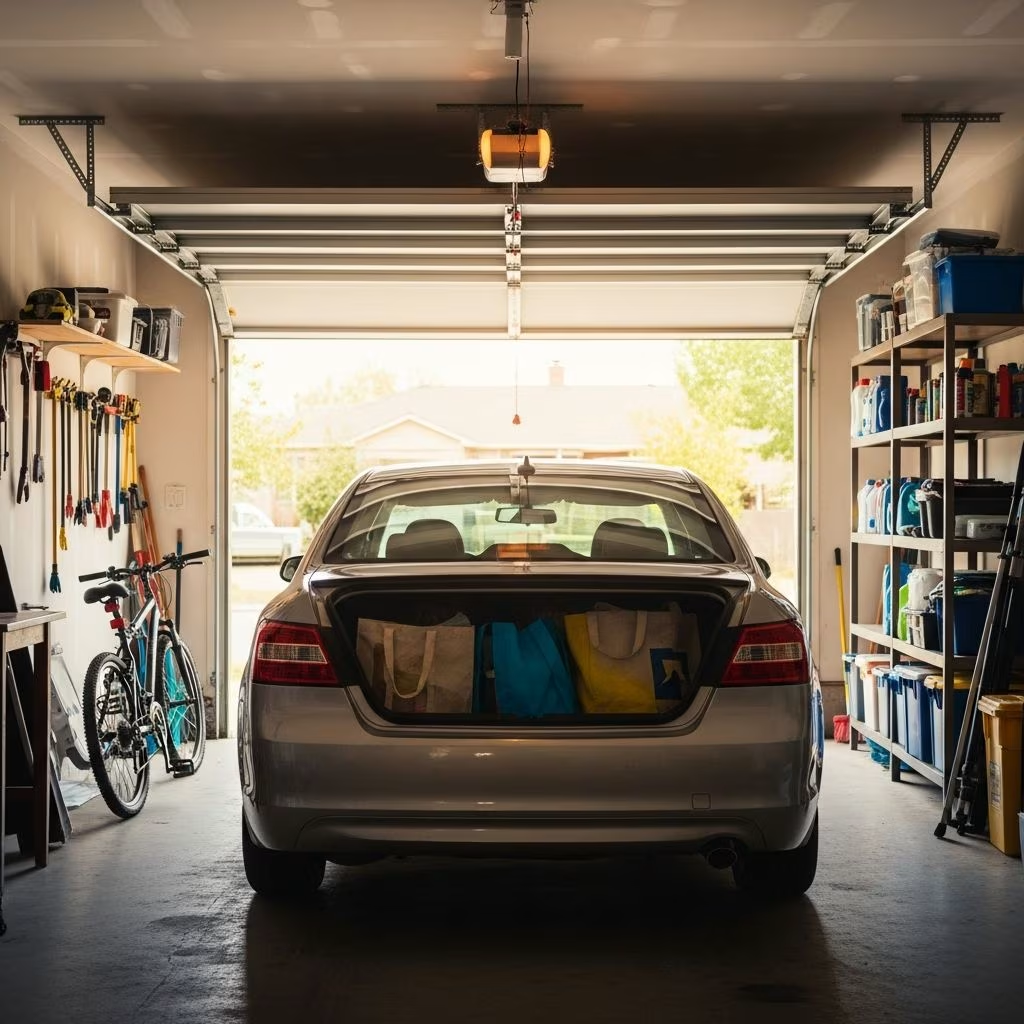
Owning multiple cars might seem like a necessity in modern life, but what if you could slash your transportation costs dramatically by going down to just one? A one-car household can save you thousands each year on payments, insurance, gas, maintenance, and more. This approach gained traction during the pandemic when remote work emptied roads and families reevaluated their needs. Today, with rising car prices and fuel costs, it’s more relevant than ever.
In this comprehensive guide, we’ll break down the key considerations, hidden costs of car ownership, strategies for sharing one vehicle, and answers to common questions. Whether you have two adults or a busy family, learn how to make a one-car lifestyle work while padding your savings account.
Key Considerations Before Downsizing
Transitioning to a one-car household isn’t for everyone, but it can be transformative if your lifestyle aligns. The biggest factors revolve around your household dynamics and daily routines. Evaluate these to see if it’s feasible.
1. Number of Drivers
The ideal setup for a one-car household is a home with **two adult drivers**. Syncing schedules becomes straightforward when there’s just one primary commuter and one flexible partner. More drivers require heightened coordination, patience, and cooperation.
For instance, households with two adults and driving teenagers might struggle unless supplemented by excellent public transit. However, proactive families have downsized from three cars to two by tracking shared calendars. Use apps like Google Calendar or Cozi to map out everyone’s driving needs daily and weekly.
- Pro tip: Start with a trial week—designate one car as ‘inactive’ and log any conflicts.
- Urban dwellers benefit most due to walkability and transit options.
2. Driving to Work and School
If all household members commute to distant jobs or schools where walking or buses aren’t viable, sticking with two cars might be wiser. But the rise of remote work and online schooling has opened doors for many.
One partner working from home? That’s a game-changer. The car can serve the full-time commuter while the remote worker handles errands on foot, bike, or via rideshares. During the pandemic, roads were emptier, and families like one couple who sold their second car saved $900 yearly on insurance alone while barely driving 6,000 miles annually.
Real-life example: A family reduced usage post-retirement and remote work, letting their new car sit for days, proving low-mileage lifestyles thrive on one vehicle.
The Price of Owning a Car
Car ownership costs have skyrocketed. New cars average around $40,000, used ones up 40% due to pandemic shortages. Beyond purchase price, ongoing expenses add up quickly—especially with multiples.
Car Payment
Monthly car loans for new vehicles often hit $500 or more per car. Selling one eliminates this burden instantly. Imagine redirecting that cash to debt payoff, emergencies, or investments. Families report saving enough for cash purchases on future vehicles.
Maintenance
AAA estimates average annual maintenance at $792 per vehicle for oil changes, tires, brakes, and wiper blades—excluding major repairs on older cars. Double that for two cars. With one, you’re halving these costs. Rideshares or rentals for rare needs often cost less; Kayak noted average daily rentals at $81 in late 2021.
| Expense Category | One Car Annual Cost | Two Cars Annual Cost | Savings with One Car |
|---|---|---|---|
| Car Payment (avg. $500/mo) | $6,000 | $12,000 | $6,000 |
| Insurance | $1,200 | $2,200 (w/ discount) | $1,000 |
| Maintenance (AAA avg.) | $792 | $1,584 | $792 |
| Gas (low mileage) | $800 | $1,600 | $800 |
| Total | $8,792 | $17,384 | $8,592 |
Note: Figures are U.S. averages; adjust for your location and usage.
Insurance, Gas, Licensing, and Parking
Insuring two cars costs nearly double, even with multi-car discounts. Gas expenses drop with consolidated trips. Don’t forget licensing fees, tolls, and parking—work lots or event garages add $50–$200 monthly per car.
Convenience vs. Cost
Having a car ‘at the ready’ is convenient, but weigh it against the price tag. Is driveway space or instant access worth hundreds monthly? Many find alternatives like biking for short trips or Uber for spontaneity sufficient.
Environmental Impact
One fewer car means lower emissions. While individual impact is small, it contributes to cleaner air and reduced carbon footprint—motivating for eco-conscious families.
Alternatives to Full Ownership
Not ready to ditch the second car entirely? Consider hybrids:
- Rideshares (Uber/Lyft): Cost-effective for occasional needs.
- Car rentals: For vacations or long trips, cheaper than maintaining an extra vehicle.
- Public transit/biking: Free or low-cost for urban commutes.
- Car-sharing services: Like Zipcar for hourly access without ownership hassles.
The Possibility of Sharing a Car
Sharing works best with clear rules. Discuss ownership upfront—is it ‘yours’ to lend, or communal? Create a shared schedule accounting for work, school runs, groceries, and appointments.
Practical tips:
- Use color-coded calendars for driving slots.
- Batch errands to minimize trips.
- Build in buffers for delays.
- Communicate openly to avoid resentment.
Real families succeed by prioritizing needs: commuter gets peak hours, flexible partner handles mid-day. One YouTube family with a reliable 2008 Honda Pilot made it work via staggered schedules and family loaners during repairs.
Impulse control bonus: Fewer cars mean fewer spontaneous drives to coffee shops, curbing unnecessary spending.
Frequently Asked Questions (FAQs) About Going to One Car
Q: Can our family really make a one-car household work?
A: Yes, depending on family size. It demands scheduling, sharing, public transit use, and walking. Urban areas with robust transit make it easiest; rural spots tougher without planning.
Q: Is owning two cars always more expensive than one?
A: Absolutely—double insurance, maintenance, licensing, and potential payments. Gas/parking don’t fully double if cars aren’t used simultaneously, but overall costs do.
Q: What if our only car breaks down?
A: Have a trusted mechanic for quick fixes, backup rides from family/friends, or short-term rentals. Reliable older models (e.g., Hondas) minimize this risk.
Q: How do we handle kids’ activities with one car?
A: Prioritize via carpooling with other parents, walking/biking for locals, or apps for coordination. Neighborhood play reduces outings.
Q: What’s the biggest savings from one car?
A: Eliminating a car payment ($6,000+/year), plus insurance/maintenance cuts, totaling $5,000–$10,000 annually for many.
Pros and Cons of a One-Car Household
| Pros | Cons |
|---|---|
| Massive savings on payments, insurance, gas | Scheduling conflicts possible |
| Less maintenance hassle | Repair downtime disrupts all |
| Environmental benefits | Limited spontaneity |
| Forces mindful spending/errands | Challenging for multi-commuters |
| Simpler parking/ownership | Rural areas harder |
Start small: Track expenses for a month, trial one-car weeks, and adjust. Many find the freedom of fewer bills outweighs minor inconveniences.
References
- Your Guide to Car Maintenance Costs — AAA. 2024-05-15. https://www.aaa.com/autorepair/articles/your-guide-to-car-maintenance-costs
- Average Cost of New Vehicles — Kelley Blue Book (via U.S. Bureau of Labor Statistics). 2025-01-10. https://www.bls.gov/news.release/csi.nr0.htm
- Car Rental Price Trends — U.S. Department of Transportation. 2024-11-20. https://www.transportation.gov/briefing-room/bts-releases-airline-and-car-rental-price-indexes
- Consumer Vehicle Financing Report — Consumer Financial Protection Bureau. 2025-03-01. https://www.consumerfinance.gov/data-research/research-reports/consumer-vehicle-financing-report/
- Household Transportation Spending — U.S. Bureau of Labor Statistics. 2024-09-12. https://www.bls.gov/news.release/cesan.nr0.htm
This article is general information, not personal financial advice. Consider your own situation, or speak with a licensed adviser, before acting on it.