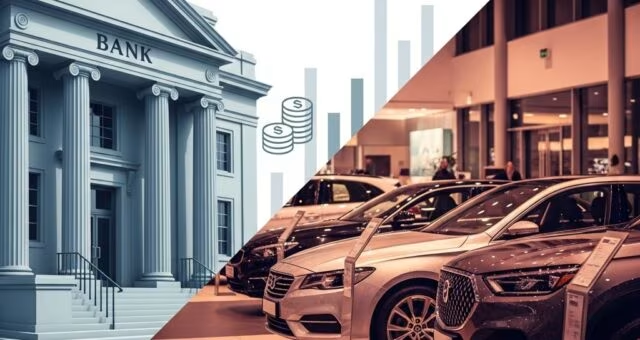
Choosing between an online bank and a traditional brick-and-mortar bank is no longer a simple question of convenience. It affects how much interest you earn, the fees you pay, how you access your money, and how secure your accounts feel to you. This guide walks through the major differences, the pros and cons of each option, and how to decide what mix of accounts works best for your situation.
Online Banks vs. Traditional Banks: What Is the Difference?
The core distinction is that traditional banks have physical branches, while online banks usually operate entirely through websites and mobile apps.
| Feature | Traditional Banks | Online Banks |
|---|---|---|
| Physical branches | Yes, local or regional branch network | Typically no branches |
| Customer service | In-person, phone, online | Phone, chat, secure messages |
| Interest on deposits | Often lower rates on savings and CDs | Often significantly higher yields |
| Account fees | More likely to charge monthly and ATM fees | Often low or no monthly fees |
| Cash deposits | Easy at branches and ATMs | Limited or not available; may depend on partner ATMs |
| ATM network | Large proprietary network; fees at out-of-network ATMs | Smaller proprietary network but often reimburse ATM fees |
| Range of products | Broad (checking, savings, loans, credit, business services) | Often narrower focus on core deposit products |
Many large traditional banks also provide robust online and mobile banking tools, so the decision is often between a branch-based bank plus digital access versus an online-only institution.
Advantages of Online Banks
Online banks exist to be used digitally, so they typically emphasize cost efficiency and strong digital tools. Lower physical overhead allows many of them to pass savings back to customers.
1. Higher Interest Rates on Deposits
One of the biggest draws is that online banks commonly offer higher interest rates on savings accounts, money market accounts, and CDs than traditional branch-based banks.
- Traditional banks may pay very low yields on savings, sometimes near the minimum market rate.
- Online banks often advertise APYs many times higher than the national average.
- Over time, higher yield can make a noticeable difference in long-term savings growth, especially on larger balances.
2. Lower (or No) Account Fees
Because online banks avoid the cost of running physical branches, they can often maintain low or zero monthly maintenance fees.
- Many online checking and savings accounts have no monthly maintenance fee or minimum balance requirement.
- Some online banks have eliminated common fees like overdraft charges on some accounts.
- Reduced fees make it easier for customers to keep more of their own money working for them.
3. Advanced Digital Experience
Online banks compete on their digital platforms, so they tend to invest heavily in user-friendly websites and mobile apps.
- Accounts can usually be opened quickly online with digital identity verification.
- Features commonly include mobile check deposit, fast transfers, bill pay, and account alerts.
- Many platforms provide budgeting tools, transaction categorization, and dashboards showing spending and savings trends.
4. Wider Geographic Reach
Since they are not built around branch networks, online banks often serve customers nationwide.
- You are not limited to banks that operate in your town or region.
- People who move frequently or travel often can retain the same bank relationship without worrying about local branch availability.
- Customers only need a stable internet connection and a smartphone or computer to manage their accounts.
Drawbacks of Online Banks
Despite their advantages, online banks are not ideal for everyone. Certain needs are still better served by physical branches.
1. Limited Cash Handling
If you regularly work with cash, the absence of local branches can be a major limitation.
- Many online banks do not accept cash deposits, or they restrict how this can be done.
- Some allow cash deposits only through specific partner ATM networks, which may have limits or fees.
- Cash-heavy users (e.g., certain small businesses, gig workers paid in cash) may find online-only banks inconvenient.
2. No In-Person Service
Online banks generally offer support only by phone, chat, or secure message.
- There is no branch manager to visit for complex issues or disputes.
- Some people value face-to-face relationships for advice on loans, mortgages, or long-term planning.
- Those unfamiliar or uncomfortable with digital tools may find remote-only support frustrating.
3. Narrower Product Line at Some Institutions
Not all online banks offer the full spectrum of services you might find at a large traditional bank.
- Some online banks focus on savings products and do not provide checking accounts or full loan offerings.
- Others may not support specialized services such as safe deposit boxes, cashier’s checks, or complex business accounts.
- Customers with diverse financial needs may need multiple providers.
4. Perceived Security and Trust Concerns
Many people still feel more secure when they can see and visit a physical bank, even though online and traditional banks use similar security technologies for digital access.
- Modern banks employ encryption, multi-factor authentication, and fraud monitoring systems for online access.
- U.S. banks that are members of the Federal Deposit Insurance Corporation (FDIC) provide the same deposit insurance up to legal limits, whether online or branch-based.
- However, comfort level with a digital-only relationship varies from person to person.
Advantages of Traditional Banks
Traditional banks remain popular because they offer branch access, a broad range of services, and in-person support that online banks cannot fully replicate.
1. Face-to-Face Support and Relationships
For many customers, the ability to walk into a branch and speak with staff is the biggest benefit.
- Complex questions can be discussed in person, which some people find easier than phone or online support.
- Long-term relationships with bankers or advisors can provide continuity and personalized guidance.
- Branches can offer notary services, safe deposit boxes, cashier’s checks, and other in-person services.
2. Easier Cash Deposits and Withdrawals
Traditional banks are well suited to frequent cash use.
- Customers can deposit and withdraw cash at branches or through branch-owned ATMs.
- Businesses that handle daily cash receipts can deposit funds quickly and safely.
- Some banks offer night depository or secured cash-handling services for businesses.
3. Wider Range of Financial Products
Large traditional banks are often a one-stop shop for many financial needs.
- Products can include checking, savings, CDs, credit cards, auto loans, mortgages, lines of credit, and investment services.
- Customers may benefit from bundled services or relationship pricing when they have multiple products at the same institution.
- Businesses may access treasury services, payroll solutions, and specialized financing not offered by many online-only banks.
4. Established ATM Networks
Traditional banks usually operate their own ATM networks and may partner with other institutions to expand access.
- Customers can use in-network ATMs to withdraw or deposit cash, often with no fee.
- Fees can apply at out-of-network ATMs, but many branch banks try to maintain broad coverage.
Drawbacks of Traditional Banks
Branch-based institutions often carry higher costs, which can show up in fees and lower interest rates.
1. Lower Interest Rates on Savings
Traditional banks frequently pay lower yields on savings, money market accounts, and CDs compared with online competitors.
- Low rates can meaningfully reduce long-term growth, especially when inflation is considered.
- Customers who leave large balances in low-yield accounts may be missing out on potential earnings.
2. Higher Fees
It is common for traditional banks to charge monthly maintenance fees, overdraft fees, and higher out-of-network ATM fees.
- Monthly fees may be waived only if customers maintain minimum balances or meet activity requirements.
- Out-of-network ATM use can trigger both ATM-owner fees and bank fees.
- Over time, recurring fees can erode the value of keeping money at that institution.
3. Limited Branch Hours
Branches operate on set schedules and may not be accessible when you need them.
- Typical hours may not align with your work schedule.
- Access to in-person services is limited during evenings, weekends, and holidays.
- While online and mobile access exists, some services still require a visit.
Security and Insurance: Are Online Banks Safe?
Both online and traditional banks that are properly chartered and insured follow regulatory and security standards designed to protect customers.
- FDIC insurance generally protects deposits at insured banks up to the legal limits per depositor, per bank, per ownership category.
- Banks use encryption, secure login processes, and monitoring systems to detect suspicious activity.
- The key is to verify that any bank you use, whether online-only or branch-based, is FDIC-insured (or NCUA-insured in the case of credit unions).
How to Decide: Online Bank, Traditional Bank, or Both?
Many people do not need to choose one or the other exclusively. In practice, a combination works well for most households and businesses.
Questions to Ask Yourself
To decide what mix fits your needs, consider the following:
- How often do I need to deposit or withdraw cash? Frequent cash use favors a traditional bank or local branch relationship.
- How important are high interest earnings? If maximizing yield on savings is a priority, an online bank may be attractive.
- Do I rely on in-person advice? If you value face-to-face guidance, a traditional bank can be useful.
- Am I comfortable managing accounts entirely online? Those who are tech-savvy may prefer online-only banks; others may want branch backup.
- What products do I need? If you need a wide range of loans, credit, and investment services, a large traditional bank may cover more of those needs.
A Common Strategy: Use Both Types of Banks
One effective approach is to combine the strengths of each model.
- Use a traditional bank for everyday checking, cash deposits, and in-person services.
- Use an online bank for high-yield savings, emergency funds, or long-term goals.
- Transfer funds electronically between institutions as needed, using either bank’s online or mobile platform.
This blended strategy lets you enjoy both competitive interest rates and convenient local access, while spreading your deposits across multiple insured institutions.
Frequently Asked Questions (FAQs)
Q: Are online banks as safe as traditional banks?
A: Online banks that are members of the FDIC provide the same deposit insurance protection as insured traditional banks, up to legal limits per depositor and ownership category. Both types of banks use modern digital security tools, such as encryption and multi-factor authentication, to protect online access.
Q: Can I have accounts at both an online bank and a traditional bank?
A: Yes. Many people maintain a local branch-based checking account for cash and in-person services and keep their savings at an online bank to earn higher interest. You can transfer money electronically between the two institutions using online or mobile banking tools.
Q: What if I need to deposit cash into an online bank?
A: Some online banks allow cash deposits through designated ATM networks or partner institutions, but many do not support direct cash deposits at all. If you regularly handle cash, keeping a checking account at a local branch bank or credit union is usually more practical.
Q: Do traditional banks also offer online and mobile banking?
A: Most traditional banks now provide online and mobile banking so customers can check balances, pay bills, transfer funds, and deposit checks remotely. The quality of digital tools varies by institution, with larger banks generally offering more advanced features.
Q: How can I compare fees between banks?
A: Review each bank’s schedule of fees for monthly maintenance charges, overdraft fees, ATM usage, wire transfers, and other services. Online banks often have lower or no monthly fees, while traditional banks may waive fees if you maintain certain balances or direct deposits.
References
- Brick-and-mortar banks vs. online banks: Pros and cons — Bankrate. 2024-01-10. https://www.bankrate.com/banking/savings/online-vs-brick-and-mortar-banks/
- Online vs Traditional Banks: Pros, Cons, and More Explained — Synchrony Bank. 2023-08-15. https://www.synchrony.com/blog/bank/online-vs-traditional-banks
- Online vs. traditional banking: Differences, pros, and cons — Brex. 2023-05-04. https://www.brex.com/spend-trends/business-banking/online-banking-vs-traditional-banking
- 4 advantages of traditional banks over online banks — NerdWallet. 2023-06-01. https://www.nerdwallet.com/banking/learn/bank-branch-or-online-bank
- Online Banking vs. Traditional Banking — JPMorgan Chase Bank, N.A. 2022-11-18. https://www.chase.com/personal/banking/education/basics/banking-traditional-vs-online-banking
- Deposit Insurance — Federal Deposit Insurance Corporation (FDIC). 2024-02-01. https://www.fdic.gov/resources/deposit-insurance/
- Online Banks vs Traditional Banks — Huntington National Bank. 2022-10-07. https://www.huntington.com/learn/checking-basics/online-banking-vs-traditional-banking
This article is general information, not personal financial advice. Consider your own situation, or speak with a licensed adviser, before acting on it.