

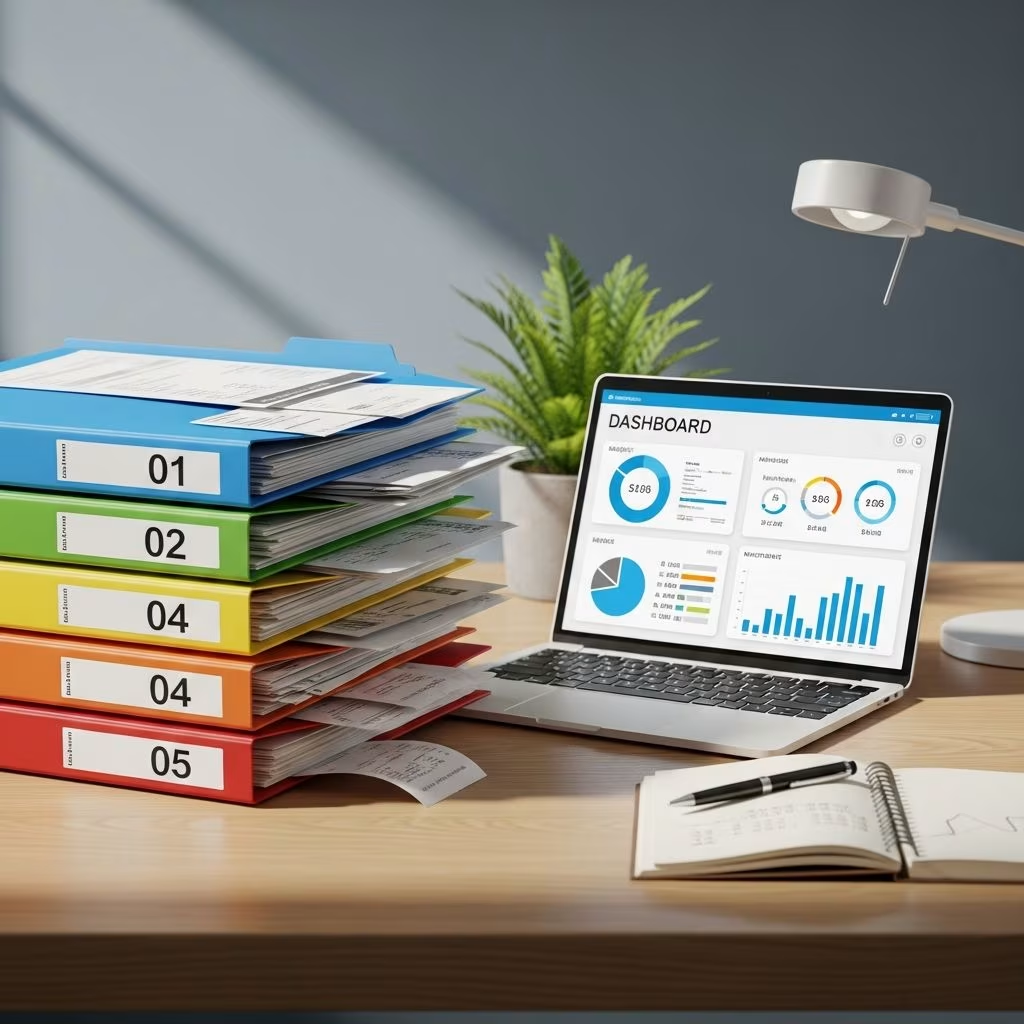
Living paycheck to paycheck, juggling bills, and constantly worrying about whether your account will overdraft is exhausting. Organized finances replace that chaos with a clear plan for every dollar so your bills get paid, your savings grows, and you can spend without constant stress.
This guide walks you through five simple, practical steps to organize your money—from automating your bills to separating your spending—so you can feel in control instead of overwhelmed.
The Importance of Having Organized Finances
Organized finances mean you always know three things: how much you earn, where your money is going, and what is coming up next. When you have that clarity, financial decisions become easier and less emotional.
Research from the Consumer Financial Protection Bureau (CFPB) shows that people who actively track and plan their finances are more likely to pay bills on time and meet savings goals. Having a system, even a simple one, lowers the risk of missed payments, overdraft fees, and impulse spending.
| Without Organized Finances | With Organized Finances |
|---|---|
| Unsure when bills are due | Clear calendar of all due dates |
| Frequent overdraft or late fees | Bills paid on time, fewer penalties |
| Guessing how much you can spend | Defined spending limits by category |
| Constant money stress | More confidence in financial choices |
When your finances are organized, you can:
- Spot wasteful spending quickly and redirect money to priorities.
- Plan for irregular expenses like holidays, car repairs, or travel.
- Make steady progress on debt payoff and savings goals.
- Reduce the mental load of constantly doing money math in your head.
5 Key Steps For Organized Finances
You do not need an advanced spreadsheet or complex tools to get organized. These five steps are simple, repeatable habits that build a strong system over time.
- Step 1: Automate your bill payments.
- Step 2: Establish a budget you can actually follow.
- Step 3: Use simple tools like alerts and apps to track spending.
- Step 4: Keep all bill due dates in one central place.
- Step 5: Separate your money so every dollar has a clear job.
1. Automate Your Bill Payments
One of the fastest ways to get more organized is to automate your recurring bills. Automation reduces the risk of forgetting payments and helps you avoid late fees, which are common sources of financial stress.
Why automation helps
- Fewer missed payments: Payments are sent automatically on the date you choose.
- Lower fees: On-time payments reduce late fees and potential penalty interest rates on credit cards and loans.
- Time savings: You spend less time logging into multiple accounts every month.
- Consistency for your credit: Payment history is the largest factor in your credit score, so paying on time supports your credit health.
How to set up automated payments
You can usually automate bills in one of two ways:
- Through each biller: Log into your utility, phone, mortgage, student loan, or credit card accounts and turn on automatic payments from your bank account or card.
- Through your bank or credit union: Many banks let you schedule recurring payments to specific companies or individuals via online bill pay.
Before turning automation on, make sure:
- Your main bill-paying account has a stable balance so you do not overdraw.
- You know the exact amount for fixed bills (like rent) and set reasonable limits for variable bills (like utilities).
- You still review statements monthly to catch errors or fraud.
2. Establish a Budget
A realistic budget is the cornerstone of organized finances. It tells your money where to go instead of leaving it up to chance. The U.S. Financial Literacy and Education Commission emphasizes that maintaining a written or digital budget is a key building block of financial capability.
Why you need a budget
- Shows exactly how much you spend in each category.
- Reveals problem areas like frequent dining out or impulse shopping.
- Helps you align day-to-day spending with long-term goals.
- Makes it easier to decide what to cut when money is tight.
Plan your budget before your next paycheck
Instead of reacting after your money is gone, plan your entire paycheck before it hits your account. A simple approach:
- List your net income (after taxes and payroll deductions).
- Write down all recurring bills and minimum debt payments.
- Estimate typical variable expenses like groceries, gas, and childcare.
- Set aside amounts for savings, investments, and irregular expenses.
Group your expenses by category
To see patterns clearly, group expenses into broad categories such as:
- Housing: Rent or mortgage, utilities, insurance.
- Transportation: Car payments, fuel, maintenance, transit passes.
- Food: Groceries, dining out, coffee runs.
- Debt: Credit cards, student loans, personal loans.
- Savings & investing: Emergency fund, retirement, other goals.
- Personal & lifestyle: Shopping, entertainment, subscriptions, travel.
Review these categories monthly and adjust the numbers as you learn more about your real spending habits.
The 70-20-10 budget
The 70-20-10 budget is a simple rule of thumb for organizing your money:
- 70% of take-home pay for bills and everyday expenses.
- 20% for savings and investments (including retirement).
- 10% for giving or extra debt payments.
| Category | Percentage of Take-Home Pay | Examples |
|---|---|---|
| Expenses | 70% | Housing, food, transport, insurance, utilities |
| Savings & Investments | 20% | Emergency fund, retirement, investment accounts |
| Giving or Extra Debt Payoff | 10% | Charitable giving, tithes, extra principal payments |
You can adjust these percentages to fit your situation—for example, using more than 20% for savings if you are catching up on retirement or aggressively paying down high-interest debt.
Include irregular and seasonal spending
Many budgets fail because they ignore irregular but predictable expenses like holidays, back-to-school costs, or annual insurance premiums. A practical approach is to create small sinking funds—dedicated savings buckets—for these expenses and contribute monthly amounts to each.
- Holiday gifts and travel
- Car repairs and maintenance
- Annual subscriptions or memberships
- Back-to-school or kids’ activities
3. Use Simple Tools to Track Spending
Even with a good budget, you need a way to track your spending in real time. Without this, it is easy to overspend in one category and not realize it until your account is nearly empty.
Enable transaction alerts from your bank
Most banks and credit unions offer free alerts through their mobile apps or online banking. You can often receive notifications when:
- A purchase is made with your debit or credit card.
- Your balance drops below a certain amount.
- A large transaction posts to your account.
These alerts provide two benefits:
- Awareness: You stay conscious of every purchase, which can reduce impulsive spending.
- Security: You can quickly spot unauthorized transactions and report them.
Use a free budgeting or money management app
Many people find it easier to stay organized with a budgeting app that automatically syncs with their accounts. Studies on financial technology show that digital tools can help households track spending more consistently and improve budgeting behavior.
Common features in free or low-cost budgeting apps include:
- Linking checking, savings, and credit card accounts.
- Automatic categorization of transactions.
- Spending reports by category and by month.
- Custom alerts when you are close to category limits.
If you prefer not to link accounts, you can still use these apps manually by entering transactions as you spend.
4. Keep Track of Your Bills’ Due Dates in One Central Place
Another key part of organizing your finances is keeping all your due dates together in one place. When your bill reminders are scattered across emails, texts, and paper mail, it is easy to miss something.
Choose a single “home” for your due dates
Pick one central system and commit to using it consistently. Options include:
- A digital calendar (like Google Calendar or the calendar in your phone).
- A paper planner or wall calendar you check daily.
- A dedicated bill-tracking worksheet or notebook.
For each bill, record:
- The company name.
- The amount due (or average amount for variable bills).
- The due date and whether it is monthly, quarterly, or annual.
- How the bill is paid (automatic draft, online pay, or manual payment).
Align due dates with your pay schedule
If many bills fall at the same time and strain your cash flow, contact service providers and ask to move due dates closer to your paydays. Many utilities, lenders, and credit card companies allow this adjustment, which can make your month more balanced and predictable.
5. Separate Your Money to Better Organize Your Finances
Separating your money into specific buckets makes it easier to see what is available for bills, what is reserved for goals, and what you can safely spend without guilt.
Use multiple accounts intentionally
A common approach is to maintain:
- One primary checking account only for bills and fixed expenses.
- A second checking account for variable, everyday spending.
- Dedicated savings accounts for your emergency fund and major goals.
By keeping your bill money separate from your spending money, you are less likely to accidentally use funds meant for rent or utilities on impulse purchases.
The cash envelope system
The cash envelope system is a powerful, low-tech way to control spending in flexible categories. Behavioral research shows that paying with cash makes people more aware of their spending and can reduce the total amount spent compared with card use.
To use the cash envelope system:
- List the categories where you tend to overspend, such as dining out, groceries, or entertainment.
- Decide how much cash to allocate to each category for the month or pay period.
- Withdraw that total amount in cash and place it into labeled envelopes.
- Use only the cash in each envelope for that category. When the envelope is empty, you stop spending until the next budget period.
This method creates a clear, physical limit that helps you stick to your plan. Over time, you can adjust envelope amounts up or down based on what realistically works.
Have More Control Over Your Money With Organized Finances
When you automate bills, build a functional budget, track your spending, centralize due dates, and separate your money into clear buckets, you gain something invaluable: a sense of control. Instead of reacting to every financial surprise, you act with intention and give each dollar a job.
You do not have to implement every step perfectly on day one. Start with a single action—like automating your most important bills or creating a basic 70-20-10 budget—and build from there. Each small improvement reduces stress and brings you closer to your financial goals.
Frequently Asked Questions (FAQs)
Q: How long does it take to get my finances organized?
A: You can set up a basic system—like a simple budget, automated bills, and a bill calendar—in a weekend. Refining your categories, adjusting amounts, and building savings is an ongoing process that usually takes a few months of consistent review.
Q: Should I automate every bill?
A: Automating fixed, predictable bills (such as rent, mortgage, insurance, or subscriptions) is usually helpful. For variable bills like utilities, you may choose to automate the minimum or average amount while still reviewing each statement before the payment date.
Q: What if my income is irregular?
A: If your income fluctuates, build your budget around a conservative “baseline” income—what you can reasonably count on—and cover essential expenses first. Use higher-earning months to build a larger cash buffer and accelerate savings or debt payoff.
Q: Is the 70-20-10 budget right for everyone?
A: No single percentage rule fits every situation. The 70-20-10 framework is simply a starting point. You might need a higher expense percentage if your housing costs are high, or you may choose to devote more than 20% to savings and debt payoff when possible.
Q: Do I still need a budget if I use a cash envelope system?
A: Yes. The cash envelope system is one way to control spending within certain categories, but you still need an overall budget to decide how much total income is available for envelopes, bills, savings, and debt.
References
- Building your savings and spending plan — Consumer Financial Protection Bureau. 2023-06-01. https://www.consumerfinance.gov/consumer-tools/manage-your-money/building-your-savings-and-spending-plan/
- What affects your credit scores — FICO. 2023-11-15. https://www.fico.com/education/credit-scores/what-affects-your-credit-scores
- My Money Five — U.S. Financial Literacy and Education Commission (MyMoney.gov). 2022-09-20. https://www.mymoney.gov/mymoney-five
- Household response to digital financial management tools — Federal Reserve Board (Consumer & Community Context). 2022-03-01. https://www.federalreserve.gov/publications/consumer-community-context-20220301.htm
- “The (Cashless) Daily Grind: Cash Usage and Spending Behavior” — Arvidsson, A. & Markendahl, J., Proceedings of the 50th Hawaii International Conference on System Sciences. 2017-01-04. https://hdl.handle.net/10125/41715
This article is general information, not personal financial advice. Consider your own situation, or speak with a licensed adviser, before acting on it.


