

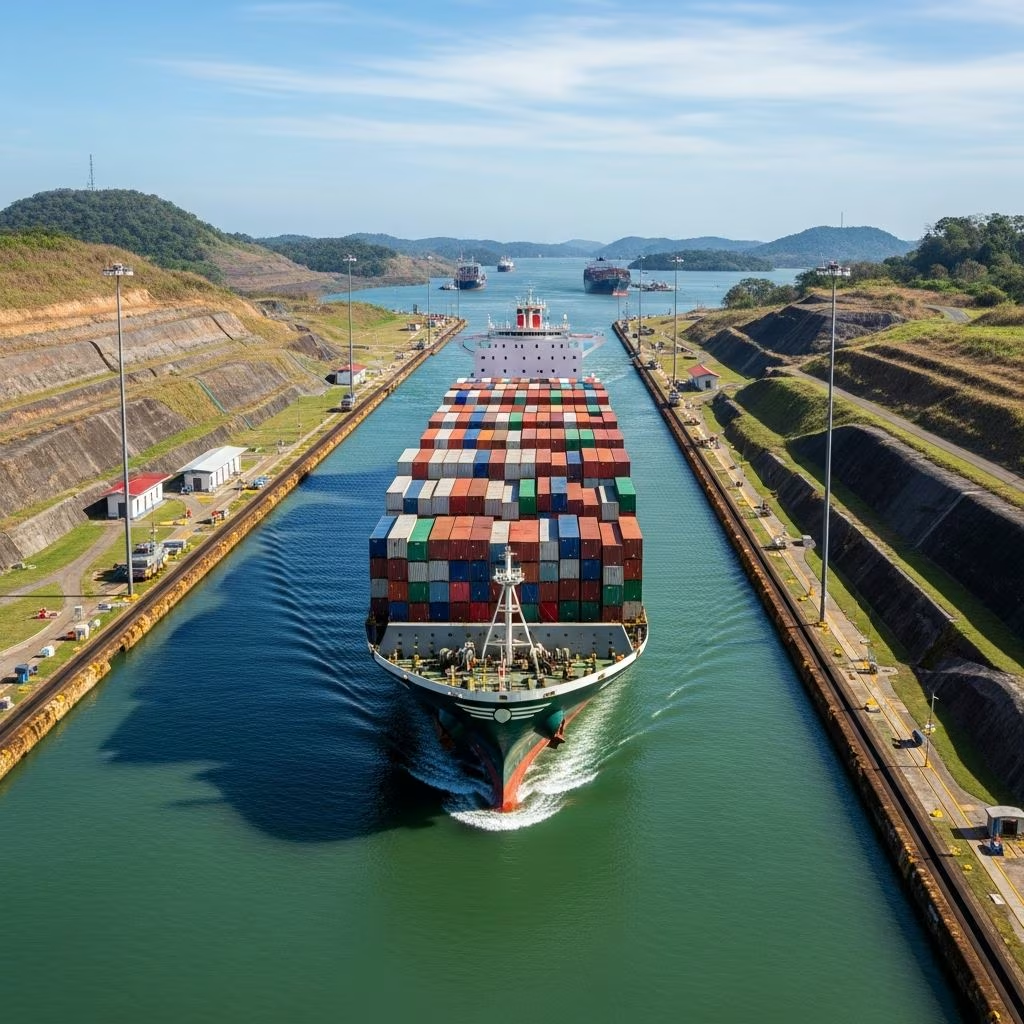
Understanding the Cost to Cross the Panama Canal
The Panama Canal stands as one of the world’s most critical maritime infrastructure assets, serving as a vital shortcut for international shipping between the Atlantic and Pacific Oceans. Since its completion in 1914, the canal has revolutionized global commerce by dramatically reducing shipping distances and transit times. However, this essential waterway comes at a cost to the vessels that traverse it. Understanding the fees associated with crossing the Panama Canal is crucial for shipping companies, logistics professionals, and anyone involved in international trade. The tolls charged by the Panama Canal Authority represent a significant operational expense that directly influences shipping routes, supply chain decisions, and global commerce patterns.
Historical Background of the Panama Canal
The Panama Canal represents one of the most ambitious engineering projects ever completed. Constructed between 1881 and 1914, the canal stretches approximately 50 miles through the Isthmus of Panama, connecting the Atlantic Ocean at Cristóbal-Colón with the Pacific Ocean at Balboa near Panama City. The construction was fraught with challenges, including tropical diseases such as yellow fever and malaria, difficult terrain, and engineering obstacles that claimed more than 27,000 lives during its construction. Despite these hardships, the canal’s completion transformed global maritime trade by eliminating the need for ships to navigate around the southern tip of South America, a route that added thousands of miles and months to voyages.
How Panama Canal Tolls Are Determined
The Panama Canal Authority, known as the Autoridad del Canal de Panamá (ACP), is the autonomous agency of the Government of Panama responsible for managing, operating, and maintaining the canal. This organization sets toll rates based on a comprehensive pricing structure that considers multiple factors specific to each vessel and its cargo. The toll system is designed to be equitable while ensuring the canal remains financially viable and capable of maintaining its critical infrastructure.
Factors Affecting Panama Canal Toll Prices
Canal tolls are not uniform—they vary significantly based on several key variables:
- Vessel Type and Size: Different classes of ships pay different rates. Container ships, tankers, bulk carriers, and passenger vessels each have distinct pricing structures. Larger vessels with greater cargo capacity pay proportionally higher tolls than smaller ships.
- Cargo Type: The nature of the cargo being transported influences the toll amount. Hazardous materials, perishable goods, and high-value cargo may have different pricing considerations.
- Vessel Capacity: The tonnage and container capacity of a ship directly affect toll calculations. The Canal Authority uses vessel capacity as one of the three primary elements in its pricing structure.
- Freshwater Surcharge: The canal requires freshwater from Gatun Lake to operate its lock systems. Vessels are charged additional fees based on freshwater consumption, which varies depending on vessel size and transit conditions.
- Supply and Demand: Market-driven pricing mechanisms allow the Canal Authority to adjust tolls based on shipping demand, vessel queue lengths, and market conditions. During periods of high demand, premium pricing may apply to vessels seeking priority passage.
Typical Panama Canal Transit Costs
Average Toll Rates
The average toll for transiting the Panama Canal is approximately $54,000. However, this figure represents an average and can vary substantially based on vessel characteristics and current market conditions. For context, a standard 40-foot container traveling from New York City to Shanghai through the Panama Canal costs roughly $4,500 in transit fees. This cost-effectiveness explains why the canal handles such significant global shipping traffic despite toll charges.
Record-Breaking Tolls
While $54,000 represents the typical toll, exceptional cases have resulted in substantially higher charges. The most expensive toll recorded to date occurred on September 25, 2003, when the luxurious passenger vessel Coral Princess paid $226,194.25 for passage. More recently, a Japanese vessel paid almost $4 million in November 2023 to skip the ship queue, though this represented a premium surcharge for priority passage rather than a standard transit toll. The same vessel then paid an additional $400,000 in standard transit fees to complete passage through the locks.
Understanding Premium Pricing and Queue Surcharges
In recent years, the Panama Canal Authority has implemented auction-based pricing systems that allow shipping companies to pay premium fees for expedited passage when the canal experiences congestion. These surcharges reflect market-driven dynamics where shipping companies value time certainty above standard toll rates.
Why Shipping Companies Pay Premium Fees
Shipping contracts often include strict delivery deadlines, with penalties for late delivery that can prove extremely costly. A single cargo vessel costs between $60,000 and $200,000 per day to operate. Additionally, every hour a ship sits in a port costs between $16,000 to $25,000. When a vessel cannot deliver cargo on schedule, penalties can reach millions of dollars. In such scenarios, paying a multi-million dollar premium to expedite canal passage becomes financially rational when compared to the cumulative costs of missed deadlines and contract penalties.
The Economic Value of Panama Canal Transit
Comparative Shipping Routes
To understand the true value of Panama Canal tolls, comparing them to alternative shipping routes provides crucial perspective. The Panama Canal represents an economical choice when compared to other maritime options:
| Route Option | Cost for 40-ft Container | Transit Efficiency | Key Advantages/Disadvantages |
|---|---|---|---|
| Panama Canal (Direct Transit) | ~$4,500 | Shortest time | Optimal balance of cost and speed |
| Land Bridge (Rail/Truck Alternative) | ~$6,000 | Comparable time | 33% more expensive than canal |
| Around Cape of Good Hope (Africa) | Varies widely | Longest transit | Extra $900,000+ in fuel costs alone |
When a ship routes around Africa instead of transiting the Panama Canal, it spends an extra $900,000 in fuel alone. Maritime fuel, known as bunker fuel, costs between $500 and $800 per ton, and a vessel capable of transiting Panama’s smaller locks burns approximately 63,000 gallons of fuel per day, costing about $116,000 at $500 per ton. These comparative economics demonstrate why paying Panama Canal tolls remains the preferred choice for most international shipping.
Cargo Transportation Efficiency
The canal’s efficiency in moving cargo is remarkable. Transporting 5,000 containers of cargo, which a single vessel can carry through the canal, would require 18 trains, 570 airplanes, or 5,800 semi-trucks. This demonstrates the unparalleled efficiency of maritime transit through the canal versus alternative transportation modes.
Panama Canal Authority Financial Structure and Profitability
The Panama Canal Authority operates as a unique entity within Panama’s government structure. According to Article 316 of Panama’s Constitution, the Canal Authority is mandated to be profitable. Unlike traditional public utilities, the Canal Authority operates with principles of supply and demand and generates revenue through transit fees. The agency is largely independent from the Panamanian government—it is neither taxed nor are its employees paid from government taxes.
However, at the end of each fiscal year, the institution delivers its profits to the national treasury. In 2024, the Canal Authority generated nearly $5 billion in revenue and transferred approximately half of that amount to the Panamanian treasury, which represented about 4% of Panama’s GDP. This financial structure ensures the canal remains self-sustaining while contributing significantly to Panama’s national economy.
International Treaties and Toll Equity
The pricing of Panama Canal tolls operates within the framework of international treaties governing the waterway. As part of the treaties governing canal operations, Panama promised to keep the canal open and secure during peace and war for vessels from all nations. Importantly, the treaty ensured that all transit tolls and charges would be “just, equitable and reasonable” for all ships seeking passage. The Canal Authority has maintained that any increases in charges are due to market forces rather than arbitrary decisions, and that pricing structures are applied uniformly to all customers transiting the canal.
The Strategic Importance of Canal Tolls
Understanding Panama Canal tolls extends beyond simple fee calculations—it involves recognizing the geopolitical and economic significance of this infrastructure. The canal handles approximately 5% to 6% of global maritime trade and remains critical to international commerce. Toll revenue ensures the canal maintains its operational capabilities, fund necessary maintenance and upgrades, and support Panama’s economic development.
Recent geopolitical tensions have highlighted the strategic importance of the canal. Both the United States and China have expressed interest in the canal’s operations and future, recognizing its vital role in global trade patterns. The Canal Authority’s commitment to maintaining profitable operations while keeping tolls reasonable reflects the delicate balance required to sustain this essential international asset.
Future Canal Expansion and Toll Implications
The Panama Canal completed a major expansion project that created a third set of locks capable of handling larger Neo-Panamax vessels. This expansion has increased the canal’s capacity and efficiency, which ultimately influences tolling structures and the economic viability of canal transit. As global shipping patterns evolve and vessel sizes continue to increase, the Canal Authority must balance infrastructure investments with toll pricing to maintain competitiveness while ensuring financial sustainability.
Frequently Asked Questions
Q: What is the average cost to cross the Panama Canal?
A: The average toll for transiting the Panama Canal is approximately $54,000, though this varies based on vessel size, type, and cargo. A standard 40-foot container costs roughly $4,500 in transit fees.
Q: How are Panama Canal tolls calculated?
A: The Panama Canal Authority calculates tolls based on vessel type, size, cargo type, vessel capacity, freshwater surcharge requirements, and supply and demand factors.
Q: What was the highest toll ever charged at the Panama Canal?
A: The highest standard transit toll was $226,194.25, charged to the Coral Princess on September 25, 2003. However, premium surcharges for expedited passage have reached approximately $4 million.
Q: Why do some ships pay millions of dollars to use the Panama Canal?
A: Shipping companies pay premium fees for priority passage when facing strict delivery deadlines. The penalties for late delivery can exceed millions of dollars, making expedited canal passage economically justified.
Q: Is the Panama Canal cheaper than alternative shipping routes?
A: Yes, significantly. Using the land bridge alternative costs approximately 33% more ($6,000 vs. $4,500), and routing around Africa costs an extra $900,000 in fuel alone, making the Panama Canal the most economical option for most shipping routes.
Q: How does the Panama Canal Authority use its toll revenue?
A: The Canal Authority uses toll revenue to maintain and operate the canal, fund infrastructure improvements, and deliver profits to Panama’s national treasury, which contributed approximately 4% of Panama’s GDP in 2024.
References
- How Do You Put a Price Tag on the Panama Canal? — Valuation Research. Accessed 2025. https://www.valuationresearch.com/insights/how-do-you-put-price-tag-panama-canal/
- Panama Canal: Caught Between the U.S. and China — Cronkite News, Arizona PBS. 2025-05-12. https://cronkitenews.azpbs.org/2025/05/12/panama-canal-vital-world-trade-caught-between-united-states-china/
This article is general information, not personal financial advice. Consider your own situation, or speak with a licensed adviser, before acting on it.


