

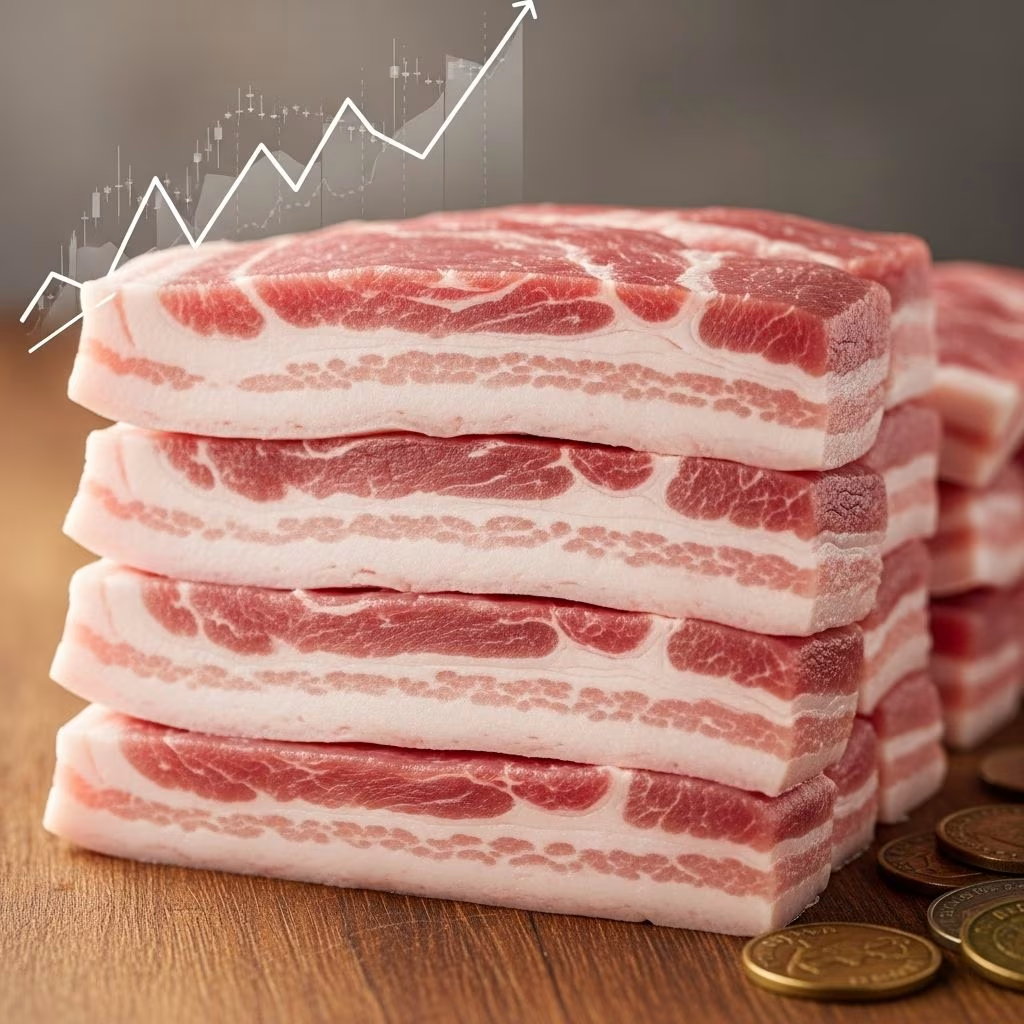
What Are Pork Bellies?
Pork bellies represent a specific cut of pork derived from the underside or abdomen of the pig, characterized by distinct layers of fat and lean meat. This boneless, fatty cut has historically held significant importance not only in culinary traditions but also as a major commodity traded on futures markets worldwide. The pork belly became one of the most recognizable financial instruments in commodity trading, particularly through its prominence on the Chicago Mercantile Exchange (CME). Understanding pork bellies requires examining both their physical characteristics and their role as tradable financial assets.
Understanding the Pork Belly Cut
The pork belly is a specific anatomical section of the pig that encompasses the ventral surface of the animal’s body. This cut is distinguished by its natural composition of alternating layers of muscle and fat, which creates both culinary appeal and market value. The boneless nature of pork bellies makes them particularly suitable for various processing methods, including curing, smoking, and rendering. This versatility contributed significantly to their demand across both food production and commodity trading sectors.
Historically, pork bellies were predominantly used in the production of bacon, though modern culinary trends have expanded their applications to include various gourmet and international dishes. The cut’s fatty composition makes it ideal for developing flavor during cooking processes, contributing to its sustained demand in both commercial and retail food markets.
The History of Pork Belly Trading
Early Development and Porkopolis
The pork processing industry in North America has deep historical roots, particularly in the development of Cincinnati and Chicago as major meatpacking centers. Cincinnati earned the nickname “Porkopolis” during the nineteenth century due to its dominance in hog slaughtering and pork product processing. The city’s strategic location along transportation routes and proximity to major agricultural regions made it the epicenter of the pork industry. Cincinnati’s meatpacking innovations, including novel manufacturing techniques and the development of the “disassembly line” for efficient hog processing, revolutionized how pork products were produced and distributed.
Chicago’s Rise and the CME Connection
Over time, Chicago gradually supplanted Cincinnati as the primary center for pork processing and trading. The establishment of the Chicago Stockyards and the development of the Chicago Mercantile Exchange created an ideal environment for commodity trading. Pork bellies emerged as a critical financial instrument for the CME, particularly during the exchange’s formative years when it faced financial challenges. The introduction of pork belly futures trading provided the CME with a viable market during a precarious period in its history, essentially saving the exchange and enabling it to establish itself as a leading commodities market.
How Pork Bellies Are Traded
Futures Market Mechanics
Pork belly trading occurs primarily through futures contracts on commodity exchanges. Futures contracts represent standardized agreements to buy or sell a specified quantity of pork bellies at a predetermined price on a future date. These contracts allow participants to hedge against price fluctuations or speculate on future price movements. The futures market for pork bellies operates similarly to other agricultural commodity futures, with prices fluctuating based on supply and demand dynamics, production forecasts, and broader economic conditions.
Contract Specifications and Trading Mechanics
Futures contracts specify standardized quantities, quality standards, delivery months, and settlement procedures. Traders can take either long positions (betting on price increases) or short positions (betting on price decreases). The futures market provides liquidity, allowing producers, processors, and speculators to enter and exit positions relatively easily. Price discovery occurs through continuous trading, with market prices reflecting the collective expectations of all market participants regarding future supply and demand conditions.
Hedging Applications
Commercial participants in the pork industry utilize futures contracts for hedging purposes. Pork producers can lock in prices for their output, protecting against adverse price movements. Processors and retailers can secure supplies at predetermined prices, ensuring cost certainty for their operations. This risk management function makes pork belly futures valuable to legitimate commercial enterprises operating throughout the supply chain.
Pork Bellies and Supermarket Dynamics
The Bacon Shortage and Product Evolution
The relationship between pork belly commodity trading and supermarket availability represents an interesting intersection of finance and consumer commerce. Historically, bacon faced periodic shortages on supermarket shelves during specific market conditions. These shortages reflected not only production constraints but also the financial incentives created by commodity pricing. When pork belly prices rose significantly, producers and retailers sometimes found greater profit opportunities in selling pork bellies through alternative channels rather than processing them into bacon for retail distribution.
Culinary Renaissance
In recent decades, pork belly experienced a culinary renaissance, transitioning from primarily commodity-oriented processing to becoming a featured ingredient on restaurant menus and in upscale cuisine. This shift altered demand patterns and brought increased consumer awareness to the product. Chefs incorporated pork belly into diverse cuisines, from traditional preparations to innovative contemporary dishes, elevating its status beyond its historical role as primarily bacon raw material.
Market Evolution and Modernization
The Transition to Lean Pork
Technological advances in breeding and meat science led to the development of leaner pork varieties throughout the 1970s and 1980s. These genetic and husbandry improvements aimed to produce pork with reduced fat content to meet changing consumer preferences favoring leaner meats. This evolution affected pork belly characteristics and availability, as selective breeding prioritized overall lean meat production over the traditional fatty profile characteristic of pork bellies. The shift toward lean pork production reflected broader dietary trends and consumer health consciousness.
Technology and Market Consolidation
Modern technology increasingly drove efficiency in meat production and distribution, reducing the relevance of traditional commodity trading mechanisms for fresh pork products. Improved cold chain logistics, advanced food processing techniques, and vertical integration in the meat industry reduced the need for extensive futures market hedging. Large integrated companies gained the capacity to manage risk through internal mechanisms rather than relying exclusively on commodity exchange trading.
The End of Pork Belly Futures Trading
Market Closure in 2011
Pork belly futures trading on the Chicago Mercantile Exchange concluded in July 2011, marking the end of an era spanning approximately fifty years. The closure reflected fundamental changes in market structure, production methods, and trading practices that rendered the contract less relevant to contemporary market participants. The decline of pork belly futures reflected broader trends toward consolidated production, integrated supply chains, and alternative risk management mechanisms that reduced demand for standardized commodity futures contracts.
Factors Contributing to Market Decline
Multiple factors converged to reduce the viability of pork belly futures. Technological innovations in production and distribution reduced the price volatility that made futures contracts valuable for hedging. Consolidation in the meat processing industry meant fewer independent actors requiring commodity market protection. Consumer preferences and production methods shifted, reducing the importance of pork bellies as a primary commodity focus. Additionally, the rise of more sophisticated financial instruments and direct supply contracts between producers and processors provided alternatives to standardized futures contracts.
Current Trading Alternatives
Other Pork Products and Futures Contracts
While pork belly futures are no longer traded, the commodity markets offer alternative pork-related instruments. Lean hog futures contracts continue trading on the CME, providing market participants with mechanisms to trade hog price exposure. These contracts focus on overall hog value rather than specific cuts, reflecting modern production and marketing approaches. Processors and traders seeking pork price exposure utilize lean hog contracts or engage in direct supply arrangements with producers.
Over-the-Counter and Direct Trading
Contemporary pork belly trading occurs primarily through over-the-counter transactions, direct supply contracts, and spot market purchases rather than standardized exchange-traded futures. Processors, retailers, and specialized distributors negotiate prices and quantities directly with producers or through commodity brokers. This system provides flexibility while potentially reducing liquidity compared to exchange-traded futures, but reflects the preferences of modern market participants for customized arrangements.
Frequently Asked Questions
What exactly is a pork belly?
A pork belly is a boneless, fatty cut of meat derived from the underside or abdomen of a pig, featuring layers of fat and lean muscle. Historically, it was primarily processed into bacon, though modern culinary use has expanded significantly.
Why were pork bellies significant in commodity trading?
Pork belly futures were crucial for the Chicago Mercantile Exchange, providing a viable market during the exchange’s formative years. They remained actively traded for approximately fifty years until the contract was delisted in July 2011.
What factors led to the discontinuation of pork belly futures?
Technological advances, industry consolidation, shifts in consumer preferences, and the development of alternative risk management mechanisms reduced the relevance and liquidity of pork belly futures, ultimately leading to market closure.
How can traders access pork price exposure today?
Contemporary traders seeking pork exposure typically utilize lean hog futures contracts on the CME or engage in direct supply arrangements and over-the-counter transactions with producers and processors.
What is the difference between pork bellies and bacon?
Pork belly refers to the raw cut of meat from the pig’s underside, while bacon is a processed product created by curing and smoking pork belly. Though historically pork bellies were primarily processed into bacon, modern culinary applications use the raw cut in various preparations.
Why did Cincinnati and Chicago dominate pork processing?
Cincinnati’s early dominance resulted from its strategic geographic location and access to agricultural regions. Chicago later supplanted it through the development of the Chicago Stockyards and the establishment of the Chicago Mercantile Exchange, which provided superior trading infrastructure.
Conclusion
Pork bellies represent a fascinating intersection of agricultural production, financial innovation, and market evolution. From their origins in the early meatpacking industry through their prominence on the Chicago Mercantile Exchange to their contemporary role in upscale cuisine, pork bellies have demonstrated remarkable adaptability across decades. Their transition from primary commodity focus to specialized culinary ingredient, coupled with the closure of their futures market, illustrates how technological and structural changes reshape financial markets and commodity trading. Understanding pork bellies provides valuable insights into commodity markets, risk management practices, and the complex relationships between production, finance, and consumer commerce in agricultural industries.
References
- This Little Piggy Made a Market: The Rise and Fall of Pork Bellies — Columbia University Press. October 2014. https://doi.org/10.7312/columbia/9780231156714.003.0008
- Pork belly — Grokipedia. https://grokipedia.com/page/Pork_belly
- Chicago Mercantile Exchange Historical Archives — CME Group Official Records. https://www.cmegroup.com/
This article is general information, not personal financial advice. Consider your own situation, or speak with a licensed adviser, before acting on it.


