

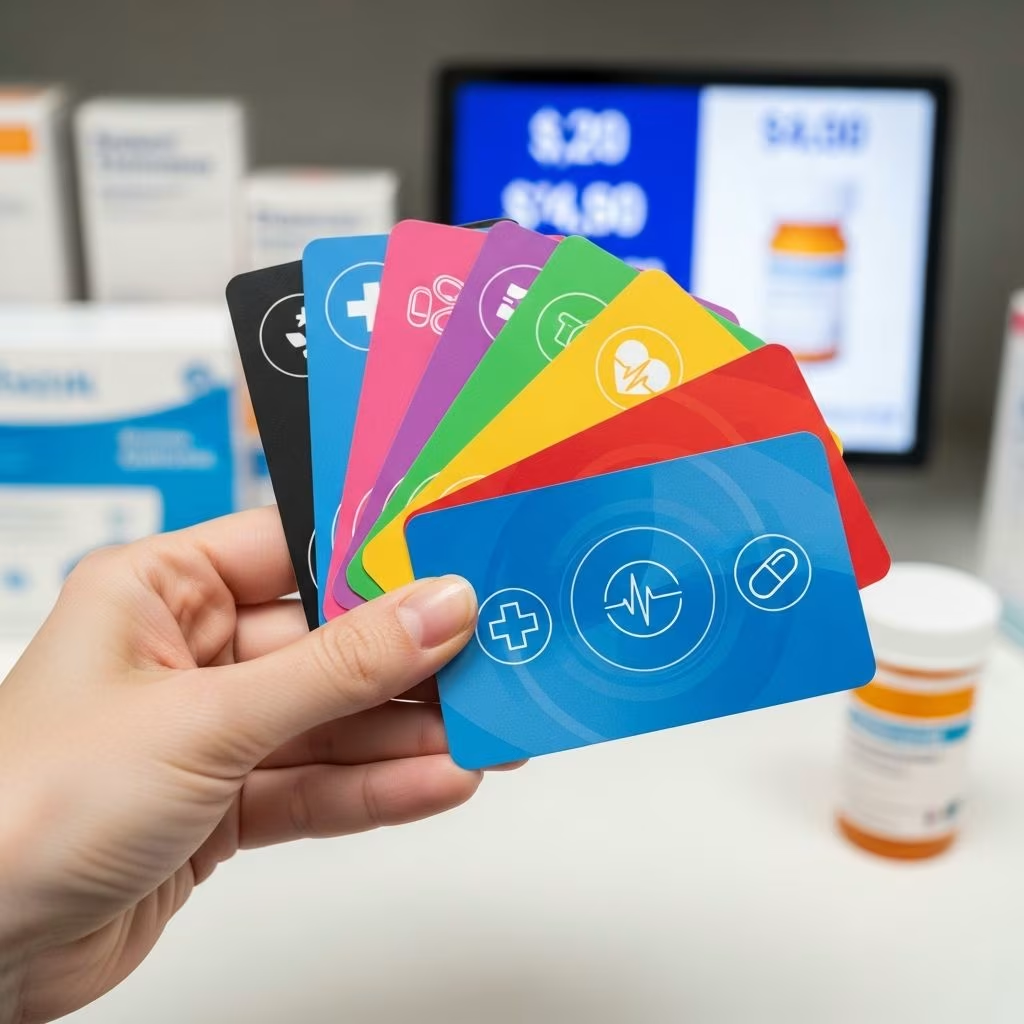
Understanding Prescription Discount Cards
Prescription discount cards are free tools designed to help patients pay lower prices for medications at pharmacies. These cards are available to everyone—whether you have health insurance or not—and they cost absolutely nothing to use. Unlike insurance, they are not a healthcare plan but rather a negotiated discount program that helps patients access more affordable medication prices.
Uninsured patients face particularly high medication costs, often paying the Usual and Customary (U&C) price, which can be up to 90% higher than rates available to insured patients. Prescription discount cards bridge this gap by providing access to significantly reduced prices. Additionally, insured patients with high deductibles or in their deductible phase can use these cards to pay less out-of-pocket while meeting their insurance obligations.
How Prescription Discount Cards Work
The mechanics of prescription discount cards involve three main parties: the pharmacy benefits manager (PBM), participating pharmacies, and the marketing company. Here’s the typical process:
- The PBM negotiates bulk purchase discounts with pharmaceutical companies and pharmacies, leveraging volume to secure lower prices.
- Marketing companies promote the discount card to consumers through websites and mobile applications.
- Patients download the card for free online or via a mobile app.
- At the pharmacy counter, patients present the discount card like an insurance card.
- The pharmacy processes the discounted rate and receives compensation from the discount program—essentially a referral fee.
- Patients pay the reduced price immediately without any insurance claims processing.
This system creates a win-win situation for everyone involved. Pharmacies benefit from increased customer traffic and foot traffic from patients who might otherwise not fill prescriptions. Uninsured patients gain access to affordable medications they might otherwise skip due to cost. The discount program earns referral fees from participating pharmacies. As a result, medication adherence improves when patients can actually afford their prescriptions.
Potential Savings With Prescription Discount Cards
The savings potential of prescription discount cards is substantial. Patients can expect average savings of 65% to 80% on both brand-name and generic medications. Some discount cards offer savings of up to 85% depending on the medication and participating pharmacy.
To illustrate the impact: if a drug retails for $45 with a negotiated discount of 40%, the patient would only pay $27, saving $18 on a single prescription. Over the course of a year, these savings can accumulate to hundreds of dollars, particularly for patients taking multiple medications or those with chronic conditions requiring long-term medication therapy.
It’s important to note that actual savings vary from pharmacy to pharmacy and card to card. Therefore, patients should compare prices across different discount cards and pharmacies to find the best deal for their specific medications.
Who Can Benefit From Prescription Discount Cards?
Multiple groups of patients can significantly benefit from using prescription discount cards:
- Uninsured patients: Those without any health insurance coverage often face the highest medication costs and benefit most dramatically from discount cards.
- Patients with high deductibles: Insured patients required to meet substantial deductibles before insurance coverage begins can use discount cards to reduce out-of-pocket costs.
- Patients in the deductible phase: Those early in their insurance plan year who must pay full costs can compare discount card rates to their insurance copay costs.
- Pet owners: Discount cards extend to pet medications, which pet owners often must pay out-of-pocket regardless of pet insurance coverage.
- Families taking multiple medications: Discount cards apply to the entire family, allowing households to save hundreds of dollars annually on combined medication expenses.
How to Use a Prescription Discount Card
Using a prescription discount card is straightforward and requires minimal effort:
- Download your free prescription discount card from the program’s website or mobile application.
- Locate a participating pharmacy that offers the lowest price for your specific medication using the card’s price comparison tools.
- Present your savings card to the pharmacist when picking up your medication, just as you would show an insurance card.
- Pay the discounted rate at the pharmacy counter.
The process is designed for simplicity and speed, allowing patients to receive instant savings without complicated paperwork or delayed processing. Many discount card programs offer convenience features such as free home delivery options and extensive networks of participating pharmacies.
Prescription Discount Cards vs. Insurance Copays
An important strategy for maximizing savings involves comparing your prescription discount card rate to your insurance copay cost. Even if you have health insurance, the discount card rate might be lower than your copay, allowing you to save money by using the card instead of your insurance.
However, it’s crucial to understand that discount cards cannot be combined with prescription insurance coverage. You must choose one or the other for each prescription. Costs paid through a discount card do not apply toward your insurance deductible or out-of-pocket maximum, so this comparison is essential before choosing which payment method to use.
Manufacturer Coupons vs. Discount Cards
Pharmaceutical companies often offer manufacturer-sponsored coupons and programs for specific brand-name medications. These coupons can frequently be combined with commercial insurance to reduce copayments. However, manufacturer programs have significant limitations:
- They only apply to specific brand-name drugs, not entire medication categories.
- Coverage typically expires after a set period, leaving patients without savings options after the coupon ends.
- They don’t help uninsured patients access brand medications at reduced rates.
Prescription discount cards, by contrast, provide ongoing savings on a broad range of brand-name and generic medications without expiration dates. For patients requiring medications without active manufacturer programs, discount cards often provide more cost-effective solutions.
Popular Prescription Discount Card Programs
Numerous prescription discount card programs operate across the United States, with tens of thousands of participating pharmacies nationwide. Popular programs include GoodRx, SingleCare, ScriptSave WellRx, and Capital Rx Advantage Card. Each program may offer different discounts on different medications, so comparing multiple programs for your specific prescriptions is worthwhile.
Programs often differentiate themselves through features such as mobile app functionality, extensive pharmacy networks, home delivery options, and transparent pricing information. Some programs charge minimal administrative fees—for example, one program’s administrative fee never exceeds $1.99, which is up to 80% less than competitors.
Important Considerations and Limitations
While prescription discount cards offer significant benefits, patients should understand their limitations:
- Discount cards are not health insurance and do not provide insurance coverage.
- Savings do not apply toward insurance deductibles or out-of-pocket maximums.
- You cannot use a discount card simultaneously with insurance coverage for the same prescription.
- Savings vary by medication, pharmacy, and program, requiring price comparison shopping.
- Some medications may be unavailable through discount card programs.
- Programs may not cover all pharmacy chains equally or offer consistent savings across all locations.
Despite these limitations, prescription discount cards remain an accessible option for individuals who might otherwise be unable to afford their medications.
Emerging Integrated Discount Programs
The prescription discount landscape continues to evolve. As of January 2024, major pharmacy benefit managers began offering point-of-sale discount programs integrated directly with pharmacy benefits. These innovative programs allow members to access low prices on commonly prescribed generic drugs automatically at the pharmacy counter, without needing to shop around, submit extra paperwork, or present an additional card. This seamless integration represents the next generation of prescription cost management for insured patients.
Maximizing Your Prescription Savings
To get the most value from prescription discount cards, consider these strategies:
- Download multiple discount card programs and compare prices for all your regular medications.
- Use the price comparison tools within each program to find participating pharmacies offering the lowest prices.
- Compare discount card prices to your insurance copays before choosing which payment method to use.
- Check if manufacturer coupons are available for your brand-name medications and evaluate whether they provide better savings than discount cards.
- Review your medications quarterly, as prices and available discounts change over time.
- Share your discount card with family members—most programs allow one card to cover entire households.
- Use discount cards for pet medications and other out-of-pocket prescriptions.
Frequently Asked Questions
Q: Are prescription discount cards really free?
A: Yes, prescription discount cards are completely free to obtain and use. There is no cost to download or use the card, and no membership fees apply. Some programs may charge a minimal administrative fee at the point of purchase, but these are typically under $2.00.
Q: Can I use a prescription discount card if I have health insurance?
A: Yes, you can use a discount card with health insurance. However, you must choose either the discount card or your insurance for each prescription—you cannot combine them. Compare your insurance copay to the discount card price and use whichever option is cheaper.
Q: Will my prescription discount card savings apply toward my insurance deductible?
A: No, amounts paid through a discount card do not apply toward your insurance deductible or out-of-pocket maximum. This is an important distinction when deciding whether to use the discount card or your insurance.
Q: How much can I save using a prescription discount card?
A: Patients typically save 65% to 80% on medications, with some programs offering savings up to 85%. However, actual savings vary by medication, pharmacy, and discount program, so price comparison is essential.
Q: Can I use a prescription discount card at any pharmacy?
A: Prescription discount cards work at tens of thousands of participating pharmacies nationwide. However, not all pharmacies participate in every program, so verify that your preferred pharmacy accepts your specific discount card before using it.
Q: Do prescription discount cards work for brand-name and generic medications?
A: Yes, discount cards provide savings on both brand-name and generic medications. You can use the same card to save on different drug types depending on your prescription needs.
Q: Can I use a prescription discount card for pet medications?
A: Yes, many prescription discount cards extend coverage to pet medications, which is particularly valuable since pet medications are typically paid out-of-pocket regardless of pet insurance coverage.
References
- How Prescription Discount Cards Work — ScriptSave WellRx. 2024. https://www.wellrx.com/how-prescription-discount-cards-work/
- Prescription Discount Cards: How They Work and the Benefits to Patients — Capital Rx. 2024. https://sonehealthcare.com/prescription-discount-cards-how-they-work-and-the-benefits-to-patients/
- A Pharmacist’s Primer on Prescription Discount Cards — U.S. Pharmacist. 2024. https://www.uspharmacist.com/article/a-pharmacists-primer-on-prescription-discount-cards
- How Discount Cards Work: A Primer on GoodRx and Its Competitors — Drug Channels Institute. 2023-05-01. https://www.drugchannels.net/2023/05/how-discount-cards-work-primer-on.html
- What to Know: Discount Cards, Coupons, & Integrated Programs — RxBenefits. 2024. https://employers.rxbenefits.com/blogs/discount-cards-coupons-integrated-programs/
This article is general information, not personal financial advice. Consider your own situation, or speak with a licensed adviser, before acting on it.


