

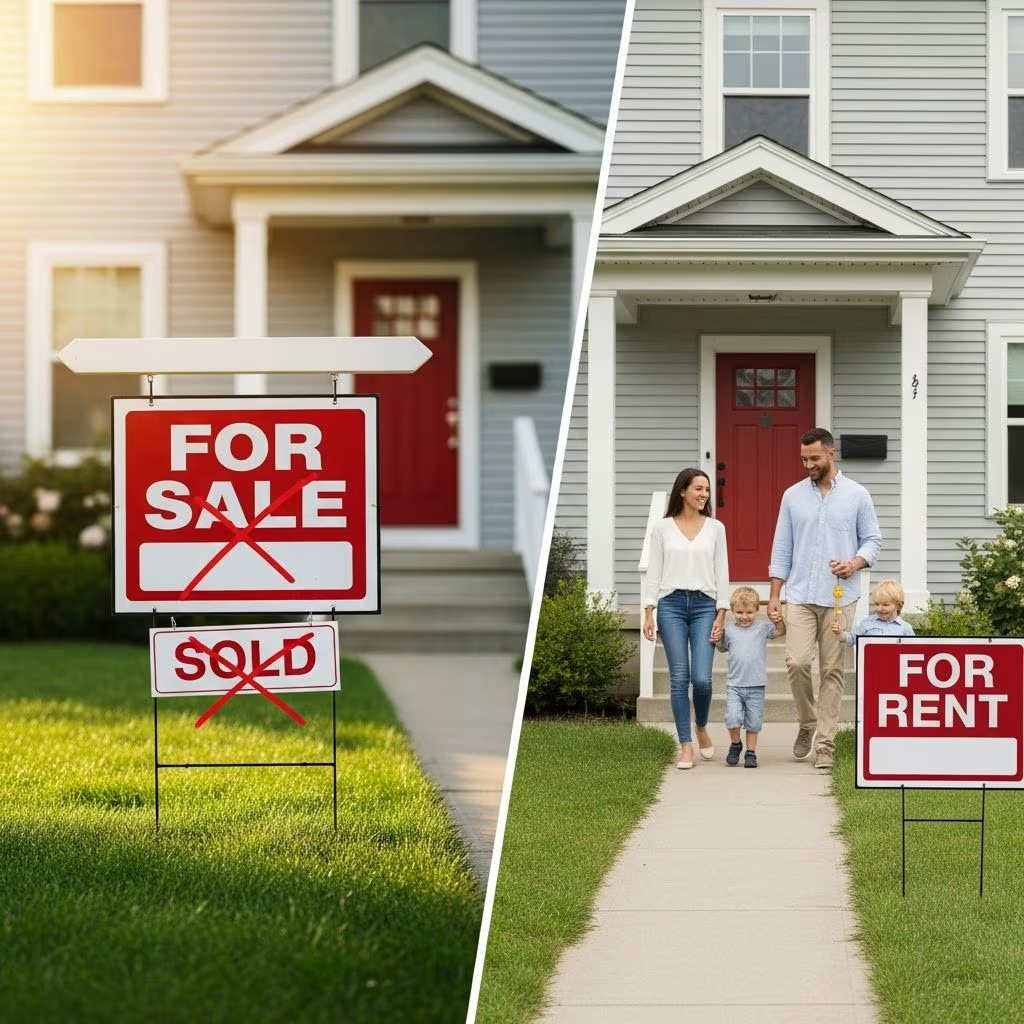
Owning a home represents one of the largest assets for most individuals, and when life changes—like a job relocation, family expansion, or retirement planning—arise, the question emerges: should you sell or convert it into a rental? This decision hinges on local market dynamics, personal finances, and lifestyle preferences. Selling provides immediate capital for new opportunities, while renting offers ongoing income and equity growth potential. This article delves into the nuances, helping you evaluate both paths objectively.
Understanding Market Dynamics: Buyer’s vs. Seller’s Markets
The real estate landscape fluctuates between buyer’s and seller’s markets, profoundly influencing your choice. In a buyer’s market, high inventory and low demand depress prices, making selling riskier as homes linger and offers fall short. Conversely, renting shields you from these pressures, allowing time for market recovery while generating income.
A seller’s market flips the script: low supply and high demand drive up values, often yielding multiple offers, bidding wars, and premiums above asking price. Here, selling maximizes lump-sum gains, ideal if you need funds for a down payment on a new property.
Local rental demand also matters. Areas with strong job growth, universities, or amenities attract tenants, supporting higher rents that can exceed mortgage costs. Tools like price-to-rent ratios help gauge viability: low ratios (renting cheaper than owning) signal profitable rentals; high ratios suggest selling.
Financial Analysis: Cash Flow Projections for Each Option
Crunch the numbers rigorously. For renting, calculate potential income against expenses:
- Rental Revenue: Research comparable rents via platforms like Zillow or local listings. Aim for coverage of your mortgage, taxes, insurance, and maintenance (the ‘1% rule’: monthly rent at least 1% of purchase price).
- Expenses: Include vacancies (5-10% annually), repairs (1-2% of value yearly), property management (8-12% of rent), and utilities.
- Net Yield: If rent exceeds costs, you gain passive income and equity buildup through principal paydown and appreciation.
Selling delivers a windfall after deducting agent commissions (5-6%), closing costs (2-5%), and capital gains taxes (if profit exceeds $250K single/$500K married exclusion). Use proceeds for debt reduction, investments, or your next home.
Break-Even Calculator Insight: Online tools simulate scenarios. For instance, if your home appreciates 3-5% yearly and rents cover 120% of mortgage, renting outperforms selling over 5-10 years, factoring taxes and fees.
| Factor | Selling | Renting |
|---|---|---|
| Immediate Cash | High (after costs) | None |
| Ongoing Income | None | Monthly (net positive if viable) |
| Equity Growth | Locked in at sale | Continues via appreciation/paydown |
| Upfront Costs | Commissions/Fees | |
| Tax Impact | Capital Gains | Income + Depreciation Benefits |
Tax Implications: Navigating IRS Rules for Homeowners
Taxes tilt the scales. Selling qualifies for principal residence exclusion, shielding up to $250K/$500K gains if owned and lived in 2 of last 5 years. Beyond that, long-term capital gains rates (0-20%) apply.
Renting shifts to investment property status: rental income is taxable, but deduct mortgage interest, property taxes, depreciation (27.5 years straight-line), and management fees. Depreciation recaptures at 25% upon sale, yet overall benefits often outweigh for cash-flow positive properties. Passive loss rules limit deductions if income exceeds $100K, but real estate professionals bypass this.
Consult a CPA; strategies like 1031 exchanges defer gains by rolling proceeds into like-kind investments.
Lifestyle Fit: Time, Effort, and Personal Goals
Beyond finances, consider your tolerance for involvement. Renting demands landlord duties: tenant screening, maintenance calls, legal evictions (costly, 1-3 months rent), and compliance with fair housing laws. Absentee owners hire managers, eroding 10% of income.
If relocating temporarily (e.g., 2-5 years job stint), renting preserves your home for return, avoids double moving costs, and leverages locked-in low mortgage rates amid rising rates. Permanent moves or aversion to hassles favor selling for simplicity.
- Temporary Relocation: Rent to cover costs, retain equity.
- Permanent Move: Sell to fund new chapter.
- Investment Mindset: Rent if market supports, building portfolio.
Risks and Mitigation Strategies
No choice is risk-free. Selling risks regret if values soar post-sale or regret buying high in frothy markets. Renting faces vacancies, bad tenants (vandalism, non-payment), rising insurance, or market shifts dropping rents below costs.
Mitigate by:
- Thorough tenant screening (credit, references, eviction history).
- Reserves: 6 months’ expenses for vacancies/repairs.
- Insurance: Landlord policies cover more than homeowner.
- Rent-to-own leases attract serious buyers, providing option income.
Step-by-Step Decision Framework
- Assess Market: Check days-on-market, median prices, rental comps via MLS or Realtor.com.
- Run Projections: Use calculators for 3-10 year horizons, sensitivity to rent growth (3%/yr), appreciation (4%/yr).
- Evaluate Finances: Debt-to-income, liquidity for dual properties.
- Consult Pros: Realtor for comps, CPA for taxes, attorney for leases.
- Test Small: Short-term rental (Airbnb) to gauge demand.
If net rental yield >8% post-expenses or temporary move, lean rent. If need cash or high effort aversion, sell.
Frequently Asked Questions (FAQs)
Can I rent my home and qualify for a new mortgage?
Yes, but lenders view it as debt. Prove 75% rental income coverage via lease; higher reserves needed.
What if the market crashes while renting?
You hold through appreciation cycles; selling locks losses. Diversify with reserves.
How do I price rent competitively?
5-10% below market for quick fill; factor amenities, location.
Is rent-to-own a good middle ground?
Yes, secures buyer commitment, retains down payment if they default.
What are typical property management costs?
8-12% of rent + lease-up fees (50-100% first month’s rent).
Final Thoughts on Your Path Forward
Align your decision with goals: liquidity and simplicity point to selling; income diversification and appreciation to renting. Markets evolve—today’s seller’s market (as of 2026) favors sales, but regional rental booms persist. Model scenarios, seek advice, and act confidently. Your home’s next chapter shapes your financial future.
References
- The pros and cons of renting vs. selling your home — Bungalow. 2023. https://bungalow.com/articles/the-pros-and-cons-of-renting-vs-selling-your-home
- Should I Sell Or Rent My House In Today’s Market? — Bankrate. 2024-02-15. https://www.bankrate.com/real-estate/should-i-sell-or-rent-my-house/
- Selling Vs. Renting a Home: Which is Right for Your Property? — Comerica. 2024. https://www.comerica.com/insights/personal-finance/renting-vs-selling-a-home-which-is-right-for-your-property.html
- Should I Sell or Rent My House? Here’s How to Decide — Redfin. 2024-01-10. https://www.redfin.com/blog/should-you-sell-or-rent-your-home/
- Should I Sell My House or Rent It Out? Key Factors To Consider — HomeLight. 2023-11-20. https://www.homelight.com/blog/should-i-sell-my-house-or-rent-it-out/
- Rent vs Sell Calculator — NARPM. 2024. https://www.narpm.org/members/resources/rent-vs-sell-calculator/
This article is general information, not personal financial advice. Consider your own situation, or speak with a licensed adviser, before acting on it.


