

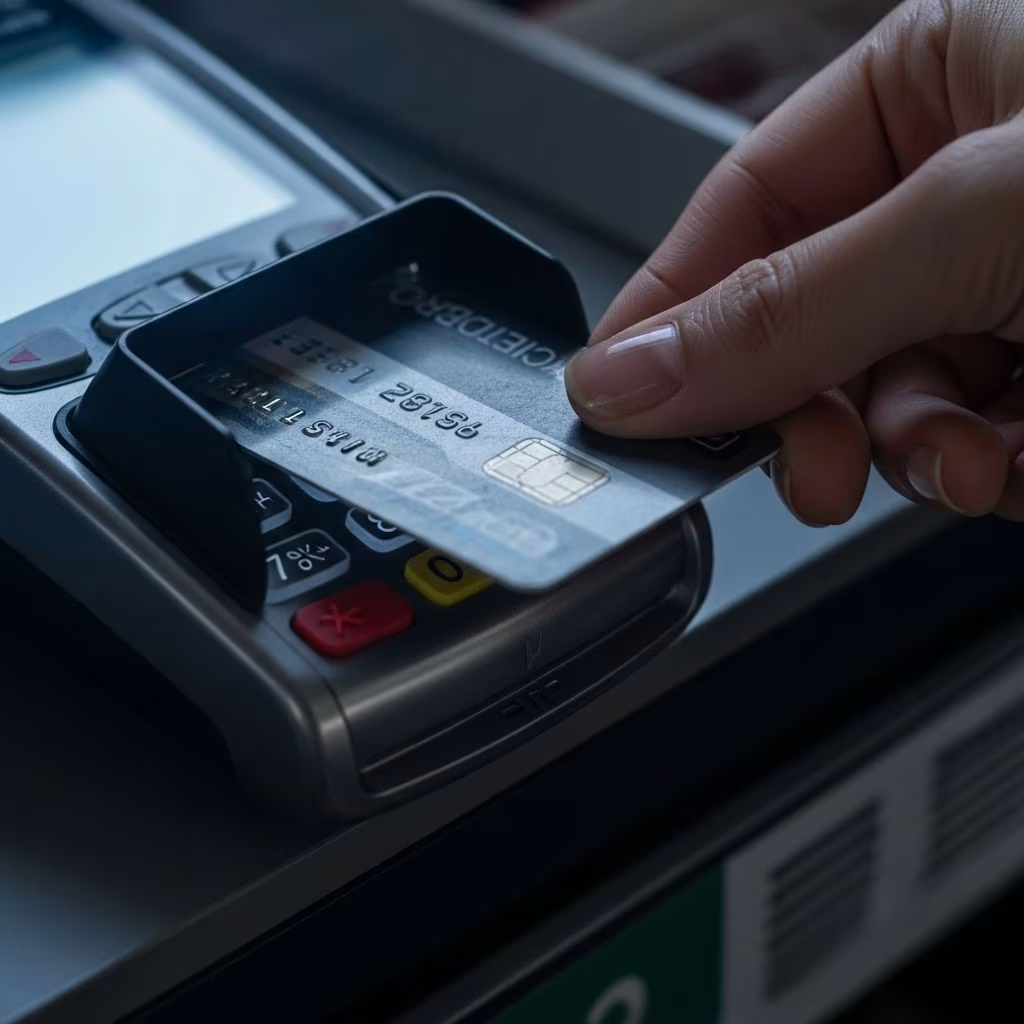
Online shopping has made life convenient, but it has also opened the door to sophisticated scams. One particularly sneaky credit card scam targets shoppers who make returns, tricking them into handing over sensitive financial information under the guise of resolving a delivery issue. This multi-step fraud preys on trust in familiar retailers and postal services, potentially costing victims hundreds or thousands in unauthorized charges.
Understanding how this scam unfolds is crucial for protection. Scammers combine public data, phishing tactics, and fake websites to create a convincing ploy. In this comprehensive guide, we’ll break down the scam’s mechanics, share real-world examples, offer prevention strategies, outline steps to take if victimized, and highlight your legal rights. Armed with this knowledge, you can shop smarter and avoid falling prey.
How the Sneaky Return Credit Card Scam Works
This scam typically starts after you’ve made an online purchase and initiated a return. Here’s the step-by-step breakdown:
- Step 1: Data Acquisition. Scammers obtain your contact details from data breaches, public records, or purchased lists. They monitor shipping and return activities through hacked retailer databases or social engineering.
- Step 2: The Trigger Text or Email. Days after shipping a return package, you receive a message claiming the item is ‘undeliverable’ due to an invalid address or payment issue. It urges you to ‘reschedule delivery’ via a link.
- Step 3: Fake Website Redirect. The link leads to a spoofed site mimicking UPS, USPS, FedEx, or the retailer (e.g., Amazon). It looks official, complete with logos and tracking numbers tailored to your real shipment.
- Step 4: Payment Demand. You’re prompted to ‘pay a small fee’—often $1–$5—for re-shipping or label reprinting. Enter your credit card details, and scammers capture them instantly.
- Step 5: Exploitation. Your card info is used for fraudulent purchases, often starting with small ‘test’ charges to verify validity before larger drains.
Unlike blunt phishing, this scam feels personalized because it references your actual return, increasing credibility. Victims report losses from $50 test charges to over $1,000 in rapid spending.
Real Victim Stories: ‘I Fell for It Despite Warnings’
Personal accounts underscore the scam’s effectiveness. One journalist from The Penny Hoarder shared her ordeal: After mailing a return package, she received a text about an undeliverable item. The link led to a convincing USPS site requesting her debit card for ‘re-mailing.’ She entered the details, only realizing the mistake when unauthorized charges appeared.
Another victim, an online shopper from Virginia, encountered a similar ploy post-Amazon return. A fake UPS email demanded $3.99 for ‘label correction.’ Her card was skimmed, leading to $800 in electronics purchases before she noticed. These stories highlight a common thread: even savvy individuals get caught due to the scam’s timeliness and authenticity.
Experts note a surge in these incidents around holidays, when returns peak. The Federal Trade Commission (FTC) reported over 2.6 million fraud cases in 2023, with imposter scams like this rising 10% yearly.
Why This Scam is So Effective
Several factors make this fraud hard to spot:
- Timing Precision. Messages arrive 2–5 days post-shipment, aligning with real delivery windows.
- Personalization. Includes your name, tracking ID, and retailer details, sourced from breaches like the 2023 UPS data leak affecting millions.
- Low-Stakes Ask. Small fees seem legitimate for ‘minor fixes,’ lowering suspicion.
- Urgency Pressure. Warnings of ‘item return to sender’ or ‘refund denial’ prompt hasty action.
Psychologically, it exploits ‘authority bias’—trust in brands like USPS—and ‘loss aversion,’ fear of losing a refund.
Red Flags to Spot the Scam
Train your eye for these warning signs:
| Legitimate Communication | Scam Indicators |
|---|---|
| Sender: Official domain (e.g., usps.com) | Sender: Generic or misspelled (e.g., usps-trackkng.com) |
| No unsolicited payment requests | Demands card details for ‘fees’ |
| Links to official apps/sites | Shortened or suspicious URLs |
| Contact via app notification | Text/email from unknown numbers |
Always verify independently: Log into your retailer or carrier account directly, never via links.
How to Protect Yourself from Return Scams
Prevention is straightforward with these habits:
- Use Virtual Cards. Generate one-time numbers via services like Privacy.com or bank apps for online buys.
- Enable Alerts. Set real-time transaction notifications on all cards.
- Avoid Links. Never click unsolicited messages; use official apps.
- Opt for Tap-to-Pay. Contactless payments reduce skimming risks.
- Monitor Returns. Track via official portals only.
- Freeze Credit. Place free freezes with Equifax, Experian, TransUnion.
For returns, print labels at home or use retailer drop-offs to minimize shipping handoffs.
What to Do If You’ve Been Scammed
Act fast—time limits apply:
- Lock Card Immediately. Use your bank’s app to disable it.
- Contact Issuer. Call the number on your card; report fraud within 60 days for $50 max liability under Fair Credit Billing Act.
- Dispute Charges. Submit a formal dispute; issuers often offer zero liability if reported promptly.
- Check Reports. Review all three credit bureaus for new accounts; place fraud alerts.
- Report to FTC. File at ReportFraud.ftc.gov; aids investigations.
- Scan Devices. Run antivirus for malware.
- Change Passwords. Update all financial logins.
Most victims recover funds quickly, as issuers prioritize fraud resolution.
Your Legal Rights Under U.S. Law
The Fair Credit Billing Act (FCBA) caps liability at $50 for timely reports, with many issuers providing zero-liability policies. The FTC enforces identity theft protections, including free credit freezes. For debit cards, Regulation E limits losses to $50 if reported within two days.
File an identity theft report for stronger bureau support, blocking fraudulent accounts. State laws may offer additional remedies.
Frequently Asked Questions (FAQs)
Q: How soon after a return does the scam text arrive?
A: Typically 2–5 days, matching real carrier delays to build trust.
Q: Can scammers access my real tracking info?
A: Yes, via data breaches or public shipment APIs; always verify officially.
Q: What if I used a debit card?
A: Contact your bank immediately; funds may be recoverable, but act faster than with credit.
Q: Is this scam only for big retailers like Amazon?
A: No, it targets any online return, including smaller sites.
Q: How can I tell if a site is fake?
A: Check URL for misspellings, HTTPS padlock, and hover for redirects.
Stay Vigilant in 2026
As e-commerce grows, so do these threats. By recognizing patterns, verifying sources, and leveraging protections, you can outsmart scammers. Share this with friends—awareness is the best defense. Safe shopping!
References
- The Penny Hoarder: I’m an Idiot. Don’t Fall for the Phishing Scam I Just Fell for — The Penny Hoarder. 2023. https://iconectiv.com/news-events/penny-hoarder-im-idiot-dont-fall-phishing-scam-i-just-fell
- Officials warn of card skimmers after arrest — WSLS. 2026-01-09. https://www.wsls.com/news/local/2026/01/09/officials-warn-of-card-skimmers-after-arrest/
- What Unpaid Tolls? What to Know About Scams on the Rise — The Penny Hoarder. 2023. https://www.thepennyhoarder.com/save-money/dont-get-scammed-scams-on-the-rise/
- Know Your Rights When Facing Credit Card Fraud — Bankrate. 2025. https://www.bankrate.com/credit-cards/advice/know-your-rights-credit-card-fraud/
- Fair Credit Billing Act — Federal Trade Commission (ftc.gov). Last updated 2024. https://www.consumer.ftc.gov/articles/0225-follow-up-your-plan-complain-about-credit-billing-errors
- Consumer Sentinel Network Data Book — Federal Trade Commission. 2024. https://www.ftc.gov/reports/consumer-sentinel-network-data-book-2024
This article is general information, not personal financial advice. Consider your own situation, or speak with a licensed adviser, before acting on it.


