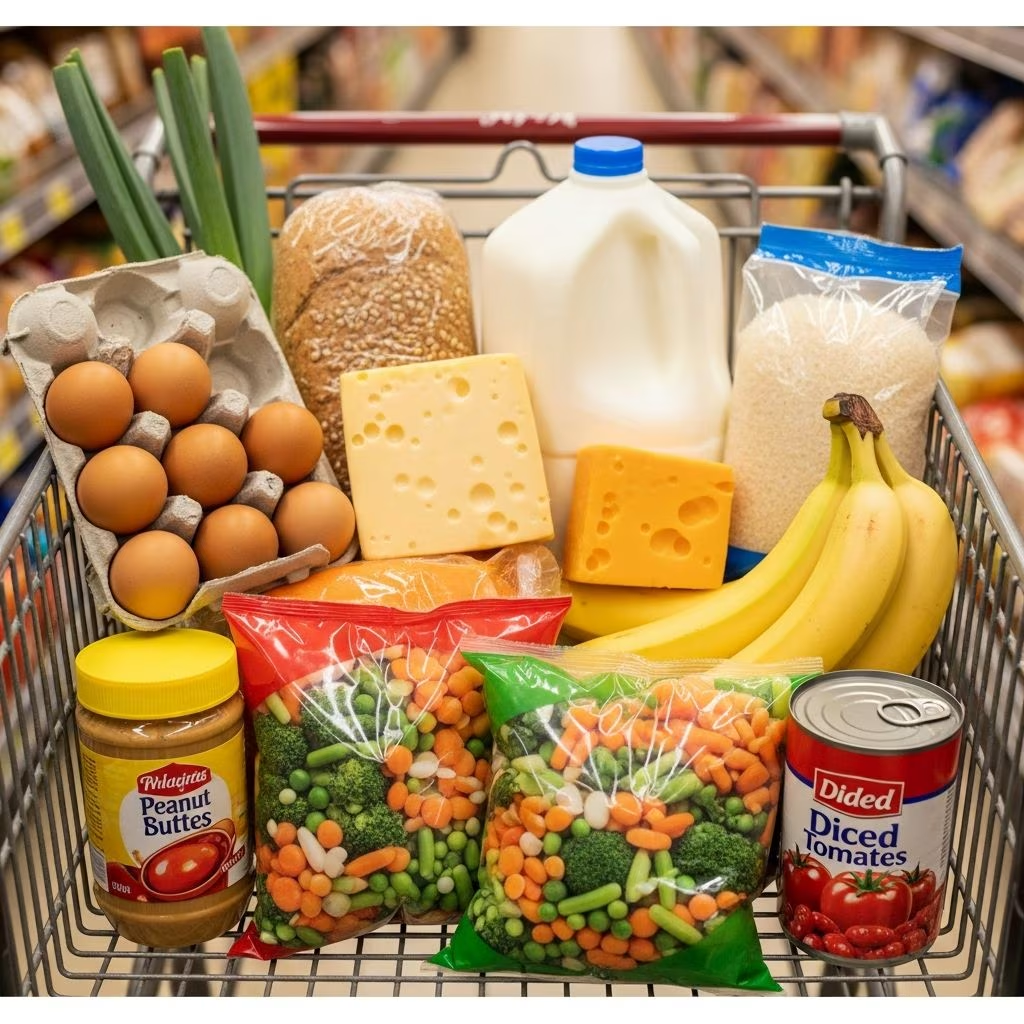
Grocery bills can quickly eat into your budget, but with targeted strategies, you can reliably save **25% or more** on everyday essentials. This guide breaks down proven tactics for nine staple items—milk, eggs, bread, meat, cheese, cereal, produce, canned goods, and pasta—drawing from smart shopping principles like choosing generics, timing purchases, and leveraging sales. Families spending $500 monthly on groceries could pocket an extra $125 using these methods, based on average U.S. household data from the U.S. Bureau of Labor Statistics.
Milk: Go Generic and Watch for Sales
Milk is a grocery cart staple, but prices fluctuate wildly. **Store-brand milk** often costs 20-30% less than name brands like Horizon or Organic Valley, offering identical quality since federal standards ensure uniformity in pasteurization and fortification. The U.S. Department of Agriculture (USDA) notes that generic dairy saves households up to $100 annually.
- Shop sales cycles: Milk goes on sale every 6-8 weeks; stock up on 4-6 gallons when it’s under $2.50 per gallon.
- Buy in bulk: Larger containers (half-gallons or gallons) reduce cost per ounce by 15-25% compared to pints.
- Freeze extras: Pour into ice cube trays for smoothies or cooking to extend usability beyond the sell-by date.
Average savings: **25-40%**. Check unit prices—aim for under $0.15 per ounce. Pair with coupons from store apps for deeper discounts.
Eggs: Cartons, Dozens, and Dozen Deals
Eggs are nutritional powerhouses but prone to price spikes. **Large white eggs** from store brands beat brown or specialty varieties by 25-50% in price without nutritional differences, per USDA grading standards.
- Buy in dozens: Two-dozen packs cost 20% less per egg than singles.
- Sales timing: Eggs drop post-Easter or holidays; buy 4-5 dozen at $1.50/dozen or less.
- Storage hack: Refrigerate promptly; they last 4-5 weeks past packing date.
| Egg Type | Avg Price/Dozen | Unit Price/Egg | Savings Tip |
|---|---|---|---|
| Store Large White | $1.99 | $0.17 | Stock sales |
| Organic Brown | $4.99 | $0.42 | Avoid unless sale |
Average savings: **30%**. Use apps like Ibotta for cashback.
Bread: Day-Old Bins and Freezer Strategy
Fresh bread tempts impulse buys, but **day-old bakery racks** offer 50% off without quality loss—toast or freeze immediately. Store brands like Sara Lee generics save another 20% over premium artisan loaves.
- Weekly deals: Wednesday “manager’s specials” often hit 2 loaves for $3.
- DIY alternative: Homemade bread costs $0.50/loaf using flour sales.
- Freeze slices: Portion into bags for grab-and-go use.
Average savings: **25-50%**. Focus on unit price per slice under $0.10.
Meat: Sales, Trims, and Ground Basics
Meat drives up bills, but **sales on family packs** of chicken breasts or ground beef yield 25-40% savings. Trim fat yourself to avoid pre-trimmed premiums.
- Chicken rotation: Buy bone-in when $0.99/lb; debone for breasts.
- Ground beef: 80/20 mix on sale beats leaner cuts; drain fat.
- Portion and freeze: Divide into meal-sized packs.
USDA reports bulk meat buys save $200/year per family. Average savings: **35%**.
Cheese: Blocks Over Shreds, Store Brands
**Cheese blocks** cost 30% less per ounce than pre-shredded; grate your own. Store-brand cheddar matches Kraft at half the price.
- Sales watch: Ends of blocks at 50% off.
- Buy large: 2-lb blocks drop to $3.50/lb on sale.
- Freeze shreds: For casseroles.
Average savings: **25-40%**; unit price goal: $4/lb or less.
Cereal: Generics and Box Tops
Cereal aisles are marketing minefields. **Store-brand flakes** mirror Kellogg’s at 40-50% less, with similar nutrition.
- Coupon stack: Sales + coupons = $1/box.
- Bulk bins: Scoop your own for 30% savings.
- Limit kids: Treat as occasional buy.
Average savings: **40%**. Track via price book.
Produce: Seasonal, Local, Imperfect
**Seasonal produce** like summer berries or winter roots saves 25-50%. Shop farmers’ markets or “ugly” bins for discounts.
- Frozen equals fresh: Nutrients preserved, cheaper off-season.
- Buy whole: Heads of lettuce over bags.
- Wash and prep: Extend life with vinegar soaks.
| Produce | Peak Season Savings | Tip |
|---|---|---|
| Apples | 40% | Fall sales |
| Berries | 50% | Frozen off-season |
USDA confirms seasonal buying cuts costs significantly. Average savings: **30%**.
Canned Goods: Stockers and Dent Check
**Canned beans, veggies, soups** on deep sales (10/$10) beat fresh equivalents. Inspect for dents (not swells).
- Store brands: 25% cheaper, same USDA inspections.
- Rotation buys: Every 4-6 weeks.
- Versatile use: Puree for dips.
Average savings: **25%**; build a 3-month pantry.
Pasta: Bulk Dry Goods Dominate
**Dry pasta** in 5-lb bags costs $0.50/lb on sale. Ignore premium shapes—nutritionally identical.
- Sales + coupons: Free after stacking.
- Store brand: Matches Barilla quality.
- Pair with sales: Sauce rotations.
Average savings: **35%**. Essential for cheap meals.
General Tips for Supermarket Success
Beyond staples, **make a list, shop perimeter, compare unit prices, and use cash** to curb overspending. Track prices in a notebook for baselines. Apps like Flipp aggregate sales. Inventory pantry first to avoid duplicates.
Frequently Asked Questions (FAQs)
Q: How much can I realistically save monthly?
A: On a $400 grocery budget, expect $80-120 (20-30%) using these tips consistently.
Q: Are store brands really as good?
A: Yes, blind taste tests by Consumer Reports show 90% indistinguishability for staples.
Q: What’s the best time to shop?
A: Early mornings or late evenings for markdowns and fewer crowds.
Q: How do I avoid food waste?
A: Freeze extras, use FIFO (first in, first out), and plan meals around sales.
Q: Do coupons still work in 2026?
A: Absolutely—digital coupons via store apps yield 10-20% extra savings.
References
- Consumer Expenditure Survey — U.S. Bureau of Labor Statistics. 2025-10-15. https://www.bls.gov/cex/
- Food Price Outlook — U.S. Department of Agriculture Economic Research Service. 2026-01-10. https://www.ers.usda.gov/data-products/food-price-outlook/
- Best Store-Brand Foods — Consumer Reports. 2025-05-20. https://www.consumerreports.org/store-brands/
This article is general information, not personal financial advice. Consider your own situation, or speak with a licensed adviser, before acting on it.