

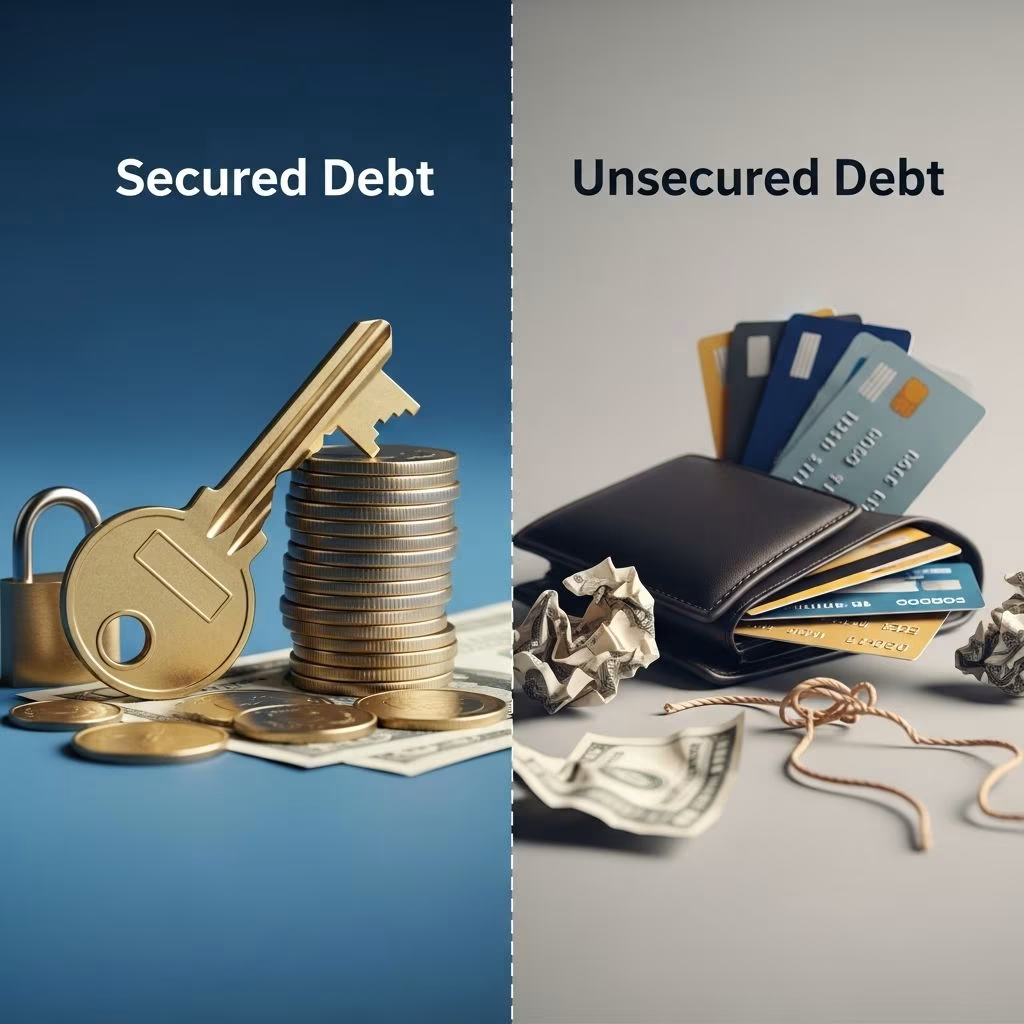
Debt consolidation loans can turn several high-interest balances into a single payment, potentially at a lower interest rate and with a clear payoff date. When you compare options, you will usually see two main types: secured and unsecured debt consolidation loans. Understanding how they differ in cost, risk, and eligibility is essential before you commit your financial future to either option.
What Is a Debt Consolidation Loan?
A debt consolidation loan is a new loan you use to pay off multiple existing debts, such as credit card balances, personal loans, or medical bills. Once your old accounts are paid, you repay the new loan in fixed installments, typically over two to seven years.
Common goals of debt consolidation include:
- Lowering interest costs: Replacing high-rate credit card debt with a lower-rate installment loan can save substantial interest over time.
- Simplifying payments: You go from managing several due dates to making a single monthly payment.
- Setting a payoff date: Installment loans have a defined term, so you know when your debt should be fully repaid if you follow the schedule.
Debt consolidation can be done through several products — including personal loans, balance transfer credit cards, home equity loans, and more — but this article focuses on personal loans used for consolidation, which can be secured or unsecured.
Secured vs. Unsecured Loans: The Core Difference
The main distinction between secured and unsecured debt consolidation loans is whether you pledge an asset as collateral:
| Feature | Secured Debt Consolidation Loan | Unsecured Debt Consolidation Loan |
|---|---|---|
| Collateral Required? | Yes, backed by an asset (e.g., home, car, savings) | No, based mainly on credit and income |
| Risk to Property | High: lender can seize collateral if you default | No direct property risk, but default harms credit |
| Typical Interest Rates | Often lower because lender’s risk is reduced | Often higher, especially with weaker credit |
| Approval Odds | Can be easier if you have valuable collateral | Depend heavily on credit profile and debt-to-income ratio |
| Common Examples | Home equity loan, HELOC, secured personal loan, auto equity loan | Standard personal loan, many peer-to-peer loans |
What Is a Secured Debt Consolidation Loan?
A secured debt consolidation loan is backed by collateral — property the lender is legally allowed to claim if you fail to repay as agreed. Common forms of collateral include a house, car, or savings account.
Common Types of Secured Consolidation Loans
- Home equity loan: A lump-sum loan secured by the equity in your home, generally repaid over 5–30 years.
- Home equity line of credit (HELOC): A revolving credit line secured by your home, similar to a credit card but typically with lower rates.
- Secured personal loan: A personal loan backed by assets such as a vehicle or savings certificate; some lenders will accept a car as collateral to improve your approval chances or rate.
Pros of Secured Debt Consolidation Loans
- Potentially lower interest rates: Because the lender’s risk is reduced by collateral, rates are often lower than those on unsecured loans or credit cards, especially if you have strong equity or savings.
- Larger borrowing limits: Home equity products and other secured loans may allow you to borrow more, which can be useful if you have significant high-cost debt.
- Better chances of approval with weaker credit: If your credit score is not ideal, collateral may help you qualify when an unsecured loan is not available or is too expensive.
Cons of Secured Debt Consolidation Loans
- Risk of losing your collateral: If you fall behind, the lender can foreclose on your home, repossess your car, or seize pledged funds. This can be devastating if you rely on that asset for housing or transportation.
- Longer payoff horizon can increase total interest: Home equity loans often have longer terms. Even at a lower rate, stretching repayment over many years can result in higher total interest paid.
- Closing costs and fees: Secured loans tied to property may involve appraisal costs, origination fees, title work, or other closing costs, which should be factored into your total cost of borrowing.
What Is an Unsecured Debt Consolidation Loan?
An unsecured debt consolidation loan does not require collateral. Approval and terms depend primarily on your credit history, income, existing debts, and overall financial profile. Many standard personal loans used for consolidation are unsecured.
How Unsecured Consolidation Loans Work
With an unsecured personal loan for consolidation:
- You apply based on your credit profile, employment, and income.
- If approved, you receive a lump sum, or in some cases the lender pays your creditors directly.
- You use the funds to pay off your existing debts.
- You make a single fixed payment each month until the loan is paid off, typically in 2–7 years.
Pros of Unsecured Debt Consolidation Loans
- No risk to your home or car: Because there is no collateral, the lender cannot seize specific property if you fall behind, although it can pursue collection and your credit will still be affected.
- Simple application process: You typically do not need an appraisal or title work; many lenders let you check estimated rates online without impacting your credit score.
- Predictable repayment schedule: Fixed interest and monthly payments provide a clear end date, making it easier to budget and plan your payoff.
Cons of Unsecured Debt Consolidation Loans
- Higher interest rates than secured loans: Without collateral, lenders take more risk and generally charge higher rates, especially if your credit score or income is not strong.
- Potentially lower borrowing limits: You may not be able to consolidate all your debts if the amount you qualify for is limited by your credit and income.
- Harder approval if credit is weak: Borrowers with poor or limited credit histories may find unsecured consolidation loans harder to obtain or may only qualify at high interest rates that provide little benefit.
Comparing Secured and Unsecured Debt Consolidation Loans
When deciding between secured and unsecured loans, consider how each option affects your cost, risk, and chances of approval.
Key Factors to Compare
- Interest rate and APR: Secured loans often offer lower rates, especially when backed by home equity, while unsecured loans may cost more but avoid property risk.
- Loan term: Longer terms can lower your monthly payment but increase total interest over time; shorter terms cost more each month but may reduce overall interest paid.
- Fees: Origination fees, appraisal costs, closing costs, and prepayment penalties all affect your true cost. Always compare the annual percentage rate (APR), which reflects interest plus many fees.
- Risk tolerance: If you are uncomfortable putting your home or car on the line, an unsecured loan may be more appropriate even if the rate is higher.
- Approval odds: If you have strong equity but weaker credit, a secured option may be more realistic than an unsecured loan with competitive terms.
Illustrative Example
Consider someone carrying high-interest credit card debt. An unsecured debt consolidation loan at a lower rate might reduce both their monthly payment and overall interest if the term is reasonable. A secured home equity loan might provide an even lower rate, but at the cost of tying the debt to their home, exposing them to potential foreclosure if they cannot keep up with payments.
When a Secured Debt Consolidation Loan Might Make Sense
A secured loan could be worth considering if you:
- Own a home with significant equity and are comfortable using it strategically to manage debt.
- Have difficulty qualifying for affordable unsecured loans because of credit challenges, but you can reliably make payments.
- Need to consolidate a large amount of debt that exceeds the limits available with unsecured personal loans.
Even in these situations, it is important to ensure that the total cost of borrowing — including interest over the full term and any fees — is lower than what you would pay by keeping your existing debts and following an aggressive payoff plan.
When an Unsecured Debt Consolidation Loan Might Be Better
An unsecured consolidation loan may be a better fit if you:
- Prefer not to put your home, car, or savings at risk.
- Have good or excellent credit and can qualify for competitive rates without collateral.
- Want a straightforward, relatively quick application and funding process with fewer fees and no appraisal requirements.
Borrowers who use unsecured loans successfully also tend to avoid taking on new debt while repaying the consolidation loan, so they do not end up owing more overall.
How to Decide Which Debt Consolidation Loan Is Right for You
Use these steps to evaluate your options carefully:
1. Review Your Current Debt
- List each debt, balance, interest rate, and minimum monthly payment.
- Note which debts are variable-rate (like many credit cards) and which are fixed-rate.
2. Clarify Your Goals
- Are you primarily trying to lower your monthly payment, reduce total interest, or pay off debt faster?
- Are you willing to accept property risk in exchange for a lower rate?
3. Compare Offers from Multiple Lenders
- Check rate estimates for both secured and unsecured options when possible.
- Compare APRs, fees, terms, and monthly payments.
- Use online calculators to estimate how much interest you might save with consolidation compared to your current trajectory.
4. Evaluate Affordability and Risk
- Ensure the monthly payment fits comfortably in your budget.
- Consider the consequences if your income changes — especially if you are considering pledging your home or car.
5. Make a Plan to Avoid New Debt
- Commit to not running up credit card balances again after consolidation.
- Build an emergency fund over time so unexpected expenses do not push you back into high-interest debt.
Alternatives to Debt Consolidation Loans
If neither secured nor unsecured debt consolidation loans seem appropriate, consider other options:
- Balance transfer credit card: Some cards offer low or 0% introductory APR on transferred balances for a limited period. You can save on interest if you pay off the debt before the promotional rate expires, though balance transfer fees often apply.
- Debt management plan through a nonprofit credit counseling agency: A counselor may be able to negotiate lower interest rates with your creditors and combine payments without taking out a new loan.
- Targeted repayment strategies: Approaches like the “avalanche” method (prioritizing highest interest rates) or “snowball” method (prioritizing smallest balances) can help you pay down debt systematically without new borrowing.
Frequently Asked Questions (FAQs)
Q: Does a debt consolidation loan hurt my credit score?
A: Applying for a new loan typically results in a hard inquiry, which can cause a small, temporary drop in your credit score. Over time, if you make on-time payments and reduce your overall revolving balances, consolidation can potentially improve your credit profile.
Q: Is it safe to use my home as collateral for debt consolidation?
A: Using home equity can provide lower rates, but it is risky because falling behind on payments could lead to foreclosure. This approach is generally safer only if you have stable income, a realistic budget, and a strong commitment not to accumulate new unsecured debt.
Q: How do I know if a consolidation loan will save me money?
A: Compare the combined interest and fees you would pay on the consolidation loan versus continuing to pay your current debts. Online calculators and lender estimates can help you see whether the new loan reduces both your monthly payment and total interest paid over time.
Q: Can I consolidate debt with bad credit?
A: Some lenders offer debt consolidation loans to borrowers with fair or even poor credit, but interest rates may be high. Collateral can sometimes improve your approval odds or terms, but you should be cautious about risking important assets if your budget is already strained.
Q: What happens if I miss payments on a consolidation loan?
A: Late or missed payments can result in fees, higher costs, and negative marks on your credit report. With secured loans, repeated nonpayment can also lead to loss of the collateral, such as your home or vehicle.
References
- Debt Consolidation Options — National Credit Union Administration / MyCreditUnion.gov. 2023-03-09. https://mycreditunion.gov/manage-your-money/dealing-debt/debt-consolidation-options
- 5 Best Debt Consolidation Options and How to Choose — Bankrate. 2024-06-10. https://www.bankrate.com/loans/personal-loans/debt-consolidation-options/
- Best Debt Consolidation Loans in January 2026 — LendingTree. 2026-01-02. https://www.lendingtree.com/debt-consolidation/
- Best Debt Consolidation Loans for 2026 — Experian. 2025-12-15. https://www.experian.com/loans/debt-consolidation/
- Best Debt Consolidation Loans in January 2026 — Credible. 2026-01-03. https://www.credible.com/personal-loan/debt-consolidation-loans
- 5 Best Ways to Consolidate Credit Card Debt — NerdWallet. 2024-08-21. https://www.nerdwallet.com/personal-loans/learn/how-to-consolidate-credit-card-debt
This article is general information, not personal financial advice. Consider your own situation, or speak with a licensed adviser, before acting on it.


