

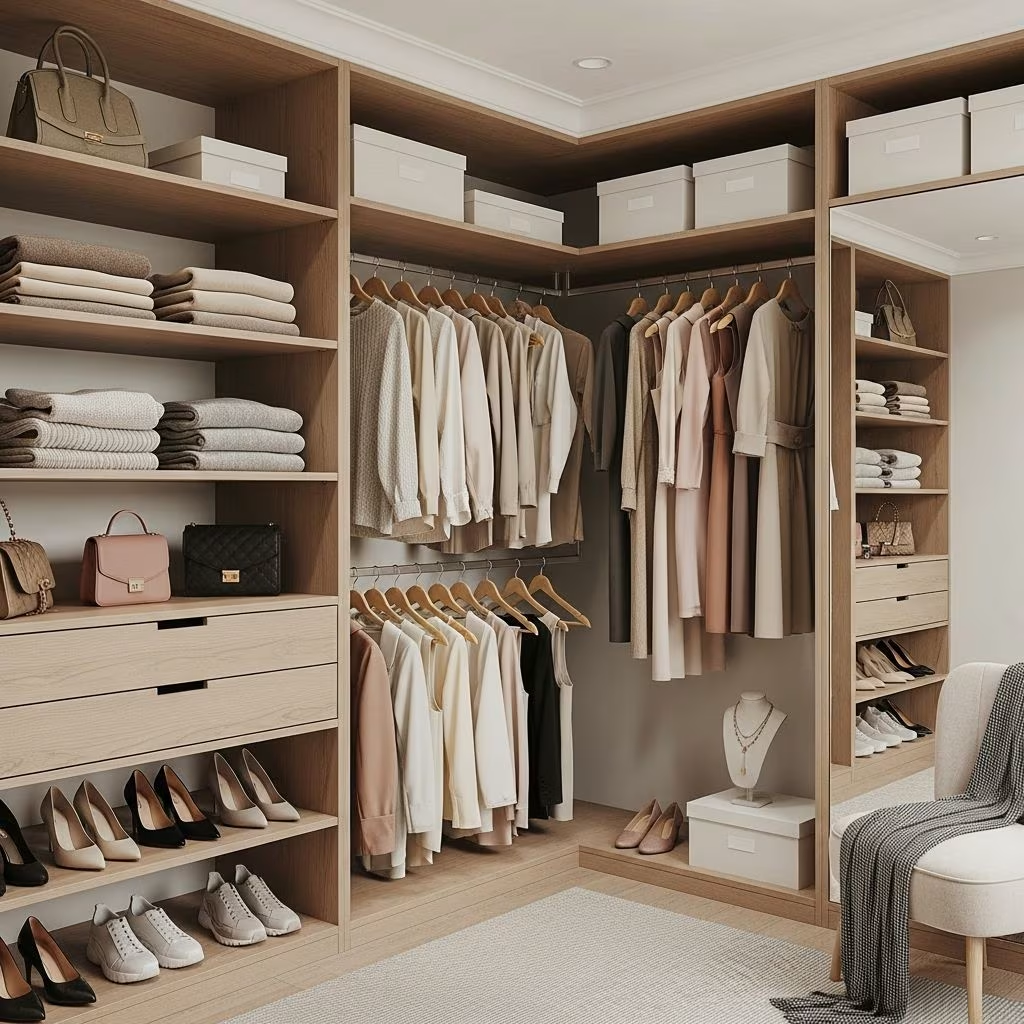
Refreshing your style does not have to mean buying something new. A focused shop your closet challenge can help you rediscover what you already own, reduce impulse spending, and free up cash for your real financial priorities.
What Does It Mean To Shop Your Closet?
To shop your closet means intentionally creating outfits using only clothes, shoes, and accessories you already own, instead of buying new items. It is a mindset shift from “What can I buy?” to “How can I use what I have better?”
Many people realize they consistently wear only a small portion of their wardrobe, even though they keep buying more pieces they rarely use. Shopping your closet interrupts this cycle so you can:
- Wear more of what you already own
- Understand your true personal style
- Spot gaps in your wardrobe before you spend
- Save money and reduce clothing waste, which benefits both your budget and the environment
What Is The Shop Your Closet Challenge?
The shop your closet challenge is a simple commitment: for a set period, typically 30 days, you do not spend any money on clothes, shoes, or accessories. Instead, you commit to wearing only what is already in your wardrobe.
This type of short-term, clearly defined challenge is similar in spirit to “no-spend” or “low-buy” challenges often recommended by financial educators to reset habits and reduce discretionary spending.
| Aspect | Shop Your Closet Challenge | Typical Clothes Shopping |
|---|---|---|
| Goal | Use what you own, save money | Acquire new items |
| Spending | No new spending on clothes, shoes, accessories | Discretionary, often impulse-based |
| Time frame | Fixed (e.g., 30 days) | Ongoing |
| Main benefit | Breaks habits, builds awareness and creativity | Immediate variety, but less financial control |
Why Shop Your Closet Instead Of Spending Money?
Redirecting money from frequent clothing purchases toward savings or debt payoff can significantly improve long-term financial health. U.S. consumer expenditure data show that clothing is a recurring but flexible budget category, meaning it is an obvious place to cut when you need extra savings.
Choosing to shop your closet:
- Saves money immediately: Every item you do not buy is money that can stay in your bank account or be used for goals like paying down debt or investing.
- Supports sustainable consumption: Extending the life of clothing reduces waste and lowers the environmental footprint of your wardrobe, aligning with broader sustainability goals discussed in consumer research.
- Improves decision-making: A pause from shopping gives you space to evaluate what you really like, instead of reacting to sales or social media trends.
- Reduces clutter: When you fully see what you own, you can let go of items that no longer fit your lifestyle.
How To Start A 30-Day Shop Your Closet Challenge
Here is a straightforward process for running your own 30-day challenge.
1. Set a Clear No-Shopping Rule
For the full 30 days, commit to:
- No new clothes
- No new shoes
- No new accessories (including jewelry, bags, hats, and similar items)
If possible, unsubscribe from promotional emails and mute or unfollow accounts that trigger impulse buying while you are in the challenge, as financial counselors often recommend minimizing exposure to spending triggers.
2. Take Inventory Of Your Wardrobe
Before the challenge begins, spend time going through everything you own:
- Group items by category (tops, bottoms, dresses, outerwear, shoes, accessories).
- Try things on to assess fit, comfort, and condition.
- Set aside items that are damaged beyond repair or that you know you will not wear again.
This inventory helps you understand what you actually have and reveals duplicates, gaps, or items that no longer fit your lifestyle.
3. Create Outfit Formulas
Instead of thinking in single items, think in outfit formulas. Some examples include:
- Blazer + t-shirt + jeans + loafers
- Button-down shirt + trousers + ankle boots
- Dress + cardigan + flats
- Denim jacket + midi skirt + sneakers
Use your existing clothes to build several combinations around each formula. This is similar to the capsule wardrobe concept promoted by stylists and personal finance educators, where a limited set of versatile pieces creates many outfits.
4. Track Your Outfits
During the challenge, track what you wear each day:
- Write outfits in a notebook or planner.
- Take daily photos to see patterns over time.
- Note how comfortable and confident you felt in each outfit.
At the end of the month, you will clearly see which pieces you reach for repeatedly and which stay untouched.
5. Reflect On Your Spending Habits
While you are not shopping, pay attention to moments when you feel tempted to buy something:
- Are you bored, stressed, or looking for a mood boost?
- Did a sale email or social media post trigger the urge?
- Are you trying to solve a problem that clothes cannot actually fix?
Research in behavioral economics and consumer psychology shows that identifying triggers is essential to changing spending habits, because much shopping is driven by emotion rather than need.
Benefits You Can Expect From Shopping Your Closet
By the end of a 30-day challenge, many people report changes in both their wardrobe and their mindset.
- More outfit ideas: You may discover new combinations you have never tried, making your wardrobe feel larger without any new purchases.
- Stronger personal style: Wearing what you already own helps you see what truly suits you instead of being swayed by short-lived trends.
- Less shopping guilt: You prove to yourself that you can look put-together without constant spending, which can reduce guilt around past purchases.
- Extra savings: The money you did not spend on clothes can be moved into savings, investments, or debt payments, consistent with standard personal finance guidance.
- Informed future purchases: When the challenge ends, you will be clearer on what you genuinely need versus what would sit unworn.
How To Make Your Closet Work Harder For You
Shopping your closet becomes easier when your wardrobe is organized and aligned with your real life.
1. Edit And Declutter Thoughtfully
After your challenge, review items you never wore:
- Ask why you avoided them: fit, color, fabric, or lifestyle mismatch?
- Set aside items to donate, sell, or give to friends if they no longer serve you.
- Keep a small “maybe” box to revisit after another month; if you still do not reach for those items, it is easier to let them go.
This process is similar to the decluttering strategies promoted in many financial and organizing programs, which emphasize minimizing unused items to reduce decision fatigue and waste.
2. Consider Basic Alterations And Repairs
Some clothing may be perfectly good but does not fit quite right. Tailoring can extend the life of garments and is often less expensive than buying new replacements.
- Hem pants or skirts to a more flattering length.
- Replace missing buttons or broken zippers.
- Adjust waistlines or shoulders for a better fit.
If professional tailoring is not in your budget, simple sewing skills can handle minor repairs and extend the useful life of clothing, which supports both frugality and sustainability.
3. Build A Simple Capsule Wardrobe Over Time
Once you know which pieces you wear the most, you can gradually shape your closet into a capsule wardrobe. A capsule wardrobe uses a limited number of versatile items that mix and match easily, reducing decision fatigue and unnecessary purchases.
- Choose a base color palette (such as black, navy, or brown).
- Add a few accent colors you genuinely love.
- Prioritize high-quality basics that can be worn in multiple settings.
This approach aligns with research showing that people often feel more satisfied with fewer, more intentional choices rather than a large, unfocused set of options.
Connect Your Closet To Your Money Goals
Shopping your closet is not only about clothes; it is also a financial decision. Treat the challenge as a practical step toward your broader money goals.
1. Add Clothing To Your Budget On Purpose
Instead of impulse buying, include a planned clothing category in your monthly budget. Personal finance experts typically recommend assigning every dollar a job and treating discretionary categories as adjustable, not fixed.
- Review past months to estimate how much you used to spend on clothing.
- Set a lower, intentional limit going forward.
- Protect that savings difference by transferring it to a specific goal account.
2. Save For Something You Truly Want
Clothing cutbacks can free up funds for:
- An emergency fund
- Debt repayment
- Investments or retirement contributions
- A specific experience, such as a trip or class
Having a clear purpose makes it easier to say no to unplanned purchases, as shown in research on goal-oriented saving and behavioral finance.
3. Shop Intentionally When The Challenge Ends
When your 30 days are over, you can shop again—but with better information and stronger boundaries.
- Make a list of genuine wardrobe gaps that became obvious during the challenge.
- Wait at least 24 hours before buying non-essential items to reduce impulse purchases.
- Choose quality over quantity so each new piece earns its place in your closet.
Frequently Asked Questions (FAQs)
Q: How long should a shop your closet challenge last?
A: Many people start with a 30-day challenge because it is long enough to change habits but short enough to feel achievable. You can extend it to 60 or 90 days if you want a deeper reset.
Q: Can I buy essentials like undergarments or work uniforms?
A: You can define your own rules, but most people allow true necessities—such as replacing worn-out undergarments or required uniforms—while still avoiding discretionary fashion spending.
Q: What if I have a special event during the challenge?
A: First, try to create an outfit from what you own or borrow from a trusted friend. If that is impossible, treat the purchase as a planned exception and stay within a pre-set spending limit.
Q: Will shopping my closet really make a difference to my finances?
A: Consistently redirecting even a modest monthly clothing budget toward savings or debt can add up significantly over time, especially when combined with other frugal habits and basic investing principles.
Q: How do I stay motivated during the challenge?
A: Keep your financial goal visible, track your no-spend streak, and involve a friend or online community for accountability. Taking photos of your outfits can also make the process more fun and show your progress.
References
- I Resolved to ‘Shop My Closet.’ Here’s How It’s Going — Kiplinger. 2023-03-28. https://www.kiplinger.com/personal-finance/shopping/i-resolved-to-shop-my-closet-heres-how-its-going
- How to Stop Buying Clothes You Never Wear — Clever Girl Finance. 2023-10-12 (last updated). https://www.clevergirlfinance.com/how-to-stop-buying-clothes/
- How Do I Shop My Closet Instead Of Spending Money? — Clever Girl Finance. 2024-06-18 (last updated). https://www.clevergirlfinance.com/shop-my-closet/
- Top 5 Takeaways From Shopping My Closet — Daynel Brown Personal Finance Blog. 2021-07-15. https://www.daynelbrown.com/personal-finance-blog/top-5-takeaways-from-shopping-my-closet
- Let’s Talk About “Shopping Guilt” — Clever Girl Finance (YouTube discussion). 2022-05-03. https://www.youtube.com/watch?v=FHpldT2gaAQ
This article is general information, not personal financial advice. Consider your own situation, or speak with a licensed adviser, before acting on it.


