

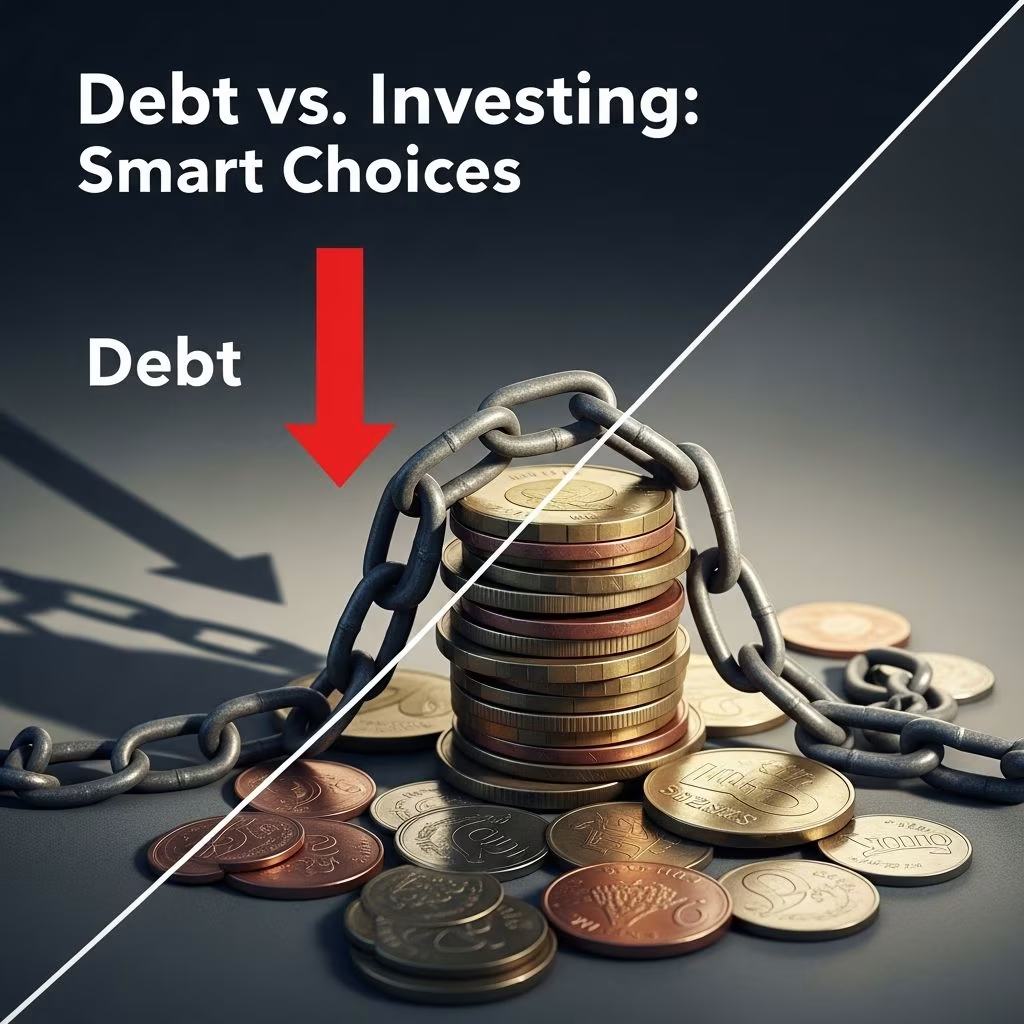
High-interest credit card debt often demands priority over new investments due to its steep costs outpacing typical market returns. However, certain conditions like employer matches or low-rate promotions can justify pursuing both goals simultaneously.
Why Credit Card Debt Usually Comes First
Credit card balances carry average annual percentage rates (APRs) around 21%, far exceeding the historical stock market average of about 10%. Paying off such debt delivers a risk-free return equivalent to the interest rate avoided, making it a foundational step for financial stability.
Consider a $5,000 balance at 20% APR: minimum payments alone could extend repayment over years, accruing thousands in interest. Directing extra funds here eliminates this drag, freeing cash flow for future savings.
The Math Behind Prioritizing Debt Elimination
Investments offer no guarantees, while debt interest accrues predictably. For every dollar applied to a 20% card, you save $0.20 annually—better than most conservative options like bonds yielding under 5%.
| Scenario | Debt Interest Saved (20% APR) | Stock Market Avg Return (10%) | Net Advantage |
|---|---|---|---|
| $1,000 Payment | $200/year | $100/year | Debt: +$100 |
| $10,000 Payment | $2,000/year | $1,000/year | Debt: +$1,000 |
This table illustrates the clear edge of debt reduction for high-rate obligations.
Credit Score Protection
High utilization—balances over 30% of limits—hurts scores, raising future borrowing costs. Clearing debt lowers utilization, boosting scores and unlocking better rates on loans or mortgages.
Scenarios Where Investing Makes Sense Alongside Debt
Not all situations demand full debt elimination first. Strategic opportunities can allow parallel progress.
Employer Retirement Matches
If your workplace matches 401(k) contributions, say 50% up to 6% of salary, that’s free money—often a 50-100% instant return. Contribute enough to capture this before extra debt payments, as long as minimums are met.
- Match exceeds debt APR in effective yield.
- Tax advantages amplify growth.
- Requires disciplined minimum payments to avoid penalties.
Low or Zero-Interest Promotions
Balance transfers to 0% APR cards (typically 12-21 months) pause interest, letting investments potentially outpace any fees (3-5%). Plan full payoff before promo ends.
Low-Rate Debt Threshold
Debt under 6% may warrant investing, especially tax-deductible types like certain student loans. Above this, debt payoff prevails.
Practical Steps to Balance Debt and Wealth Building
Assess your full picture: debt rates, investment options, emergency fund (3-6 months expenses), and cash flow.
- Secure minimum payments: Prevent fees, score damage.
- Build emergency fund: Avoid new debt from surprises.
- Capture matches: Free gains first.
- Target high-APR debt: Avalanche method—highest rate first.
- Automate investments: Post-debt, dollar-cost average into index funds.
Debt Repayment Accelerators
Negotiate lower rates with issuers, consolidate via personal loans (avg 11-12%), or use windfalls like bonuses directly on balances.
Long-Term Financial Roadmap
Post-debt, redirect payments to investments. Compounding turns $500/month at 7% into over $200,000 in 20 years. Debt-free status enhances this by improving access to premium opportunities.
Psychological wins matter too: debt freedom reduces stress, enabling bolder investing.
Frequently Asked Questions
Is paying off 18% credit card debt better than stock investing?
Yes, as few investments reliably beat 18% without high risk. Debt payoff guarantees the win.
Can I invest in retirement accounts with debt?
Yes, if capturing employer matches; otherwise, prioritize debt.
What if my debt is at 4% interest?
Invest alongside, as returns likely exceed it.
How does debt affect my ability to invest later?
High balances tank scores, leading to worse investment loan terms.
Should I use credit cards to fund investments?
No—fees and interest amplify risks, often creating debt spirals.
References
- Using Credit Cards for Investing: Exercise Caution — FINRA. 2024. https://www.finra.org/investors/insights/credit-cards-and-investing
- Should I Invest if I Have Credit Card Debt? — Experian. 2025-05. https://www.experian.com/blogs/ask-experian/should-i-invest-if-i-have-credit-card-debt/
- Pay Off Credit Cards or Other High Interest Debt — Investor.gov (SEC). Accessed 2026. https://www.investor.gov/introduction-investing/investing-basics/save-and-invest/pay-credit-cards-or-other-high-interest
- Paying Down Debt vs Investing — Credit Human. 2024. https://www.credithuman.com/building-slack/paying-down-debt-vs-investing
- Should I Pay Off Debt or Invest First? — John Hancock. 2024. https://www.johnhancock.com/ideas-insights/should-i-pay-off-debt-or-invest.html
This article is general information, not personal financial advice. Consider your own situation, or speak with a licensed adviser, before acting on it.


