

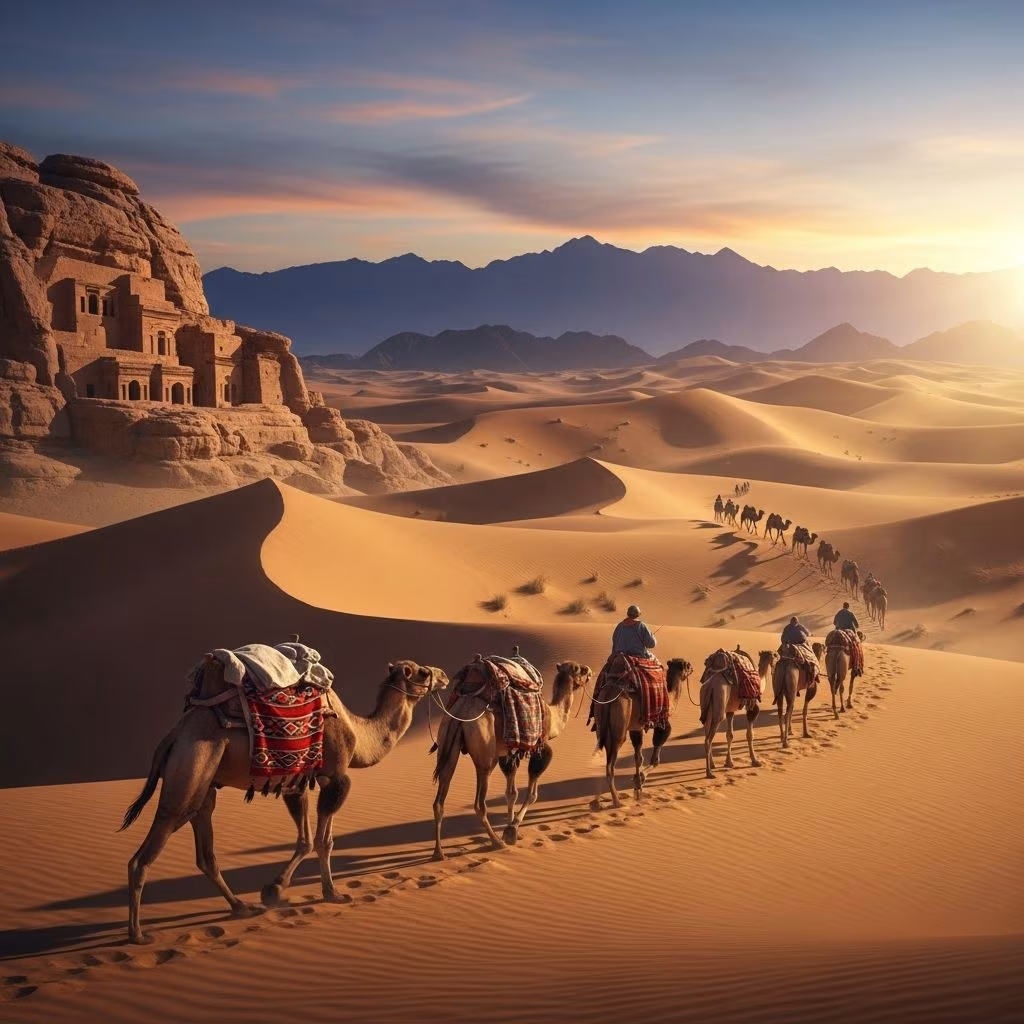
The Silk Road: History’s Greatest Trade Network
The Silk Road stands as one of history’s most significant trade networks, representing far more than a simple commercial pathway. This vast system of interconnected trade routes fundamentally transformed civilizations across Europe, Asia, and the Middle East, facilitating not only the exchange of goods but also ideas, technologies, and cultural practices. The Silk Road was formally established during the Han Dynasty of China in 130 BCE and remained active until 1453 CE, when the Ottoman Empire closed these ancient passages. For over 1,500 years, merchants, explorers, and travelers traversed these routes, creating a web of commerce that would shape the course of human history.
What is the Silk Road?
The Silk Road was not a single unified route but rather a network of ancient trade routes linking the regions of the ancient world in commerce. Historians often prefer the term ‘Silk Routes’ to emphasize the multiplicity of pathways that made up this complex system. The network stretched across the Eurasian continent, spanning between 6,400 and 10,000 kilometers in total distance. The eastern terminus of these routes was Chang’an, known today as Xi’an, China’s ancient capital. The western endpoints varied depending on the goods being transported, often reaching Mediterranean cities including Genoa, Venice, Constantinople, and Valencia in Spain.
The term “Silk Road” itself was coined by German explorer Ferdinand von Richthofen in 1877 in his book “China,” naming the route after silk, the most prestigious and sought-after commodity transported along these pathways. The name would endure despite the countless other valuable goods that traveled these same routes.
Historical Timeline and Development
The history of the Silk Road stretches back further than many realize. While the Han Dynasty formally established the trade routes in 130 BCE, evidence suggests that commercial pathways may have existed much earlier. Some 21st-century researchers propose that trade routes originated as early as the Neolithic period, with timelines beginning in the 3rd millennium BC, connecting various parts of Eurasia long before establishing connections with China.
Early Development and Zhang Qian’s Expedition
The pivotal moment in Silk Road history came with the famous expedition of Chinese ambassador Zhang Qian in 128-127 BCE. Tasked with traveling to Bactria to forge alliances against the Hunnu, Zhang Qian’s journey, though diplomatically unsuccessful, proved economically transformative. During his years-long travels, he documented the life and culture of Central Asia, and his reports enabled the Han Empire to establish crucial trade relations with Central Asian regions, marking the early stages of the organized Silk Road.
Expansion and Peak Activity
The Silk Road experienced several distinct periods of intense trading activity. Historically, scholars identify three primary periods of flourishing trade: first, from 206 BCE to 220 CE between the Han dynasty and Central Asia, extending to Rome; second, from approximately 618 to 907 CE between Tang dynasty China and Central Asia; and third, during the 13th and 14th centuries. The most significant expansion occurred in the 2nd century AD when China broadened its cooperation with the Roman Empire. The first documented direct contact between these two great powers occurred in 166 AD, when envoys from Roman Emperor Marcus Aurelius arrived in China, establishing the earliest formal phase of Silk Road commerce.
The Decline of the Silk Road
The decline of the Silk Road as a global trade network began in the 15th century due to multiple geopolitical factors. The Ottoman Empire’s rise to prominence resulted in the blockade of major trade routes to Europe. In 1453 CE, when the Byzantine Empire fell to the Turks, the Ottoman Empire officially closed the ancient Silk Road routes and severed all commercial ties with Western Europe. However, some overland trade routes remained active until the late 19th century, though their economic significance had dramatically diminished.
Geographic Scope and Routes
The Silk Road’s geographic reach was extraordinary, encompassing territories that now comprise approximately 40 countries, all of which experienced significant economic and cultural impacts from this historic network. The routes extended from Xi’an in China, with connections to Japan’s Nara, westward through Central Asia, across the Middle East, and finally to Mediterranean ports and European cities.
Major Trade Routes
The Silk Road system included several significant pathways, though not all originated during the height of Silk Road commerce. The Persian Royal Road, established during the Achaemenid Empire (approximately 550-330 BCE), served as one of the main arteries of the Silk Road, running from Susa in northern Persia to the Mediterranean Sea in Asia Minor and featuring postal stations with fresh horses for efficient message delivery. The primary overland route stretched approximately 4,000 miles (6,400 kilometers) from Xi’an, following the Great Wall of China to the northwest, bypassing the Takla Makan Desert, climbing the Pamirs mountains, crossing Afghanistan, and extending to the Levant, where merchandise was then shipped across the Mediterranean.
Notably, few merchants traveled the entire Silk Road route, which would have required more than a year to complete. Instead, goods were handled in a staggered progression by middlemen who traded at major transit cities along the way, making the exchange of merchandise an intricate network of regional transactions.
Predecessor Routes
Before the formal establishment of the Silk Road, other trade routes fostered regional commerce and cultural exchange. The Jade Road connected western China with northern regions and is believed to have originated approximately 5,000 years ago. The King’s Road, established in the Middle East by Darius I around 500 BCE, linked Susa and Sardis. These earlier routes laid groundwork for the more extensive Silk Road network that would eventually develop.
Trade Goods and Commercial Exchange
While silk gave the Silk Road its enduring name, the network facilitated the exchange of diverse commodities and ideas that enriched civilizations across three continents. The commerce flowing along these routes represented a sophisticated system of supply and demand that shaped economies and refined tastes among elites and general populations alike.
Silk: The Most Precious Commodity
Silk held paramount importance in Silk Road trade, originating from a legendary discovery in ancient China. According to tradition, the cocoon of a silkworm fell into the tea of the Yellow Emperor’s wife, and when she retrieved it, she discovered a fine thread suitable for yarn. This serendipitous moment sparked a vast silk industry that carried silk from China to the noble houses of Central Asia and Europe, bringing China immense wealth and recognition as the world’s leading silk producer, a position it maintains today by producing nearly 80% of the world’s silk.
The demand for Chinese silk in the Western world proved insatiable, particularly among Roman elites beginning as early as the second century BCE. This demand became so pronounced that when the Visigoth Alaric besieged Rome in 408 CE, he demanded and received as ransom 5,000 pounds of gold and 4,000 tunics of silk. The Byzantine Empire, frustrated by exorbitant prices charged by Chinese merchants, eventually attempted to break China’s monopoly. Byzantine Emperor Justinian (527-565 CE) sent two emissaries disguised as monks to China to steal silkworms and smuggle them back to the West, an espionage operation that proved successful and initiated the Byzantine silk industry.
Other Valuable Commodities
Beyond silk, the caravans traversing the Silk Road carried numerous luxury goods and practical commodities. Traveling eastward were wools, gold, silver, blown glass, asbestos, amber, and red coral. These goods represented newly invented technologies and rare materials that fascinated Eastern consumers. Chinese goods moving westward included not only silk but also jewelry, food, animals, and other treasures. This bidirectional flow of merchandise enriched trading communities throughout the network and created mutual economic dependency that encouraged peaceful coexistence and cooperation.
Cultural and Intellectual Exchange
Beyond material commerce, the Silk Road served as a conduit for ideas, religions, and technologies. China received Nestorian Christianity and Buddhism from India through Silk Road connections, profoundly influencing Chinese cultural and spiritual life. The interconnectivity established by these routes facilitated the spread of innovations, artistic traditions, and knowledge systems that would transform civilizations on both ends of the network. Archaeological evidence, including Roman glass bowls and other objects found in tombs in China and the Korean peninsula, attests to the depth of exchange and cultural contact fostered by Silk Road commerce.
Silk Road Countries and Economic Impact
The vast territory once united by the Silk Road now encompasses approximately 40 nations across Central Asia, the Middle East, Europe, and East Asia. Each of these countries experienced transformative economic and cultural impacts from participating in this historic trade network. The interconnected commerce of the Silk Road created prosperous trading hubs, stimulated the development of cities, and established patterns of international commerce that would influence global trade for centuries to come.
Frequently Asked Questions
Q: When was the Silk Road formally established?
A: The Silk Road was formally established during the Han Dynasty of China in 130 BCE, though trade routes existed earlier. The Han Dynasty officially opened trade with the west at this time, initiating the most recognizable phase of Silk Road commerce.
Q: Who coined the term “Silk Road”?
A: German explorer Ferdinand von Richthofen coined the term “Silk Road” in 1877 in his book “China.” He chose this name because silk was the most prestigious commodity transported along these routes, though many other goods were also traded.
Q: What was the approximate length of the Silk Road?
A: The Silk Road spanned between 6,400 and 10,000 kilometers in total distance, though the primary overland route was approximately 4,000 miles (6,400 kilometers) long. Few merchants traveled the entire route, which would have required more than a year to complete.
Q: Why did the Silk Road decline?
A: The Silk Road declined primarily due to the rise of the Ottoman Empire in the 15th century. The Ottoman Empire blocked major trade routes to Europe, and when it conquered the Byzantine Empire in 1453 CE, it closed the ancient Silk Road routes entirely.
Q: What goods traveled the Silk Road besides silk?
A: Besides silk, merchants traded wools, gold, silver, jewelry, food, animals, blown glass, asbestos, amber, and red coral. Ideas, technologies, and religions, including Buddhism and Nestorian Christianity, also spread along these routes.
Q: How did the Byzantine Empire respond to high silk prices?
A: Frustrated by China’s silk monopoly and exorbitant prices, Byzantine Emperor Justinian sent two emissaries disguised as monks to China to steal silkworms and smuggle them back to the West. This successful espionage operation allowed the Byzantine Empire to establish its own silk industry.
Legacy of the Silk Road
The Silk Road represents one of history’s most important achievements in human cooperation and commerce. This vast network of trade routes transcended mere economic transactions, serving as a vehicle for cultural synthesis, technological innovation, and intellectual exchange. The routes remained active for over 1,500 years, connecting distant civilizations and fostering understanding across geographical and cultural boundaries. Though the official Silk Road declined in the 15th century, its legacy continues to influence global commerce, cultural exchange, and international relations. Today, modern initiatives like China’s Belt and Road Initiative explicitly reference the historical Silk Road, demonstrating the enduring significance of these ancient trade routes. The Silk Road exemplifies how commerce and cultural exchange can create networks of mutual benefit that enrich all participants and contribute to the advancement of human civilization.
References
- Silk Road Travel Guide — Advantour. Accessed November 2025. https://www.advantour.com/silkroad/
- Silk Road — World History Encyclopedia. Accessed November 2025. https://www.worldhistory.org/Silk_Road/
- Silk Road (trade route) — Britannica. Accessed November 2025. https://www.britannica.com/topic/Silk-Road-trade-route
- The Silk Road: Connecting People and Cultures — Smithsonian Institution. 2002. https://festival.si.edu/2002/the-silk-road/the-silk-road-connecting-peoples-and-cultures/
- The Silk Roads — Smarthistory. Accessed November 2025. https://smarthistory.org/reframing-art-history/the-silk-roads/
- The Great Silk Road — UNESCO. Accessed November 2025. https://en.unesco.org/silkroad/knowledge-bank/great-silk-road
This article is general information, not personal financial advice. Consider your own situation, or speak with a licensed adviser, before acting on it.


