

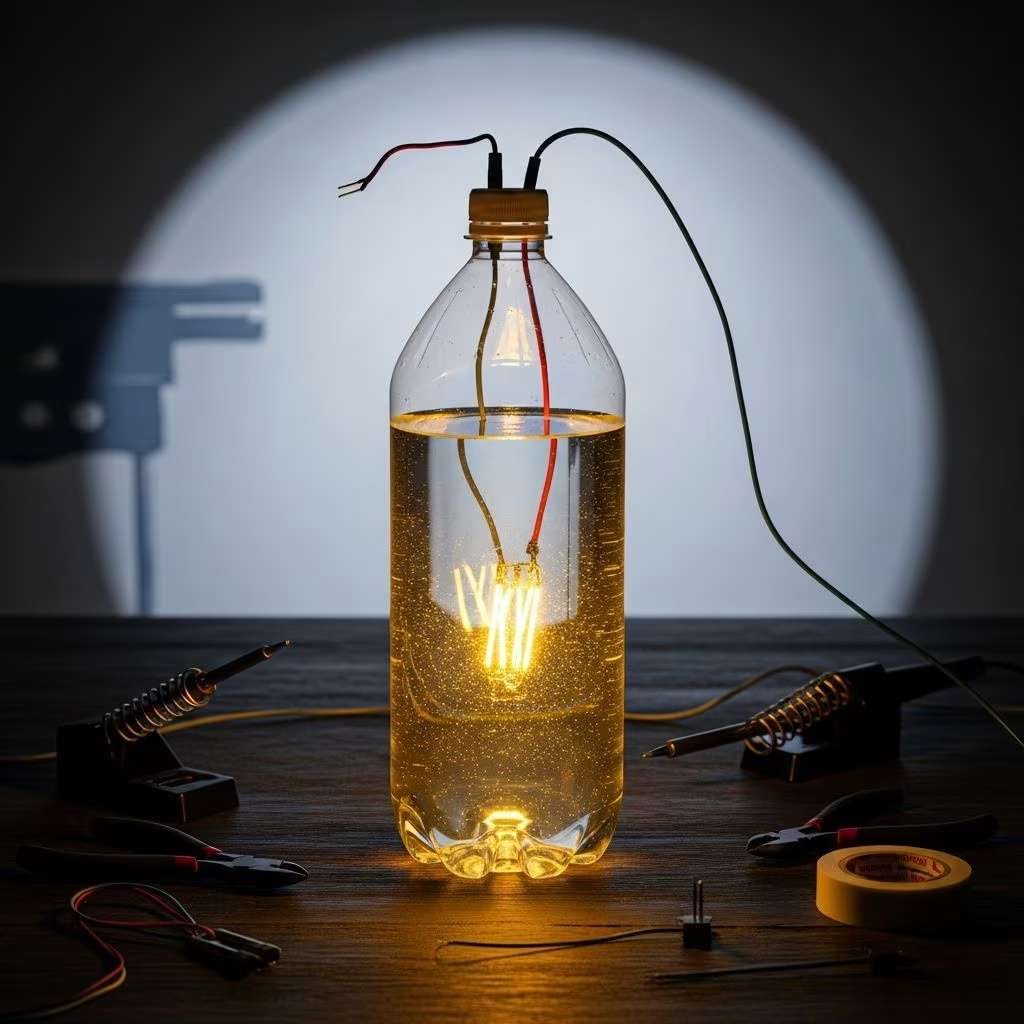
Using a simple **2-liter bottle of water**, two capfuls of bleach, and basic installation materials, you can create a daylighting solution that mimics the brightness of a **50-60 watt incandescent bulb**. This ingenious invention, known as the solar bottle bulb or Liter of Light, harnesses sunlight to illuminate dark interior spaces without electricity, offering a game-changing option for off-grid living, workshops, or underserved communities.
The Invention: Born from Necessity
In 2002, during a widespread energy blackout in Brazil, inventor **Alfredo Moser** faced darkness in his workshop. Unable to afford or access electric lighting, he experimented with everyday items. By filling a clear 2-liter PET plastic bottle with purified water and a small amount of bleach, sealing it, and installing it through his roof, Moser created a passive solar light. Sunlight enters the top of the bottle, refracts through the water, and diffuses evenly inside, bathing rooms in natural light equivalent to 40-60 watts.
This simple hack spread rapidly through Moser’s neighborhood and beyond. Neighbors adopted it for their homes, illuminating kitchens, living rooms, and workspaces for free during daylight hours. Today, organizations like MyShelter Foundation’s Isang Litrong Liwanag (A Liter of Light) have scaled it globally, installing millions in the Philippines, Venezuela, India, and disaster-struck areas.
How It Works: The Science Behind the Glow
The solar bottle bulb functions as a **passive skylight** enhanced by physics. Here’s the breakdown:
- Refraction and Diffusion: Sunlight hits the bottle top, refracts through the water (which acts like a lens), and scatters omnidirectionally inside the bottle, mimicking an electric bulb’s spread. This provides up to **55 lux of illumination** across a 50-200 square foot area, depending on sunlight intensity.
- Bleach’s Role: Two capfuls (about 10-20 ml) of bleach prevent algae, bacteria, and cloudiness, keeping water crystal clear for 5+ years. Without it, organic growth would dim the light within months.
- Sealing and Durability: The bottle is sealed airtight and protected, preventing leaks and UV degradation. The water doesn’t evaporate or leak, even in rain.
Unlike a plain hole in the roof, the water-filled bottle captures and redirects more light downward, avoiding glare and hot spots. It’s not for nighttime use—it’s a **daytime daylighting solution**—but in sunny regions, it rivals tube skylights like Solatube at a fraction of the cost.
Materials Needed
Gather these affordable, recyclable items for one bulb:
| Item | Quantity | Purpose |
|---|---|---|
| Clear 2-liter PET soda bottle | 1 | Main light conduit |
| Filtered or purified water | Full bottle | Refractive medium |
| Bleach (unscented) | 2 capfuls (~10-20 ml) | Preservative |
| Galvanized iron (GI) sheet (9×10 inches, corrugated or flat) | 1 | Roof mount/flange |
| Rubber sealant (silicone caulk) | Tube | Waterproofing |
| Rivets and drill | 8-12 | Secure installation |
| Protective plastic tube (e.g., 35mm film canister) | 1 (optional) | Cap shield from UV |
Total cost: Under $2 in most areas, using recycled bottles.
Step-by-Step Building Instructions
Follow these steps, adapted from official A Liter of Light guides, to build your solar bottle bulb. Safety first: Wear gloves, eye protection, and work on a stable surface.
- Prepare the GI Sheet: Cut a 9×10 inch piece. At the center, draw two circles: outer matching bottle diameter (~10-11 cm), inner 1 cm smaller. Cut only the inner circle.
- Create Flaps: Cut four 2-inch radial slits from the inner edge outward. Bend flaps upward to grip the bottle.
- Insert Bottle: Push the bottle through the hole until one-third protrudes above. Apply sealant around the seal and flaps; let dry 1 hour.
- Fill the Bottle: Fill with filtered water, add 2 capfuls bleach, and screw on the original cap tightly. Cover cap with protective tube and sealant to block UV degradation.
- Roof Hole: On a sloped roof, cut a hole matching the bottle’s circumference. Ensure 10-20 degree downward angle for optimal light.
- Install: Insert assembly into hole. Drill 4 holes per side; secure with rivets. Seal all edges, rivets, and gaps generously.
- Test: Check for leaks and light diffusion on a sunny day. Adjust if needed.
Installation takes 30-60 minutes. For professional results, use a cordless drill like Bosch lithium-ion models.
Benefits: Lighting Up Lives Sustainably
This invention shines beyond Brazil:
- Cost-Free Light: Zero electricity bills; ideal for slums, rural areas, or sheds.
- Environmental Impact: Recycles plastic waste, reduces kerosene use (cutting indoor pollution and CO2), and needs no manufacturing energy.
- Health & Safety: Natural light reduces eye strain vs. dim fluorescents; safer than open flames in poor housing.
- Scalability: Over 1 million installed worldwide by 2025, including post-typhoon streetlights in the Philippines.
- Versatility: Works in greenhouses, animal pens, or garages. In cold climates, insulate to prevent freezing.
Communities report brighter homes, extended work hours, and improved quality of life.
Limitations and Considerations
No invention is perfect. Key drawbacks:
- Daylight Only: Ineffective at night or in low-sun areas (e.g., northern winters).
- Roof Compatibility: Best on corrugated metal; harder on tiles/shingles. Leaks possible if poorly sealed.
- Durability: Lasts 5-8 years; replace if water clouds or plastic cracks.
- Light Output: Varies with sun (40-60W equiv.); not for precision tasks.
Comparisons:
| Feature | Solar Bottle Bulb | Tube Skylight (e.g., Solatube) | Incandescent Bulb |
|---|---|---|---|
| Cost | <$2 | $200+ | $1 + electricity |
| Energy Use | Zero | Zero | 50W/hour |
| Install Time | 30 min | 2+ hours | Instant |
| Availability | Global DIY | Retail | Universal |
Global Impact and Variations
Moser’s idea inspired A Liter of Light, training locals to build and install. In 2025, they’ve lit over 2 million homes. Variations include gravity lamps (night-use add-ons) and cluster installations for brighter spaces.
In the US/Europe, use for eco-sheds or Earthships. Experiment with larger bottles for more light.
Frequently Asked Questions (FAQs)
Q: Does it work at night?
A: No, it’s solar-powered for daytime only. Pair with LED solar lights for evenings.
Q: Why bleach? Can I skip it?
A: Bleach sterilizes water, preventing algae for clear light over years. Alternatives like iodine work but are less effective.
Q: Will it leak or freeze?
A: Proper sealing prevents leaks. In freezing areas, drain or insulate; not ideal for sub-zero climates.
Q: How much light does it provide?
A: Equivalent to 50-60W bulb, illuminating 10-20 m² effectively.
Q: Is it safe for all roofs?
A: Yes on metal; reinforce weak structures. Consult locals for tiles/thatch.
Q: Where can I learn more or volunteer?
A: Visit isanglitrongliwanag.org for tutorials and programs.
This DIY empowers anyone to fight energy poverty. Try it—necessity breeds brilliance!
References
- How To Turn a 2-liter Bottle Of Water Into a 50-Watt Lightbulb — Wise Bread. 2010 (approx., evergreen DIY). https://www.wisebread.com/how-to-turn-a-2-liter-bottle-of-water-into-a-50-watt-lightbulb
- How to make Solar bottle bulbs project | DIY Liter of Light — YouTube (Creative Fest). 2025-01-23. https://www.youtube.com/watch?v=EZFOCkarugQ
- How to Build a SOLAR BOTTLE BULB — Instructables (Isang Litrong Liwanag official). N/A (ongoing project). https://www.instructables.com/How-to-build-a-SOLAR-BOTTLE-BULB/
- Lighting Global: Off-Grid Solar Market Trends Report 2023 — World Bank Group/ESMAP. 2023-06-15. https://www.esmap.org/sites/default/files/2023-06/Lighting_Global_Off-Grid_Solar_Market_Trends_Report_2023.pdf
- Passive Daylighting Systems: A Review — Energy and Buildings Journal (peer-reviewed). 2022-04-01. https://doi.org/10.1016/j.enbuild.2022.111789
This article is general information, not personal financial advice. Consider your own situation, or speak with a licensed adviser, before acting on it.


