

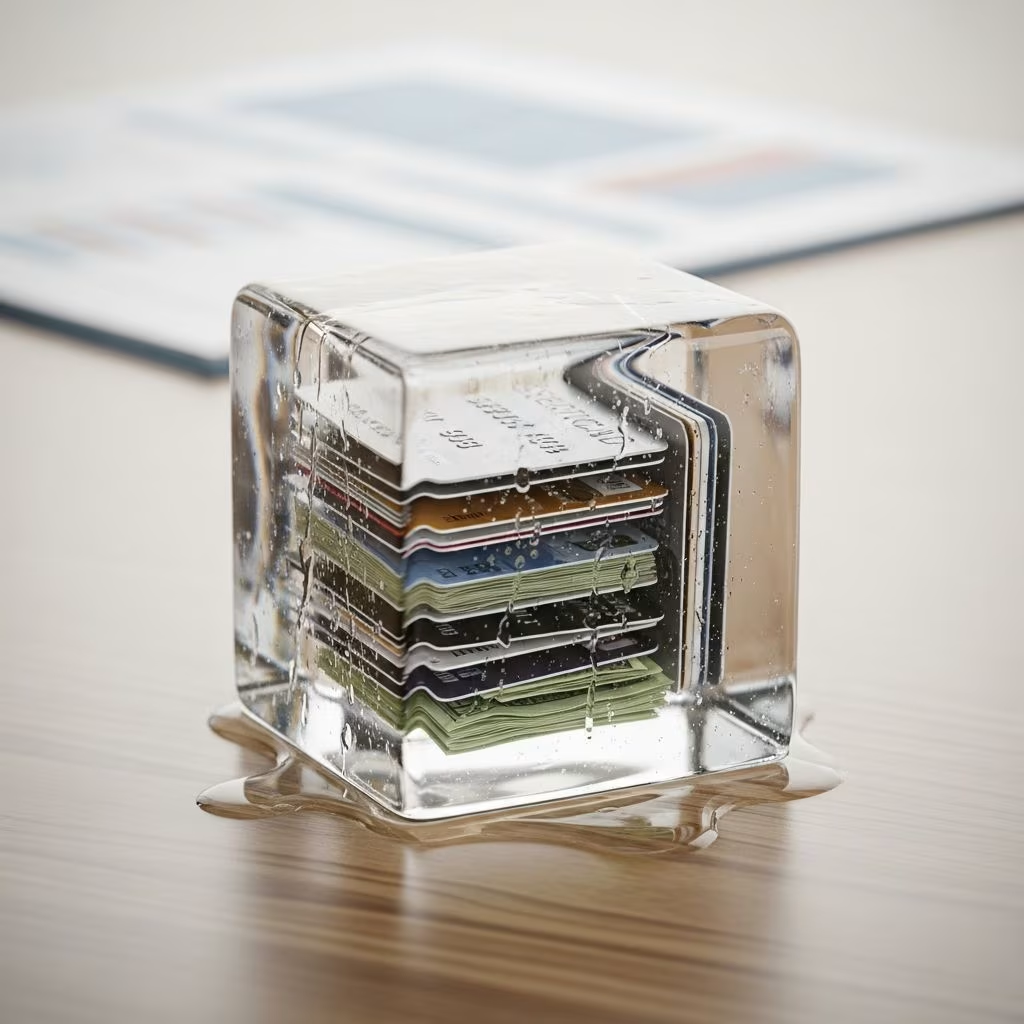
A spending freeze can be a powerful short-term tool to reset your money habits, reduce impulse purchases, and redirect more cash toward your biggest financial goals. Instead of trying to overhaul your entire budget at once, a no-spend period gives you clear rules, a defined timeline, and a chance to observe your behavior with money in real time.
This guide explains what a spending freeze is, the main benefits, how to set one up step by step, and several practical challenge examples you can start today.
What Is A Spending Freeze?
A spending freeze (also called a no-spend challenge or “no-buy” period) is a self-imposed commitment to stop spending on everything except true necessities for a specific length of time.
During a spending freeze, you still pay for essential needs such as:
- Housing costs (rent, mortgage, property taxes, required insurance)
- Basic utilities (electricity, water, heating, essential internet if needed for work)
- Groceries and staple household items
- Transportation to work or school (fuel, transit passes, necessary repairs)
- Minimum debt payments and health-related expenses
Non-essential purchases, such as restaurant meals, new clothes, impulse online orders, or entertainment splurges, are paused until the challenge ends. Personal finance educators commonly describe these challenges as a way to intentionally limit discretionary spending for a short time in order to accelerate savings or debt payoff.
Benefits Of Not Spending
A spending freeze is not just about saying “no” to purchases. It can re-align your finances and mindset in several important ways.
1. Immediate Cash Savings
The most obvious benefit is that you keep more of your income instead of letting it leak out on small, non-essential expenses. Even modest cuts can add up; for example, U.S. consumer expenditure surveys show households spend thousands of dollars per year on nonessential items like dining out and entertainment, creating room for quick savings when those categories are reduced.
The money freed up during a freeze can be redirected to:
- Building or boosting an emergency fund
- Making extra debt payments to reduce interest costs
- Starting or increasing retirement contributions
- Saving for short-term goals such as travel, moving, or education
2. Less Interest And Faster Debt Payoff
When you use a spending freeze to shift extra money toward debt, you can shorten your payoff timeline and reduce total interest paid. The U.S. Consumer Financial Protection Bureau notes that extra payments above the minimum go directly toward principal, which lowers future interest charges and helps borrowers get out of debt faster.
3. Awareness Of Emotional Spending Triggers
Another major benefit is heightened awareness of why you spend. Many people shop in response to stress, boredom, or social pressure. When you pause non-essential spending, you start noticing:
- Times of day when you tend to browse shopping sites or apps
- Emotions that precede impulse purchases (loneliness, anxiety, fatigue)
- Situations that encourage overspending (sales emails, social events, social media)
Behavioral research from organizations like the Financial Industry Regulatory Authority (FINRA) highlights how emotional and situational triggers often drive financial decisions more than logic, especially around impulsive spending.
4. Resetting Money Habits
Because a spending freeze is temporary, it can be easier to commit to than sweeping, permanent changes. During the freeze, you test new habits such as:
- Planning meals and bringing lunch from home
- Finding low-cost or free entertainment
- Delaying purchases for a few days to see if you still want them
Some of these behaviors often stick even after the challenge ends, creating longer-term financial benefits.
How To Do A Spending Freeze (Step By Step)
Anyone can attempt a spending freeze, but a bit of planning dramatically increases your chance of success. The basic process looks like this:
- Choose a timeframe for your challenge
- Define what counts as a need vs. a want
- Set simple rules and boundaries
- Prepare your budget and environment
- Track your progress and review the results
1. Determine Your “Why”
Start by clearly answering: Why am I doing this spending freeze? Common reasons include:
- “I want to save a specific amount of money quickly.”
- “I want to break patterns of impulse buying.”
- “I want to redirect money toward debt repayment.”
- “I feel out of control with my spending and need a reset.”
Write your reason down and keep it visible during the challenge. A concrete purpose increases motivation and makes it easier to say no when temptations appear.
2. Choose Your Timeframe
Next, decide how long your spending freeze will last. Some popular options are:
| Timeframe | Difficulty Level | Best For |
|---|---|---|
| Weekend (2–3 days) | Low | Beginners, testing the concept, busy weeks |
| One week | Moderate | Short reset, quick cash boost |
| Two weeks | Moderate–High | Practicing new habits, testing triggers |
| One month | High | Meaningful savings, deep habit reset |
Longer than one month is usually discouraged for beginners because it can feel restrictive and may lead to burnout or a spending binge when the challenge ends.
3. Decide What Is And Is Not A Necessity
Everyone’s situation is different, so you should define needs vs. wants for your own life before the freeze starts. To do this, list your typical monthly expenses and label each one:
- Need: Required for basic living, work, health, or safety
- Want: Optional or can be delayed without harm
Examples:
- Need: Rent, groceries, insurance, medication, essential car repairs
- Want: Streaming subscriptions, eating out, new clothing, decor, takeout coffee
Be honest but reasonable. If something is technically a want but non-negotiable for your mental or physical health, you might keep a minimal version of it in your plan (for example, one low-cost fitness class instead of several).
4. Set Clear Spending Freeze Rules
Creating custom rules makes your challenge realistic and tailored to your life. Consider rules such as:
- Target specific categories: For example, no spending on dining out, clothing, or online shopping.
- Pre-approve exceptions: Gifts for previously scheduled events, essential car repairs, or pre-planned travel.
- Focus on reduction instead of elimination: Instead of cutting a category entirely, give it a strict lower cap.
Write the rules somewhere you can reference easily. Clarity prevents mid-challenge rationalizations that can derail your progress.
5. Create A Short-Term Budget
Before the challenge begins, sketch a simple budget for the chosen timeframe. Key steps include:
- Estimate income during the challenge period.
- List required bills, minimum debt payments, and essential spending.
- Assign a firm amount to groceries and transportation.
- Set the remainder aside for your primary goal (savings or debt).
Government and consumer agencies emphasize that tracking income and expenses is a core component of financial stability, because you cannot improve what you don’t measure.
6. Prepare Your Environment
Setting up your environment in advance can remove friction and temptation. Helpful actions include:
- Planning meals and making a grocery list so you avoid extra store trips.
- Unsubscribing from marketing emails and app notifications that trigger shopping.
- Removing stored card details from online retailers to slow down impulse buys.
- Scheduling low-cost or free activities (library visits, walks, game nights) to replace shopping.
7. Track Your Progress And Feelings
During the spending freeze, track each purchase and keep a brief journal of your thoughts and urges. You might note:
- What you wanted to buy
- When and where the urge appeared
- What you felt (bored, stressed, excited)
- How you responded instead (walked away, added it to a later wish list)
Financial education materials from regulators encourage journaling as a way to uncover patterns in spending, which can then inform better long-term habits.
8. Analyze Your Results Afterward
Once the challenge ends, take time to review:
- How much you saved or redirected toward your goals
- Which temptations were hardest to resist
- Any feelings of scarcity or stress that came up
- New habits or tricks that worked surprisingly well
Then decide what you want to keep going forward, such as:
- Limiting eating out to once a week
- Continuing to delay nonessential purchases by 48 hours
- Repeating a mini spending freeze once per quarter
Spending freezes are not meant to be permanent, but they can inform a sustainable budget that balances financial health with enjoyment.
Spending Freeze Challenge Examples
There is no single “right” way to do a spending freeze. You can customize the challenge structure to your needs and personality.
Example 1: One-Month No-Spend Challenge
A month-long spending freeze is a popular option because it covers several pay cycles and gives enough time to see meaningful results. To make it manageable:
- Pick a relatively quiet month on your calendar (avoid major holidays or heavy travel seasons).
- Plan your social life around low-cost or no-cost activities, such as potlucks or at-home movie nights.
- Stock reasonable pantry staples before the challenge without overbuying.
- Communicate your challenge to close friends or family so they understand if you decline certain plans.
At the end of the month, calculate how much you saved versus a typical month. Even if you slipped once or twice, you will likely see a clear difference in your bank account.
Example 2: Weekday Spending Freeze
If a full month feels intimidating, try a weekday-only challenge for several weeks in a row. Under this approach:
- You avoid all non-essential weekday purchases (no lunches out, coffee runs, or after-work shopping).
- You allow a modest, planned amount of discretionary spending on weekends.
This format can work well if your weekdays tend to be routine and easier to control, while your weekends remain more flexible.
Example 3: Category-Specific Freeze
Instead of cutting all wants at once, you can freeze one spending category for a set period. For instance:
- No new clothing or accessories for 30–90 days.
- No restaurant meals or takeout for one month.
- No online shopping from a specific retailer for six weeks.
Category freezes are especially useful when you know exactly where your trouble spots are and want to target them without changing your entire lifestyle at once.
Example 4: Savings-Goal-Based Freeze
Another option is to tie your spending freeze to a specific savings target instead of a timeframe. For example:
- Pause nonessential shopping until you set aside $500 in an emergency fund.
- Hold off on buying new decor until you have saved for a plane ticket.
- Skip entertainment spending until one credit card balance drops below a chosen level.
This approach can be motivating because the “finish line” directly reflects your progress toward a meaningful goal.
Example 5: Progressive Freeze
For a more advanced challenge, you can build a progressive spending freeze over several months:
- Month 1: Cut one category (for example, eating out).
- Month 2: Keep that cut and add a second category (impulse online shopping).
- Month 3: Introduce a full no-spend week while maintaining prior reductions.
This staggered method can help you adapt gradually and prevent the feeling of going from zero to extreme overnight.
Tips To Make Your Spending Freeze More Successful
To improve your odds of finishing your challenge and learning from it, keep these practical tips in mind.
- Remove easy spending pathways: Delete shopping apps, clear saved cards, and log out of retail accounts.
- Use cash or debit only: Rely on available funds instead of credit to make spending more tangible.
- Delay decisions: When you feel tempted, write the item down and revisit it after 48–72 hours.
- Enlist accountability: Share your challenge with a friend or partner, or do it together.
- Plan for setbacks: If you slip, acknowledge it, adjust if needed, and continue the challenge instead of quitting.
Frequently Asked Questions (FAQs)
Q: Is a spending freeze bad for my mental health if I already feel stressed about money?
A: A spending freeze can reduce stress by giving you structure and quick wins, but it should not feel punitive. If cutting back too sharply increases anxiety or leads to unhealthy restriction, consider a shorter timeframe or a category-specific freeze instead, and prioritize essentials that support your well-being.
Q: How long should my first spending freeze last?
A: Many people start with a weekend or one-week challenge to build confidence, then work up to a full month. Anything up to 30 days is generally manageable for beginners, especially if you prepare and keep your rules realistic.
Q: Can I use a spending freeze to build an emergency fund?
A: Yes. Directing all freed-up cash into a dedicated savings account is a common use of a spending freeze. Consumer finance agencies recommend keeping emergency savings in a separate, easy-to-access account to prevent accidental spending.
Q: What if an unavoidable expense comes up during my challenge?
A: True emergencies or necessary repairs should always take priority. Pay for the essential expense, note it in your records, and continue the freeze. The goal is to cut nonessential spending, not to ignore legitimate needs.
Q: How often should I repeat a spending freeze?
A: That depends on your goals and how the challenge feels. Some people do a short no-spend challenge every quarter, while others use it once a year or during specific seasons when their budget tends to drift. Aim for a cadence that helps without causing burnout.
References
- Consumer Expenditure Surveys — U.S. Bureau of Labor Statistics. 2024-09-10. https://www.bls.gov/cex/
- Financial Well-Being in America — Consumer Financial Protection Bureau. 2023-07-27. https://www.consumerfinance.gov/data-research/research-reports/financial-well-being-america/
- How to get out of credit card debt — Consumer Financial Protection Bureau. 2023-05-18. https://www.consumerfinance.gov/about-us/blog/how-to-get-out-of-credit-card-debt/
- Know Yourself, Control Your Financial Behavior — Financial Industry Regulatory Authority (FINRA). 2022-03-08. https://www.finra.org/investors/personal-finance/know-yourself-control-your-financial-behavior
- Start Saving — USA.gov. 2024-01-11. https://www.usa.gov/save-money
This article is general information, not personal financial advice. Consider your own situation, or speak with a licensed adviser, before acting on it.


