

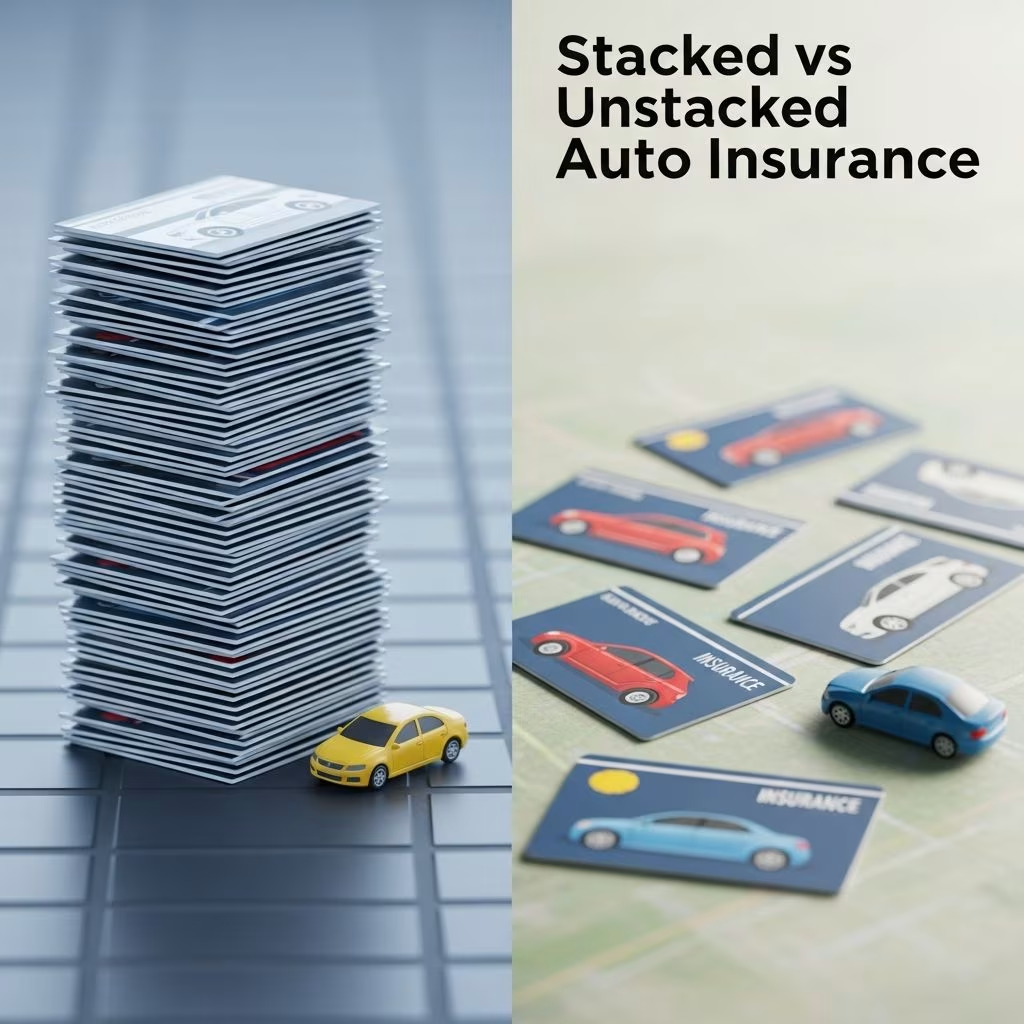
Auto insurance policies often include options for uninsured/underinsured motorist (UM/UIM) coverage, which protects you if you’re hit by a driver without sufficient insurance. The choice between stacked and unstacked coverage significantly impacts your protection level and premiums. Stacked policies combine limits across vehicles for higher payouts, while unstacked keeps them separate for lower costs.
Understanding Uninsured and Underinsured Motorist Coverage
UM/UIM coverage is crucial in scenarios where the at-fault driver lacks adequate insurance. Uninsured motorist (UM) handles cases with no insurance at all, while underinsured motorist (UIM) covers shortfalls in the other driver’s policy. This protection pays for medical bills, lost wages, and other damages.
Not all states mandate UM/UIM, but it’s available everywhere and recommended due to high uninsured driver rates—about 13% nationally. For multi-vehicle households, how these limits apply becomes pivotal.
How Stacked Coverage Works
Stacked insurance aggregates UM/UIM limits from multiple vehicles or policies, creating a higher total limit. This is ideal for enhanced protection in serious accidents.
Vertical Stacking Explained
Vertical stacking occurs within a single policy covering multiple cars. If each vehicle has a $25,000 UM limit and you insure two cars, stacking raises it to $50,000 per accident. For three vehicles, it becomes $75,000.
- Requires at least two vehicles on one policy.
- Multiplies the per-vehicle limit by the number of cars.
- Provides robust coverage without buying higher individual limits.
Horizontal Stacking Details
Horizontal stacking combines limits from separate policies, often held by household members. With two $25,000 policies, you could access $50,000 total if both are in eligible names.
Availability varies by insurer and state; not all allow horizontal stacking.
Unstacked Coverage Fundamentals
Unstacked policies treat each vehicle’s UM/UIM limit independently. With two cars each at $30,000, you’re capped at $30,000 per claim, regardless of vehicles involved.
Advantages of Unstacked Insurance
- Cost savings: Lower premiums since coverage isn’t aggregated.
- Simplicity: Straightforward claims process without combining calculations.
- Suitable for singles: Ideal for one-vehicle owners or low-risk areas.
Default in most policies, unstacked suits budget-conscious drivers but risks out-of-pocket expenses in major incidents.
Comparing Coverage Scenarios
Consider a crash with an uninsured driver causing $60,000 in damages:
| Scenario | Stacked (2 cars, $25k each) | Unstacked (2 cars, $25k each) |
|---|---|---|
| Coverage Available | $50,000 | $25,000 |
| Out-of-Pocket | $10,000 | $35,000 |
| Premium Impact | Higher | Lower |
This table illustrates stacking’s value in high-damage claims.
Cost Implications of Stacking
Stacked coverage raises premiums—often 20-50% more for UM/UIM—due to elevated payout potential. Exact increases depend on vehicles, location, and insurer.
Unstacked keeps costs down, appealing for older cars or low-uninsured areas. Shop quotes to compare; stacking might add $100-300 annually per vehicle.
Factors Influencing Your Choice
Decide based on these elements:
- Number of vehicles: Stacking shines for 2+ cars.
- Uninsured driver rates: High in states like New Mexico (23%) or Mississippi—opt for stacked.
- Vehicle value: Protect high-end cars with stacking.
- Budget: Balance premiums against risk tolerance.
- State laws: Some mandate unstacked or restrict stacking.
State Variations in Stacking Rules
Regulations differ: Illinois
This article is general information, not personal financial advice. Consider your own situation, or speak with a licensed adviser, before acting on it.


