

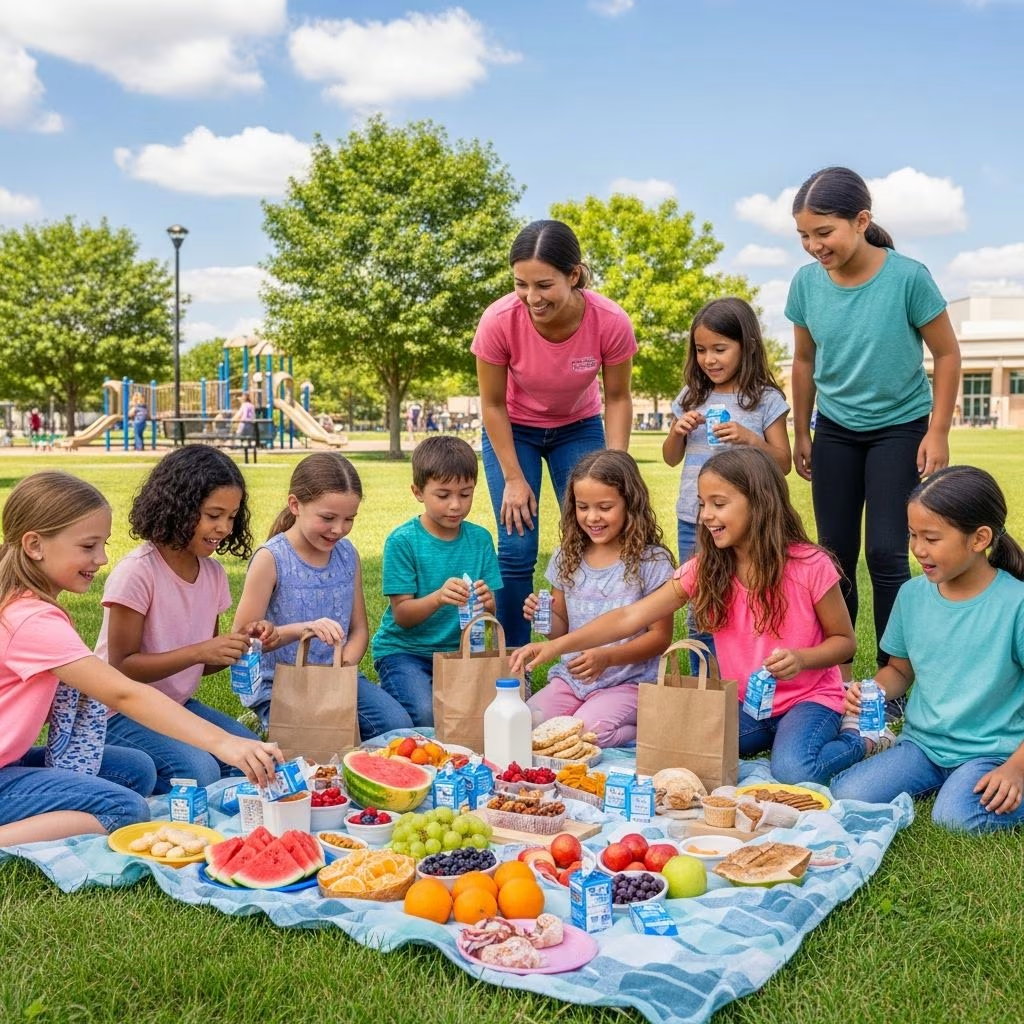
The Summer Food Service Program (SFSP) is a federally funded initiative administered by the U.S. Department of Agriculture (USDA) that provides reimbursements to sponsors for serving free, nutritious meals and snacks to children 18 years of age and younger during periods when school is not in session for 15 or more consecutive days. This program bridges the nutritional gap left by the absence of school meals, ensuring kids in low-income areas continue to receive healthy food options during summer vacation, year-round school breaks, or emergency closures. Participation helps children maintain physical health, social development, and readiness to learn when school resumes.
What Is the Summer Food Service Program?
The SFSP operates nationwide, with state administrations like California’s Department of Education (CDE) overseeing local implementation. It targets areas where at least 50% of children qualify for free or reduced-price school meals, making meals available at no cost to all kids 18 and under, regardless of individual income at eligible open sites. Sponsors—including schools, parks, recreation centers, nonprofits, libraries, faith-based organizations, and camps—receive reimbursements covering food, labor, transportation, and other costs.
Unlike school year programs, SFSP emphasizes community access. In 2025, programs like those in San Francisco and Oakland delivered snacks and lunches at convenient public spots, preparing kids nutritionally for the new school year. The program follows strict USDA meal patterns, incorporating milk, fruits, vegetables, grains, and proteins like ground turkey, eggs, or cheese.
Who Is Eligible for Free Summer Meals?
Every child 18 and under can receive free meals at SFSP sites without enrollment or income verification at open sites, located in high-need areas. These sites serve meals on a first-come, first-served basis to any child in the community. Adults may accompany children but typically cannot eat the meals themselves, though some sites allow parents to bring their own lunch.
- Open Sites: Area-eligible (50%+ kids qualify for free/reduced-price meals via Census data); no applications needed.
- Restricted Open Sites: Serve enrolled children from eligible areas.
- Closed-Enrolled Sites: Require individual income eligibility forms or school data.
- Camps (Residential/Nonresidential): Enrolled kids meeting free/reduced-price standards; no area eligibility needed but must offer organized activities.
Eligibility uses Census Block Groups or Tracts for area determination, or Community Eligibility Provision (CEP) data from schools serving universal free meals. Rural areas may offer non-congregate “SUN Meals To-Go” or “Rural Non-Congregate” options for off-site consumption.
How to Find Summer Food Service Program Locations Near You
Families can locate sites via the USDA’s Summer Meals Site Finder tool, state nutrition department maps (e.g., CDE’s list), or local resources like No Kid Hungry directories. In California, Impact LA partners with agencies for public sites offering breakfast, lunch, snacks, or supper, often paired with enriching activities. San Francisco’s DCYF program served meals from June 9 to August 15, 2025, with afterschool options into 2026.
| State/City Example | Program Details | Meal Types | Contact |
|---|---|---|---|
| California (CDE) | Summer/vacation periods | Breakfast, lunch, snack, supper | cde.ca.gov/ls/nu/sf |
| San Francisco | June-Aug 2025; afterschool Sep 2025-Jun 2026 | Meals/snacks for under 18 | sf.gov |
| Oakland | Citywide summer snack/lunch | Nutritious meals at parks/schools | oaklandca.gov |
| Impact LA | Public sites statewide | Breakfast/lunch/snack per USDA | impactla.org/summer |
Check for Seamless Summer Option (SSO) sites, which serve all kids without charge via NSLP sponsorship. Apps and texts via Text “MEALS” to 914-342-7744 provide location alerts.
Meal Types and Nutrition Standards
SFSP meals adhere to USDA patterns ensuring balanced nutrition: fruits/vegetables (1/2-1 cup), grains (1-2 oz eq.), meats/alternatives (1-2 oz eq.), milk (1 cup), and water. Open/closed sites serve up to two meals daily (e.g., breakfast + lunch, or two snacks); camps offer three.
- Breakfast: Grains, fruit/juice, milk.
- Lunch/Supper: Meat/alternative, grains, two fruits/veggies components, milk.
- Snack: Two of four: milk, grains, fruit/veg, meat/alternative.
Preparation requires permitted kitchens, food handler training, and no direct food contact without certification. Vending contracts cover delivery for sponsors without kitchens. Programs like Feeding America emphasize June-August access to combat “summer hunger,” where kids lose nutritional support.[10]
Benefits of the Summer Food Service Program
SFSP combats summer hunger slide, where kids consume less nutritious food without school meals.[10] It supports growth, learning readiness, and activity—vital as healthy eating improves focus and health. Economically, families save hundreds on groceries; sponsors gain reimbursements for operations.
In low-income areas, participation boosts community wellness. Studies show summer programs reduce obesity risks and maintain academic gains. Pairing meals with recreation (e.g., at YMCAs, Boys & Girls Clubs) enhances social development.
How Organizations Can Sponsor or Participate
Potential sponsors complete state training (e.g., CDE’s annual mandatory session), recruit sites, hire/train staff, procure food competitively, monitor compliance, and submit reimbursement claims. Applications open early (e.g., SF March 2026 for summer 2026). Finances must cover upfront costs like vendor payments.
- Verify site eligibility via Census/CEP data.
- Secure permits/inspections months ahead.
- Operate 7 days/week, 10+ weeks typically.
- Non-discrimination policy mandatory.
Intermediaries like Impact LA handle vending and training for compliance.
Frequently Asked Questions (FAQs)
Who can eat at SFSP sites?
All children 18 and under at open sites; no ID or application needed. Enrolled sites may require eligibility proof.
When does SFSP run?
Primarily summer (June-August), plus year-round breaks or closures (Oct-April emergencies).
Do parents eat free?
Typically no, but they can bring their own food and supervise.
What if my area has no sites?
Advocate via USDA or local sponsors; rural areas get to-go options.
Is SFSP only in summer?
No, includes vacations and Seamless Summer Option year-round.
How to become a sponsor?
Contact state agency (e.g., CDE), complete training, apply early.
Additional Tips for Families and Communities
Combine SFSP with SUN Bucks for eligible school-aged kids, providing grocery benefits. Promote sites via social media; volunteer to expand reach. For 2026, monitor openings like SF’s March applications. This program not only saves money but invests in kids’ futures by preventing hunger.[10]
In total, SFSP served millions nationwide, underscoring its role in equity. Families: Search sites today; sponsors: Apply to nourish your community.
References
- Free Summer Meals – Impact LA — Impact LA. 2025. https://impactla.org/summer
- Summer Food Service Program Information — California Department of Education. 2025. https://www.cde.ca.gov/ls/nu/sf/sfspinfo.asp
- Apply to serve free meals for young people — SF.gov. 2025. https://www.sf.gov/apply-to-serve-free-meals-for-young-people
- Summer Food Program — City of Oakland, CA. 2025. https://www.oaklandca.gov/Community/Food-Services/Summer-Food-Program
- SUN Meals — USDA Food and Nutrition Service. 2025. https://www.fns.usda.gov/summer/sunmeals
- Summer Nutrition Programs — Food Research & Action Center. 2025. https://frac.org/programs/summer-nutrition-programs
This article is general information, not personal financial advice. Consider your own situation, or speak with a licensed adviser, before acting on it.


