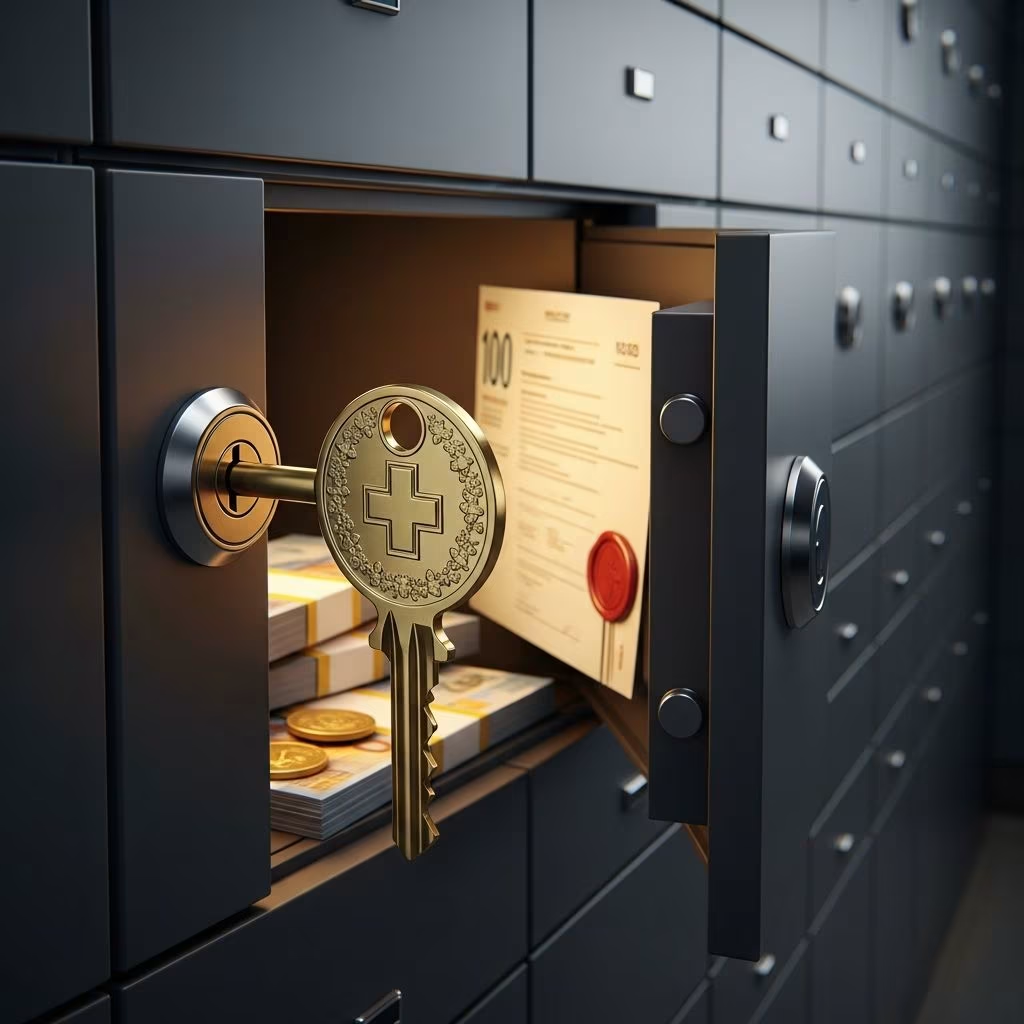
Understanding Swiss Bank Accounts
Swiss bank accounts have long been associated with privacy, security, and financial stability. For decades, Switzerland has maintained a reputation as a financial haven for individuals seeking to protect and grow their wealth. While many people believe that Swiss banking is exclusively for the ultra-wealthy, the reality is far more accessible. Today, Swiss bank accounts are available to qualified individuals from around the world who meet certain eligibility criteria and are willing to navigate the regulatory requirements that govern international banking.
The appeal of Swiss banking extends beyond just privacy. Switzerland’s political neutrality, economic stability, and robust regulatory framework make it an attractive destination for individuals seeking to diversify their assets and protect their financial interests. Understanding the process of opening a Swiss bank account, along with the associated advantages and requirements, is essential for anyone considering this financial strategy.
How Swiss Bank Accounts Work
Opening a Swiss bank account follows a similar process to establishing a bank account in your home country, though with additional layers of complexity due to international regulations and Switzerland’s stringent anti-money laundering standards. The process involves several key steps designed to verify your identity, confirm the source of your funds, and ensure compliance with both Swiss and international banking regulations.
The account opening process can take several weeks or even months, depending on the bank’s internal processes and the completeness of your application. Swiss banks must adhere to know-your-client (KYC) laws, which require them to verify the identity and financial background of all new customers. Much of the paperwork involved in this process falls on the bank’s shoulders, as they must conduct thorough due diligence before accepting your application.
Swiss banks maintain stringent anti-money laundering (AML) regulations to ensure they are not facilitating illegal financial activities. These regulations have become increasingly rigorous in recent years, reflecting global efforts to combat financial crime and ensure transparency in the banking system. As an applicant, you should be prepared to provide comprehensive documentation supporting your financial profile and the source of your funds.
Eligibility Requirements for a Swiss Bank Account
To qualify for a Swiss bank account, you must meet several fundamental requirements. First and foremost, you must be at least 18 years of age. Additionally, you will need a valid passport to establish your identity. Swiss banks will conduct thorough verification of your personal information before proceeding with your application.
The core eligibility requirements include:
- Age requirement: You must be 18 years old or older
- Valid identification: A current passport is mandatory
- Proof of address: Documentation such as a utility bill or other official correspondence
- Proof of profession: Tax returns, employment letters, business documents, or professional licenses
- Source of funds documentation: Bank statements, property sale documents, or business sale agreements
- Beneficiary identification: Information about any individuals designated to benefit from the account
For clients with large deposits—such as those from the sale of a home or business—Swiss banks will require additional documentation to verify the source of these funds. This level of scrutiny is standard practice and reflects the bank’s commitment to regulatory compliance and risk management.
Documentation You’ll Need
When applying for a Swiss bank account, organization is critical. You should prepare a comprehensive package of documents to streamline the application process. Having all required documentation ready before submitting your application can significantly reduce processing time and increase the likelihood of approval.
The essential documents typically include:
- Notarized photocopy of your valid passport
- Recent utility bill or other proof of current residence
- Current and prior-year tax returns
- Employment verification letter or business registration documents
- Professional licenses or certifications, if applicable
- Bank statements showing recent account history
- Source of funds documentation for any significant deposits
- Personal references from established financial institutions
It’s important to note that Swiss banks may request additional documentation based on your individual circumstances. For instance, if you have complex international business interests or significant wealth transfers, the bank may require supplementary information. Working with a banking consultant or attorney familiar with Swiss banking practices can help ensure you provide all necessary documentation in the correct format.
Minimum Balance Requirements
A common misconception about Swiss banking is that you need an exceptionally high minimum balance to open an account. In reality, minimum balance requirements vary significantly depending on the specific bank and the type of account you wish to establish.
Some Swiss banks offer accounts with opening deposits as low as $10,000. However, for United States citizens and residents, minimum balances tend to be higher due to the additional regulatory compliance requirements these banks must follow to serve American clients. For most U.S.-based investors, Swiss banks typically expect opening deposits between $250,000 and $500,000, though this can vary.
Once your account is established, the minimum balance requirements usually apply to your ongoing deposits and account balance. These minimums can range from a few thousand dollars for standard accounts to one million dollars or more for premium wealth management accounts. It’s essential to discuss specific minimum balance requirements with your chosen bank before committing to the opening process, as these figures can change and may be negotiable based on your financial profile and intended account usage.
Currency Options
One of the advantages of Swiss banking is the flexibility to hold your funds in your currency of choice. Most Swiss banks allow account holders to maintain balances in multiple currencies simultaneously, providing valuable diversification and hedging benefits.
The most commonly available currencies for Swiss bank accounts include:
- Swiss Francs (CHF): The national currency, offering stability and exposure to Switzerland’s strong economy
- United States Dollars (USD): The world’s primary reserve currency, widely available at Swiss banks
- Euros (EUR): Providing exposure to the European economic zone
- British Pounds Sterling (GBP): Offering access to the United Kingdom’s financial markets
The ability to hold multiple currencies within a single account provides significant advantages for international investors. You can take advantage of currency movements, reduce foreign exchange conversion costs, and maintain exposure to multiple economies without maintaining separate accounts in different countries.
Key Advantages of Swiss Banking
Strong Privacy Protections
Switzerland’s reputation for banking confidentiality is rooted in the Swiss Banking Law of 1934, which made it illegal for Swiss banks to disclose account holder information. This legal framework created privacy protections comparable to attorney-client privilege or doctor-patient confidentiality. The secrecy afforded by Swiss banking has been a cornerstone of the country’s financial appeal for nearly a century.
The primary legislation governing bank secrecy in Switzerland today is the Swiss Federal Act on Banks and Savings Banks, commonly known as the Banking Act. This legislation was significantly amended in 2016 to incorporate evolving international standards for financial transparency while still maintaining robust customer privacy protections. Swiss banks continue to amend and strengthen their confidentiality policies to protect customer data from unauthorized disclosure and to comply with international regulations.
Political Stability and Economic Security
Switzerland’s long history of political stability and neutrality makes it an exceptionally safe jurisdiction for banking. Remarkably, Switzerland has not engaged in warfare with another nation since 1505, making it one of the most peaceful countries in the world. This extended period of stability has allowed Switzerland to develop a robust financial system and maintain consistent economic policies.
The stability of Switzerland’s government directly translates to stability in its banking system and currency. International conflicts and geopolitical turmoil rarely disrupt Switzerland’s economy, which continues to function effectively regardless of global economic conditions. This insulation from international strife provides peace of mind for account holders who are concerned about currency devaluation or banking system collapse.
Currency Strength and Gold Backing
The Swiss Franc is one of the world’s strongest and most stable currencies. Over the past 15 years, the Swiss Franc has substantially appreciated against the U.S. Dollar and the Euro, making it an attractive currency for long-term wealth preservation. Unlike most modern currencies, which exist primarily in digital form, the Swiss Franc is backed by gold reserves equal to at least 40% of the currency in circulation.
This gold backing is extraordinarily significant. It means that the Swiss Franc maintains virtually zero inflation over the long term and retains purchasing power in ways that most fiat currencies cannot match. The Swiss National Bank’s commitment to maintaining these gold reserves underscores the country’s dedication to currency stability and sound monetary policy.
Deposit Insurance Protection
Swiss banking deposits are protected by the Depositor Protection Association, known as esisuisse, which is governed by the Swiss Bankers Association (SBA). This deposit insurance program guarantees customer money held in Swiss banks and with securities dealers, providing crucial protection for your assets.
In the event of bank failure, the Depositor Protection Association ensures that protected deposits are paid out to customers within one month. This rapid reimbursement process provides substantial security for account holders and reflects Switzerland’s commitment to maintaining confidence in its banking system. The existence of this safety net distinguishes Swiss banking from less regulated offshore financial centers.
Swiss Banking for Different Types of Investors
Swiss bank accounts serve multiple purposes for different types of financial situations. Some individuals use Swiss accounts for comprehensive wealth management and investment strategies, while others maintain them simply as secure repositories for payroll deposits or investment proceeds.
Whether you’re seeking to diversify your investment portfolio, protect assets through an offshore LLC or trust structure, develop a sophisticated wealth management strategy, or simply find a secure location to hold significant assets, Swiss banking offers flexible solutions. The professional advisors at Swiss banks can tailor account structures and services to match your specific financial objectives and risk tolerance.
Frequently Asked Questions
Q: What is the minimum age to open a Swiss bank account?
A: You must be at least 18 years old to open a Swiss bank account. Additionally, you will need a valid passport and supporting documentation to verify your identity and financial background.
Q: How long does it take to open a Swiss bank account?
A: The process typically takes several weeks to several months, depending on the bank’s procedures and the completeness of your application. Swiss banks conduct thorough due diligence to comply with know-your-client regulations.
Q: What is the typical minimum deposit for a Swiss bank account?
A: Minimum deposits can range from as low as $10,000 for some accounts to $250,000-$500,000 for U.S. citizens. Specific requirements depend on the bank and account type.
Q: Can I hold multiple currencies in a Swiss bank account?
A: Yes, most Swiss banks allow you to hold funds in multiple currencies within a single account, typically including Swiss Francs, U.S. Dollars, Euros, and British Pounds Sterling.
Q: What happens to my deposits if a Swiss bank fails?
A: Your deposits are protected by the Depositor Protection Association (esisuisse), which guarantees protected deposits and ensures reimbursement within one month of bank failure.
Q: Are Swiss bank accounts only for wealthy individuals?
A: No. While minimum deposits can be substantial for U.S. citizens, Swiss bank accounts are accessible to qualified individuals from various financial backgrounds who meet eligibility requirements and documentation standards.
Q: What documents do I need to open a Swiss bank account?
A: You will need a valid passport, proof of address, professional documentation, source of funds verification, and identification of any account beneficiaries. Additional documentation may be required based on your circumstances.
References
- Swiss Banking Law of 1934 and Modern Banking Act Amendments — Swiss Federal Government. https://www.sba.swiss/
- Know Your Client (KYC) and Anti-Money Laundering (AML) Regulations — Financial Action Task Force (FATF). https://www.fatf-gafi.org/
- Swiss Franc Gold Backing and Monetary Policy — Swiss National Bank. https://www.snb.ch/
- Depositor Protection Association (esisuisse) Insurance Coverage — Swiss Bankers Association. https://www.sba.swiss/
- International Standards for Banking Confidentiality — Organization for Economic Cooperation and Development (OECD). https://www.oecd.org/
This article is general information, not personal financial advice. Consider your own situation, or speak with a licensed adviser, before acting on it.