

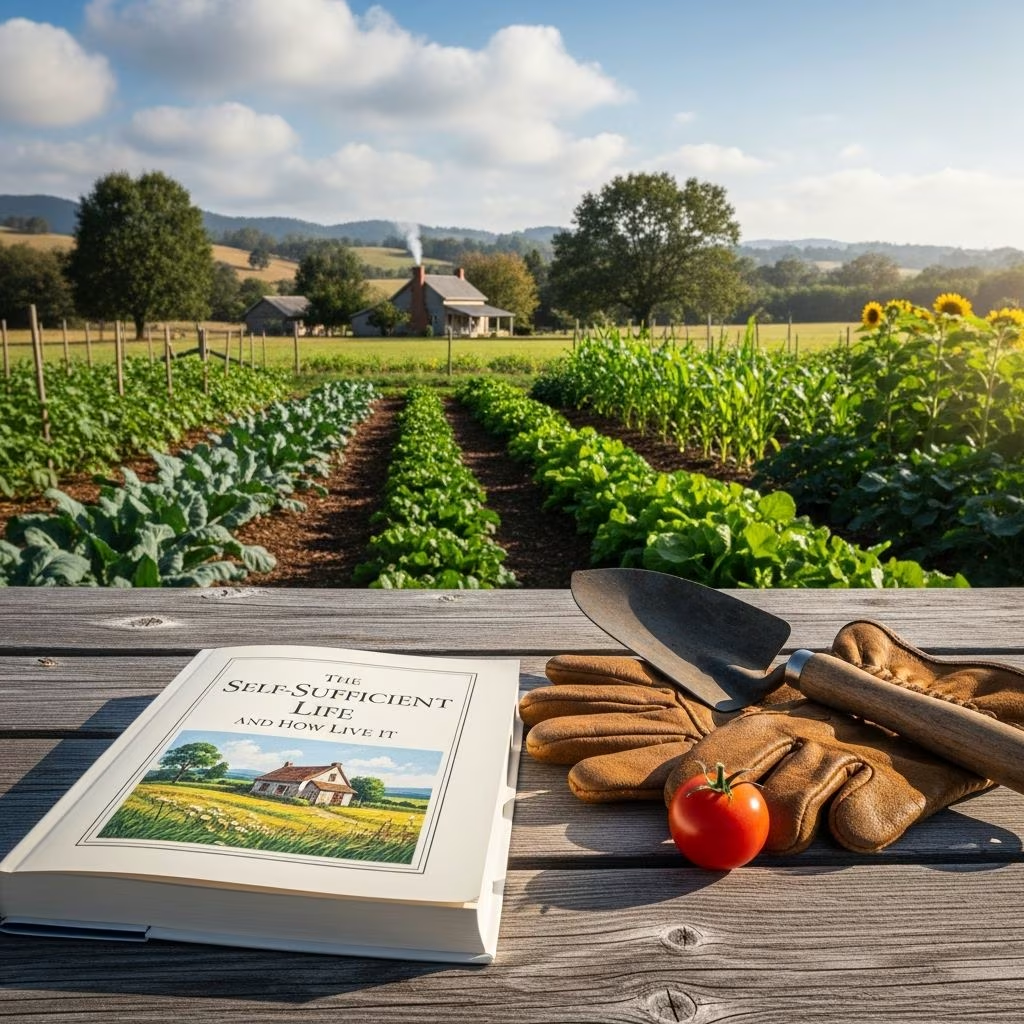
By John Seymour, DK Publishing, 2003 (Updated Edition)
John Seymour’s The Self-Sufficient Life and How to Live It stands as a cornerstone in the world of self-reliance literature. First published decades ago and updated with stunning full-color illustrations, this book promises to teach “all the skills needed to live independently in harmony with the land.” From harnessing natural energy to raising crops, keeping livestock, preserving food, brewing, and crafting, it delivers a holistic blueprint for sustainable living.
The Philosophy of Self-Sufficiency
Seymour, often called the father of the back-to-basics movement, opens with a profound exploration of what self-sufficiency truly means. It’s not mere survivalism but a deliberate choice for a simpler, healthier, and more spiritually satisfying life. He questions modern progress, contrasting the factory worker’s “easier” existence with the peasant’s grounded reality, advocating for harmony with nature over industrial dependence.
The book emphasizes zero-waste principles and scalability. Whether you’re a city dweller with a window box garden or aspiring homesteader with acres, Seymour encourages starting small. He promotes community co-ops and honest craftsmanship over corporate tycoons, fostering independence without isolation.
- Core Principles: Live in harmony with the land, minimize waste, prioritize health and fulfillment over convenience.
- Scalability: Adapt skills to your space—from urban balconies to rural farms.
- Mindset Shift: Value self-reliance as empowerment, not deprivation.
Planning Your Self-Sufficient Homestead
Seymour provides detailed layouts for different scales: the quarter-acre smallholding, one-acre garden, and five-acre farm. These plans include crop rotation, animal integration, and energy-efficient designs. For instance, a quarter-acre plot can yield vegetables, fruits, poultry, and even a pig, with composting systems closing the nutrient loop.
| Homestead Size | Key Features | Potential Yield |
|---|---|---|
| Quarter-Acre | Vegetable beds, fruit trees, chickens, compost heap | Year-round veggies for 2-4 people |
| One-Acre | Add goats, bees, greenhouse, pond | Full family food supply + surplus |
| Five-Acre Farm | Livestock rotation, woodland, workshop | Complete self-sufficiency + trade goods |
These blueprints stress permaculture-like integration: animals fertilize gardens, waste feeds livestock, and natural energy sources power it all.
Food from the Garden
The heart of self-sufficiency beats in the garden. Seymour details organic methods for soil building, companion planting, and crop rotation. Step-by-step guides cover seed starting, transplanting, and pest control without chemicals. Highlights include:
- Vegetables: Potatoes, beans, brassicas, root crops—with succession planting for continuous harvest.
- Fruits: Apples, soft fruits, nuts; pruning and grafting techniques.
- Herbs & Perennials: Medicinal plants and pollinator attractors.
Beautiful illustrations show garden layouts and growth stages, making complex techniques accessible. Readers praise its inspiration for starting gardens, even in limited spaces.
Food from Animals
Raising livestock provides protein, dairy, and manure. Seymour covers:
- Poultry: Chickens for eggs/meat, ducks, geese; housing, feeding, butchering.
- Mammals: Pigs (efficient foragers), goats (milk/meat), sheep (wool/meat).
- Bees: Honey production and pollination services.
Practical tips include breed selection, health care, and humane slaughter. The book stresses welfare: happy animals yield better products.
Food from the Fields and Preservation
Beyond gardens, fields offer grains, hay, and wild foods. Seymour teaches harvesting wheat by hand, threshing, and milling. Preservation ensures abundance year-round:
- Canning & Bottling: Jams, pickles, sauces.
- Drying & Smoking: Herbs, meats, fish.
- Root Cellars: Natural storage for potatoes, apples.
- Cheesemaking & Fermenting: Yogurt, butter, sauerkraut.
These methods reduce waste and build resilience against shortages.
Energy and Utilities
Self-sufficiency demands off-grid solutions. Seymour covers:
- Water: Rain harvesting, wells, purification.
- Energy: Solar, wind, wood gasifiers; efficient stoves.
- Sanitation: Composting toilets, greywater systems.
His vision predates modern renewables, proving timeless relevance.
Brewing, Baking, and Crafts
Culinary self-reliance includes:
- Baking: Sourdough breads, pies from home-ground flour.
- Brewing: Beer, wine, cider from garden fruits.
- Crafts: Basketry, weaving, carpentry, spinning wool into cloth.
Step-by-step instructions empower crafting everything from soap to furniture.
Strengths: Practicality and Inspiration
Reviewers rave about its organization, illustrations, and hands-on advice. It’s exhaustive yet approachable, inspiring action from novices to pros. Seymour’s passion motivates a deeper environmental connection.
Criticisms and Limitations
Some note superficial coverage of advanced topics like machining or spinning, lacking step-by-step beginner paths. It’s inspirational but not a complete “how-to” for every skill. Urban adapters may need supplements.
Frequently Asked Questions (FAQs)
Is this book suitable for urban dwellers?
Yes, Seymour scales advice for small spaces like window boxes and composting, encouraging gradual steps toward self-sufficiency.
Does it cover modern renewables?
The 2003 edition focuses on timeless methods like wood and wind, but principles apply to solar today.
Is it beginner-friendly?
Absolutely—step-by-step guides and illustrations make it accessible, though some crafts assume basic skills.
How comprehensive is livestock coverage?
Extensive: from chickens to pigs, including housing, feeding, and processing.
What’s the best homestead size for starters?
Quarter-acre: enough for veggies, poultry, and fruits without overwhelming.
Final Verdict: A Timeless Essential
At 320+ pages of wisdom, this book is indispensable for homesteaders. Its blend of philosophy, plans, and practices equips readers for resilient living. Buy it, refer to it often, and transform your life.
References
- The Self-Sufficient Life and How to Live It — John Seymour, Dorling Kindersley. 2003. https://www.goodreads.com/book/show/78605.The_Self_Sufficient_Life_and_How_to_Live_It
- The Self-Sufficient Life and How to Live It Description — Trident Booksellers & Cafe. Accessed 2026. https://tridentbookscafe.com/book/9780744084467
- John Seymour’s The Self Sufficient Life Book Flip Through — Miranda Made (YouTube). 2022-05-23. https://www.youtube.com/watch?v=t4Dnr7myQV8
- Book Review: Living On An Acre — Wise Bread. Accessed 2026. https://www.wisebread.com/book-review-living-on-an-acre-a-practical-guide-to-the-self-reliant-life
- The Self-Sufficient Life and How to Live It — Good-Books.co.uk. Accessed 2026. https://good-books.co.uk/books/8629
This article is general information, not personal financial advice. Consider your own situation, or speak with a licensed adviser, before acting on it.


