

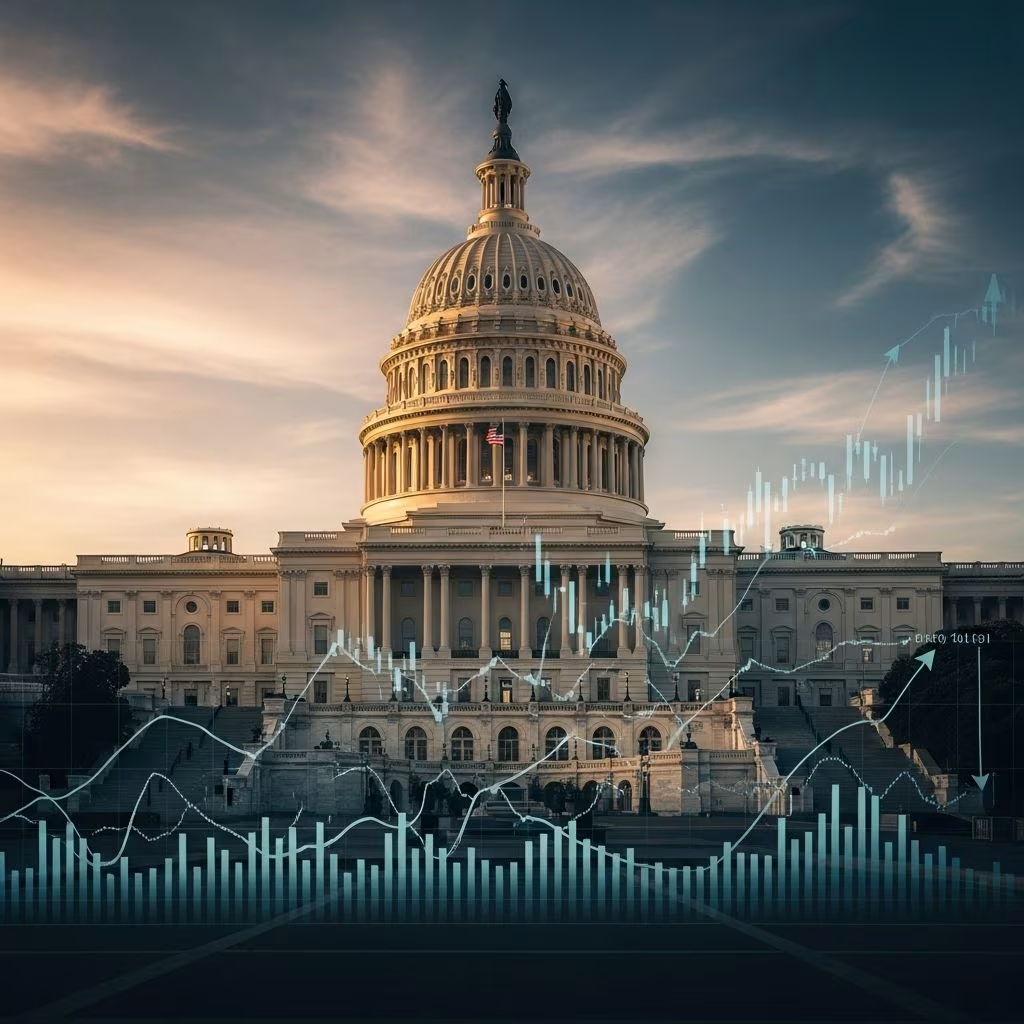
Understanding the U.S. Senate and Its Structure
The United States Senate stands as one of the two chambers of Congress, serving as a fundamental pillar of the American legislative system. Established by the Constitution in 1788, the Senate comprises exactly 100 senators, with each of the 50 states represented by two members, regardless of population size. This equal representation structure differs markedly from the House of Representatives, which allocates seats based on state population, creating a more balanced approach to democratic representation.
The Senate’s unique composition reflects a deliberate constitutional compromise designed to address representation concerns that emerged during the Constitutional Convention. Each senator must meet specific eligibility requirements: they must be at least 30 years old, have been a U.S. citizen for a minimum of nine years, and be a resident of the state they represent. Senators serve staggered six-year terms, with elections occurring every two years for one-third of the seats, ensuring continuity and stability within the legislative body.
The Vice President of the United States serves as the Senate’s presiding officer, holding the power to cast tie-breaking votes when necessary. This structural arrangement ensures that the Senate operates with built-in mechanisms for maintaining order and resolving procedural deadlocks, while the chamber itself remains deeply engaged in deliberative processes that shape national policy.
The Senate’s Unique Powers and Responsibilities
The U.S. Senate possesses several exclusive powers that set it apart from the House of Representatives and make it a critical component of the federal government’s checks and balances system. These powers extend far beyond simple legislative duties, encompassing crucial functions that directly influence both political governance and economic affairs.
Legislative Authority and Fiscal Responsibility
The Senate shares full legislative power with the House of Representatives, meaning that Senate approval is required to pass any federal legislation. Beyond this foundational responsibility, the Senate maintains significant budgetary authority, working in concert with the House to oversee federal spending and revenue collection. This fiscal power makes the Senate intimately involved in economic policymaking, as senators must approve all taxation measures, appropriations bills, and budgetary frameworks that shape the nation’s financial trajectory.
Presidential Appointments and Confirmations
One of the Senate’s most consequential powers involves confirming or rejecting presidential nominations to federal positions. The Senate has exclusive authority to approve presidential appointments to executive branch positions, including cabinet members and other high-ranking officials who directly influence economic policy. Additionally, the Senate confirms federal judges, including Supreme Court justices whose decisions affect regulatory frameworks and economic law. This appointment power gives the Senate substantial influence over the ideological and policy direction of both the executive and judicial branches for decades to come.
Treaty Ratification
The Senate must provide its “advice and consent” to treaties negotiated by the executive branch, granting it exclusive authority to approve or reject international agreements. This power proves particularly significant for trade agreements, international financial arrangements, and other treaties with substantial economic implications. No treaty can become binding on the United States without Senate ratification, giving this chamber a decisive voice in international economic relations.
Impeachment Trials
The Senate holds the sole power to conduct impeachment trials for federal officials, including the president, ensuring accountability within the government. While the House brings impeachment charges, only the Senate can convict or exonerate, making this chamber the final arbiter in removing federal officials from power. This responsibility underscores the Senate’s role in maintaining governmental integrity and constitutional order.
How the Senate Affects the U.S. Economy
The Senate’s economic influence operates through multiple channels, affecting everything from immediate business conditions to long-term growth trajectories and market confidence.
Tax and Spending Legislation
As a coequal partner in the legislative process, the Senate must approve all federal tax legislation and spending bills. Senate deliberations on tax policy directly shape business investment decisions, consumer spending patterns, and government revenue. The chamber’s decisions regarding tax rates, deductions, and credits can significantly impact corporate profitability, individual disposable income, and capital allocation throughout the economy. Similarly, Senate appropriations decisions determine funding levels for infrastructure, research and development, defense, and social programs—all of which ripple through economic activity.
Regulatory Framework Through Appointments
The Senate’s power to confirm presidential nominees extends to leadership positions at regulatory agencies including the Federal Reserve, Securities and Exchange Commission, Environmental Protection Agency, and others. These appointments shape the regulatory environment in which businesses operate. A more business-friendly regulatory appointee might reduce compliance costs and accelerate economic growth, while a more consumer-protective appointee might prioritize market safety over efficiency. The Senate’s confirmation decisions thus carry profound implications for specific industries and the broader economy.
Monetary Policy Influence
Through its confirmation power over Federal Reserve Board appointments and the Federal Reserve Chair, the Senate indirectly influences monetary policy decisions that affect interest rates, inflation, and credit availability. While the Fed maintains operational independence, senators can question nominees about their policy perspectives and may reject candidates whose views diverge too sharply from their own. This confirmation process allows senators to have a voice in shaping the monetary policy framework within which the entire economy operates.
International Trade and Economic Relationships
The Senate’s authority to ratify trade agreements gives it decisive power over international economic relationships. Trade agreements affect tariffs, market access, and competitive conditions for American exporters and import-competing industries. Senate debates over trade agreements often reflect regional economic interests, with agricultural senators, manufacturing senators, and service industry senators advocating for different trade policies based on their constituents’ economic needs.
The Senate Committee System
The Senate organizes its work through a sophisticated committee structure that enables specialized attention to economic and fiscal matters. Standing committees maintain permanent authority over specific policy domains, with 16 major standing committees handling issues from finance to commerce to energy policy.
Key committees with direct economic relevance include the Committee on Finance (overseeing taxation and spending), the Committee on Appropriations (allocating federal funds), the Committee on Banking, Housing, and Urban Affairs (regulating financial institutions and markets), and the Committee on Energy and Natural Resources (shaping energy policy). These committees conduct in-depth reviews of bills, hold hearings with expert witnesses, and undertake detailed analysis before recommending legislation to the full Senate.
The committee process begins with comprehensive study of proposed bills, including hearings where members of Congress, administrative officials, business representatives, and members of the public testify about impacts and implications. Following these hearings, committees conduct markup sessions where members debate, modify, and vote on bills. On average, about 500 bills and resolutions emerge from this process to be reported to the Senate floor, representing legislation filtered through rigorous committee review.
Senate Leadership and Party Structure
The Senate’s operations depend upon internal leadership structures that coordinate legislative activity and advance party agendas. The Majority Leader and Minority Leader serve as the primary political figures within their respective parties, scheduling legislation and negotiating across party lines. Party Whips round up members for votes and quorum calls, ensuring party unity on key measures. Conference Chairpersons preside over closed party meetings where members determine committee assignments and set legislative priorities.
These leadership structures shape which economic legislation receives floor consideration, how amendments get handled, and what compromises emerge to pass contentious bills. Party discipline and internal negotiations within Senate leadership often determine whether proposed economic policies advance or stall.
Checks and Balances: The Senate’s Economic Role
The Senate functions as a critical check on executive and judicial power, preventing any single branch from dominating economic policymaking. The president proposes economic policies and appoints regulatory leaders, but the Senate must confirm those appointees and approve implementing legislation. Federal judges interpret economic law, but the Senate confirms those judges. This distribution of power ensures that significant economic decisions emerge from compromise and broad consensus rather than unilateral executive action.
The system operates through mutual constraint: the president may veto Senate legislation, but the Senate can override vetoes with a two-thirds majority; the president nominates judges, but the Senate confirms them; the president negotiates treaties, but the Senate must ratify them. These reciprocal powers create an intricate network requiring negotiation and agreement across branches, generally producing more cautious economic policy changes than would occur under concentrated authority.
Frequently Asked Questions
How does the Senate differ from the House of Representatives in economic policymaking?
While both chambers must approve legislation, the Senate’s equal state representation and longer six-year terms create a more deliberative chamber less responsive to short-term political swings. The Senate also possesses exclusive powers over appointments and treaties that directly shape economic governance, powers the House does not hold.
Can the Senate unilaterally implement economic policy without the House?
No, the Senate cannot unilaterally implement most economic policy. The Senate must work with the House to pass legislation. However, the Senate possesses exclusive confirmation powers and treaty ratification authority that allow it to shape economic governance independent of the House.
How does Senate confirmation of Federal Reserve leadership affect the economy?
Senate confirmation of Federal Reserve appointees influences monetary policy priorities and approaches. While the Fed maintains operational independence, senators can ensure appointees align with Senate economic priorities, indirectly shaping interest rate decisions, inflation targets, and credit policy that profoundly affect economic conditions.
What role does the Senate play in international trade?
The Senate must ratify trade agreements negotiated by the president, giving it decisive authority over U.S. trade policy. Senate debate over trade agreements reflects regional economic interests and determines whether America enters into international economic arrangements affecting tariffs, market access, and competitive conditions.
How do Senate committees influence economic legislation?
Senate committees conduct detailed analysis of economic legislation through hearings, markup sessions, and expert consultation. The Finance Committee, Appropriations Committee, and Banking Committee shape tax policy, spending decisions, and financial regulation before measures reach the full Senate floor.
References
- The U.S. Senate: What It Does and How It Works — The Policy Circle. 2024. https://www.thepolicycircle.org/briefs/makes-america-exceptional-u-s-senate-explained/
- United States Senate — U.S. Senate Official Website. 2024. https://www.senate.gov/about/powers-procedures.htm
- United States Senate — EBSCO Research Starters. 2024. https://www.ebsco.com/research-starters/politics-and-government/united-states-senate
- The U.S. Senate — U.S. Capitol Visitor Center. 2024. https://www.visitthecapitol.gov/education-resource/us-senate
- Branches of the U.S. Government — USAGov. 2024. https://www.usa.gov/branches-of-government
This article is general information, not personal financial advice. Consider your own situation, or speak with a licensed adviser, before acting on it.


