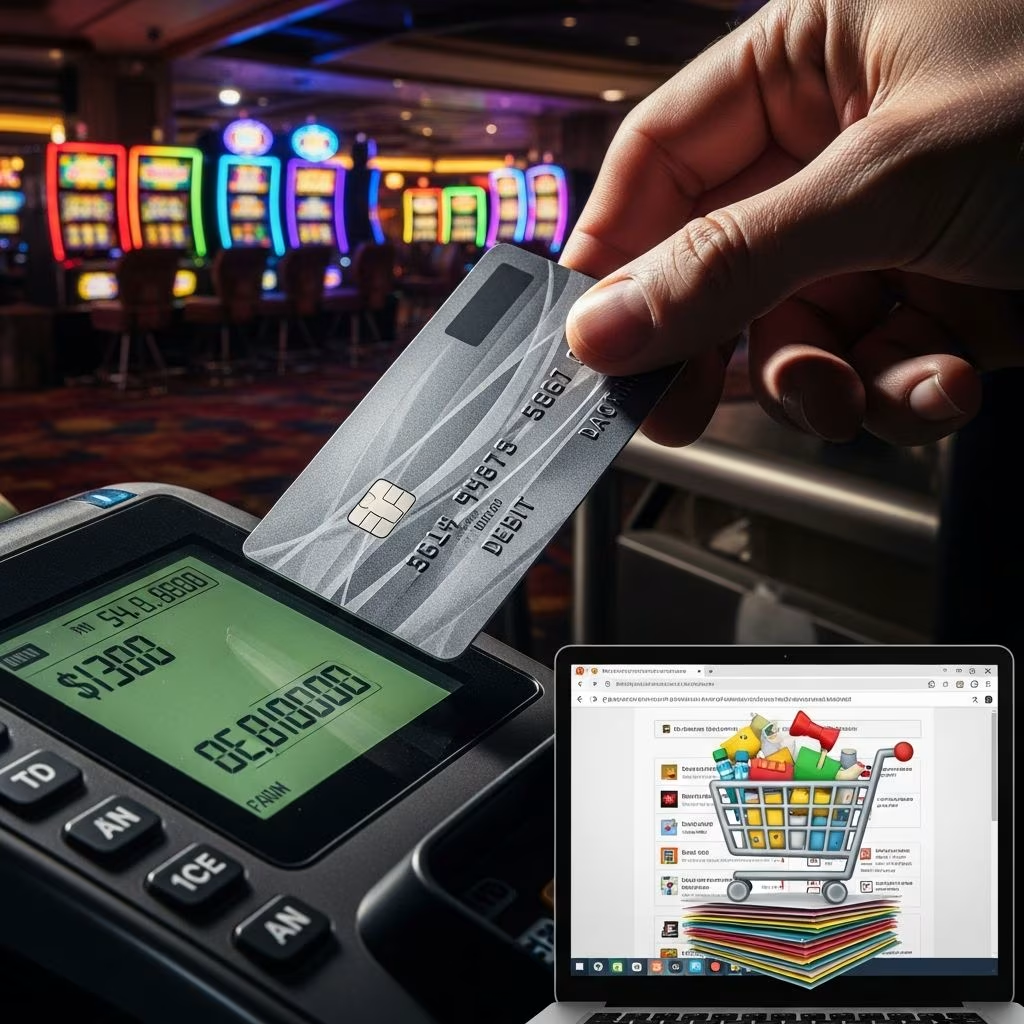
Debit cards offer convenience by linking directly to your bank account, ensuring you spend only what you have. However, their vulnerabilities in certain scenarios make them a poor choice compared to credit cards, which provide stronger safeguards and perks. This article highlights three key situations where opting for debit can expose you to unnecessary risks, drawing on established financial principles for smarter payment decisions.
Understanding Debit vs. Credit: Core Differences That Matter
Debit cards deduct funds immediately from your checking account, promoting budget discipline since overspending triggers declines or fees. Credit cards, by contrast, extend a line of credit, allowing deferred payments with rewards and robust fraud protections. While debit avoids debt accumulation, it lacks the liability caps and earning potential of credit.
Key distinctions include spending limits tied to account balance for debit versus credit limits for credit cards, and varying fraud liabilities where credit caps exposure at $50 if reported promptly, while debit can reach $500. These factors underscore why context matters in payment choices.
Situation 1: Online Transactions and E-Commerce
Shopping online exposes debit users to heightened fraud risks because stolen card details drain real bank funds instantly, often before detection. Cybercriminals target e-commerce for data breaches, and debit offers limited recourse compared to credit’s zero-liability policies in many cases.
- Immediate fund loss: Unlike credit, where issuers absorb fraudulent charges, debit pulls from your account directly.
- Slower resolution: Banks may take days to investigate, leaving you short on cash for essentials.
- No purchase protections: Credit cards frequently include extended warranties and return guarantees absent in debit.
For platforms like Amazon or digital marketplaces, credit cards enable rewards like cash back on electronics or apparel, turning routine buys into gains while shielding against scams. Opt for virtual card numbers or digital wallets linked to credit for added layers.
Situation 2: Travel and Hospitality Bookings
When reserving flights, hotels, or car rentals, debit cards jeopardize trip security due to potential holds that tie up funds longer than available balances allow. Travel involves high fraud incidence, and debit lacks the trip delay insurance or cancellation coverage common with credit.
| Feature | Debit Card | Credit Card |
|---|---|---|
| Fraud Liability | Up to $500 | $0-$50 |
| Travel Insurance | Rarely included | Often covers delays, baggage |
| Dispute Ease | Bank-dependent | Federal protections |
| Rewards | Minimal | Miles, points on travel |
Airlines and hotels place authorizations that can linger for weeks, risking overdrafts on debit. Credit handles these seamlessly without touching your cash, plus perks like lounge access or free checked bags. In international travel, credit avoids foreign transaction fees on premium cards and provides better exchange rates.
Situation 3: Major Purchases and High-Value Items
Electronics, appliances, or furniture demand credit over debit for built-in buyer protections like price matching and defect coverage. Debit transactions offer scant warranty extensions, leaving you vulnerable if items fail post-purchase.
- Extended warranties: Many credit issuers double manufacturer coverage up to a year.
- Price protection: Refunds differences if prices drop soon after.
- Return windows: Easier disputes with issuer backing.
For a $1,000 laptop, credit might yield 2-5% back in rewards, offsetting costs while ensuring quality assurance. Debit provides no such incentives, and recovery from faulty goods relies solely on the retailer.
Broader Implications: Building Financial Health
Beyond these spots, habitual credit use responsibly boosts credit scores via payment history and utilization, unlocking better loan rates. Debit doesn’t contribute here, potentially hindering milestones like homebuying. Pair credit with autopay to sidestep interest, harvesting rewards without debt traps.
Overdraft pitfalls plague debit: even with opt-outs, fees average $35 per incident, eroding budgets. Credit’s grace periods allow full payoff flexibility, preserving liquidity.
Practical Strategies for Safer Payments
- Monitor accounts daily: Apps flag anomalies faster on credit.
- Enable alerts: Real-time notifications prevent surprises.
- Choose rewards credit: Match to spending habits for value.
- Freeze debit for emergencies: Limit exposure.
- Use digital wallets: Tokenization hides actual numbers.
Transition by starting small: everyday groceries on debit for control, escalating to credit for protected categories. Track via spreadsheets or apps to maintain discipline.
Frequently Asked Questions (FAQs)
Is a debit card ever safer than credit?
Debit prevents debt by limiting to balances, ideal for strict budgets, but sacrifices protections.
How quickly must I report debit fraud?
Within 2 days caps liability at $50; delays raise it to $500.
Do debit cards have rewards?
Some offer minor cash back, but credit dominates variety and rates.
Can credit cards cause debt?
Yes, if not paid fully monthly, but tools like limits mitigate risks.
What’s best for ATM cash?
Debit avoids advance fees and high interest of credit cash withdrawals.
Empowering Choices in a Cashless World
Navigating payments smartly hinges on context: debit suits cash access and budget enforcement, but credit excels in protection-heavy zones. By avoiding debit in vulnerable areas, you fortify finances against fraud, fees, and missed opportunities. Review statements monthly, diversify methods, and align tools with goals for optimal outcomes.
References
- When to Use a Credit Card vs. Debit Card — SumUp. 2023. https://www.sumup.com/en-us/business-guide/credit-card-vs-debit-card/
- Debit Cards vs Credit Cards Key Differences and Benefits — Dollar Bank. 2025-08. https://dollar.bank/be-dollar-wise/august-2025/debit-cards-vs-credit-cards-key-differences-and-benefits
- 5 Pros and Cons of Debit Cards vs. Credit Cards — Dexsta FCU. 2024. https://www.dexsta.com/pros-and-cons-of-debit-cards-vs-credit-cards/
- Credit vs. Debit Card: The Main Differences — TD Bank. 2025. https://www.td.com/us/en/personal-banking/when-to-use-credit-or-debit-card
- What’s the Difference Between Credit & Debit Cards? — Huntington Bank. 2024. https://www.huntington.com/learn/checking-basics/difference-between-credit-debit
This article is general information, not personal financial advice. Consider your own situation, or speak with a licensed adviser, before acting on it.