

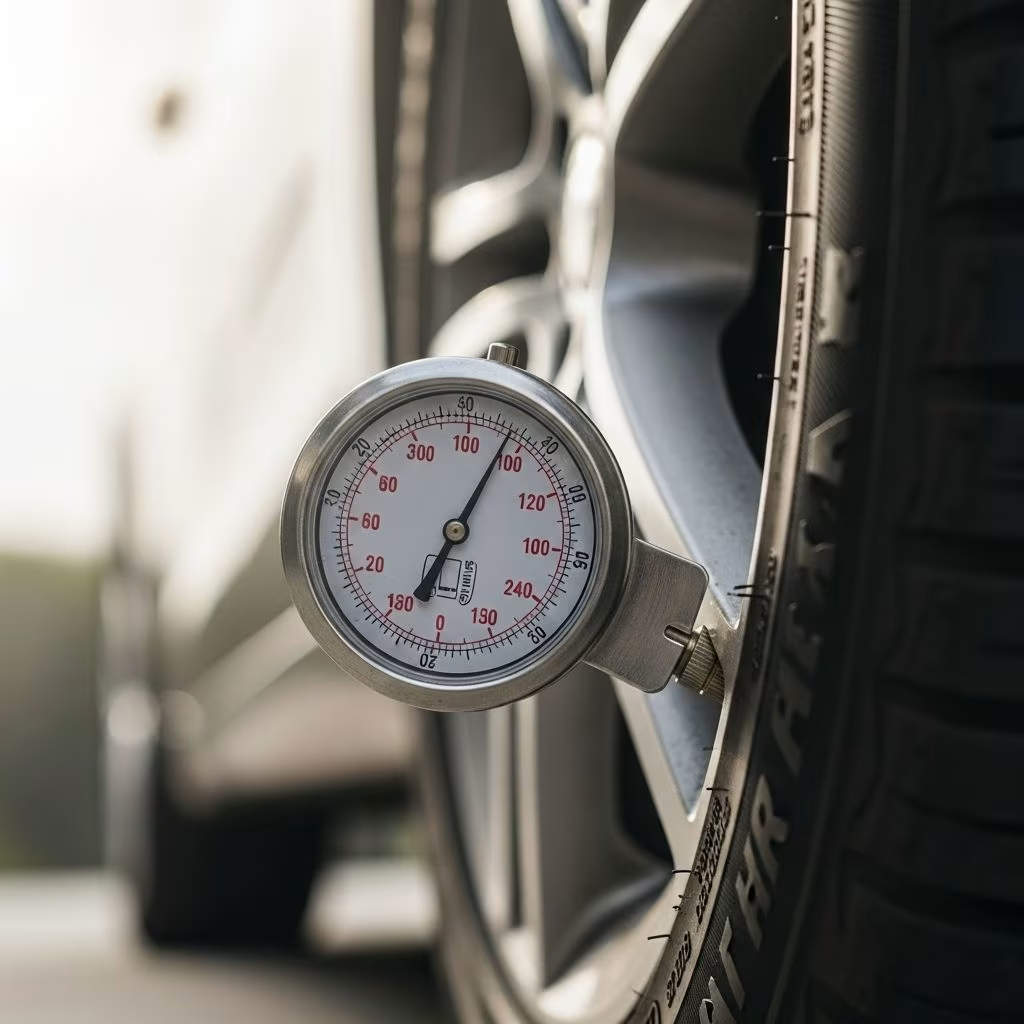
Proper tire pressure is the foundation of vehicle safety, efficiency, and longevity. Maintaining the correct pounds per square inch (PSI) ensures optimal handling, reduces fuel consumption, and prevents premature tire wear. This comprehensive guide explores everything from finding your recommended PSI to advanced maintenance techniques, empowering drivers to take control of their tire care routine.
Why Tire Pressure Matters More Than You Think
Tires are the only point of contact between your vehicle and the road, making their condition critical. Incorrect pressure leads to a cascade of issues: underinflated tires increase rolling resistance, causing up to 3% higher fuel use, while overinflation stresses the center tread, accelerating wear. Both extremes compromise braking distances and cornering stability, heightening accident risks.
According to safety authorities, properly inflated tires improve road grip, enhance steering response, and extend tread life by thousands of miles. Neglecting this simple check can result in blowouts, hydroplaning, or uneven wear patterns that shorten tire lifespan by 20-30%.
Finding Your Vehicle’s Ideal PSI
Every vehicle has unique pressure requirements based on size, weight, and tire type. Ignore the PSI printed on the tire sidewall—it’s the maximum rating, not the recommended driving pressure.
- Driver’s door jamb sticker: Lists front and rear PSI for standard loads.
- Owner’s manual: Provides detailed specs, including adjustments for heavy loads or towing.
- Fuel door or glovebox: Common alternate locations for placards.
Most passenger cars require 30-35 PSI, but trucks or SUVs may need 35-40 PSI or more. Always verify for cold tires, as heat from driving can raise readings by 4-5 PSI.
| Vehicle Type | Typical Front PSI | Typical Rear PSI | Source Notes |
|---|---|---|---|
| Passenger Sedan | 32 | 30 | Standard load |
| SUV/Crossover | 35 | 35 | May vary with cargo |
| Light Truck | 38 | 40 | Check for towing specs |
Step-by-Step Guide to Checking Tire Pressure
Regular checks prevent most tire issues. Aim for monthly inspections or every other gas fill-up, plus before long drives.
- Gather tools: Reliable digital or analog gauge (avoid station ones for accuracy), valve caps, and gloves.
- Park on level ground: Ensure tires are cold—undriven for 3+ hours.
- Remove valve caps: Wipe stems clean.
- Press gauge firmly: Quick press yields PSI reading; repeat 2-3 times per tire.
- Compare to spec: Note discrepancies for all four tires and spare.
Visual cues like sidewall bulging signal underinflation; a centered wear bar indicates overinflation.
Inflating Tires Like a Pro
Once checked, adjust promptly. Use a quality compressor for precision.
- Underinflated: Attach pump nozzle securely, inflate in bursts, recheck frequently.
- Overinflated: Press valve core gently with gauge tip to release air incrementally.
- Final steps: Verify all tires match specs, replace caps tightly to seal against leaks.
Pro tip: Invest in a portable compressor for roadside fixes. Fill slowly near target PSI to avoid overshooting.
Seasonal and Environmental Factors
Temperature swings dramatically affect pressure: expect 1 PSI drop per 10°F cooling, common in winter.
- Winter prep: Check weekly; add 1-2 PSI buffer before cold snaps.
- Summer heat: Monitor for expansion; park in shade.
- Altitude changes: Pressure drops ~1 PSI per 1,000 ft elevation gain.
Load adjustments: Increase rear PSI by 3-5 for heavy cargo, per manual guidelines.
Signs of Tire Pressure Problems
Don’t wait for a check—spot issues early:
- Underinflation: Soft ride, low fuel economy, shoulder wear, dashboard TPMS light.
- Overinflation: Harsh bumps, center tread baldness, tramlining (pulling side-to-side).
- Leaks: Hissing sounds, rapid PSI loss, rim corrosion.
TPMS (Tire Pressure Monitoring Systems) alerts to drops below 25% of recommended PSI, but manual checks remain essential.
Advanced Tire Maintenance Beyond Pressure
Pressure is step one; integrate with full care:
- Rotate every 5,000-8,000 miles: Even out wear patterns.
- Balance and align annually: Prevent vibrations and pulling.
- Inspect tread: Use penny test—Lincoln’s head down means replace at 2/32 inch.
- Spare tire: Check monthly; flats happen unexpectedly.
Tools Every Driver Needs
| Tool | Purpose | Recommended Type |
|---|---|---|
| Tire Gauge | Accurate PSI reading | Digital for precision |
| Portable Compressor | On-demand inflation | 12V with auto-shutoff |
| Tread Depth Gauge | Wear assessment | Analog slider |
| Valve Tool | Cleaning/cores | Multi-bit set |
The Cost of Ignoring Tire Pressure
Underinflated tires by just 6 PSI can cut life by 25%, costing $300+ in replacements yearly for average drivers. Fuel waste adds $100-200 annually, per efficiency studies. Safety-wise, NHTSA links improper pressure to thousands of crashes. Proactive care pays dividends.
FAQs on Tire Pressure Maintenance
What is the ideal tire PSI for most cars?
Typically 30-35 PSI cold, but always use your vehicle’s door sticker or manual for exact figures.
How often should I check tire pressure?
Monthly, before trips, and after temperature changes. Include the spare.
Can I check hot tires?
Yes, but subtract 4 PSI from reading for true cold pressure, or wait 3 hours.
What if my TPMS light is on?
Inspect immediately; it signals 25% underinflation. Don’t rely solely on it.
Does tire pressure affect insurance?
Indirectly—preventable accidents from poor maintenance can raise rates.
Mastering tire pressure transforms routine driving into a safer, more efficient experience. Commit to regular checks, and your vehicle will reward you with reliability mile after mile.
References
- Tire Safety Ratings and Awareness | TireWise – NHTSA — NHTSA. 2023. https://www.nhtsa.gov/vehicle-safety/tires
- Tire Care Essentials | USTMA — U.S. Tire Manufacturers Association. 2024. https://www.ustires.org/tire-care-essentials
- Correct Tire Air Pressure | Recommended Tire PSI – Discount Tire — Discount Tire. 2025-01-15. https://www.discounttire.com/learn/tire-pressure
- What Is the Ideal Car Tire Pressure and How to Maintain It? – AAA — AAA. 2024-11-20. https://www.aaa.com/autorepair/articles/what-is-the-ideal-car-tire-pressure-and-how-to-maintain-it
- Learn Tire Care Tips You Need To Be Doing Regularly | Michelin — Michelin. 2025. https://www.michelinman.com/auto/auto-tips-and-advice/tire-maintenance/routine-tire-care-tips
This article is general information, not personal financial advice. Consider your own situation, or speak with a licensed adviser, before acting on it.


