

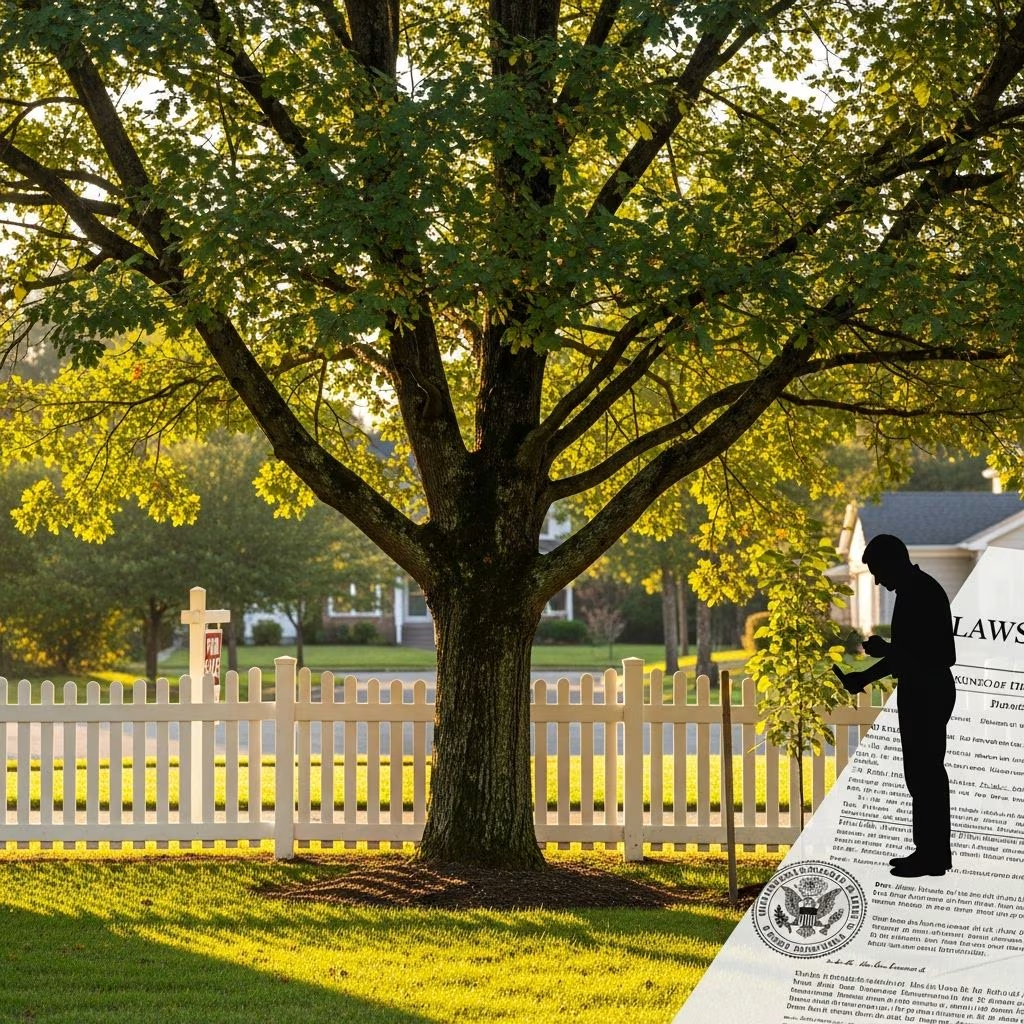
Understanding tree-related laws is crucial for homeowners to avoid costly disputes and ensure compliance with local regulations. These rules govern everything from maintenance responsibilities to liability for damages, varying by jurisdiction but sharing common principles.
Defining Ownership and Responsibility for Trees
Homeowners typically own trees fully located on their property, up to the property line. This ownership entails duties like pruning, health monitoring, and removal when necessary. Trees straddling property lines, known as boundary trees, create shared obligations where both adjacent owners must collaborate on care to prevent issues.
- Full ownership applies to trees whose trunk base is entirely within one parcel.
- Boundary trees require mutual agreement for major actions like cutting.
- Neglect by one party can lead to liability if damage occurs to the neighboring property.
Property surveys help clarify trunk positions, as roots or branches extending over lines do not shift ownership. Regular inspections by certified arborists can identify risks early, mitigating potential legal entanglements.
Handling Encroaching Branches and Roots
Branches or roots from a neighbor’s tree invading your yard grant you the right to trim them back to the property line at your expense, provided it does not harm the tree’s health. Self-help remedies like trimming must use reasonable care to avoid killing the tree or causing it to fall.
| Issue | Your Rights | Limitations |
|---|---|---|
| Overhanging branches | Trim to boundary | No poisoning or excessive cutting |
| Invasive roots | Cut at property line | Install barriers if needed, without damage |
| Falling debris | Rake leaves yourself | Cannot force neighbor removal |
Courts generally uphold the ‘self-help rule,’ allowing trimming without permission unless it endangers the tree. Document actions with photos and professional advice to defend against claims of negligence.
Liability When Trees Cause Damage
If a tree or its parts damage a neighbor’s property, the owner may be liable if they knew or should have known about defects like decay or instability. Healthy trees failing due to storms typically absolve owners of responsibility, classifying it as an ‘act of God.’
- Inspect for visible signs like leaning trunks or dead limbs annually.
- Obtain arborist reports for hazardous trees to demonstrate due diligence.
- Homeowner insurance often covers third-party damages from your trees.
In urban areas, municipalities may share liability for street trees, but private yard trees fall squarely on owners. Prompt removal of known hazards prevents lawsuits and fines.
Rules and Permits for Tree Removal
Many localities require permits for removing trees above a certain size, especially protected species or those in conservation zones. Unauthorized removal can result in hefty fines, replanting orders, or civil penalties.
- Check local zoning ordinances or forestry departments for size thresholds, often 6-12 inches in diameter.
- Submit applications with site plans and arborist justifications for health or safety risks.
- Appeal denials through hearings if removal is essential for construction or danger.
Protected trees, such as oaks or heritage specimens, demand replacement ratios or mitigation fees. Hiring ISA-certified professionals ensures compliance and quality work.
Navigating Disputes with Neighbors Over Trees
Tree conflicts often escalate without communication; start with polite discussions outlining concerns and proposed solutions. Mediation services through community associations or courts offer neutral ground before litigation.
- Send certified letters documenting issues and timelines for response.
- Involve HOAs if applicable, as they enforce covenants on tree care.
- Litigation as last resort: seek injunctions for imminent hazards or damages.
Costs of disputes can exceed tree values, so compromises like cost-sharing for pruning preserve relationships. Legal aid societies provide free consultations for low-income homeowners.
Preventive Measures to Avoid Tree Issues
Proactive strategies safeguard against problems: plant species suited to your climate, space trees appropriately from structures, and schedule biennial professional assessments. Educate family on not attaching swings or structures to living trees.
| Prevention Step | Benefit | Frequency |
|---|---|---|
| Species selection | Reduces disease risk | At planting |
| Root barriers | Controls spread | During install |
| Arborist checks | Early hazard detection | Every 2 years |
Insurance riders for tree coverage and emergency funds for removals (1-2% of home value yearly) build resilience. Community tree boards offer free workshops on best practices.
Special Considerations for Urban and HOA Properties
In dense urban settings, overhanging trees affect power lines or sidewalks, prompting utility or city intervention. HOA-governed communities impose stricter rules via CC&Rs, mandating approval for alterations.
- Review HOA bylaws for tree lists and fine schedules.
- Coordinate with municipal arborists for public-right-of-way trees.
- Historic districts preserve mature trees, limiting options.
These layers add complexity, so consult local experts familiar with overlays.
Insurance Implications and Financial Planning
Standard policies cover tree-uprooted damage to your home but exclude neighbor claims unless negligence proven. Consider umbrella policies for high-value properties. Budget for tree work as part of annual maintenance (1-4% of home value).
Escrow accounts bundling taxes and insurance ease budgeting, indirectly supporting tree funds.
Frequently Asked Questions
Who pays if a neighbor’s tree falls on my house?
Your homeowner insurance covers repairs; subrogate against neighbor if negligence shown.
Can I remove a tree on my property without permission?
Yes, if no local permit required; check ordinances first.
What if roots damage my fence?
Trim roots at line; sue for ongoing damage if tree unhealthy.
Are fallen leaves my responsibility?
Yes, clean your side; no right to demand neighbor action.
How do I prove a tree is hazardous?
Certified arborist report with photos and risk assessment.
State-Specific Variations and Resources
Laws differ: California emphasizes tree preservation, while Texas favors self-help. Consult state bar associations or extension services for guides. Apps track local ordinances by ZIP code.
References
- The Responsibilities of a First-Time Homeowner — Mortgage Solutions. 2023-12-25. https://mortgagesolutions.net/2023/12/25/responsibilities-first-time-homeowner/
- How to plan for homeowner financial responsibilities — OnPoint Community Credit Union. 2024. https://www.onpointcu.com/blog/responsibilities-new-homeowners-need-to-know/
- The Expenses and Responsibilities of Homeownership — HAR.com. 2023. https://www.har.com/ri/1080/the-expenses-and-responsibilities-of-homeownership
This article is general information, not personal financial advice. Consider your own situation, or speak with a licensed adviser, before acting on it.


