

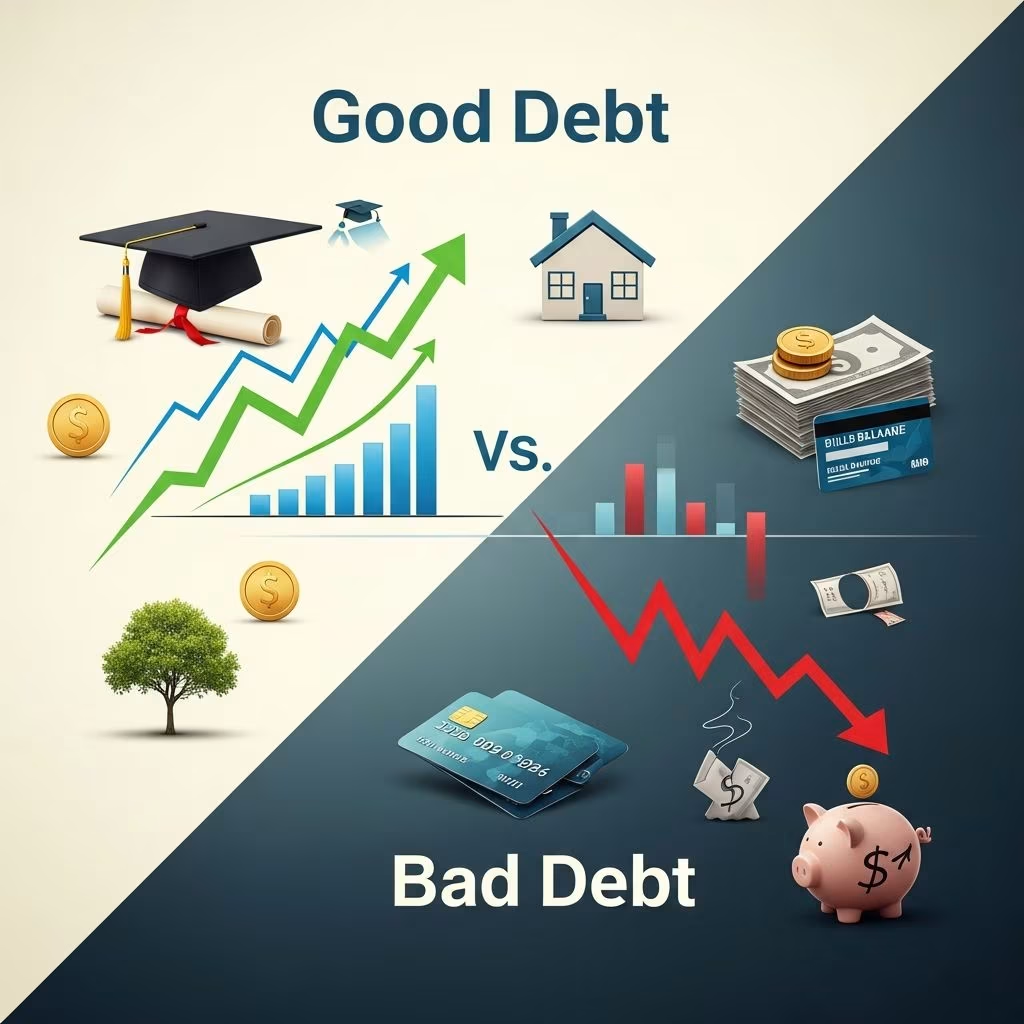
Debt can either move you toward your financial goals or pull you further away from them. Understanding the different types of debt, how they work, and which ones are considered helpful versus harmful is a key step in taking control of your money.
This guide explains secured vs unsecured debt, revolving vs installment debt, walks through 10 common kinds of debt, and shows you how to build a realistic plan to pay off what you owe.
Types of Debt: An Overview
Before looking at specific loans and credit products, it helps to understand the basic ways debt is categorized.
Secured vs Unsecured Debt
On a high level, most consumer debts fall into two major categories: secured and unsecured debt.
| Type of debt | Definition | Backed by collateral? | Typical examples | General risk level for lender |
|---|---|---|---|---|
| Secured debt | Debt tied to an asset the lender can take if you stop paying. | Yes, linked to a specific item or asset. | Mortgages, auto loans, some equipment loans, home equity loans, secured credit lines. | Lower risk, so interest rates are often lower than on similar unsecured loans. |
| Unsecured debt | Debt not tied to any specific asset; lender relies mainly on your creditworthiness. | No collateral. | Credit cards, personal loans, student loans, medical debt, payday loans. | Higher risk, so rates are often higher and approval standards stricter. |
Secured debt is backed by collateral such as a house, car, or other property. If you fail to make payments, the lender may legally seize the collateral (for example, through foreclosure or repossession).
Unsecured debt has no collateral attached. Because the lender cannot claim a specific asset if you default, they may charge higher interest, pursue collections, or file a lawsuit and seek a court judgment if payments stop.
Revolving vs Installment Debt
Debt can also be grouped by how you borrow and repay:
- Revolving debt allows you to borrow, repay, and borrow again up to a pre-set credit limit. You can carry a balance from month to month and are usually required to make at least a minimum payment. Credit cards and lines of credit are common examples. Interest rates on revolving credit, especially credit cards, are usually higher than on installment loans.
- Installment debt is borrowed as a lump sum that you repay over a fixed period with regular, scheduled payments. Mortgages, auto loans, many student loans, and most personal loans fall in this category.
Many debts are both secured vs unsecured and revolving vs installment. For example, a credit card is typically unsecured revolving debt, while a mortgage is usually secured installment debt.
5 Types of Secured Debt
For debt to be considered secured, you must pledge an asset as collateral. In many cases, the item you finance is the collateral (like a home or car). This security can make it easier to qualify and may lower the interest rate, but it also increases the risk of losing that asset if you cannot keep up with payments.
1. Mortgages
A mortgage is a long-term loan used to finance real estate, such as a primary residence, rental property, or vacation home. The property itself serves as collateral, and the lender may foreclose if you default.
Key features of mortgage debt include:
- Usually structured as fixed installment payments over 15–30 years.
- Monthly payments typically include principal, interest, and possibly property taxes and homeowner’s insurance.
- Interest rates can be fixed or adjustable, depending on the loan type.
Mortgage debt is often viewed as a form of potentially good debt because it can help you build equity in an appreciating asset over time, although it still carries risk if you borrow more than you can afford.
2. Auto Loans
Auto loans are installment loans used to purchase vehicles. The car itself is the collateral, and lenders may repossess it if the loan becomes seriously delinquent.
- Terms usually range from 36 to 84 months.
- Interest rates depend on your credit profile, loan term, and whether the car is new or used.
- Because cars depreciate quickly, borrowing too much or stretching out the term can leave you upside down (owing more than the car is worth).
Auto debt can be neutral or harmful depending on the price of the car, interest rate, and how it fits into your overall financial plan.
3. Equipment Loans
Equipment loans are mainly used in a business context to purchase items such as machinery, technology, or other tools required to operate. The equipment usually secures the loan.
- Useful for business owners who need to invest in tools that generate revenue.
- Terms often match the useful life of the equipment.
- If payments are not made, the lender can reclaim the equipment.
When used thoughtfully and for productive purposes, equipment loans can be considered a form of investment-focused debt that supports income growth.
4. Home Equity Loans
A home equity loan is a second, separate installment loan that allows homeowners to borrow against the equity they have built in their property.
- You receive a lump sum and repay it over a fixed term.
- Because the loan is secured by your home, failing to repay can lead to foreclosure.
- Often used for major expenses such as home improvements, debt consolidation, or education costs.
Even though rates may be lower than on unsecured loans, using your home as collateral significantly raises the stakes.
5. Secured Lines of Credit
A secured line of credit works like a revolving credit account but is backed by collateral, such as savings, investments, or home equity (in the case of a HELOC—home equity line of credit).
- You can draw funds as needed up to your credit limit and only pay interest on what you use.
- Interest rates are usually lower than unsecured lines or credit cards.
- Defaulting can lead to losing the pledged asset, such as part of your home equity or savings.
Secured lines can be a flexible, lower-cost borrowing option when managed carefully.
5 Types of Unsecured Debt
Unsecured debt is not tied to any specific asset, which means you won’t automatically lose property if you fall behind. However, unsecured lenders can turn to collection agencies, report delinquencies to credit bureaus, or even sue to obtain a judgment that may allow wage garnishment under some circumstances.
1. Credit Cards
Credit cards are one of the most common forms of unsecured, revolving debt. They allow you to make purchases up to your credit limit and either pay in full each month or carry a balance and pay interest.
- Interest rates on credit cards are typically much higher than on many other forms of debt, often well above 15–20% APR for revolving balances.
- Paying only the minimum can keep you in debt for years and significantly increase total interest costs.
- Responsible use—paying on time and in full—can help you build a strong credit history.
Credit card debt is usually considered bad debt when it comes from everyday overspending or funding non-essential purchases at high interest.
2. Student Loans
Student loans are installment loans used to pay for higher education and related costs. They may be issued by the federal government or by private lenders.
- Federal student loans often offer income-driven repayment, deferment, and certain forgiveness options.
- Private student loans typically offer fewer flexible repayment protections and are based heavily on creditworthiness.
- Student loans are generally difficult to discharge in bankruptcy under current U.S. law.
Student debt can be seen as potentially good debt when it funds a reasonably priced education that leads to higher earning potential, but excessive borrowing or a poor program match can turn it into a long-term burden.
3. Medical Debt
Medical debt arises when you cannot pay healthcare bills in full. Even with insurance, high deductibles and out-of-pocket costs can lead many households to owe substantial amounts to providers.
- In the United States, medical bills are a major contributor to financial stress and are associated with a significant share of personal bankruptcies and collections accounts.
- Providers may offer payment plans or financial assistance programs; some debts may be turned over to collection agencies if unpaid.
- Recent policy changes and reporting practices aim to reduce the impact of small or recently paid medical collections on credit reports, but larger debts can still affect creditworthiness.
Medical debt is rarely the result of discretionary spending, yet it can be just as disruptive to your financial life as other types of borrowing.
4. Payday Loans
Payday loans are very short-term, small-dollar loans that are typically due on your next payday. They are one of the most expensive forms of credit available.
- Annual percentage rates (APRs) for payday loans often exceed 300% when fees are converted to a yearly rate.
- Borrowers frequently roll over or renew loans, creating a cycle of repeated borrowing and escalating fees.
- Many consumer protection agencies warn that payday loans can quickly become unaffordable and trap borrowers in debt.
Because of the extremely high cost and short repayment window, payday loans are widely considered dangerous bad debt and are often best avoided if possible.
5. Signature (Unsecured Personal) Loans
Signature loans, also known as unsecured personal loans, provide a lump sum that can be used for almost any purpose, from consolidating higher-interest debt to funding large purchases.
- Approval and terms are largely based on your credit profile and income.
- Interest rates are usually higher than on secured loans but often lower than typical credit card rates for well-qualified borrowers.
- Fixed payments and a defined payoff date can make budgeting easier compared to revolving debt.
When used to refinance or consolidate more expensive debts at a lower rate, signature loans can be a tool for simplifying and reducing the overall cost of what you owe.
Make a Plan to Tackle Your Debt
Knowing the different types of debt you have is only the first step. The next is building a clear, realistic plan for paying it off.
1. List Out All Your Debts
Start by creating a complete inventory of what you owe. For each account, write down:
- The lender or creditor name
- The current balance
- The interest rate (APR)
- The minimum monthly payment
- The due date
- Whether it is secured or unsecured, and revolving or installment
This overview helps you see which debts are most urgent, which are costing you the most in interest, and where you might have room to restructure or refinance.
2. Choose a Repayment Strategy
Two popular accelerated payoff strategies are:
- Debt snowball method: You target your smallest balance first while paying at least the minimum on everything else. Once the smallest is gone, you roll that payment onto the next smallest balance. This method can provide strong psychological wins and momentum.
- Debt avalanche method: You focus on the highest-interest debt first, again paying at least the minimum on other accounts. When that account is paid off, you move to the next highest rate. This approach usually saves the most money over time.
Whichever method you choose, the key is to stay consistent and apply any extra money you can toward your priority debt.
3. Align Your Budget With Your Payoff Plan
Debt repayment works best when it is built into your monthly spending plan. Consider:
- Making sure all minimum payments are included in your budget.
- Cutting or reducing nonessential expenses to free up cash for extra payments.
- Automatically scheduling payments to avoid late fees and protect your credit.
Over time, each account you pay off frees additional money that you can redirect toward remaining debts, accelerating your progress.
4. When Debt Consolidation Might Help
Debt consolidation involves combining multiple debts into a single new loan or balance transfer, ideally with a lower interest rate or more manageable payment.
- Options may include personal loans, balance transfer credit cards, or home equity products.
- The main benefits can be simplified payments and potential interest savings.
- However, consolidation is not a cure-all; it works only if you avoid running up new balances on the accounts you just paid off.
Before consolidating, compare the total cost of the new loan (including fees) with what you would pay if you kept your current debts and paid them down more aggressively.
Understand the Types of Debt and How They Work
Not all debt is equally harmful. Some forms can support your long-term goals, while others may erode your financial stability.
Good Debt vs Bad Debt
There is no perfect, universal definition of good debt and bad debt, but many financial educators use the following guidelines:
- Good (or productive) debt is borrowing that helps you build an asset, increase your earning potential, or otherwise improve your long-term financial position. Examples can include a reasonably sized mortgage, a carefully chosen student loan, or a loan to grow a profitable business.
- Bad (or high-risk) debt is borrowing that primarily funds consumption, loses value quickly, or charges very high interest, making it hard to repay. Common examples include revolving credit card debt from lifestyle spending and high-cost payday loans.
Even potentially helpful debt can become harmful if you borrow too much relative to your income or if the terms are too expensive. The key is to evaluate each borrowing decision based on cost, risk, and how it fits your overall financial plan.
Questions to Ask Before Taking On New Debt
Before opening a new account or signing a loan agreement, ask yourself:
- Is this debt funding a want or a need?
- Will this purchase lose value quickly, or could it improve my finances later?
- What is the interest rate and total cost over the life of the loan?
- Can I comfortably afford the payments in my current budget?
- What happens if my income temporarily drops—can I still keep up?
Being intentional about the kinds of debt you accept, and how you manage them, helps you avoid common pitfalls and stay focused on building wealth over time.
Frequently Asked Questions (FAQs)
Q: Is all secured debt considered good debt?
A: No. Secured debt simply means there is collateral backing the loan. A modest mortgage on a home you can afford may be helpful, while an oversized car loan or using home equity to fund everyday spending can be risky.
Q: Which should I pay off first: credit cards or student loans?
A: Many people prioritize high-interest credit card debt first because it is usually more expensive than student loans. However, you should always make at least the minimum payments on all debts to avoid late fees and serious credit damage.
Q: Can medical debt affect my credit score?
A: Large, unpaid medical debts that are sent to collections can still impact your credit history, though recent changes have reduced the impact of certain small or recently paid medical collections. It is best to contact providers early and arrange payment plans when needed.
Q: Are payday loans ever a good idea?
A: Payday loans are generally considered a last resort because of their extremely high costs and the risk of getting trapped in a cycle of repeated borrowing. Exploring alternatives—such as negotiating with creditors, using a payment plan, or seeking help from nonprofit credit counselors—is usually safer.
Q: How can I avoid falling back into debt after paying it off?
A: Building an emergency fund, keeping a realistic budget, and tracking your spending can help you stay out of high-interest debt. It also helps to set clear savings goals so you are less tempted to rely on credit for future large or unexpected expenses.
References
- What Is Secured Debt? — Consumer Financial Protection Bureau. 2021-06-08. https://www.consumerfinance.gov/ask-cfpb/what-is-secured-debt-en-2097/
- Credit Cards — Consumer Financial Protection Bureau. 2023-08-15. https://www.consumerfinance.gov/consumer-tools/credit-cards/
- Mortgages — Consumer Financial Protection Bureau. 2023-05-10. https://www.consumerfinance.gov/consumer-tools/mortgages/
- Equipment Financing — U.S. Small Business Administration. 2022-09-01. https://www.sba.gov/article/2022/sep/01/equipment-financing-small-businesses
- Student Loans — Federal Student Aid, U.S. Department of Education. 2024-01-05. https://studentaid.gov/understand-aid/types/loans
- Medical Debt Burden in the United States — U.S. Consumer Financial Protection Bureau. 2022-03-01. https://www.consumerfinance.gov/data-research/research-reports/medical-debt-burden-in-the-united-states/
- Payday Loans, Auto Title Loans, and High-Cost Installment Loans — Consumer Financial Protection Bureau. 2021-04-01. https://www.consumerfinance.gov/consumer-tools/payday-loans/
This article is general information, not personal financial advice. Consider your own situation, or speak with a licensed adviser, before acting on it.


