

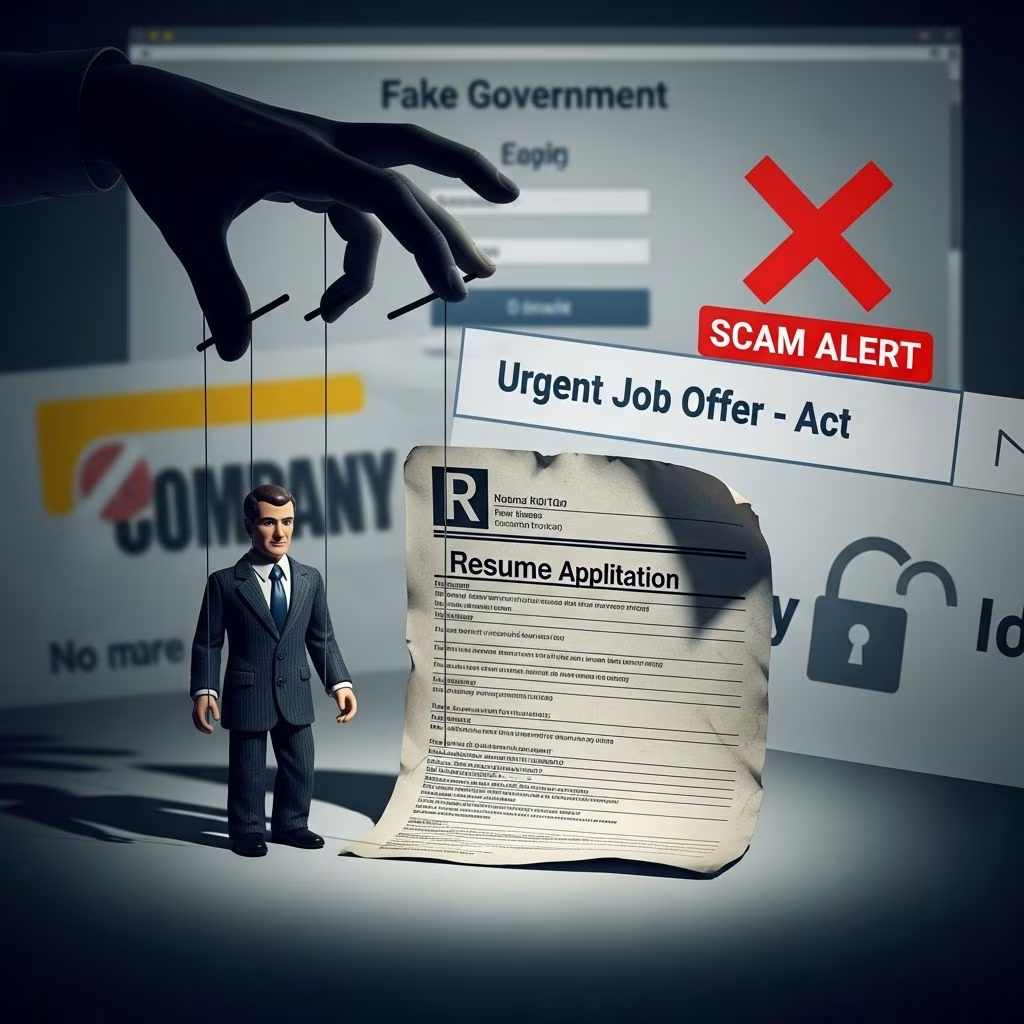
Unemployment scams have proliferated, particularly during economic downturns, where fraudsters exploit overwhelmed systems to siphon benefits using stolen identities. These schemes not only drain public funds but also ensnare innocent individuals in legal and financial nightmares.
The Surge in Unemployment Fraud
During periods of mass layoffs, such as those triggered by global events, unemployment insurance programs become prime targets for criminals. Fraudsters file bogus claims en masse, often using personal details harvested from data breaches. State agencies process billions in claims, making it easy for illicit ones to slip through initially.
Official reports indicate unprecedented fraud levels, with criminals employing sophisticated tactics like bulk filings from compromised databases. This not only burdens taxpayers but also delays legitimate claimants’ access to aid.
Common Types of Unemployment Fraud
Fraud manifests in various forms, from imposter claims to employer manipulations. Understanding these helps in early detection.
- Imposter Claims: Criminals use stolen Social Security numbers, often from deceased or incarcerated individuals, to file first-time claims. Victims discover this via unexpected notices from state offices or employers.
- Bank Account Hijacking: Scammers alter direct deposit details on valid claims, diverting payments to their accounts.
- Shell Business Schemes: Fraud rings create fake companies to ‘hire’ and ‘lay off’ phantom workers, claiming benefits on both ends.
- Claimant Misrepresentation: Individuals falsely report job searches, earnings, or availability while collecting benefits.
- Employer Collusion: Businesses aid fraud by misclassifying workers, underreporting wages, or coercing false claims.
Phishing and Related Deceptions
Beyond direct claims, scammers deploy phishing emails and texts mimicking government agencies. These lure victims into fake portals to harvest more data or prompt money transfers.
For instance, texts from spoofed numbers claim issues with benefits, directing users to malicious sites. Legitimate agencies never request payments via wire, gift cards, or cryptocurrency.
Warning Signs You’re a Target
Spotting red flags early can prevent victimization. Key indicators include:
- Receiving benefit notices or 1099-G forms for claims you didn’t file.
- Unexpected deposits followed by demands to return funds via untraceable methods.
- Suspicious emails with urgent language, generic greetings, or odd sender domains.
- Employer alerts about unfamiliar jobless applications.
- Credit report anomalies like new accounts or inquiries.
| Legitimate Contact | Scam Red Flag |
|---|---|
| Official state domain (e.g., .gov) | Generic email like unemployment@help.com |
| Requests info via secure portal | Demands immediate wire transfer |
| Clear identification of agency | Urgent threats of benefit loss |
Immediate Steps if Victimized
Act swiftly upon suspicion:
- Contact Your Employer: Inform HR and document conversations.
- Report to State Agency: Use official online portals for fastest processing; retain case numbers.
- Alert FTC: File at IdentityTheft.gov if personal data was compromised.
- Monitor Finances: Review accounts, credit reports, and freeze credit.
- Handle Errant Deposits: Report to agency; never forward funds as instructed by callers.
Prevention Strategies for Individuals
Proactive measures fortify defenses:
- Secure personal data; avoid sharing SSN unnecessarily.
- Verify communications through official channels only.
- Regularly check unemployment accounts and credit reports.
- Educate family on scam tactics.
- Use strong, unique passwords for financial sites.
Employer Defenses Against Fraud
Businesses face unique risks, including wage misreporting penalties. Implement:
- Robust verification for separation notices.
- Employee training on phishing recognition.
- Timely wage reporting and audits.
- Collaboration with state labor departments.
Legal Consequences of Fraud
Participation invites severe repercussions. Claimant fraud can lead to repayment, fines, and imprisonment. Employers risk tax liabilities and business dissolution. States pursue recovery aggressively, with felony charges for organized schemes.
FAQs on Unemployment Scams
Q: What if I receive benefits I didn’t claim?
A: Report immediately to your state agency; do not spend or forward the money.
Q: How do scammers get my information?
A: Primarily from data breaches, dark web sales, or phishing.
Q: Can I file taxes if fraudulently issued a 1099-G?
A: Yes, report it as fraudulent when filing; follow IRS guidance.
Q: Are unemployment agencies safe to contact?
A: Use only verified .gov sites and numbers.
Q: What about international scammers?
A: Common; report to FTC regardless of origin.
Broader Economic Impact
These scams erode trust funds, raising costs for all. During peaks, losses reached tens of billions, prompting enhanced federal oversight. Recovery involves interagency task forces and tech upgrades like AI detection.
Staying informed empowers individuals and employers alike. By recognizing patterns and reporting promptly, you contribute to system integrity.
References
- Types of Unemployment Scams to Watch Out For — CertiPay. 2024. https://www.certipay.com/blog/post/types-unemployment-scams-watch-out/?nocache=1774799002
- Phases of Unemployment Fraud After COVID-19 — Thomson Reuters. 2020-06-01. https://legal.thomsonreuters.com/en/insights/articles/phases-of-unemployment-after-covid
- Unemployment Insurance Fraud — RI Department of Labor & Training. 2024. https://dlt.ri.gov/individuals/unemployment-insurance/unemployment-insurance-fraud
- Is a scammer getting unemployment benefits in your name? — FTC Consumer Alerts. 2020-06-01. https://consumer.ftc.gov/consumer-alerts/2020/06/scammer-getting-unemployment-benefits-your-name
- Unemployment Scams — GDI Insurance Agency, Inc. 2024. https://gdiinsurance.com/blog/unemployment-scams/
- Unemployment Insurance Fraud: What You Need To Know — SC Department of Employment & Workforce. 2021-02-01. https://www.dew.sc.gov/news/2021-02/unemployment-insurance-fraud-what-you-need-know
- Unemployment scams — USAGov. 2024. https://www.usa.gov/unemployment-scams
This article is general information, not personal financial advice. Consider your own situation, or speak with a licensed adviser, before acting on it.


