

The used car market represents one of the largest consumer transactions most people undertake, yet it remains rife with opportunities for fraudulent activity. Millions of buyers enter this marketplace each year without adequate knowledge of the sophisticated schemes perpetrated by dishonest sellers and criminal enterprises. Understanding the mechanics of these deceptive practices and implementing protective measures can mean the difference between acquiring a reliable vehicle and losing thousands of dollars to fraud. This comprehensive guide examines the primary deception tactics used in the secondhand automotive market and provides actionable strategies for identifying and avoiding them.
Understanding the Landscape of Automotive Fraud
The used car industry presents a unique environment where information asymmetry favors sellers over buyers. Many purchasers lack the technical expertise to evaluate vehicles accurately, creating an ideal situation for fraudsters to exploit. Title washing, odometer manipulation, and vehicle cloning rank among the most prevalent schemes, with title washing alone accounting for approximately 30% of auto fraud cases and resulting in losses up to $5,000 per transaction. Understanding that these scams exist and recognizing their warning signs forms the foundation of effective buyer protection.
Decoding Title Manipulation Schemes
Among the most damaging frauds affecting used car buyers is the practice of altering vehicle titles to conceal negative ownership history. When vehicles sustain significant damage, accumulate liens, suffer water damage, or receive salvage designations, this information becomes legally required on the title document. However, criminals circumvent these requirements through illegal alteration or by transporting vehicles across state lines where certain title brands lack recognition, thereby obtaining clean titles through fraudulent registration in new jurisdictions.
This deceptive practice allows sellers to market damaged or inherently defective vehicles as problem-free, commanding premium prices that far exceed their actual market value. Buyers who unknowingly purchase such vehicles may discover their cars are fundamentally unreliable, expensive to repair, or potentially dangerous to operate. Additionally, subsequent attempts to resell these vehicles or file insurance claims can trigger investigations that reveal the fraudulent title history.
Protective Measures Against Title Fraud:
- Request comprehensive vehicle history reports from established providers such as Carfax or AutoCheck before proceeding with any purchase
- Verify the seller’s account of the vehicle’s history by cross-referencing the narrative provided with documented records
- Contact your insurance company with the vehicle identification number to inquire whether they maintain any records regarding the vehicle
- Examine the original title document and compare it with the history report to identify any discrepancies or inconsistencies
- Scrutinize titles from vehicles that have been recently relocated across state lines, as this practice often indicates intentional title washing
Identifying Odometer Fraud and Mileage Misrepresentation
Odometer rollback schemes, where criminals reduce recorded mileage to artificially lower vehicle age and increase market value, affect approximately 10% of used cars in circulation. This form of fraud directly impacts purchasing decisions since mileage heavily influences vehicle pricing, expected lifespan, and anticipated maintenance requirements. A vehicle with 80,000 miles commands significantly higher value than an identical model with 140,000 miles, motivating perpetrators to manipulate odometers for substantial financial gain.
The consequences of purchasing a vehicle with concealed mileage extend beyond the initial financial loss. Buyers unknowingly inherit vehicles with advanced wear and diminished remaining lifespan while expecting years of reliable service. Components subjected to higher mileage than indicated require replacement sooner than anticipated, resulting in unexpected repair expenses that can rapidly accumulate.
Detection Strategies for Mileage Manipulation:
- Compare the current odometer reading against the mileage recorded on the original title document
- Evaluate interior wear patterns relative to the claimed mileage, noting that vehicles with fewer than 30,000 miles should display minimal wear on pedals and steering components
- Inspect tire condition and tread depth, as tires showing excessive wear inconsistent with low mileage indicate fraud
- Assess the condition of gas pedals, brake pedals, and clutch pedals, which should exhibit wear proportional to vehicle age and stated mileage
- Request service records that document maintenance performed at specific mileage intervals
- Verify discrepancies by obtaining multiple vehicle history reports from different providers
Recognizing and Preventing Vehicle Identification Number Manipulation
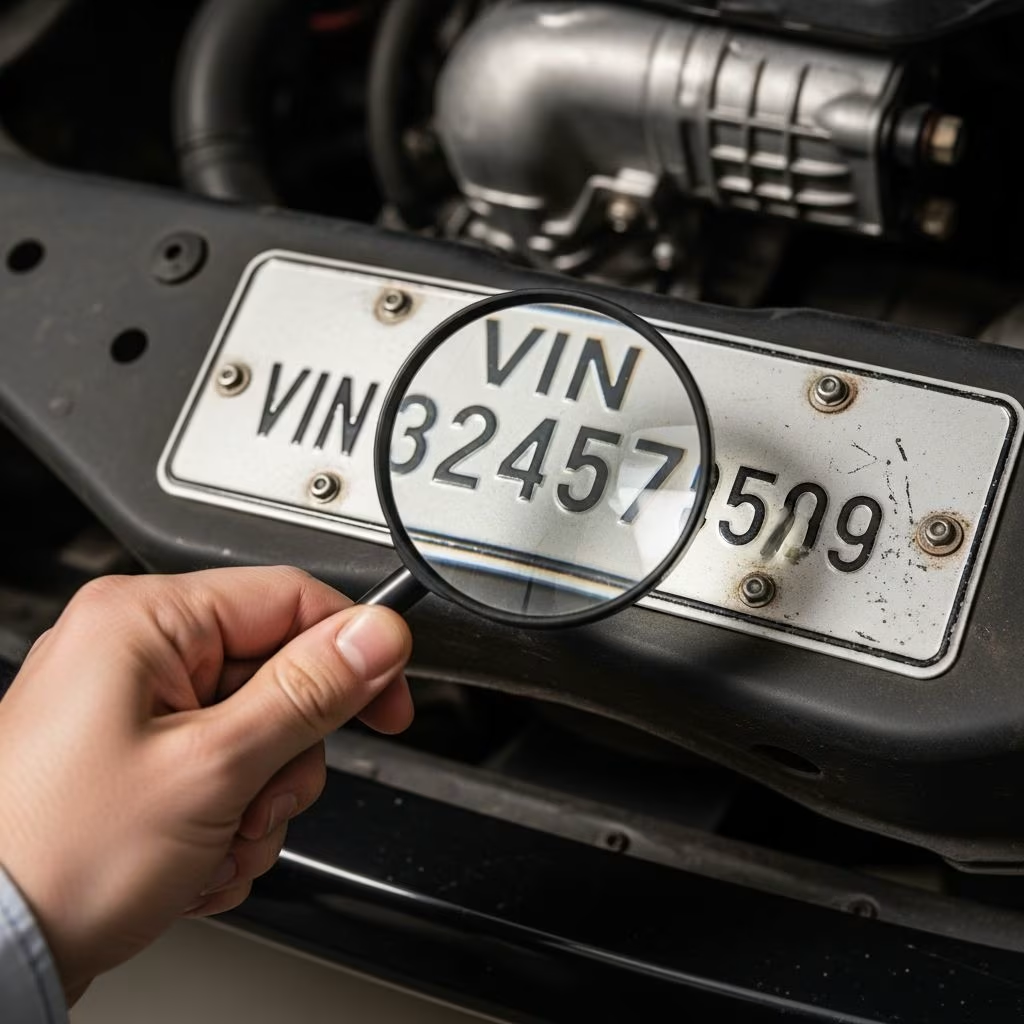
Vehicle Identification Number (VIN) cloning represents a particularly serious fraud category where criminals duplicate legitimate VINs from real vehicles and apply them to stolen cars, effectively concealing theft and creating parallel vehicles with identical identities. Approximately 8% of used vehicles in the marketplace contain incorrect or missing VINs, with research indicating that 70% of purchasers neglect to verify VIN authenticity before completing transactions.
When a buyer purchases a cloned vehicle, they risk eventual discovery that their car is actually stolen property. Law enforcement and insurance companies can initiate vehicle repossession proceedings, resulting in complete financial loss despite ongoing payments. Additionally, cloned vehicles may be involved in crimes, leaving legitimate buyers vulnerable to legal complications or law enforcement investigations.
VIN Verification and Protection Protocol:
- Examine the VIN displayed on the vehicle’s dashboard near the windshield
- Locate the VIN on the door jamb or door edge sticker
- Cross-reference VINs in title documents with physical vehicle markings
- Verify that all VINs match precisely without discrepancies or signs of tampering
- Check the vehicle’s identification through local Secretary of State offices
- Search the VIN against national vehicle history databases to verify legitimate ownership history
- Look for evidence of adhesive residue or scratches around VIN locations that might indicate replacement
The Mechanics of Lowballing and Undervaluation Tactics
Lowballing represents a psychological manipulation tactic where sellers deliberately underprice vehicles to create artificial urgency and cloud buyer judgment. When presented with an unexpectedly low price, many buyers become so focused on perceived savings that they neglect thorough due diligence, skipping inspections, history checks, or mechanical evaluations. This strategy preys on buyer excitement and the cognitive bias toward attractive pricing without proportionate skepticism.
Prices significantly below market value frequently correlate with hidden mechanical problems, accident damage, or salvage history. Understanding fair market valuation for specific makes, models, and condition states provides essential protection against this manipulation.
Market Research and Pricing Intelligence:
- Consult Kelley Blue Book, Edmunds, or comparable pricing resources to establish realistic market ranges
- Compare multiple listings for similar vehicles across geographic regions
- Account for mileage, condition, features, and local market variations when evaluating pricing
- Approach listings priced 15% or more below market value with substantial skepticism
- Request mechanical inspections for any vehicle offered at significantly reduced prices
The Curbstoning Phenomenon: Private Seller Deception
Curbstoning occurs when unlicensed dealers operate as private sellers, fraudulently misrepresenting their commercial enterprise status to circumvent dealer licensing requirements and regulatory oversight. These operators purchase used vehicles in bulk, often with undisclosed mechanical issues or accident history, then resell them through private channels while impersonating ordinary owners.
Purchasing from unverified private sellers creates significant risk, as these individuals operate outside regulatory frameworks and accountability mechanisms. Legitimate licensed dealerships maintain compliance standards and face regulatory consequences for deceptive practices, whereas unlicensed operators face minimal enforcement risk.
Seller Verification Methodology:
- Request verification that the seller is the legal owner documented on the vehicle title
- Cross-reference seller information with title documentation
- Inquire whether the seller holds an active dealer license through state Department of Licensing and Regulatory Affairs websites
- When licensed dealers are involved, verify their credentials and operational history
- Research seller reputation through online reviews, Better Business Bureau ratings, and consumer forums
- Evaluate whether the seller has sold multiple vehicles within recent periods, which may indicate curbstoning activity
Comprehensive Pre-Purchase Investigation Procedures
Vehicle History Report Analysis
Vehicle history reports serve as foundational documentation in the fraud prevention process, aggregating insurance claims, accident records, title histories, service records, and ownership transitions. These reports typically reveal patterns consistent with deceptive practices and provide crucial information for informed purchasing decisions.
- Review complete accident history and evaluate the severity and frequency of reported incidents
- Identify gaps in registration timeline that might indicate concealed ownership periods
- Note title brand changes or salvage designations
- Assess service and maintenance records for consistency with claimed mileage
- Evaluate the number of previous owners and average ownership duration
Professional Mechanical Inspection
Pre-purchase inspections conducted by qualified mechanics typically cost between $100 and $200 but can prevent losses exceeding thousands of dollars. Professional inspectors identify mechanical deficiencies, concealed accident damage, deferred maintenance, and component wear that may indicate misrepresented mileage or ownership history.
Physical Vehicle Assessment
Conducting thorough visual inspections during daylight hours reveals inconsistencies indicative of fraud or damage concealment.
| Inspection Component | What to Evaluate | Red Flags |
|---|---|---|
| Paint and Bodywork | Color uniformity, texture consistency, panel gaps | Mismatched colors, fresh paint, uneven gaps, bondo texture |
| Interior Condition | Seat wear, steering wheel condition, dashboard fading | Excessive wear inconsistent with mileage, replacement upholstery |
| Engine Bay | Fluid leaks, corrosion, recently replaced components | Oil stains, corroded connectors, overly clean appearance |
| Undercarriage | Rust accumulation, frame integrity | Extensive rust, welded repairs, structural damage |
| Tire Condition | Tread depth, wear patterns, age | Excessive wear, uneven wear patterns, aged tires |
Safe Transaction Completion Practices
The transaction phase presents final opportunities for fraud perpetration through forged documentation, altered paperwork, or fraudulent payment schemes. Protecting yourself requires deliberate verification steps and secure payment methodology.
Payment Security Measures:
- Avoid cash transactions, which provide no documentation trail and increased fraud vulnerability
- Utilize cashier’s checks that require legal recipient identification, creating accountability documentation
- Never wire funds to unknown recipients or unfamiliar financial institutions
- Avoid gift cards, wire transfers, or cryptocurrency as payment methods
- Complete all financial transactions at your bank for maximum security
- Never release funds before physically inspecting the vehicle and verifying all documentation
- For high-value purchases, consider legitimate escrow services that verify both parties and secure transaction completion
Documentation Verification and Final Checks
Before finalizing any purchase, verify that all paperwork is legitimate and matches represented information. Title documents should be original, not photocopied, and should match seller identification documentation. Registration documents should reflect current ownership without indication of fraud or alteration.
Frequently Asked Questions
What specific warning signs indicate a used vehicle might be stolen?
Stolen vehicles often feature mismatched or altered VINs, reluctant sellers avoiding detailed questions about vehicle history, significantly reduced pricing without proportionate damage or mechanical issues, and documentation inconsistencies. Verification through Secretary of State offices and national vehicle history databases can confirm legitimate ownership status.
How can I determine whether a seller is operating as an unlicensed dealer?
Unlicensed dealers operating as private sellers often have sold multiple vehicles within short timeframes, cannot provide personal ownership history, avoid detailed questions about vehicle condition, and resist providing comprehensive documentation. Verification through state licensing authorities clarifies dealer status.
What represents a fair market price for a used vehicle?
Fair market pricing depends on make, model, year, mileage, condition, local market conditions, and prevailing market rates for comparable vehicles. Resources including Kelley Blue Book and Edmunds provide individualized valuation estimates based on these factors. Prices 15% or more below market average warrant investigation before purchase.
Should I purchase extended warranties for used vehicles?
Extended warranties provide value primarily for vehicles with elevated mechanical risk or limited service history. For vehicles with excellent documented maintenance and recent professional inspections, extended warranties may provide minimal additional protection. Evaluate warranty terms and coverage limitations before committing to additional expenses.
How do I verify that a vehicle title is legitimate and unaltered?
Legitimate titles feature security features including watermarks, holograms, and tamper-evident elements. Original titles should be presented, not photocopies. Cross-reference title information with vehicle history reports and physical VIN verification. Consult with state vehicle registration authorities if concerns regarding title authenticity arise.
References
- Avoid Scams When Buying a Used Car — McLeod Auto Sales. 2026. https://www.mcleodautosales.com/avoid-scams-when-buying-a-used-car.html
- 5 Used Car Scams and How to Avoid Them — Experian. 2026. https://www.experian.com/blogs/ask-experian/used-car-scams/
- How to Avoid Common Scams When Buying a Used Car — MotorMax of GR. 2026. https://motormaxofgr.com/bdp/79910/car-buying-tips/how-to-avoid-common-scams-when-buying-a-used-car
- 5 Common Used Car Scams and How to Avoid Them — Outlier Media. 2026. https://outliermedia.org/used-car-scams-avoid-buying-tips/
- How to Protect Yourself from Scams and Fraud When Selling a Car — AutoTrader. 2026. https://www.autotrader.com/sell-car/adviser/close-the-deal/fraud-protecting-yourself
This article is general information, not personal financial advice. Consider your own situation, or speak with a licensed adviser, before acting on it.


