

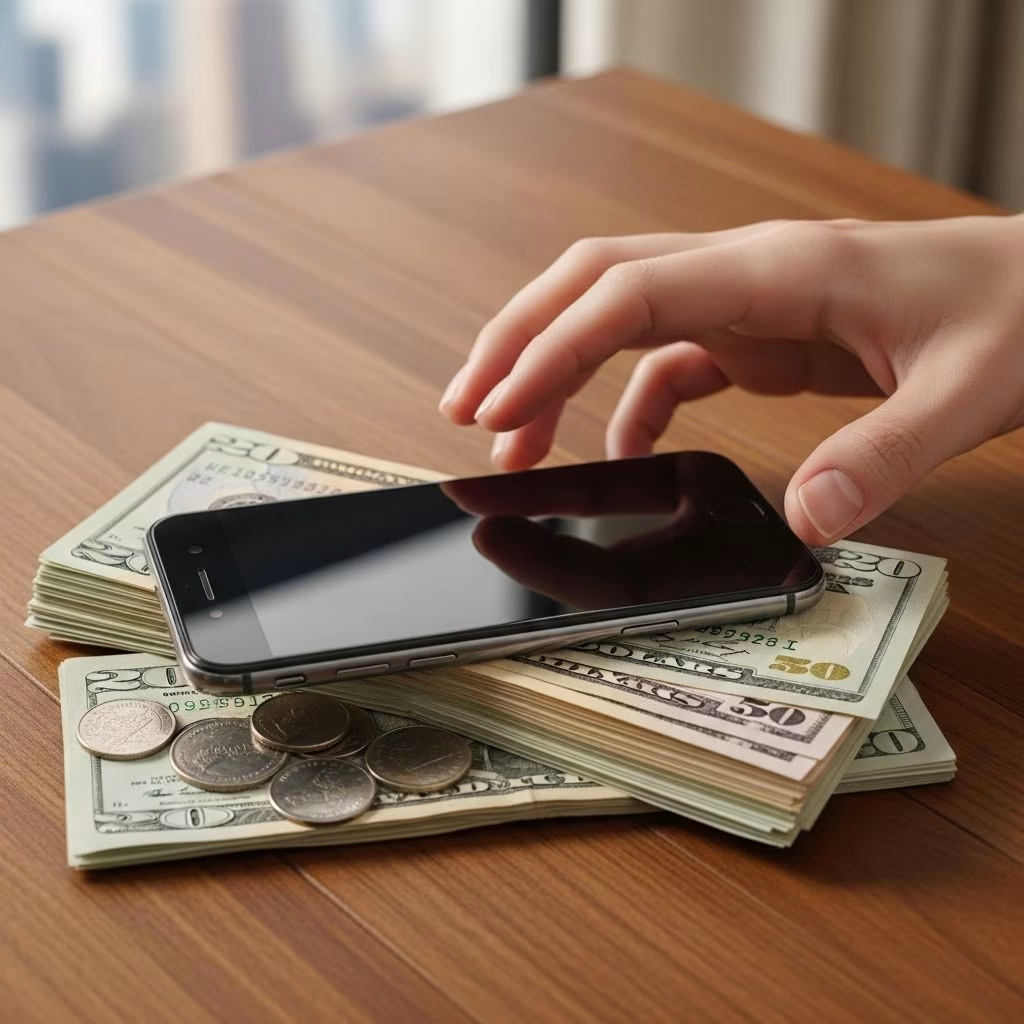
Consider used phones, and take pride in being a modern-day penny hoarder who knows how to make every dollar count. In today’s fast-paced tech world, flagship smartphones come with eye-watering price tags, but savvy shoppers can score high-performance devices at a fraction of the cost by opting for used or refurbished options. This comprehensive guide breaks down why it’s worth it, where to shop safely, the key differences between used and refurbished, what to inspect before buying, and pro tips to maximize your savings.
Is Buying Used Phones Worth It?
The short answer is yes, absolutely. Buying a used phone can be a smart, strategic decision, especially if you’re trying to cut down on unnecessary expenses or simply refuse to pay flagship prices for marginal feature upgrades. Not to mention, it’s a sound business idea, at least in theory, because people will always need affordable phones.
When you buy a used phone, you’re often getting 80% to 90% of the performance of the latest model at a fraction of the price. Want a concrete example? A used iPhone 13 Pro Max with 128GB might cost you around $500–$600, while the latest iPhone 15 Pro Max starts at $1,199. That’s a potential savings of over $600 for a device that, practically speaking, will serve 99% of your needs just as well—streaming videos, browsing social media, taking photos, and running everyday apps without a hitch.
Beyond the wallet wins, used phones are a win from an environmental standpoint. Refurbished models reduce the carbon footprint of the purchase by as much as 11x, according to lifecycle analyses from tech sustainability reports. Extending the life of a phone reduces the need for new manufacturing, which in turn cuts down on electronic waste and the resources required to mine rare earth metals. If you’re eco-conscious, this is a powerful reason to buy used phones. The U.S. Environmental Protection Agency notes that e-waste is one of the fastest-growing waste streams globally, and reusing devices directly combats this issue.
Of course, there are risks: worn-out batteries, outdated software support, and the general uncertainty of a phone’s history. Android phones, for instance, might lose official updates after 2-3 years, while iPhones often get 5+ years of support. But with proper vetting and trusted sellers (detailed below), you can buy used phones with confidence. All of these factors make a compelling case for looking outside the “brand new” section. Used phones can deliver the same performance at a much more palatable cost, making them ideal for budget-conscious consumers, students, families, or anyone upgrading without breaking the bank.
Where to Buy Used Phones: Trusted Platforms and Retailers
Where you buy your used phone matters just as much as what you buy. Reputable platforms and retailers offer peace of mind with warranties, return policies, and quality guarantees. Here are your best bets, categorized for easy comparison:
- Peer-to-peer marketplaces:
- Swappa: This platform stands out for its rigorous verification process. Every listing is reviewed by moderators, and sellers must provide the phone’s IMEI number. That helps eliminate blacklisted or stolen phones. Prices are often lower than retailer sites, and you can negotiate directly with sellers. Swappa has facilitated millions of safe transactions since 2010.
- eBay: With buyer protection and PayPal safeguards, it’s reliable for used phones, but always check seller ratings (aim for 99%+ positive feedback).
- Refurbished specialists:
- Back Market: Think of it as the Amazon for refurbished electronics. Every phone comes with a condition grade (from “Excellent” to “Fair”), and there’s a one-year warranty standard across the site. They partner with certified refurbishers worldwide.
- Amazon Renewed: Offers phones refurbished by approved vendors. You get the backing of Amazon’s legendary customer service and 90-day return policies, which is a strong safety net.
- Manufacturer certified:
- Apple Certified Refurbished: Arguably the best option for buying used iPhones. These devices are like-new, come with new batteries, outer shells, and are backed by a one-year Apple warranty. Available directly from Apple’s site.
- Google Certified Refurbished: Similar perks for Pixel phones, ensuring full software support.
- Retailers and carriers:
- Best Buy often has deals on open-box or Geek Squad Certified refurbished phones. These may include carrier-locked or unlocked models, and you get an in-store return policy—perfect for hands-on inspection.
- Carrier stores like Verizon, AT&T, or T-Mobile sell certified pre-owned phones with financing options and trade-in deals.
While local listings like Craigslist or Facebook Marketplace can yield steep deals (sometimes 20-30% below online prices), proceed with extreme caution. Insist on meeting in public, ideally a well-lit public place with lots of cameras, and check the IMEI before money changes hands using free tools like CTIA’s Stolen Phone Checker or IMEI.info. Avoid wire transfers or untraceable payments.
Refurbished vs Used Phones: What’s the Difference?
Understanding the difference between “used” and “refurbished” is crucial for setting expectations and making an informed choice. Here’s a clear comparison:
| Feature | Used Phones | Refurbished Phones |
|---|---|---|
| Seller Type | Private individuals | Retailers/manufacturers |
| Inspection/Repair | None or minimal | Professional full inspection, repairs, battery replacement if needed |
| Warranty | Rarely any (seller-dependent) | 90 days to 1 year standard |
| Condition | Cosmetic wear common, potential hidden issues | Graded (Fair to Like-New), software reset to factory |
| Price | Lowest (max savings) | Slightly higher but safer |
| Best For | Tech-savvy buyers | Beginners seeking security |
Used phones are typically sold by private individuals and haven’t undergone any inspection or repair. They might work fine, or they might have hidden issues like water damage or a failing logic board. In some cases, they might even be unlocked. Not to mention, there’s usually no warranty or return policy, and cosmetic flaws like scratches are common. The benefit? Rock-bottom prices. But you need to do your homework.
Refurbished phones, on the other hand, are sold by retailers or manufacturers after being professionally inspected and repaired. Batteries may be replaced (aim for 85%+ health), defective components fixed, and software restored to factory settings. Refurbished phones often come with a warranty (usually 90 days to a year), which adds a significant layer of protection. Certified refurbishers follow standards set by organizations like the CTIA.
If you’re new to buying used tech or simply want more security, go refurbished. If you’re tech-savvy, know how to inspect a device thoroughly, and want to maximize savings, a used phone from a reputable seller might be your best bet.
What to Check Before You Buy a Used Phone
Buying a used phone requires a critical eye. Don’t just take someone’s word that it works great. Use this comprehensive checklist to evaluate the phone before making a commitment:
- Physical inspection: Check for cracks on screen/back glass, dents, or signs of water damage (fuzzy corrosion in ports, SIM tray). Test buttons, ports (charge Lightning/USB-C, headphones), speakers, microphones, and cameras (front/back, flash).
- Battery health: On iPhones: Settings > Battery > Battery Health (80%+ capacity ideal). On Android: Use apps like AccuBattery or dial *#*#4636#*#* for stats. Ask for a full charge cycle demo.
- IMEI/ESN verification: Dial *#06# to get IMEI. Check on Swappa, CTIA.org, or carrier sites for blacklisting. Ensure it matches the box/seller info.
- Software & performance: Confirm latest OS (iOS 17+ or Android 13+), no iCloud/Google lock. Run benchmarks (Geekbench), test apps, check storage (not bloated with junk). Look for lag or overheating.
- Unlock status: Test with a new SIM from another carrier. Avoid carrier-locked unless you use that provider.
- Accessories & box: Original charger/cables add value; ask for purchase receipt for warranty proof.
Pro tip: Use diagnostic apps like Phone Doctor Plus (Android) or 3uTools (iPhone via PC) for deeper scans. If buying in-person, bring a USB-C/Lightning cable and SIM card.
Pro Tips for Maximum Savings on Used Phones
To squeeze every penny:
- Buy during launch cycles: New models usually drop in the fall (e.g., September for iPhones, October for Pixels). That’s when prices on previous models drop the most—up to 30-40%.
- Negotiate politely: Sellers on platforms like Swappa or Facebook Marketplace are often open to offers. Be respectful, point out market prices from comparable listings, and make a fair counteroffer (e.g., 10-15% off asking).
- Target last-gen models: Skip the newest; iPhone 14/15 or Galaxy S23 offer near-flagship specs at used prices under $400.
- Trade-ins & bundles: Sell your old phone first via Gazelle or Decluttr for credit.
- Watch for holidays: Black Friday, Prime Day yield extra discounts on renewed stock.
By following these steps, you can save $300-$800 per phone while minimizing risks.
Frequently Asked Questions (FAQs)
Is it safe to buy used phones online?
Yes, from trusted sites like Swappa or Back Market with buyer protection. Always verify IMEI and use secure payments.
How much can I save on a used iPhone?
Typically $400-$700 vs. new, e.g., used iPhone 14 Pro at $550 vs. $999 new.
What’s the battery life like on used phones?
Varies; aim for 85%+ health. Refurbished often get new batteries.
Do used phones get software updates?
iPhones: Yes, 5+ years. Android: 2-4 years depending on model.
Can I return a used phone from Facebook Marketplace?
No formal policy—meet locally and test thoroughly first.
References
- Electronics Reuse and Recycling — U.S. Environmental Protection Agency. 2024-01-15. https://www.epa.gov/smm-electronics/electronics-reuse-and-recycling
- CTIA Stolen Phone Checker — CTIA — The Wireless Association. 2025-06-01. https://www.stolenphonechecker.org
- Smartphone Lifecycle Assessment — International Energy Agency (IEA). 2023-11-20. https://www.iea.org/reports/electronics
- IMEI.info Verification Service — IMEI.info. 2025-01-10. https://www.imei.info
- Consumer Guide to Refurbished Devices — Federal Trade Commission (FTC). 2024-09-05. https://consumer.ftc.gov/articles/shopping-refurbished-products
This article is general information, not personal financial advice. Consider your own situation, or speak with a licensed adviser, before acting on it.


