

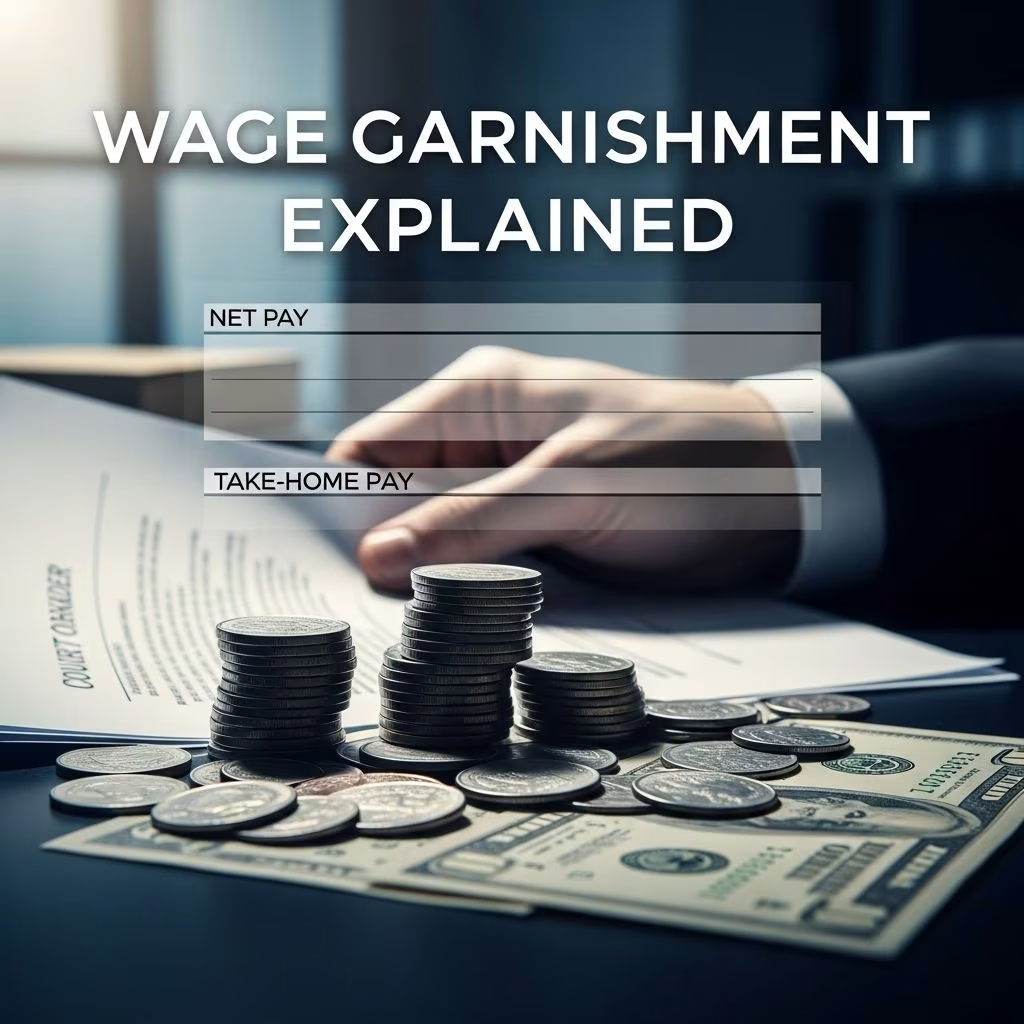
Wage garnishment is a legal mechanism where courts or government agencies direct employers to withhold a portion of an employee’s earnings to settle debts. This process ensures creditors receive payments directly from paychecks until obligations are fulfilled.
Defining Wage Garnishment and Key Players
In essence, wage garnishment involves a court order compelling an employer to divert part of an employee’s disposable income toward debt repayment. It targets wages, salaries, bonuses, and sometimes commissions or tips. Unlike voluntary payroll deductions, this is enforced by law.
The main parties include:
- Debtor (Employee): The individual owing the debt whose wages are withheld.
- Creditor: The entity—such as a private lender, court, or agency—seeking repayment.
- Garnishee (Employer): The third party holding the debtor’s funds (wages) and required to withhold and remit them.
This structured involvement protects creditors while imposing strict rules on how much can be taken.
Common Triggers for Wage Garnishment
Certain debts routinely lead to garnishments due to their priority under law. Child support tops the list as the most frequent type, mandated aggressively to support dependents. Federal tax levies from the IRS follow, bypassing some court steps via administrative orders.
Other triggers encompass:
- Defaulted student loans, where up to 15% of disposable pay can be withheld without court involvement.
- Court judgments for unpaid consumer debts like credit cards or medical bills.
- Bankruptcy proceedings or alimony obligations.
Government debts often take precedence, with private creditor garnishments subject to tighter limits.
The Step-by-Step Legal Process
Initiating garnishment requires a creditor to secure a judgment first. They file a lawsuit; if victorious, they request a writ of garnishment from the court. The court clerk issues this writ, ordering the employer to hold wages.
Service happens via certified mail, process server, or sheriff, ensuring the employer receives official notice. Upon receipt, employers must:
- Verify the employee’s identity and calculate garnishable amounts.
- Begin withholding from the next pay period, typically within 5-30 days.
- Remit funds to the creditor or agency within 15 days post-pay period.
Employees receive notice post-judgment, allowing time to contest. Non-compliance by employers risks penalties.
Federal and State Limits on Withholdings
The Consumer Credit Protection Act (CCPA) caps garnishments at the lesser of 25% of disposable earnings or the amount exceeding 30 times the federal minimum wage ($7.25/hour, about $217.50 weekly). Priority debts like child support can reach 50-60%.
| Debt Type | Max Garnishment (% of Disposable Earnings) | Notes |
|---|---|---|
| Child Support/Alimony | 50-65% | Increases with arrears or multiple dependents |
| Federal Taxes/Student Loans | 15% | Administrative, no court needed |
| General Creditor Debt | 25% | After priority claims |
States may impose stricter caps; for instance, some ban consumer debt garnishments entirely. Disposable earnings exclude taxes and mandatory deductions.
Employer Responsibilities and Compliance
Employers act as intermediaries, facing legal duties upon receiving a writ. They must promptly notify the employee, compute withholdings accurately, and forward payments without delay.
Key obligations include:
- Continuing garnishment until court/agency halt.
- Handling multiple orders by priority (e.g., child support first).
- Prohibiting termination for a single garnishment; up to two consumer debt ones allowed federally.
Payroll providers often assist with complex calculations to avoid fines.
Employee Rights and Protections
Workers aren’t defenseless. Federal law shields minimum necessary income, and states add safeguards like exemptions for low earners. Key rights:
- Hearings to challenge validity or amounts.
- Exemptions for Social Security, disability, or veterans’ benefits.
- No retaliation; firing for one garnishment is illegal.
Track notices carefully; errors occur, providing contest grounds.
Strategies to Stop or Avoid Garnishment
Proactive steps can halt proceedings. Negotiate repayment plans with creditors pre-judgment, potentially avoiding court. File for bankruptcy to trigger automatic stays.
Post-order options:
- Challenge the Order: Dispute in court if errors exist, like wrong amounts.
- Pay Lump Sum or Settle: Offer in Compromise for taxes reduces debt.
- Hardship Request: Seek temporary suspension if unable to afford basics.
- Debt Consolidation: Combine debts into manageable payments.
Consult legal aid or financial counselors early for tailored advice.
Impact on Paychecks and Long-Term Finances
Garnishment shrinks take-home pay, straining budgets. A 25% hit on $50,000 annual salary equals $250 biweekly loss. Multiple garnishments compound issues.
Long-term, it harms credit via unresolved debts but resolves upon payoff. Rebuild via budgeting, emergency funds, and credit counseling to prevent recurrence.
Frequently Asked Questions (FAQs)
Can all income be garnished?
No. Only disposable earnings qualify, exempting certain benefits like SSI.
How long does garnishment last?
Until debt satisfaction, order vacation, or period ends—often months to years.
Can I quit my job to stop it?
No, as new employers must comply with continuing orders.
Does garnishment affect taxes?
Withheld amounts aren’t deductible by employee; employers report via W-2.
What if my employer makes a mistake?
Notify them immediately; escalate to issuing court if unresolved.
Preventing Future Wage Garnishment Risks
Avoidance starts with debt management: monitor bills, communicate with lenders, build savings. Credit counseling nonprofits offer free plans. Understand state laws via official sites for localized protections.
References
- What Employers Need to Know About Wage Garnishment — Maryland People’s Law Library. 2023. https://www.peoples-law.org/what-employers-need-know-about-wage-garnishment
- All You Need to Know About Wage Garnishments — ADP. 2024. https://www.adp.com/resources/articles-and-insights/articles/a/all-you-need-to-know-about-wage-garnishments.aspx
- What is Wage Garnishment? And How Does it Work? — Paylocity. 2024. https://www.paylocity.com/resources/learn/articles/wage-garnishment/
- What is wage garnishment and what does it mean for your paycheck? — H&R Block. 2024. https://www.hrblock.com/tax-center/income/what-is-wage-garnishment/
- Garnishment — Legal Information Institute, Cornell Law School. 2023. https://www.law.cornell.edu/wex/garnishment
- Wage Garnishment Protections — U.S. Department of Labor. 2022-01-01. https://www.dol.gov/agencies/whd/fact-sheets/30-cppa
This article is general information, not personal financial advice. Consider your own situation, or speak with a licensed adviser, before acting on it.


