

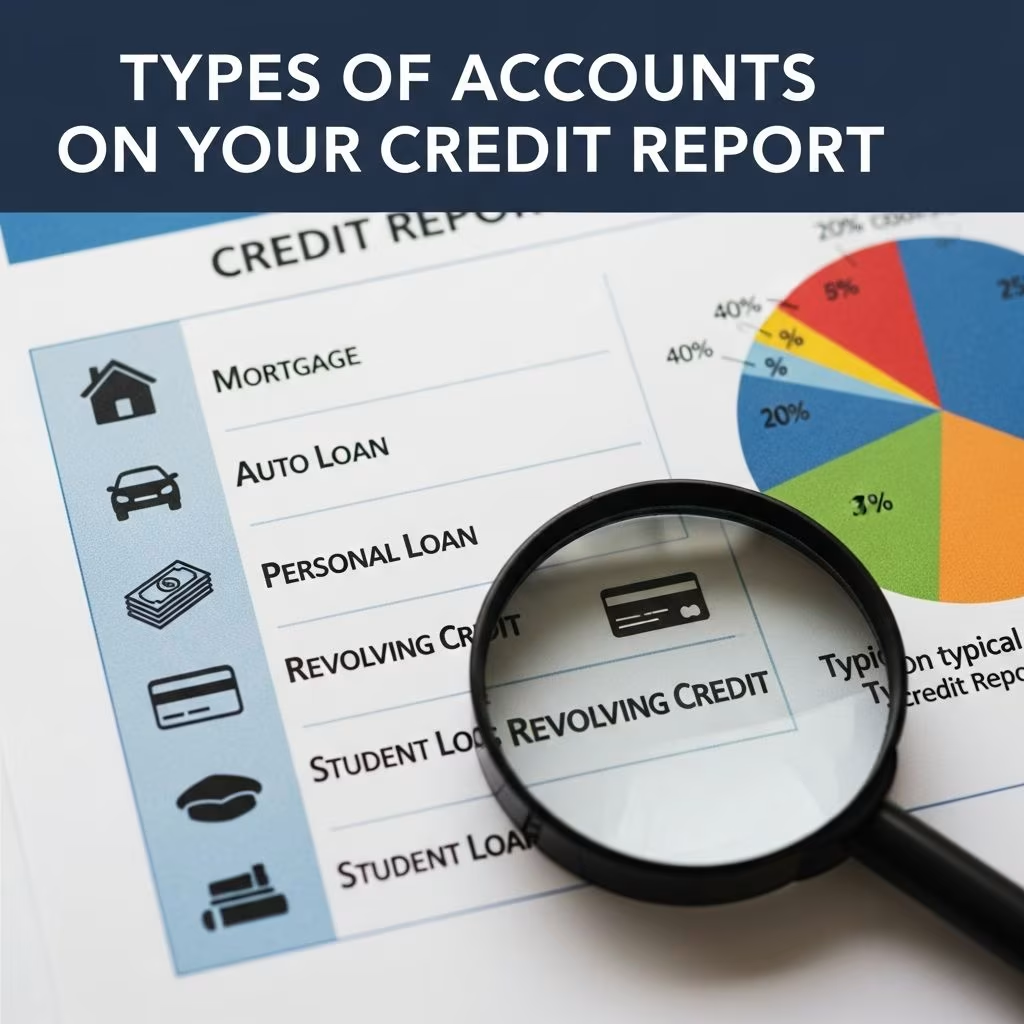
Your credit report serves as a comprehensive record of your financial history, primarily featuring various types of credit accounts that lenders use to assess your creditworthiness. These accounts, known as tradelines, fall into distinct categories like installment, revolving, and collection accounts, each playing a unique role in determining your credit score.
Understanding Tradelines: The Building Blocks of Credit Reports
Tradelines represent every credit account listed on your report from the three major bureaus: Experian, Equifax, and TransUnion. They include details such as account type, opening date, balance, and payment history, which collectively influence about 35% of your FICO score through payment history alone.15 Positive tradelines demonstrate reliability, while negative ones can lower your score.
Lenders report this information monthly, ensuring your report reflects current activity. Even closed accounts remain visible for years, contributing to your credit profile’s depth and length of history.
Installment Accounts: Fixed Repayment Structures
Installment accounts provide a lump sum upfront, repaid in fixed monthly payments over a set period. Once fully paid, the account closes but stays on your report, signaling responsible borrowing.
Common examples include:
- Auto loans: Financed vehicle purchases with terms typically 36-72 months.
- Student loans: Federal or private education funding, often with long repayment plans.
- Personal loans: Unsecured borrowing for debt consolidation or expenses.
- Mortgages: Home loans with 15-30 year terms, highly valued for credit mix.
These accounts positively affect your score by showing diverse credit management, but missed payments harm it severely.16
| Installment Account Type | Typical Term | Credit Impact |
|---|---|---|
| Auto Loan | 3-6 years | Builds payment history |
| Student Loan | 10+ years | Demonstrates long-term reliability |
| Mortgage | 15-30 years | Boosts credit mix significantly |
| Personal Loan | 1-5 years | Helps diversify profile |
Revolving Accounts: Flexible Borrowing Options
Revolving accounts offer a credit limit you can borrow against repeatedly, with no fixed repayment schedule beyond minimum payments. Balances fluctuate based on usage, impacting your credit utilization ratio—a key scoring factor at 30% of FICO scores.7
Primary types are:
- Credit cards: Everyday spending tools from banks or retailers.
- Home equity lines of credit (HELOCs): Secured against home value for large expenses.
- Personal lines of credit: Unsecured flexible borrowing similar to cards.
Keeping utilization under 30% maximizes score benefits. High balances signal risk to lenders.12
Collection Accounts: The Negative Mark
Collection accounts arise when original creditors sell or assign unpaid debts to agencies. They appear separately, detailing the original creditor, amount owed, and ‘placed for collection’ date. These always hurt scores, remaining for seven years.1
Unlike active accounts, collections don’t offer borrowing; they indicate delinquency. Disputing inaccuracies can remove them if unverifiable.
Key Details Displayed for Every Account
Each tradeline includes standardized information for transparency:
- Creditor or lender name.
- Account number (often partially masked).
- Open and close dates.
- Status: current, past due, or closed.
- Your role: primary, joint, authorized user, or cosigner.
- Credit limit (revolving) or loan amount (installment).
- Current balance and payment history.
This data helps lenders evaluate risk. Payment patterns over two years are especially scrutinized.58
How Long Do Accounts Stay on Your Report?
Retention periods vary by status, affecting score recovery timelines.
| Account Status | Reporting Duration |
|---|---|
| Open, good standing | Indefinitely |
| Closed, good standing | 10 years |
| Late payments | 7 years from first delinquency |
| Collections | 7 years from original delinquency |
Positive history persists longer, building a strong profile.1
Other Potential Entries: Inquiries and Public Records
Beyond accounts, reports include hard inquiries (recent applications, affecting 10% of score) and public records like bankruptcies (10 years) or judgments (7 years). These aren’t accounts but influence overall assessment.7
Building a Strong Credit Profile with Diverse Accounts
A mix of installment and revolving accounts (10% of FICO score) shows versatility. Aim for:
- One mortgage or long-term installment for stability.
- 2-3 revolving accounts with low utilization.
- No collections by paying debts promptly.
Authorized user status on a trusted family member’s card can add positive history without risk.
Common Misconceptions About Credit Accounts
Utility bills always appear: No, only if reported by lenders; most don’t.3
Store cards count less: All revolving accounts weigh equally.
Closed accounts vanish: They remain 10 years if positive.
Steps to Review and Improve Your Credit Report
- Obtain free weekly reports from AnnualCreditReport.com.
- Check for errors and dispute inaccuracies.
- Pay bills on time—35% of your score.
- Reduce revolving balances below 30% utilization.
- Avoid new accounts unnecessarily to preserve history length.
Monitoring prevents surprises during loan applications.
Frequently Asked Questions (FAQs)
What types of accounts most impact my credit score?
Payment history from all accounts is paramount, followed by utilization on revolving credit.7
Do closed accounts still affect my score?
Yes, positively for 10 years if in good standing; negatively for 7 years if delinquent.1
Can I remove collection accounts?
Only by disputing errors or negotiating pay-for-delete (not guaranteed).1
How many accounts is ideal?
Quality over quantity: 3-5 diverse, well-managed accounts suffice.
Do authorized user accounts count fully?
Yes, but primary responsibility matters most for your habits.
Conclusion: Empower Yourself with Credit Knowledge
Mastering account types empowers better financial decisions. Regular checks and responsible use turn your credit report into an asset.
References
- Which Accounts Appear on Your Credit Report? — Experian. 2023. https://www.experian.com/blogs/ask-experian/which-accounts-appear-on-credit-report/
- The Types of Accounts in Your Credit Report — Credit.com. 2022. https://credit.com/blog/tips-for-improving-your-credit-types-of-accounts
- What is a credit report? — Consumer Financial Protection Bureau. 2024-03-15. https://www.consumerfinance.gov/ask-cfpb/what-is-a-credit-report-en-309/
- A Guide to What’s in My Credit Report — myFICO. 2023. https://www.myfico.com/credit-education/whats-in-my-credit-report
- Credit Report Terminology — Equifax. 2024. https://www.equifax.com/personal/education/credit/report/articles/-/learn/credit-report-terminology/
- Understanding Credit Reports — First Federal Bank. 2023-06-01. https://www.1stfed.com/understanding-credit-reports
This article is general information, not personal financial advice. Consider your own situation, or speak with a licensed adviser, before acting on it.


