

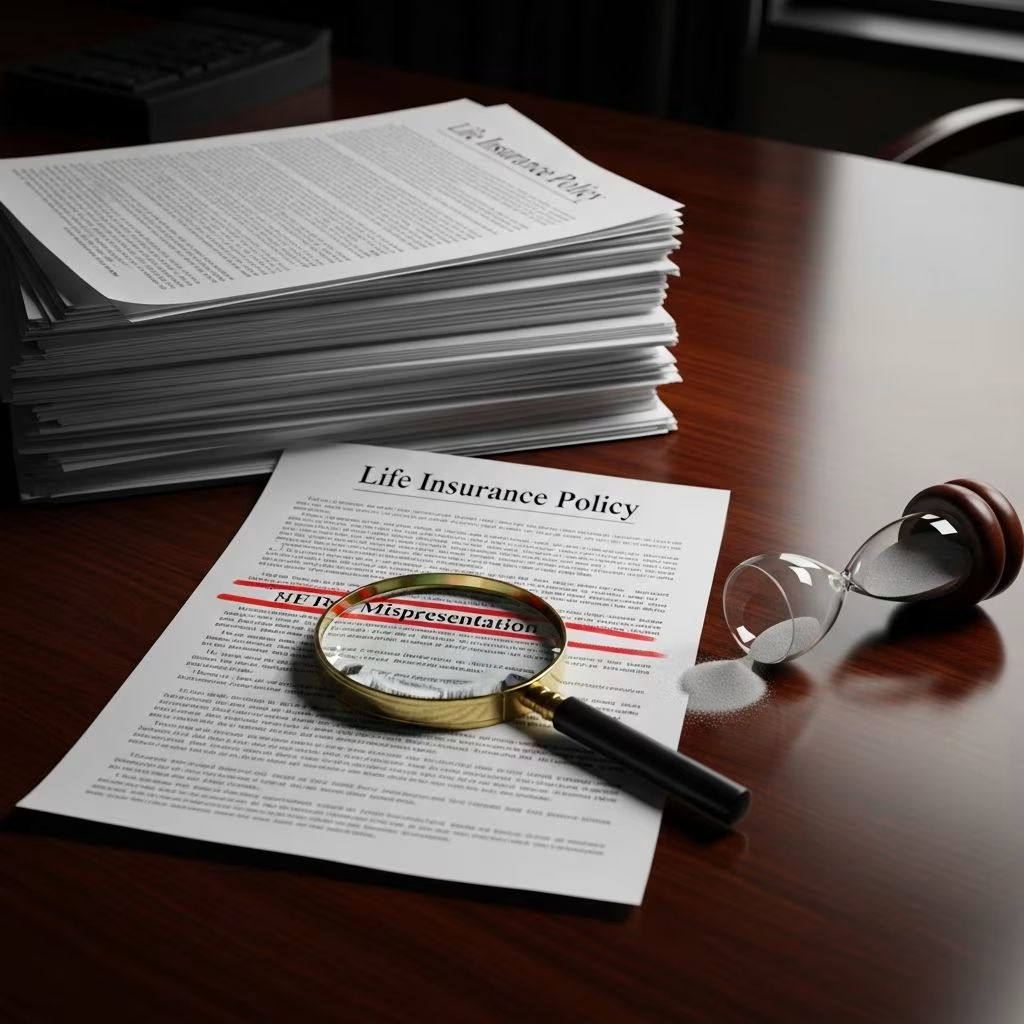
Providing inaccurate information on a life insurance application can undermine the very protection you seek for your family. Insurers rigorously verify details, and discovering falsehoods may lead to claim rejections, policy terminations, or worse, jeopardizing your beneficiaries’ financial future.
Understanding the Risks of False Statements
Life insurance relies on accurate applicant disclosures to assess risk and set premiums fairly. When individuals withhold or falsify details, it constitutes misrepresentation, which insurers treat seriously. This practice not only affects the policyholder but also burdens loved ones who depend on the payout.
Common motivations for dishonesty include fear of higher premiums or rejection, yet the fallout often proves far more damaging. Insurers employ multiple verification methods, making deception difficult to sustain long-term.
Immediate Outcomes During the Application Stage
If discrepancies surface before policy issuance, consequences unfold swiftly. Underwriters cross-check data against medical exams, driving records, prescription histories, and databases like the Medical Information Bureau (MIB).
- Application Rejection: The insurer may decline coverage outright, noting the incident in shared databases, potentially flagging you with other carriers.
- Rate Adjustments: Minor errors might result in elevated premiums to reflect true risk.
- Requests for Clarification: You could be asked to amend sections, delaying approval.
These steps protect insurers from adverse selection, where high-risk individuals secure low rates through deceit.
The Critical Role of the Contestability Period
Most policies include a **contestability period**, typically two years from issuance, allowing insurers to scrutinize applications upon a claim. Death within this window triggers a thorough review.
| Aspect | During Contestability | After Contestability |
|---|---|---|
| Insurer’s Review Rights | Full investigation of application | Limited to proving intentional fraud |
| Possible Actions | Deny claim, rescind policy, refund premiums | Pay claim unless fraud proven |
| Beneficiary Impact | No payout, only premiums returned | Full payout if no fraud evidence |
This period exists because initial underwriting relies on applicant honesty, supplemented by limited medical data. Discovery of material omissions—details that would alter risk assessment—empowers insurers to void coverage.
Types of Misrepresentations and Their Impacts
Misrepresentations range from innocent errors to deliberate fraud. Insurers distinguish based on intent and materiality.
Innocent Mistakes vs. Intentional Deceit
Forgetting a minor detail or misstating an address rarely derails applications. However, intentional lies about health, habits, or history qualify as fraud.
- Health Conditions: Omitting diabetes, cancer history, or mental health treatments, especially if death-related.
- Lifestyle Factors: Denying tobacco use, misreporting weight/height, or hiding hazardous hobbies like skydiving.
- Legal and Driving Records: Concealing DUIs, felonies, or multiple violations.
Such deceptions, if uncovered, prompt severe responses. For smoking lies, payouts might adjust to smoker rates, slashing benefits significantly.
Material vs. Immaterial Facts
**Material facts** influence underwriting decisions. Falsifying them voids policies; immaterial ones, like clerical errors, do not.
Post-Discovery Repercussions After Policy Issuance
Even if a policy activates, lies can surface later. A claim prompts investigation, revealing inconsistencies via autopsy, records, or MIB data.
- Claim Denial: Beneficiaries receive only refunded premiums, leaving them unsupported.
- Policy Rescission: Coverage retroactively cancels, as if never existed.
- Reduced Payouts: Adjusted for true risk, e.g., non-smoker rates refunded at smoker levels.
Beyond financial loss, repeated fraud flags in MIB hinder future insurability.
Legal Ramifications of Insurance Fraud
Intentional misrepresentation escalates to fraud, a criminal offense in many jurisdictions. Insurers may pursue civil suits against estates or criminal charges against policyholders.
Proving intent requires evidence of knowing falsehoods. Successful cases result in fines, restitution, or imprisonment, though rare for individuals. The primary deterrent remains claim denial, fulfilling insurance’s protective intent only through truthfulness.
How Insurers Detect Deception
Verification is multilayered, minimizing successful lies.
- Medical Exams: Blood/urine tests reveal smoking, drug use, or conditions.
- Prescription and Doctor Records: Confirm reported health history.
- Motor Vehicle Reports: Uncover driving infractions.
- MIB Database: Flags prior applications and declinations.
- Coroner’s Reports: Post-claim autopsies expose undisclosed issues.
These tools ensure most deceptions fail, underscoring honesty as the optimal strategy.
Why Temptation Arises and Better Alternatives
Applicants fear rejection or cost hikes, but alternatives exist: no-exam policies for minor issues, or brokers finding suitable carriers. Honesty often secures better terms long-term.
Table of Common Lies and Detection Methods:
| Lie Type | Detection Method | Typical Consequence |
|---|---|---|
| Tobacco Use | Cotinine Test | Rate Adjustment or Denial |
| Health Omission | Records/MIB | Claim Rescission |
| Driving Record | DMV Report | Application Rejection |
| Weight Misreport | Exam Measurement | Policy Cancellation |
Protecting Your Family Through Transparency
Life insurance offers peace of mind via reliable payouts. Dishonesty erodes this, exposing families to hardship. Disclose fully; insurers accommodate many risks with fair pricing.
Consult agents for guidance on sensitive disclosures. Accurate applications build lasting coverage.
Frequently Asked Questions
What is the contestability period?
A 2-year window post-issuance where insurers can contest claims based on application inaccuracies.
Can small lies void my policy?
Only material misrepresentations affecting risk assessment do; minor errors typically don’t.
Is unintentional misinformation fraud?
No, fraud requires intent; honest mistakes may lead to corrections, not denial.
What if I die after the contestability period?
Claims generally pay out unless insurers prove post-period fraud.
How does MIB affect future applications?
Records denials or lies, alerting other insurers to potential risks.
Final Thoughts on Building Trustworthy Coverage
Prioritize truthfulness to ensure your policy delivers intended security. The stakes—your family’s stability—demand nothing less.
References
- What Happens if You Lie on Your Life Insurance Application? — Diversified LLC. 2024. https://insurance.diversifiedllc.com/life-insurance/what-happens-if-you-lie-on-your-life-insurance-application/
- What Happens If You Lie on a Life Insurance Application? — Experian. 2024. https://www.experian.com/blogs/ask-experian/what-happens-if-you-lie-on-life-insurance-application/
- What Happens if You Lie on Your Life Insurance Application? — Policygenius. 2024. https://www.policygenius.com/life-insurance/what-happens-if-you-lie-on-your-life-insurance-application/
- 3 Bad Consequences If You Lie On A Life Insurance Application — My Family Life Insurance. 2024-01-29. https://myfamilylifeinsurance.com/2024/01/29/fibs-lies-and-life-insurance/
- What happens when you lie on a life insurance application — MassMutual. 2024. https://blog.massmutual.com/insurance/lying-on-insurance
This article is general information, not personal financial advice. Consider your own situation, or speak with a licensed adviser, before acting on it.


